







































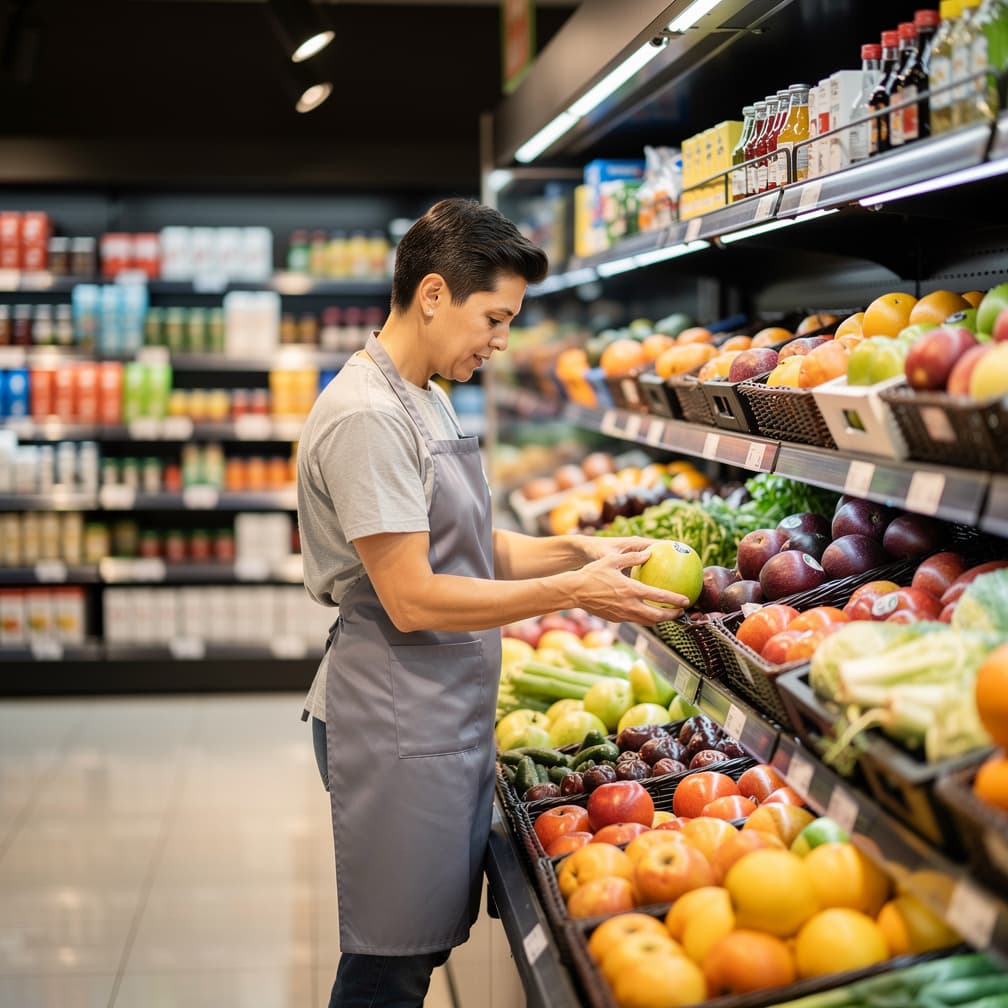

San Bernardino County counts about 42,000 business establishments, and that density puts landlords, property managers, and center owners in a position to dictate terms. Ask about grocery store insurance in Ontario and the first thing a leasing office wants is a certificate naming it as additional insured, at limits it picked. Heavy markets also push more people through your doors, more carts across your lot, and more chances for a claim brought by someone who has never shopped with you before. Attorneys who handle premises cases work volume where the population supports it. Defense costs can run for months before anyone settles the question of fault. The point of the sections below is to line up what a lease demands against what a policy would actually do.
What Makes Ontario Different
Where the population is heavy, liability pricing tends to run higher, because claim volume and legal fees scale with it. That has nothing to do with your mats and everything to do with the territory your address sits in. You cannot move the store, so the only lever you hold is the rest of the file. A documented cleaning routine, a working camera system, and a clean loss run are that lever. Deductible choice is the other one, and it moves a premium faster than anything else on the page. Raising it lowers the bill and shifts the first slice of every claim onto your own cash. For an Ontario store with steady traffic and small frequent claims, that trade can go badly wrong. Participating carriers in California will move the retention as far as you ask, so run the math first.
Local Risk Factors in Ontario
An evacuation zone does not care that your stock is fine. Doors stay shut by order, staff are somewhere else, and the loss is entirely revenue and spoilage with an undamaged building sitting in the middle of it. Civil authority wording is what speaks to that, and it usually arrives with a distance requirement and a time limit measured in days rather than weeks. Read both numbers before a season when you might need them. A store in Ontario can lose more to an order than to a flame, and the two sit under very different sentences in the same policy. Ask which sentence you bought, and ask what participating carriers in California actually put inside it.
What Coverage Does a Grocery Store in Ontario Need?
General Liability
A shopper goes down in a wet aisle and the store hears about it from a lawyer six weeks later. That is the claim General Liability is generally built for: third-party injury on your floor, damage you cause to someone else's property, and the defense costs arriving with either. It typically excludes injuries to your own staff, which sit with Workers' Compensation instead.
Example: A stack of cans shifts as a customer reaches for the bottom one, and a case lands on her foot. The medical bills and the demand that follows could fall to this line, subject to the limit.
Commercial Property
Coolers, shelving, registers, the fit-out, and the stock sitting on it are what this line puts a value on. A landlord may require it, and a lender holding a note on the building has its own reasons to ask. Commercial Property can help cover fire, storm damage, vandalism, and theft after a break-in, and it typically excludes flood and ordinary shoplifting, which sit outside the form entirely.
Example: A break-in takes the door, the till, and two shelves of stock in a single night. Repairing the frame and replacing the merchandise might be picked up here, once the deductible is gone.
Workers Compensation
Cashiers, stockers, and deli staff get hurt in ways customers never do: knives, pallet jacks, and lifting the same case four hundred times. Workers' Compensation is meant to answer for medical costs and lost wages after a work injury, and it is rated on payroll rather than on sales. Whether you must carry it depends on your state and your headcount.
Example: A stocker slips on a wet dock while pulling a pallet off a truck and tears a shoulder. Treatment and the wages lost while he heals may be handled here, depending on the claim.
Business Owners Policy
Buying property and liability as one package often prices better than buying them apart, and a Business Owners Policy is that package for a smaller store. It commonly bundles the building or fit-out, the stock, and third-party injury under a single form, sometimes with business interruption inside. Eligibility is the catch: revenue, size, and deli operations can push a store out of the class.
Example: A grease fire in the deli shuts an Ontario store for two weeks. The repairs, the ruined stock, and the income lost while the doors stay closed could all sit under this one form.
Commercial Umbrella
When a shopper's fall turns into a demand with seven figures on it, the primary limit runs out and the rest keeps coming. Commercial Umbrella sits above General Liability and adds limit once the underlying one is exhausted. It follows the underlying form, so a claim excluded below is generally excluded above as well, and it is priced off the limits you already carry.
Example: An elderly customer falls near the checkout and the head injury changes her life. Once the primary limit is spent, an excess layer might carry what is left of the settlement.
How Much Does Grocery Store Insurance Cost in Ontario?
Grocery Store Insurance is a bundle of separate policies, priced separately. The ranges below are typical figures for Ontario for each line, except workers compensation, which is rated per $100 of payroll; a quote prices each one against your own operations.
| Coverage | Typical range | What moves your price |
|---|---|---|
| General Liability Insurance | $95 - $310 per month | Industry and risk classification, annual revenue, number of employees |
| Commercial Property Insurance | $220 - $900 per month | Building value and construction type, roof age and condition, fire protection class |
| Workers Compensation Insurance | $0.75 - $2.74 per $100 of payroll | Employee classification codes, total annual payroll, experience modification rate |
| Business Owners Policy Insurance | $160 - $550 per month | Annual revenue and industry class, building and contents values, square footage and building age |
| Commercial Umbrella Insurance | $75 - $240 per month | Umbrella limit requested, limits carried on the underlying policies, loss history on those underlying policies |
Prices shown are general estimates, not guaranteed rates or quotes. Your actual premium will depend on the insurer, coverage selected, business details, location, claims history, and other underwriting factors. Learn about our pricing methodology.
What Are the Insurance Requirements for a Grocery Store in Ontario?
Workers' comp is generally required once you have your first employee. California generally requires employers to carry workers' compensation at that point. Common exemptions include sole proprietors and some partners. Confirm current thresholds with your state's workers' compensation agency before you hire.
Flood damage is typically excluded from standard policies. Standard commercial property and builders-risk-type policies typically exclude flood damage. Flood exposure varies address by address, so check your premises in FEMA's Flood Map Service Center before deciding; if you sit in a mapped flood zone, a separate policy through the National Flood Insurance Program is the usual starting point.
Where to verify licensing and coverage rules. The California Department of Insurance publishes consumer guidance and current insurance requirements for California businesses. When a contract or lease demands specific wording, the California Department of Insurance's guidance is the authoritative place to check.
Get Your Grocery Store Quote in Ontario
Compare rates from multiple carriers. Free quotes, no obligation.
Operating in Ontario
- About 330 grocery stores operate in San Bernardino County, which gives an underwriter a small set of comparable files and a strong reason to read your own disclosures line by line.
- Temperature logs feel like busywork until a spoilage claim asks what the case was running at, and a photo of an empty freezer proves nothing about the hours before it emptied.
- Turnover at a checkout is constant, and every new hire is somebody who has not yet been shown where the wet floor signs live. Participating carriers in California ask about training because it is the only part of a slip claim you control beforehand.
- A pallet stacked above eye level is a falling-merchandise claim waiting for a customer to reach for the wrong box. Those injuries land on the liability side, and they usually involve a stranger rather than a regular.
How to Buy: Advice for Ontario Owners
Gather four numbers before you ask anyone for a price: annual sales, annual payroll, square footage, and the replacement cost of your refrigeration and shelving. Sales drive one rating basis, payroll drives Workers' Compensation, and the equipment value drives Commercial Property. Guess at any of them and the quote is a guess too, which surfaces later as a bill at audit. Add a current loss run and photos of the entry mats, the cooler bank, and the loading door of your Ontario store. A complete submission gets read; a thin one gets priced defensively or set aside for a slower afternoon. The California Department of Insurance publishes consumer guidance on premium audits and how payroll figures are verified. Assemble that packet once and you can put the identical file in front of several participating carriers, then compare what comes back on equal terms.
FAQ
Grocery Store Insurance in Ontario: FAQ
Yes, and before they work in the building. A compressor tech who soaks your stockroom or a cleaner who leaves a wet floor creates a loss that can land on you first. Your carrier may pay and then pursue theirs, and that pursuit runs for months on your deductible and your renewal record. Checking a certificate takes two minutes and it is the only part of this that is free.
Generally each claim carries its own retention, and the property and liability sides can carry different ones. Spoilage and equipment breakdown wording sometimes uses a waiting period instead: nothing counts until an outage has run a set number of hours. That detail decides whether a short failure is a claim or just a lesson. Ask for the retention and the waiting period on the quote itself, in writing, rather than as a description.
More open hours mean more exposure hours: more people in the aisles, more carts moving, more chances for something to end up on the floor. Underwriters read hours as a rating driver, along with how many staff work them. Late trading can also change how a carrier views theft and the security you keep. If your Ontario store extended its hours after the policy was written, say so now rather than at the claim.
Most commercial policies are estimated at binding and trued up afterward, so a year that lands below the estimate can produce a return premium rather than a bill. The reverse holds as well, and a store that grew quietly during the term should expect the correction to go the other way. Keep sales and payroll records in a form somebody else can follow. An audit you can document is an audit that ends quickly.
Before, in practice. The insurance exhibit becomes your obligation the moment you sign, and an endorsement nobody can actually issue is now your problem rather than the landlord's. Read the limits and the entity names first, then ask whether participating carriers in California can produce that exact wording. A store in Ontario that finds a wording problem after signing is negotiating from a much worse position than it needed to.
Landlords and many permit offices ask for proof of it before the doors open, so in practice the answer is usually yes. General Liability is the line that typically responds when a shopper slips in a wet aisle or a case falls off a shelf. It generally handles defense costs as well as any settlement, which matters because a lawyer's letter starts costing money long before fault is decided. Requirements differ, so read your lease first.
Sources
- 1.U.S. Census Bureau, County Business Patterns (2022), San Bernardino County(San Bernardino County has about 42,000 business establishments.; San Bernardino County has about 330 businesses in this trade's category (NAICS group 445110).)
- 2.California Department of Insurance(California Department of Insurance publishes consumer guidance for insurance buyers.)
- 3.FEMA / FloodSmart(Flood coverage is typically purchased separately; FEMA administers the National Flood Insurance Program.)


