







































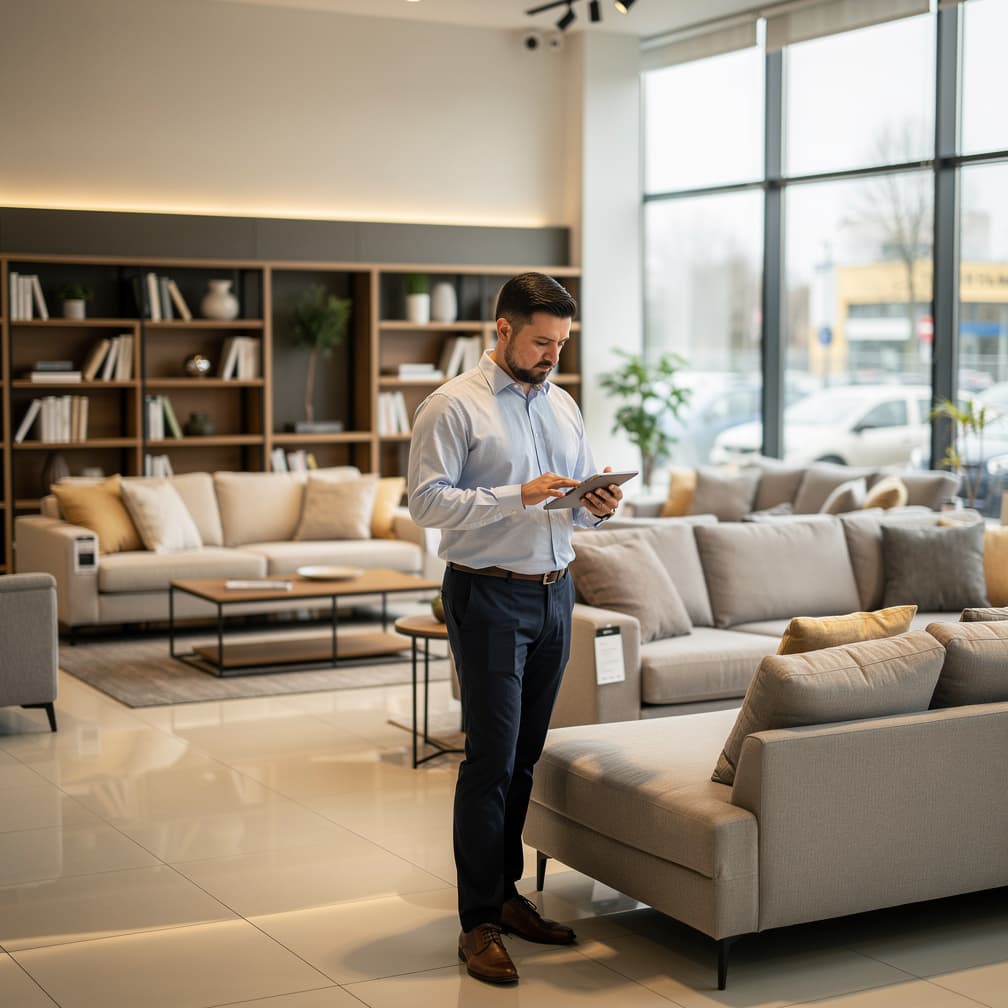

As a furniture store in Orange, your certificate of insurance is a sales document. A contract desk selling to offices, hotels, or property managers gets asked for it alongside the quote, and the order waits until the paper matches the request. Furniture store insurance in Orange therefore has to be built for the buyers you want, not only the losses you fear. The range of wording you get asked for is wider than most owners expect: additional insured, waiver of subrogation, primary and noncontributory, each carrying its own limit. Some of those requests cost nothing to satisfy and some change the policy underneath them. Know which is which before you promise a buyer anything in writing, because a promise you cannot paper is a lost order.
What Makes Orange Different
Competition pushes a store to sell more than furniture, and every add-on carries an exposure with it. Design consults, assembly, haul-away, and in-home staging win orders that a plain sales floor loses. Each is a new way to damage a customer's property, and a new question on a quote. A policy written for retail alone can be written wrong for a store doing all four. Tell a carrier in California exactly what your crews do inside a customer's home in Orange, in plain words. Then read what came back and check that the added service is named somewhere inside it. Assembly on site and a drop at the curb are different exposures with different answers. Buying on the wrong description is a denial waiting for a date.
Local Risk Factors in Orange
Wildfire threatens a furniture store twice: once through fire, and once through smoke that ruins upholstery a mile from anything that actually burned. Smoke is the version stores usually see, and fabric, foam, and unfinished wood all hold odor long after the air clears. Commercial Property may respond to smoke as a fire peril, though how a form treats stock that is intact but unsellable varies, and that is the argument worth settling early. Evacuation is the other cost, since a closed store with a full warehouse earns nothing while roads stay shut. Ask what your Orange policy requires as proof that stock is a loss rather than a markdown, and ask what carriers in California accept as that proof.
What Coverage Does a Furniture Store in Orange Need?
General Liability
A customer who catches a heel on an entry mat or pulls a bookcase over is the exposure this line exists for. Landlords and commercial buyers commonly want it in place before a lease starts or an order ships. It can help cover defense and settlement of third-party injury and property damage claims, though it generally does nothing about your own stock or your own employees.
Example: A delivery crew swings a headboard into a client's stairwell wall on the way up, and the repair plus the argument that follows is the kind of claim general liability is meant to answer.
Commercial Property
Stock is the point of this one. Sofas, dining sets, floor samples, racking, and the point-of-sale system all sit under a limit you supplied the number for. Fire, storm, theft, and vandalism are the usual perils; flood and gradual leaking usually are not. A lender or a landlord may insist on it where the building or the improvements are financed.
Example: A receiving door left propped during a busy afternoon lets a floor sample walk out overnight, and the theft claim behind it is what a commercial property limit typically stands behind.
Commercial Auto
Every delivery puts a loaded truck between your warehouse and somebody's driveway, which is where this line earns its keep. Personal auto policies commonly exclude business use, so a store delivering in an employee's pickup can be uninsured without anybody noticing. Liability, damage to the vehicle itself, and hired or non-owned exposure are separate decisions inside it. Cargo in the back is usually its own question.
Example: A box truck clips a bollard at an Orange loading dock with tomorrow's orders aboard; commercial auto might respond to the vehicle damage and to the liability that comes with it.
Workers Compensation
Lifting is how people get hurt in this trade: a sectional on a stair turn, a marble top on a hand truck, a warehouse pull done alone. Rating runs on payroll rather than headcount, so classifying a driver who also loads changes the number. Medical bills and lost wages for an injured employee are what it is meant to take on. Requirements vary by state, and the California Department of Insurance publishes the current requirements.
Example: A loader tears a shoulder easing a dresser around a tight landing, and the medical bills plus the weeks off are the sort of loss workers' compensation is generally there to absorb.
How Much Does Furniture Store Insurance Cost in Orange?
Furniture Store Insurance is a bundle of separate policies, priced separately. The ranges below are typical figures for Orange for each line, except workers compensation, which is rated per $100 of payroll; a quote prices each one against your own operations.
| Coverage | Typical range | What moves your price |
|---|---|---|
| General Liability Insurance | $90 - $280 per month | Industry and risk classification, annual revenue, number of employees |
| Commercial Property Insurance | $260 - $875 per month | Building value and construction type, roof age and condition, fire protection class |
| Commercial Auto Insurance | $250 - $725 per month | Fleet size and vehicle types, driver records and experience, coverage limits and deductibles |
| Workers Compensation Insurance | $0.75 - $2.74 per $100 of payroll | Employee classification codes, total annual payroll, experience modification rate |
Prices shown are general estimates, not guaranteed rates or quotes. Your actual premium will depend on the insurer, coverage selected, business details, location, claims history, and other underwriting factors. Learn about our pricing methodology.
What Are the Insurance Requirements for a Furniture Store in Orange?
Workers' comp is generally required once you have your first employee. California generally requires employers to carry workers' compensation at that point. Common exemptions include sole proprietors and some partners. Confirm current thresholds with your state's workers' compensation agency before you hire.
State auto liability minimums apply to business vehicles. California's minimum auto liability limits are $30,000/$60,000/$15,000 (bodily injury per person / per accident / property damage). Contracts and lenders often require more than the state floor.
Flood damage is typically excluded from standard policies. Standard commercial property and builders-risk-type policies typically exclude flood damage. Flood exposure varies address by address, so check your premises in FEMA's Flood Map Service Center before deciding; if you sit in a mapped flood zone, a separate policy through the National Flood Insurance Program is the usual starting point.
Where to verify licensing and coverage rules. The California Department of Insurance publishes consumer guidance and current insurance requirements for California businesses. When a contract or lease demands specific wording, the California Department of Insurance's guidance is the authoritative place to check.
Get Your Furniture Store Quote in Orange
Compare rates from multiple carriers. Free quotes, no obligation.
Operating in Orange
- Entry mats are the least glamorous liability control in retail and the first thing to vanish when a floor gets rearranged. Wet tile at an Orange doorway is where injury claims start.
- Floor samples get sat on, stood on, and climbed by strangers all day. A display that can tip is a claim waiting on a curious child and a distracted parent.
- An Orange customer can ask your loaders to shift an old sofa out of the way, and that unpaid favor is how a wall gets dented and a claim gets filed.
- Warehouse racking is inventory control until it comes down, and then it is an injury. Height limits, weight limits, and who may go up a ladder are worth writing down before an underwriter asks.
How to Buy: Advice for Orange Owners
Budget from the parts, not from a single number. General Liability for retail commonly starts from $35 a month, and an Orange store with a warehouse, a truck, and four employees will not land near a floor like that. Commercial Property limits move with stock value, auto moves with radius and drivers, and the injury line moves with payroll. Build the four numbers separately, add them, then ask what you would cut if the total is uncomfortable. The honest answer is usually the deductible rather than a limit. Cutting a limit trades a certain small saving for an uncertain large exposure. Check the California Department of Insurance's guidance before deciding where that trade-off sits for your situation. Then put the same four-part submission to participating carriers on CPK, since the split of the total varies more than the total does.
FAQ
Furniture Store Insurance in Orange: FAQ
Damage your crew does inside an Orange customer's home is third-party property damage, and General Liability is usually the line asked about first. Whether it responds can turn on who was carrying the piece, since an employee, a hired driver, and an independent delivery company each change the analysis. Some forms also treat property in your care differently from property damaged in passing. Get that wording confirmed before a truck leaves the dock.
Stolen stock is typically a Commercial Property question, but where the stock was standing matters. Merchandise on the sales floor, merchandise in a rented warehouse bay, and merchandise riding in a truck are three separate situations, and a form that speaks to one can be silent on another. Ask specifically about property away from the premises. Ask too what documentation a theft claim requires, because serial numbers and order records decide those claims.
An additional insured is another party added to your policy so your coverage could respond to claims arising out of your work for them. Commercial buyers ask for it because it puts your policy in front of theirs when a delivery goes wrong inside their building. Adding one can be routine or can require an endorsement, depending on the form. Ask what your carrier will actually issue, since a certificate promising what the policy does not do is worse than none at all.
Not automatically. Stock in transit is often treated as its own category, and Commercial Auto generally insures the vehicle and the liability arising from its use rather than the cargo inside it. Some property forms sold in California extend to goods away from the premises, subject to a separate and often modest limit. Ask what limit applies to a full truckload rather than to a single piece, because that gap only shows itself after a load is gone.
A per-occurrence limit is the most a policy may pay for one claim, while the aggregate is the ceiling across the whole policy period. A furniture store collects small claims easily, a wet entry mat here and a scratched floor there, and each one draws the aggregate down quietly. Nobody calls to tell you the room has gotten smaller. Ask what your aggregate looks like after a couple of routine claims, and whether defense costs come out of the limit or sit outside it.
Anyone can bring a claim, and a retail floor supplies plenty of raw material: a wet entry mat, a rug edge, a bookcase a child pulls on. The argument about fault usually costs more than the injury bill, which is why limits get tested by lawyers rather than by the fall. General Liability is generally the line that answers for defense and settlement in those disputes, subject to its terms. Photograph the scene and write down what happened on the day it happens.
Sources
- 1.California Department of Insurance(California Department of Insurance publishes consumer guidance for insurance buyers.)
- 2.FEMA / FloodSmart(Flood coverage is typically purchased separately; FEMA administers the National Flood Insurance Program.)


