







































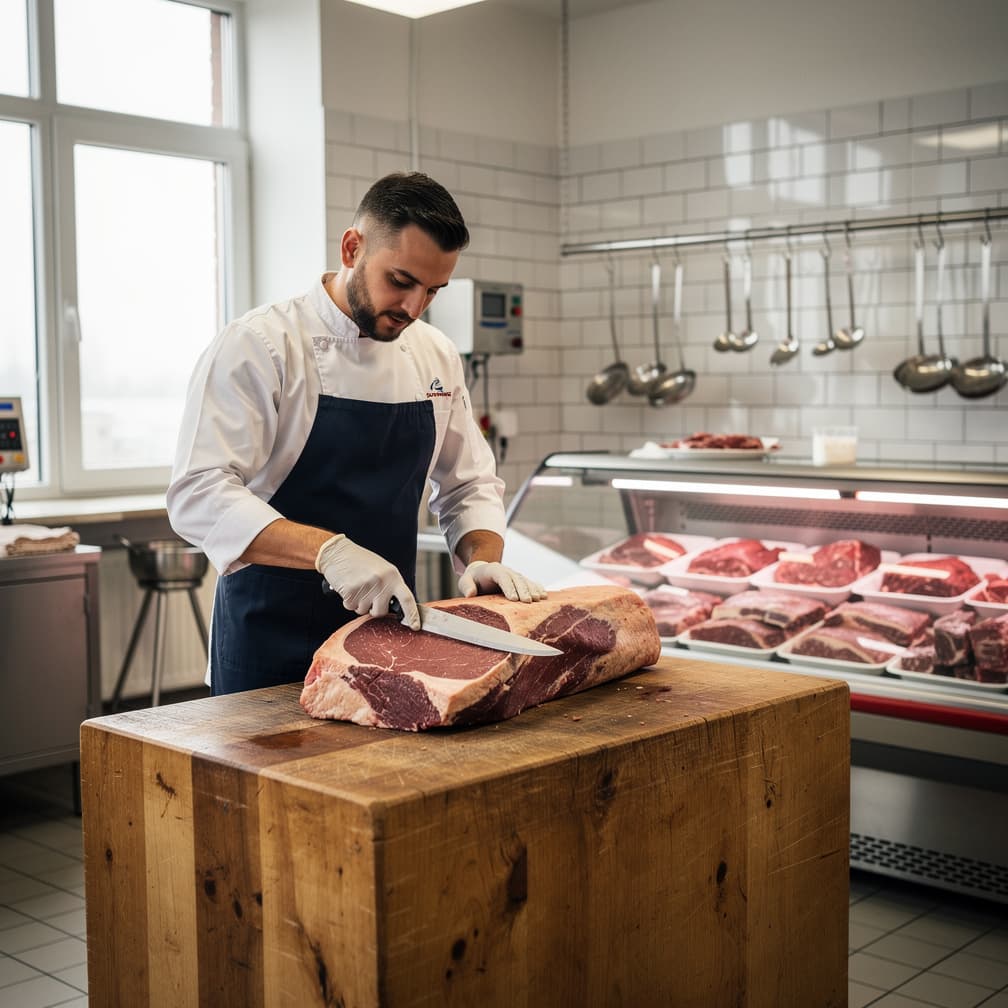

As a butcher shop in Riverside, the paperwork arrives before the customers do: a lease, a supplier agreement, maybe a market tenancy that names who must carry what. Each of those documents can set a limit you have to meet, and none of them care what you think is enough. Butcher shop insurance in Riverside usually gets bought to satisfy a contract and then discovered again during a claim. Read the insurance clause in your lease first, then the certificate holder list, then the limits. If the wording asks for additional insured status, say so at quote time, because adding it later is a second conversation. The point of comparing participating carriers is to find one that meets those terms without stripping out the coverage that made the policy worth buying.
What Makes Riverside Different
Heat, cold, and humidity are constant background risks in a shop that runs cold rooms year round. Equipment fails when it works hardest, and a compressor that quits during a heat run takes your inventory with it. Property forms often treat mechanical breakdown differently from storm damage, and one may be excluded while the other is included. That distinction is worth a direct question, because owners assume a property policy answers for anything that breaks. It generally does not, and finding out during an outage is an expensive way to learn the difference. A breakdown exclusion is common, and adding the coverage back is usually a specific endorsement with its own limit. Ask what it costs on a quote in Riverside, and ask what proof of maintenance a carrier expects afterward. Keep the service records, because they are often what separates a denied claim from a paid one in California.
Local Risk Factors in Riverside
Days of heavy smoke keep customers home and pull staff back to their families, and a shop can lose a week without a flame reaching the building. The product does not survive that if the power drops with it. Smoke also settles into surfaces a food business cannot simply wipe down, which turns a cleanup into a closure. Interruption terms, where a policy carries them, generally require physical damage before anything begins, and smoke may or may not qualify depending on the wording. Ask exactly what counts, whose property must be damaged, and how long the waiting period runs. Then ask what proof of product loss a carrier expects in Riverside, because a claim in Riverside County moves on records rather than on how bad the week felt.
What Coverage Does a Butcher Shop in Riverside Need?
General Liability
Landlords, market organizers, and wholesalers usually name this line when they ask for proof, and it is the one most butcher shops buy first. It can help cover third-party injury and property damage claims, a customer down on a wet floor or a cart through a neighbor's door, plus the defense behind them. Damage to your own equipment sits elsewhere.
Example: A customer steps off a wet mat near the case, breaks a wrist, and hires a lawyer six weeks later; general liability may answer for the injury claim and the defense that follows.
Commercial Property
Flood sits outside it, mechanical breakdown is commonly excluded, and wear on an aging compressor is not a claim. What remains is the core of a butcher shop's balance sheet: coolers, saws, slicers, scales, cases, and stock, against fire, theft, vandalism, and storm damage. Spoilage terms, where offered at all, usually arrive as a separate endorsement.
Example: A fire in the back room takes out two grinders and a wall of packaging overnight in Riverside; commercial property could pick up the repairs and the equipment replacement, subject to your deductible.
Workers Compensation
A cut, a burn on a sealer, a slip in the cold room: staff injuries in this trade are hands-on and frequent enough that carriers price them by job code rather than headcount. This line is generally intended to address medical care and a share of lost wages for employees hurt at work. Rules on who must carry it vary by state.
Example: A helper's hand slips on a band saw during a busy stretch and the shift ends at an urgent care clinic; Workers Compensation is typically meant to handle the treatment and the wages missed while the hand heals.
Business Owners Policy
Where liability and property get bought as two policies, this package puts them under one, which is a common structure for an owner-operated counter. It can suit a shop with equipment, inventory, and public foot traffic in Riverside. What sits inside varies by carrier, so the endorsement list, and what is missing from it, is the part worth reading.
Example: A pipe bursts over the display case and a customer slips in the runoff the same morning; a Business Owners Policy might address the property damage and the injury claim under one policy.
How Much Does Butcher Shop Insurance Cost in Riverside?
Butcher Shop Insurance is a bundle of separate policies, priced separately. The ranges below are typical figures for Riverside for each line, except workers compensation, which is rated per $100 of payroll; a quote prices each one against your own operations.
| Coverage | Typical range | What moves your price |
|---|---|---|
| General Liability Insurance | $75 - $260 per month | Industry and risk classification, annual revenue, number of employees |
| Commercial Property Insurance | $210 - $725 per month | Building value and construction type, roof age and condition, fire protection class |
| Workers Compensation Insurance | $0.75 - $2.74 per $100 of payroll | Employee classification codes, total annual payroll, experience modification rate |
| Business Owners Policy Insurance | $170 - $525 per month | Annual revenue and industry class, building and contents values, square footage and building age |
Prices shown are general estimates, not guaranteed rates or quotes. Your actual premium will depend on the insurer, coverage selected, business details, location, claims history, and other underwriting factors. Learn about our pricing methodology.
What Are the Insurance Requirements for a Butcher Shop in Riverside?
Workers' comp is generally required once you have your first employee. California generally requires employers to carry workers' compensation at that point. Common exemptions include sole proprietors and some partners. Confirm current thresholds with your state's workers' compensation agency before you hire.
Flood damage is typically excluded from standard policies. Standard commercial property and builders-risk-type policies typically exclude flood damage. Flood exposure varies address by address, so check your premises in FEMA's Flood Map Service Center before deciding; if you sit in a mapped flood zone, a separate policy through the National Flood Insurance Program is the usual starting point.
Where to verify licensing and coverage rules. The California Department of Insurance publishes consumer guidance and current insurance requirements for California businesses. When a contract or lease demands specific wording, the California Department of Insurance's guidance is the authoritative place to check.
Get Your Butcher Shop Quote in Riverside
Compare rates from multiple carriers. Free quotes, no obligation.
Operating in Riverside
- A power cut of a few hours costs a hardware store nothing and costs you a full case, which is why an outage clause is worth raising with participating carriers in California before a storm makes it interesting.
- Employee turnover shows up in your loss runs, since new hands on a band saw are a common way a serious cut enters the file and stays there for years.
- Health inspections, equipment installs, and permit visits all generate paper trails, and an inspector's note about a floor or a missing guard can end up quoted back at you in a claim.
- A market organizer near Riverside can pull your stall over an expired certificate, and policy dates are the one detail nobody accepts an explanation about.
How to Buy: Advice for Riverside Owners
Compare quotes on four lines and skim the rest of the page. The per-occurrence limit on your General Liability, the aggregate behind it, the deductibles, and the endorsement list tell you nearly everything that matters. Two Business Owners Policy quotes can carry the same monthly figure and a very different aggregate, which is what a bad year tests. The endorsement list is where spoilage, equipment breakdown, and additional insured wording live or fail to. Ask each carrier to mark which of your contract requirements it is actually meeting rather than assuming a package handles it. Price is the last column, not the first, because the gap between two quotes is usually smaller than the gap between two limits. A marketplace like CPK exists to put those columns beside each other, with participating carriers in California pricing the same Riverside shop on the same facts.
FAQ
Butcher Shop Insurance in Riverside: FAQ
Anyone with something at stake: the landlord, a lender that financed equipment, a market or hall organizer, a wholesaler opening an account, and sometimes a customer placing a large order. Each may want different wording, and a certificate naming the wrong entity gets bounced back. Collect every request in one list before you buy, so the policy is built to satisfy the strictest one rather than amended three times.
A customer going down on a wet floor is the classic General Liability scenario, and the line is generally intended to answer for the injury claim and the defense behind it. Nothing is automatic: the facts, the exclusions, and your limits all decide the outcome. What helps is documentation from the first hour, including photographs, names of anyone present, and the condition of the floor. A claim from a Riverside counter can arrive months later, so file the report even when the customer waves it off.
Rules on who must carry it vary by state, and thresholds change, so no honest answer covers every place at once. The California Department of Insurance publishes the current requirements for employers. What stays consistent is that a cutting role prices differently from a register role, and rates run on payroll rather than headcount. If you are near a threshold, ask before you hire rather than after a blade sends someone to a clinic.
Usually yes, through an endorsement, and that endorsement is the thing that actually adds them. A certificate is only evidence that it exists. Ask for the form number rather than a verbal promise, because the form language is what gets read during a claim. Adding a party mid-term is possible but slower and can carry a fee, so bring the full list of names to the quote conversation instead.
The per-occurrence limit is the most a policy may pay for one claim; the aggregate is the ceiling across the whole term. A shop that files a slip claim and a spoiled inventory dispute in the same year can press the aggregate harder than owners expect. When two quotes show the same monthly figure, the aggregate is often what separates them. Read both numbers before you compare price.
It can be a sensible core, since a Business Owners Policy generally bundles liability and property in one place for a small retail operation. Whether it is enough depends on what the package leaves out. Spoilage, equipment breakdown, and employee injuries are commonly handled separately or not at all. Read the endorsement list against your own equipment and staffing, and ask what must be added rather than assuming it sits inside.
Sources
- 1.California Department of Insurance(California Department of Insurance publishes consumer guidance for insurance buyers.)
- 2.FEMA / FloodSmart(Flood coverage is typically purchased separately; FEMA administers the National Flood Insurance Program.)


