







































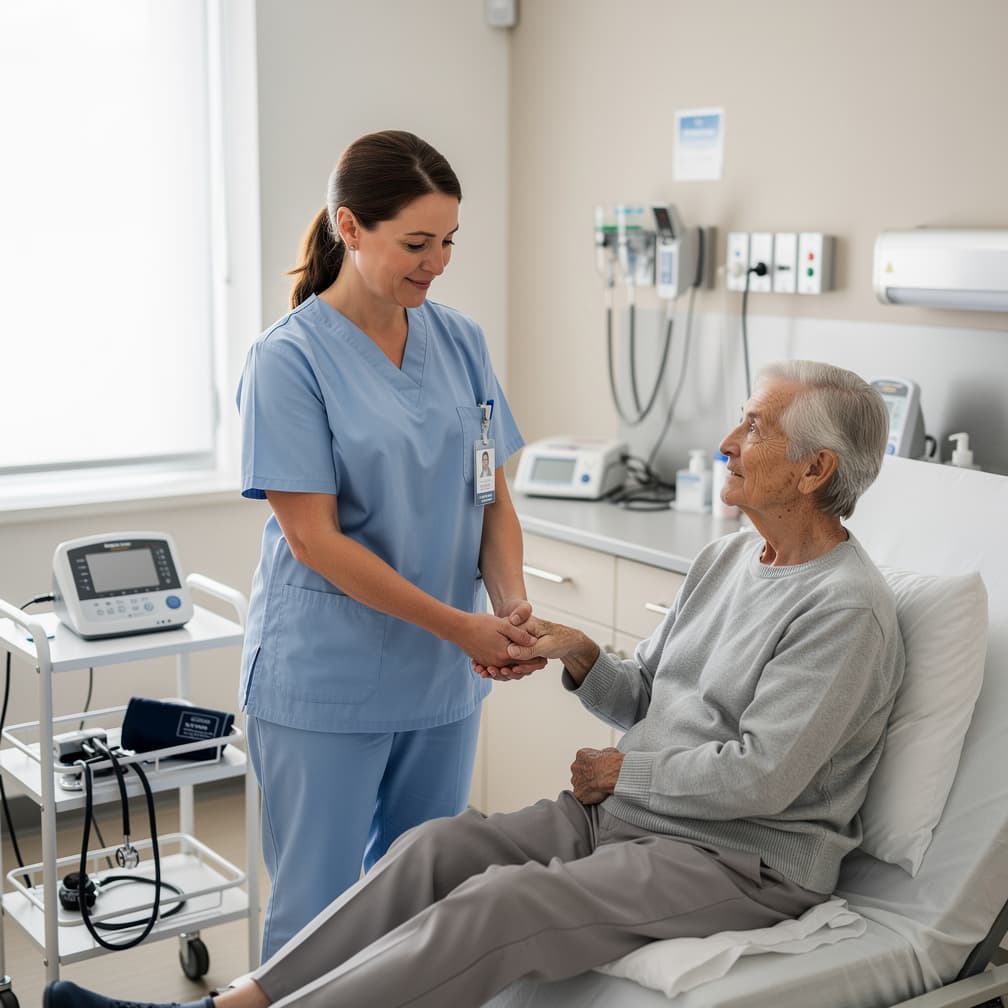

Commercial Property for a care building starts higher than for a shop of the same square footage, often between $65 and $290 a month, because the building runs around the clock and the contents include medical equipment. Sprinklers, generators, boilers, and oxygen storage all change the number. Participating carriers in California weigh those features differently, which is why one building draws several different numbers. Nursing home insurance in Sacramento is priced by what happens inside the walls as much as by the walls themselves. Competition for repair crews after a regional storm shows up in how long a claim takes rather than in what it pays. Ask about extra expense and how the form treats a building you cannot empty. The pages below break down what drives each line, what a quote requires, and which losses sit outside the forms entirely.
What Makes Sacramento Different
Competition for staff is the quiet cost driver in a dense market, and it lands on your insurance bill sideways. When a hospital down the road raises wages, your payroll base rises, and payroll is what rating uses. Agency shifts fill the gap, and unfamiliar staff generate more incidents than the people who know each resident by name. That shows up as frequency, and frequency is what underwriters price. None of this appears on a quote sheet as a line item; it appears as a modifier you inherited. Buildings that stabilize their crews usually see the number bend within a few renewals, in Sacramento as anywhere else. Cost control here is a staffing project wearing an insurance costume. Ask participating carriers in California what they weigh most heavily, then go fix that instead of shopping harder.
Local Risk Factors in Sacramento
An evacuation order arrives and a care building has hours to move people who need lifts, oxygen, and medication schedules. Buses, receiving facilities, staff overtime, and the pharmacy transfer all get paid for whether or not the building ever burns. That is the loss most owners never price, because they picture flames instead of logistics. Civil authority language is the part of the form worth reading, since it speaks to access denied by an official order, usually within limits and for a limited stretch of days. Ask what triggers it and how long it runs for a Sacramento building before Sacramento County is under warning.
What Coverage Does a Nursing Homes in Sacramento Need?
General Liability
Landlords, vendors, and staffing agencies ask for this one by name before they will sign anything. It generally responds to third-party bodily injury and property damage on your premises: the visitor who slips in a hallway, the family member caught by a swinging door. Allegations about the care itself usually belong elsewhere, and injuries to your own staff never sit here.
Example: A daughter visiting her father catches her foot on a buckled floor mat outside the dining room and fractures a wrist. The claim that follows is the kind General Liability is typically built to take on.
Professional Liability
Nothing in a premises policy answers an allegation that your staff got the care wrong. This line is where that argument lives: supervision, medication administration, transfers, wound care, and documentation gaps. Abuse and neglect allegations are often handled through a sublimit or specific wording, so read those terms closely. Defense cost may sit inside the limit, which shrinks whatever remains for a settlement.
Example: A resident is found on the floor after a call light went unanswered, and the family alleges the staffing plan was thin that night. Professional Liability could be the form that carries the defense.
Commercial Property
Beds, lifts, kitchen equipment, medical devices, and the building itself are what this line is written around. It may respond to fire, storm damage, vandalism, and similar sudden events, subject to your deductible and the valuation on file. Flood and gradual deterioration typically sit outside it, and residents' personal belongings usually do as well.
Example: A grease fire in the kitchen closes the servery for a month while residents keep eating three meals a day. Commercial Property might pick up the rebuild and, depending on the form, part of the added cost.
Workers Compensation
Where the liability lines answer to residents and visitors, this one answers to your own payroll. Back injuries from transfers, needlesticks, kitchen burns, and slips on a wet laundry floor are the recurring claims. It generally handles medical treatment and lost wages for an injured employee. Agency staff usually belong to the agency, which is why their certificates matter to you.
Example: A caregiver lifts a resident alone rather than waiting for a second pair of hands, and her back gives out three hours into a night shift. Workers' Compensation is generally the line that takes it from there.
Commercial Umbrella
One bad care claim can pass the underlying liability limit long before anyone talks settlement, and this line sits above that ceiling. It typically raises the total limit over General Liability and, where the form allows, over the care liability underneath. It follows the exclusions below it, so a gap downstairs stays a gap upstairs. Lenders and management companies often demand a specific total.
Example: A judgment after a resident's fall runs past the primary liability limit while defense costs are still accruing. A Commercial Umbrella may be what stands between that number and a Sacramento owner's balance sheet.
How Much Does Nursing Homes Insurance Cost in Sacramento?
Nursing Homes Insurance is a bundle of separate policies, priced separately. The ranges below are typical figures for Sacramento for each line, except workers compensation, which is rated per $100 of payroll; a quote prices each one against your own operations.
| Coverage | Typical range | What moves your price |
|---|---|---|
| General Liability Insurance | $410 - $1,700 per month | Industry and risk classification, annual revenue, number of employees |
| Professional Liability Insurance | $875 - $3,800 per month | The services you actually perform, annual revenue or billed fees, limit and retention selected |
| Commercial Property Insurance | $650 - $3,000 per month | Building value and construction type, roof age and condition, fire protection class |
| Workers Compensation Insurance | $0.75 - $2.74 per $100 of payroll | Employee classification codes, total annual payroll, experience modification rate |
| Commercial Umbrella Insurance | $370 - $1,625 per month | Umbrella limit requested, limits carried on the underlying policies, loss history on those underlying policies |
Prices shown are general estimates, not guaranteed rates or quotes. Your actual premium will depend on the insurer, coverage selected, business details, location, claims history, and other underwriting factors. Learn about our pricing methodology.
What Are the Insurance Requirements for a Nursing Homes in Sacramento?
Workers' comp is generally required once you have your first employee. California generally requires employers to carry workers' compensation at that point. Common exemptions include sole proprietors and some partners. Confirm current thresholds with your state's workers' compensation agency before you hire.
Flood damage is typically excluded from standard policies. Standard commercial property and builders-risk-type policies typically exclude flood damage. Flood exposure varies address by address, so check your premises in FEMA's Flood Map Service Center before deciding; if you sit in a mapped flood zone, a separate policy through the National Flood Insurance Program is the usual starting point.
Where to verify licensing and coverage rules. The California Department of Insurance publishes consumer guidance and current insurance requirements for California businesses. When a contract or lease demands specific wording, the California Department of Insurance's guidance is the authoritative place to check.
Get Your Nursing Homes Quote in Sacramento
Compare rates from multiple carriers. Free quotes, no obligation.
Operating in Sacramento
- Medication carts are the most expensive small objects in the building, because the error that leaves one open is worth far more than the cart, the doors, and the locks combined.
- A generator that has never been load-tested is a plan rather than a backup, and the first outage across Sacramento County is a poor moment to learn the difference.
- Staff turnover erases institutional memory about which residents fall, and underwriters read turnover as a leading indicator long before your loss runs catch up to it.
- Your building never closes, so repairs happen around residents, and a contractor's dust barrier becomes your problem the moment someone walks through it looking for a bathroom.
How to Buy: Advice for Sacramento Owners
Write down every party who can present you with a claim before you shop, because the list is longer than owners expect. Residents, families, visitors, vendors, staff, and the occasional delivery driver all reach different parts of your program. Staff injuries go to Workers' Compensation, visitors go to General Liability, and residents mostly go to Professional Liability, though the boundary blurs when a fall involves both care and a wet floor. Ask each quote how overlapping claims get allocated, and whether one incident can trigger two forms and two deductibles. That answer changes what limit you actually need. Check the California Department of Insurance's guidance before deciding what a licensed building in Sacramento has to carry. Then compare quotes from participating carriers with that overlap in mind.
FAQ
Nursing Homes Insurance in Sacramento: FAQ
The forms are the same; what changes is price and appetite. Participating carriers weigh construction, fire response distance, payroll levels, and their own experience with care risks. A building in Sacramento and one twenty miles out can draw different numbers from the same underwriter for those reasons alone. Coverage requirements come from your contracts and from state rules, never from the map.
The claim usually finds your policy first and argues about responsibility later. Families sue the building, because the building is who they know. Your General Liability may defend the allegation subject to the wording, and your insurer might then pursue the contractor's carrier if one exists. If it does not exist, your limits absorb the loss and your renewal remembers. Collect certificates from anyone working inside.
It depends on the contracts you signed and on what a bad care claim looks like at your census. A Commercial Umbrella sits above your underlying limits and generally follows their exclusions, so it lifts the ceiling without filling a hole. Owners in a thin market often use one to reach a limit a lender or landlord demands. Price the whole tower, not the top layer alone.
No. Property forms are built around sudden events, and gradual deterioration is generally excluded as maintenance. A roof that has been leaking for two years is a budget item; the same roof torn off in a storm is a claim. Deferred maintenance also weakens a storm claim, because the argument becomes about what caused what. Keep repair records for exactly that reason.
Usually yes. Vendors, staffing agencies, and therapy groups routinely ask for a certificate before their people set foot inside a Sacramento building, and many contracts also require being named as an additional insured. The certificate is issued against your liability policy, so the limits and the wording have to exist before anyone can paper it. Read the contract clause first, then have the certificate built to match it.
Payroll, resident census, acuity, and your loss history do most of the work. Workers' Compensation is rated on payroll per hundred dollars, so wages and headcount move it directly. Care liability moves on incident frequency and on how well your charting holds up under a records request. Building age, roof, and sprinklers matter for the property side. Geography matters far less than owners expect.
Sources
- 1.California Department of Insurance(California Department of Insurance publishes consumer guidance for insurance buyers.)
- 2.FEMA / FloodSmart(Flood coverage is typically purchased separately; FEMA administers the National Flood Insurance Program.)


