







































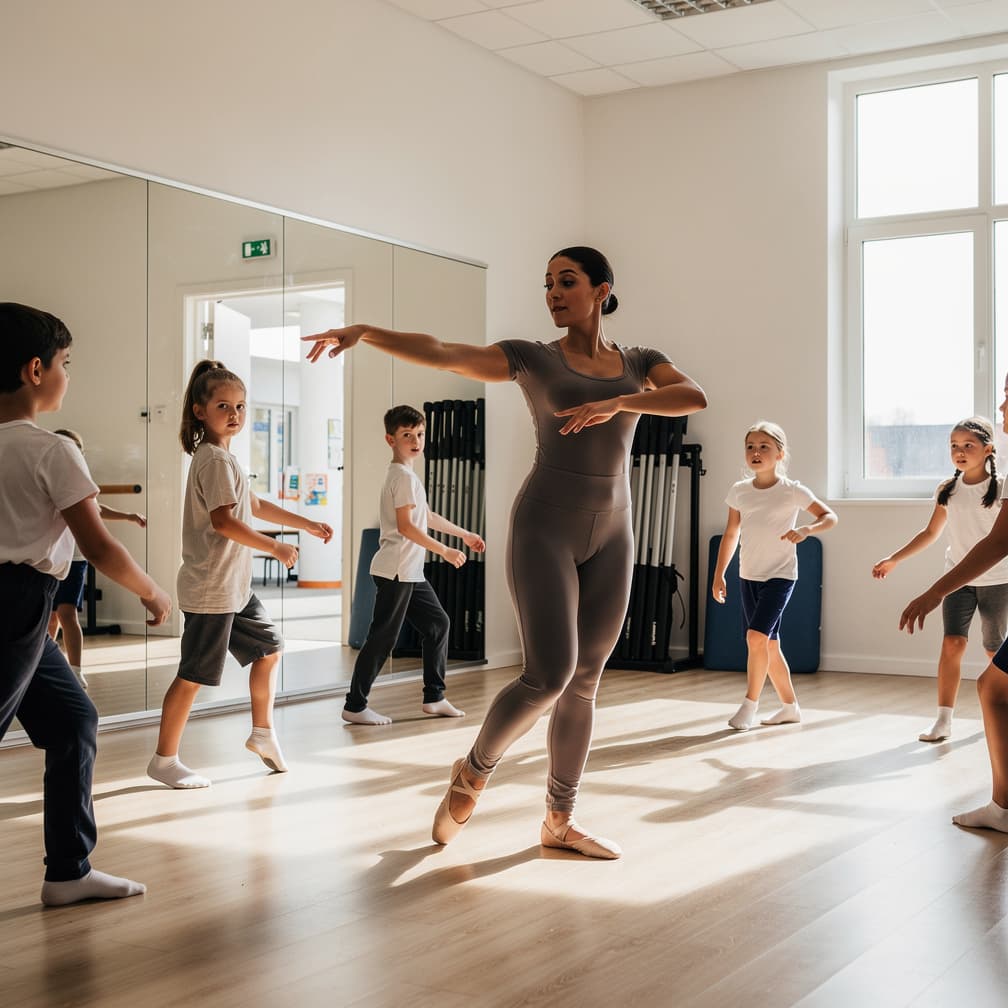

Mirrors crack, sound boards die, and a sprung floor takes a gouge that nobody admits to. Those are property losses, and they are the smallest ones a studio faces. The bigger one arrives when a student lands wrong out of a lift and a family decides the correction caused it. That claim reaches your lease, your limits, and your standing with the landlord in the same week. Dance studio insurance in San Diego exists to keep one class hour from becoming the reason you close. In a county with about 93,000 businesses, the manager reviewing your certificate can be comparing you against a queue of other tenants, and a stale expiration date is an easy reason to wait. The exposures below are the ones that actually generate claims, so you know which limits to argue about before you buy.
What Makes San Diego Different
Recitals move your business into someone else's building, and that building has its own rules. Theaters and school auditoriums commonly ask for a certificate naming them as an additional insured. The request usually arrives late, from a venue coordinator, with a date you cannot move. If a venue in San Diego asks for wording your policy does not carry, the show is at risk. Endorsements take days to issue, and nobody at a carrier hurries because your curtain is up. Ask a San Diego venue for its requirements when you book, not when rehearsal schedules print. General Liability is the line those certificates typically reference, so know your limit by heart. One coverage named early turns the rest of the booking into ordinary logistics rather than emergency.
Local Risk Factors in San Diego
Before a dry season, back up your enrollment records somewhere that is not the building. Wildfire is the loss where studios discover the student roster, the waiver files, and the payment records all lived in one filing cabinet and one desktop machine. Rebuilding a business without knowing who was enrolled is harder than replacing a floor. A studio in San Diego County can restore the room and still lose the season if the records burned with it. Commercial Property may help with the hardware and cannot reconstruct the data that was on it. Spend an hour on a backup and put the waivers in it, because a San Diego rebuild is hard enough without starting from memory.
What Coverage Does a Dance Studio in San Diego Need?
General Liability
A parent goes down on a wet lobby floor and wants her medical bills handled. That third-party demand is what this line is generally built for: bodily injury and property damage to people who are not your staff. It typically will not answer an allegation that your instruction caused a student's injury, and it is the coverage a landlord or a venue asks to see named on your certificate.
Example: A sibling waiting for pickup trips over a dance bag in the lobby and fractures a wrist. The family sends medical bills, and general liability may respond to the demand and the defense behind it.
Professional Liability
Premises coverage stops at the edge of this exposure. When a family alleges that a correction, a progression, or a placement you taught caused a student's injury, they are challenging professional judgment rather than the condition of your floor. This line is designed for that allegation and for the cost of defending it. It commonly runs on a claims-made basis, so a lapse can reach backward into teaching you already did.
Example: An instructor guides a teen toward a deeper extension, and the family later claims the technique caused a hip injury. Professional liability could pick up the defense of that judgment call.
Commercial Property
Mirrors, barres, the sprung floor, the sound rack, and a closet of costumes are the assets this line is meant for, along with the tenant improvements you paid to install. Sudden and accidental damage is the trigger: fire, a burst pipe, vandalism overnight. Wear on a floor you dance across daily is excluded by design, and flood is typically bought on its own.
Example: Vandals get in overnight, take the speakers, and crack a mirror panel on the way out. Commercial property might answer for the replacement once you document what was in the room.
Business Owners Policy
Where property and liability sit apart as separate purchases, this one packages them together, which is why many small studios start here. Expect the same exposures in a single form: gear and improvements on the property side, third-party injury on the liability side, plus lost income after covered damage. Instruction allegations generally fall outside it, so ask what has to be added.
Example: A fire in the neighboring unit closes your San Diego studio for three weeks. A business owners policy can help with the smoke damage and with the tuition weeks the closure took away.
How Much Does Dance Studio Insurance Cost in San Diego?
Dance Studio Insurance is a bundle of separate policies, priced separately. The ranges below are typical figures for San Diego for each line; a quote prices each one against your own operations.
| Coverage | Typical range | What moves your price |
|---|---|---|
| General Liability Insurance | $70 - $220 per month | Industry and risk classification, annual revenue, number of employees |
| Professional Liability Insurance | $55 - $190 per month | The services you actually perform, annual revenue or billed fees, limit and retention selected |
| Commercial Property Insurance | $120 - $390 per month | Building value and construction type, roof age and condition, fire protection class |
| Business Owners Policy Insurance | $110 - $320 per month | Annual revenue and industry class, building and contents values, square footage and building age |
Prices shown are general estimates, not guaranteed rates or quotes. Your actual premium will depend on the insurer, coverage selected, business details, location, claims history, and other underwriting factors. Learn about our pricing methodology.
What Are the Insurance Requirements for a Dance Studio in San Diego?
Workers' comp is generally required once you have your first employee. California generally requires employers to carry workers' compensation at that point. Common exemptions include sole proprietors and some partners. Confirm current thresholds with your state's workers' compensation agency before you hire.
Flood damage is typically excluded from standard policies. Standard commercial property and builders-risk-type policies typically exclude flood damage. Flood exposure varies address by address, so check your premises in FEMA's Flood Map Service Center before deciding; if you sit in a mapped flood zone, a separate policy through the National Flood Insurance Program is the usual starting point.
Where to verify licensing and coverage rules. The California Department of Insurance publishes consumer guidance and current insurance requirements for California businesses. When a contract or lease demands specific wording, the California Department of Insurance's guidance is the authoritative place to check.
Get Your Dance Studio Quote in San Diego
Compare rates from multiple carriers. Free quotes, no obligation.
Operating in San Diego
- Mirror walls are glass, mounted to a wall, in a room where people throw themselves around. A cracked panel is a property loss small enough that paying it yourself keeps your file quiet.
- Waivers get signed once at registration and then sit in a drawer for years while the release language ages. Participating carriers in California may ask when the form was last reviewed.
- The heat fails and a room full of dancers cannot safely warm up, so you cancel the evening. An outage without physical damage usually gives a property form nothing at all to respond to.
- A permit office reviewing a public showcase application in San Diego wants a certificate number on a form and has no interest in your policy, so a wrong limit stops the event over paperwork rather than over risk.
How to Buy: Advice for San Diego Owners
Before you open, get the certificate right, because a landlord will not hand over keys without one. Ask the property manager for the exact entity names, the required limits, and whether the lease demands a waiver of subrogation or primary and non-contributory wording. Those phrases sound like boilerplate and they are actual endorsements a carrier has to add. Bring them to the quote conversation rather than discovering them after you bind. A Business Owners Policy can usually carry them, and General Liability is the part the exhibit is describing. Requirements vary by state and city, so check the California Department of Insurance's guidance before deciding. Then compare quotes from participating carriers on whether each can produce the exact wording your San Diego lease demands, not only on what they charge.
FAQ
Dance Studio Insurance in San Diego: FAQ
A signed release can discourage a claim and it does not prevent one from being filed. With minors it gets more complicated, since a parent's signature may not bind the child's own rights, and rules on that vary by state. Treat the waiver as your first layer and the policy as the thing that actually responds. Keep both current, because a stale release and a lapsed policy tend to fail on the same day.
Usually not. Standard commercial property forms typically exclude flood, and flood coverage is priced and bought on its own. The distinction that matters is where the water came from: a burst pipe above your ceiling is generally a different peril than water rising from outside. A sprung floor is ruined by both. Ask each quote to show you the water language before you assume anything.
Two numbers sit on your declarations page. One caps what a policy may pay for a single incident, and the other caps everything paid across the policy year. A studio running competitions and a recital can put several injury claims against that annual ceiling, and once it is drawn down the certificate you sent a venue means much less. Ask whether defense costs erode the ceiling, since that decides how fast it disappears.
Ask that renter for their own certificate and ask to be named on it, the way your landlord asked you. Their student's injury still starts on your floor, and your policy is the nearest available one when the renter carries nothing. A package policy may not automatically contemplate tenants using your space, so disclose the arrangement. Undisclosed use is the standard reason a response gets contested.
The paperwork itself is usually free while the endorsement standing behind it may not be. Naming an additional insured is a policy change, and some carriers charge for each party added. If a San Diego venue asks to be named, that is one endorsement, and four bookings a year is four. Ask each quote how many additional insureds are included and what each extra one costs before you compare prices.
Equipment and fixtures generally sit inside a commercial property form or the property side of a package, listed as business personal property. What matters more than where they live is how they are valued. Replacement cost and actual cash value produce very different checks on a speaker you bought used four years ago. Schedule the gear, value it at what buying it again costs today, and keep the list current.
Sources
- 1.U.S. Census Bureau, County Business Patterns (2022), San Diego County(San Diego County has about 93,000 business establishments.)
- 2.California Department of Insurance(California Department of Insurance publishes consumer guidance for insurance buyers.)
- 3.FEMA / FloodSmart(Flood coverage is typically purchased separately; FEMA administers the National Flood Insurance Program.)


