







































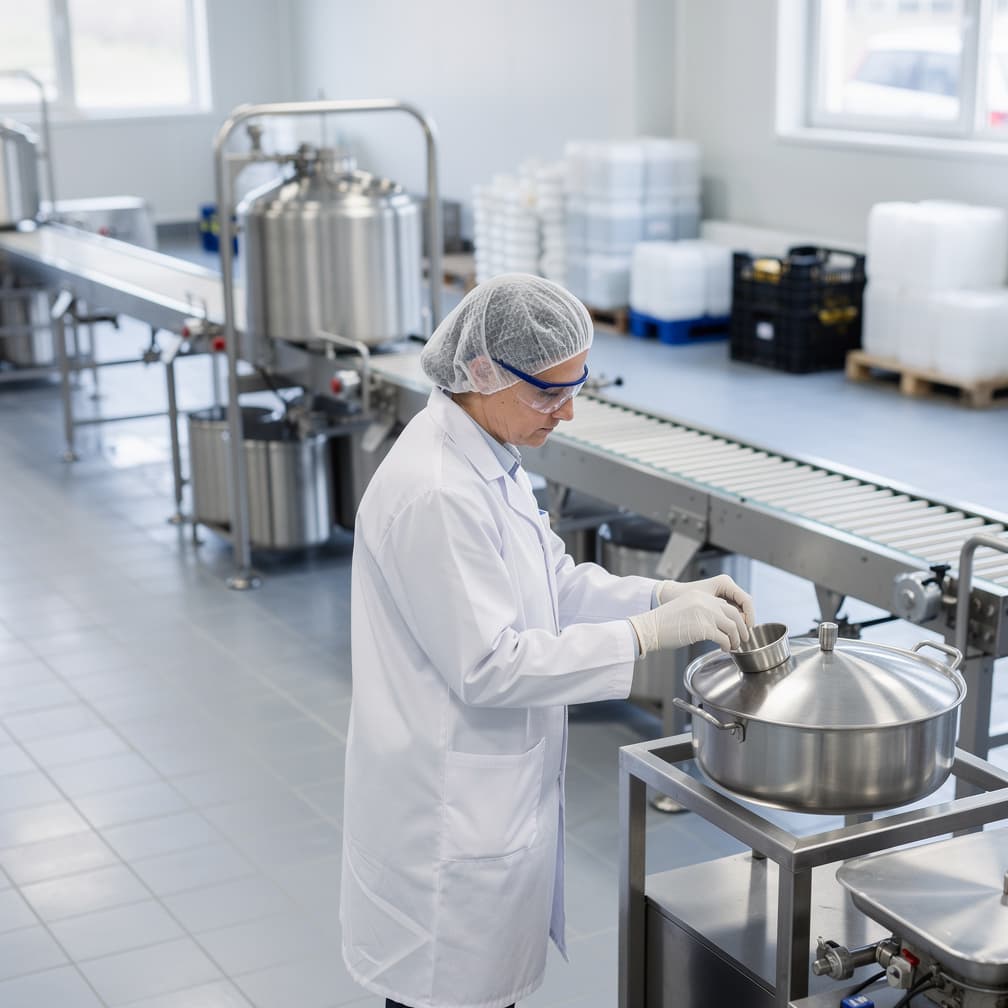

As a food manufacturer in San Diego, you are the one who signs the recall decision. It starts with a phone call about an off-spec lot, and within a day you are choosing between pulling stock you believe is fine and defending a lot you cannot fully trace. Traceability makes that choice cheap or ruinous, and lot coding is the whole difference. Pricing follows the same line, since food manufacturer insurance in San Diego gets underwritten partly on how well you can prove which pallets are in question. Recall expense usually sits outside a standard package and has to be added deliberately. Before comparing anything, find out how far back your own records actually reach and how fast you could produce them.
What Makes San Diego Different
Audits open doors that insurance underwriters walk through afterward, which owners rarely plan for. A third-party food safety audit produces findings, and those findings become part of your renewal file. Sanitation programs, allergen controls, and pest logs read as risk information long before they read as compliance. If a buyer in San Diego requires an audit score from you, you now hold documentation two audiences want. Owners who treat the audit binder as paperwork tend to lose the argument at renewal time. Owners who hand it over unprompted change the tone of the underwriting conversation entirely. Requirements vary from buyer to buyer, and a binder that satisfied one account in California may not satisfy the next. Bring the binder to the quote rather than to the claim.
Local Risk Factors in San Diego
Decide what leaves the building with you. A wildfire evacuation gives you an hour, and the things worth carrying are your production records, your lot traceability data, and your equipment schedule, because rebuilding a claim without them is far slower. Back them up off site while the sky is still clear. Then ask about extra expense wording in San Diego County, since renting capacity from another plant is how an account survives a month you are closed. Some carriers in California write extra expense as a sublimit, so the number to ask for is the sublimit rather than the headline limit.
What Coverage Does a Food Manufacturer in San Diego Need?
General Liability
Buyers, landlords, and distributors ask for this one by name, and the certificate they want usually references it. It is meant for third-party claims: a visitor hurt on your floor, damage to someone else's property, and the legal defense that follows a complaint about product you shipped. Employee injuries sit elsewhere, and damage to your own equipment is no part of it.
Example: A delivery driver waiting at your dock slips on rinse water tracked out of the wash bay and breaks a wrist. The medical claim and the defense behind it may fall to this coverage.
Commercial Property
Tanks, fillers, sealers, cold rooms, and the finished pallets waiting on your dock are what this line is built around. Fire, storm, theft, and similar sudden causes are generally what trigger it. Flood typically sits outside it, and damage that starts inside a machine usually needs equipment breakdown wording added on purpose.
Example: A fire in the dry-blend room takes the mixer, a pallet of ingredient sacks, and two weeks of the schedule. Repair and replacement of the damaged property could be picked up here, subject to your limit and deductible.
Workers Compensation
Where liability wording looks after other people, this one looks after your crew. Medical care and a share of lost wages after a work injury are the core of it, whether that is a slip on a wash-down floor, a hand caught at a slicer, or a back strain moving a drum. Thresholds vary by state, and the California Department of Insurance publishes the current requirements.
Example: A sanitation tech loses footing on a wet floor at the end of a shift and tears a shoulder. Treatment and part of the missed pay may be handled through this line.
Tools & Equipment (Inland Marine)
What a building policy leaves out is usually whatever moves. Portable scales, calibration kits, hand tools, pallet jacks, and gear you carry to a co-packer generally live here instead, insured on a schedule rather than by address. Wear, rust, and mechanical failure are typically excluded, because this line is about sudden loss rather than about age.
Example: A locked job box on the loading dock is cut open over a weekend, and the calibration kit and two scales are gone. Replacing scheduled items like those is what this coverage is intended to do.
Commercial Umbrella
When a buyer's contract demands a limit higher than your primary policy carries, this is often the less expensive way to reach it. It adds room above the liability sitting underneath, which matters when one bad lot produces several claimants at once. It follows the policy beneath it, so a gap down there stays a gap up here.
Example: One contaminated run reaches four accounts, and defense costs alone chew through the primary limit before any settlement gets discussed. The claims still open at that point are what this layer might take up.
How Much Does Food Manufacturer Insurance Cost in San Diego?
Food Manufacturer Insurance is a bundle of separate policies, priced separately. The ranges below are typical figures for San Diego for each line, except workers compensation, which is rated per $100 of payroll; a quote prices each one against your own operations.
| Coverage | Typical range | What moves your price |
|---|---|---|
| General Liability Insurance | $230 - $850 per month | Industry and risk classification, annual revenue, number of employees |
| Commercial Property Insurance | $390 - $1,500 per month | Building value and construction type, roof age and condition, fire protection class |
| Workers Compensation Insurance | $0.75 - $2.74 per $100 of payroll | Employee classification codes, total annual payroll, experience modification rate |
| Inland Marine Insurance | $50 - $230 per month | Total insured value of the scheduled property, type and age of the equipment, where it is stored and how far it travels |
| Commercial Umbrella Insurance | $130 - $490 per month | Umbrella limit requested, limits carried on the underlying policies, loss history on those underlying policies |
Prices shown are general estimates, not guaranteed rates or quotes. Your actual premium will depend on the insurer, coverage selected, business details, location, claims history, and other underwriting factors. Learn about our pricing methodology.
What Are the Insurance Requirements for a Food Manufacturer in San Diego?
Workers' comp is generally required once you have your first employee. California generally requires employers to carry workers' compensation at that point. Common exemptions include sole proprietors and some partners. Confirm current thresholds with your state's workers' compensation agency before you hire.
Flood damage is typically excluded from standard policies. Standard commercial property and builders-risk-type policies typically exclude flood damage. Flood exposure varies address by address, so check your premises in FEMA's Flood Map Service Center before deciding; if you sit in a mapped flood zone, a separate policy through the National Flood Insurance Program is the usual starting point.
Where to verify licensing and coverage rules. The California Department of Insurance publishes consumer guidance and current insurance requirements for California businesses. When a contract or lease demands specific wording, the California Department of Insurance's guidance is the authoritative place to check.
Get Your Food Manufacturer Quote in San Diego
Compare rates from multiple carriers. Free quotes, no obligation.
Operating in San Diego
- Temporary labor from an agency carries your peak weeks, and the agency's coverage may or may not extend to work on your line. Get their certificate in hand before the first shift, not after an injury.
- Utility outages hit food harder than they hit most tenants in the same building, because the cold does the damage while the power is out and nothing looks broken once it comes back.
- Equipment gets bought used and almost never reappraised, so an insured value set three years ago buys a fraction of what a replacement filler costs in California today.
- A boiler inspection can shut your line down faster than any claim, and the repair schedule gets set by whoever happens to be available in San Diego County rather than by your production calendar.
How to Buy: Advice for San Diego Owners
Budgeting for coverage works better from a range than from a single number. General Liability for a small food plant commonly starts from $35 a month, and where it lands depends on product type, volume, and how far the goods travel. Treat that as the floor of a conversation rather than as a quote. The bigger swings sit in Commercial Property, where the equipment schedule and the building limit do the work, and in Workers' Compensation, where payroll and class codes do it instead. Two plants on the same street can price three times apart for reasons that are entirely visible in the paperwork. The California Department of Insurance publishes consumer guidance on comparing costs. Give participating carriers the same file and let the spread across San Diego County tell you which assumptions actually differ.
FAQ
Food Manufacturer Insurance in San Diego: FAQ
Most vendor agreements ask for proof before the first purchase order clears, and the request usually names a limit along with additional-insured status. That demand is a commercial condition set by the buyer rather than a rule you can appeal. Get the agreement in hand first, because the limits it names decide which quotes are even usable to you.
There is no single answer, because pricing gets built from payroll, product type, production volume, and where the goods end up. A shelf-stable dry mix and a chilled ready-to-eat item price differently at identical revenue. Claim history and audit results move the number again. Two plants in San Diego can sit far apart for reasons that are entirely visible in the paperwork.
Usually not. Recall expense, customer notification, freight back, and disposal typically sit outside a standard package, and that coverage gets added by endorsement or bought as its own policy. General Liability may respond to a third-party injury claim that follows contaminated product, which is a different thing from the cost of pulling stock off shelves. Ask for recall wording by name.
That claim generally lands on liability wording, which is intended to answer for bodily injury a third party suffers from your product, including legal defense. Defense can begin long before anyone proves anything, and it may erode your limit depending on the form. Check whether defense costs sit inside or outside the limit, since participating carriers in California split on that point.
Often not under a standard property form. Damage starting inside a machine, like a failed compressor, a fried control board, or a boiler that quits, is commonly excluded, because the form is built around fire, storm, and similar outside causes. Equipment breakdown wording is what addresses it, and it may also pick up product spoiled while the room warmed. Ask for it specifically.
Expect revenue, product categories, payroll split by job class, an equipment schedule with replacement values, your sanitation and allergen controls, audit results, and the farthest point your product ships. Many underwriters also want a site visit before binding. Assembling that once turns a three-week email thread into an afternoon, and it keeps every quote describing the same plant in San Diego.
Sources
- 1.California Department of Insurance(California Department of Insurance publishes consumer guidance for insurance buyers.)
- 2.FEMA / FloodSmart(Flood coverage is typically purchased separately; FEMA administers the National Flood Insurance Program.)


