







































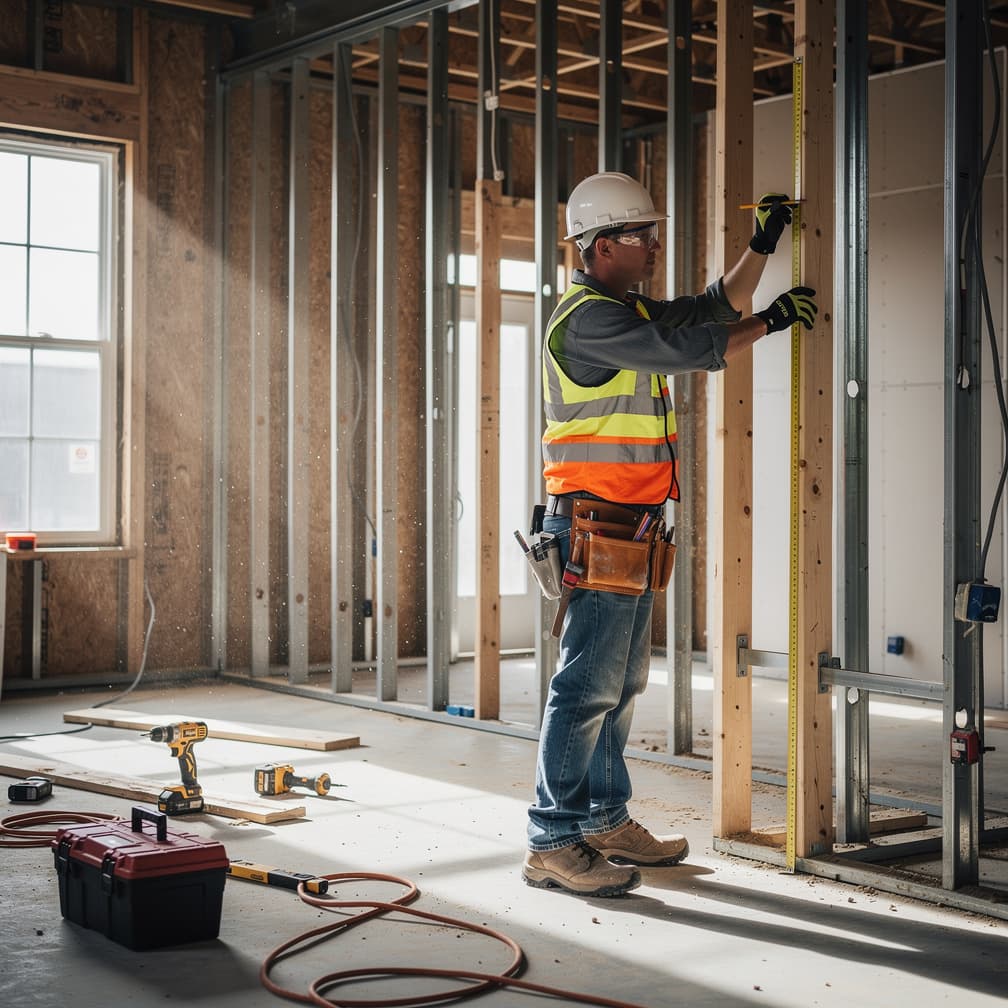

The median home value in San Diego is about $849,000, which sets the rough ceiling on what the house around your job is worth. That number matters because your exposure is not the job price. It is the whole structure wrapped around a gutted kitchen, which is what renovation contractor insurance in San Diego actually has to be sized against. A modest bathroom remodel inside a far more valuable home can still generate a claim measured against the building, not the invoice. Owners of higher-value homes tend to write higher limits into their contracts, and they put it in the document rather than the conversation. Check the limit the contract names before you assume the one you carry clears it.
What Makes San Diego Different
An open roof and a storm week are the pairing that quietly ruins a remodeling schedule. Once the envelope is opened, the building's own protection is whatever your crew tarped down at dusk. Rain finding a joist bay you exposed is damage to the client's home while it sits in your care. That distinction matters, because property you are working on is treated differently from property you own outright. Dry-in decisions are risk decisions, and they get made by whoever is on site at quitting time. Write the tarping standard down and make it one person's job rather than everybody's assumption. If a San Diego client asks who pays for storm damage to an open wall, the contract answers first. Read that clause long before a wet week makes it urgent somewhere in California.
Local Risk Factors in San Diego
Air quality shuts a crew down while the fire is still miles off, which surprises contractors the first time it happens. Nobody is hurt, nothing burned, and the job simply stops for a week. Payroll runs, the completion date holds, and standard policies generally leave that gap with you, since income protection typically depends on damage to property. Where a claim does exist it is often about the employee: a worker who spent two days in bad air and ended up at a clinic is a Workers Compensation question, and it runs on a reporting clock. Send people home early rather than late in San Diego, and note what the California Department of Insurance publishes on employer requirements in California.
What Coverage Does a Renovation Contractor in San Diego Need?
General Liability
The owner, the landlord, or the general contractor ahead of you asks for this one by name before your crew opens anything. It is the line generally written for a third party hurt on your jobsite and for damage you cause to somebody else's property while working. Intentional acts sit outside it, your own tools sit outside it, and so does the fee dispute when a scope argument turns ugly.
Example: A homeowner steps around the dust barrier, catches a heel on a pried-up threshold, and breaks a wrist in her own hallway. The medical bills and the letter from her lawyer are what this line may be called on to answer.
Workers Compensation
A framer drops a header on his hand at nine in the morning and the day changes for everyone on site. This line is built around employees hurt at work: lifting injuries, falls from planks, and heat illness in an unconditioned gut. It generally applies to your people rather than to subs carrying their own policies, though an uninsured sub can end up counted as yours at audit. Requirements vary by state.
Example: A helper carrying a cast iron tub down a stair tread that gave way spends the next six weeks off the job. Wage replacement and the medical side are what this coverage is intended to pick up.
Commercial Property
Flood sits outside this one, and so does anything parked on a jobsite you do not own, which catches remodelers out constantly. What it typically attaches to is a fixed location you occupy: a shop, an office, a yard, and the stock and benches inside them. If you run the business out of trucks and a rented storage unit, say so, because the answer may be a different form entirely.
Example: A fire in the shop takes the miter station, the racked lumber, and the paperwork drawer in one night. Rebuilding that room and replacing what stood in it is the sort of loss this policy is meant to address.
Tools & Equipment (Inland Marine)
Tools are the property that never sits still: in the truck, in a locked house overnight, loaned to a sub for a week. This line follows gear that moves rather than gear that lives at one address, and it commonly picks up theft, vandalism, and storm damage away from a shop. Wear, rust, and a blade that finally gave up are ordinary depreciation and usually fall outside it.
Example: Somebody pops the trailer at a San Diego jobsite overnight and clears out the nailers, the compressor, and two lifts. Replacing that kit fast enough to keep the crew working is what this coverage can help cover.
Commercial Umbrella
Where the underlying liability limit stops, this one starts, and that is the entire idea. It generally adds height above a policy already in force and may respond once that limit is used up, which means it inherits whatever the form beneath it leaves out. Contractors buy it when a lease demands a limit the base policy cannot reach, never as a patch for a gap.
Example: One demolition afternoon produces an injured guest, a flooded unit below, and separate demands from the building's owner and its manager. Once the base limit runs dry, this layer is designed to sit behind the rest.
How Much Does Renovation Contractor Insurance Cost in San Diego?
Renovation Contractor Insurance is a bundle of separate policies, priced separately. The ranges below are typical figures for San Diego for each line, except workers compensation, which is rated per $100 of payroll; a quote prices each one against your own operations.
| Coverage | Typical range | What moves your price |
|---|---|---|
| General Liability Insurance | $230 - $725 per month | Industry and risk classification, annual revenue, number of employees |
| Workers Compensation Insurance | $0.75 - $2.74 per $100 of payroll | Employee classification codes, total annual payroll, experience modification rate |
| Commercial Property Insurance | $120 - $440 per month | Building value and construction type, roof age and condition, fire protection class |
| Inland Marine Insurance | $65 - $240 per month | Total insured value of the scheduled property, type and age of the equipment, where it is stored and how far it travels |
| Commercial Umbrella Insurance | $100 - $350 per month | Umbrella limit requested, limits carried on the underlying policies, loss history on those underlying policies |
Prices shown are general estimates, not guaranteed rates or quotes. Your actual premium will depend on the insurer, coverage selected, business details, location, claims history, and other underwriting factors. Learn about our pricing methodology.
What Are the Insurance Requirements for a Renovation Contractor in San Diego?
Workers' comp is generally required once you have your first employee. California generally requires employers to carry workers' compensation at that point. Common exemptions include sole proprietors and some partners. Confirm current thresholds with your state's workers' compensation agency before you hire.
Flood damage is typically excluded from standard policies. Standard commercial property and builders-risk-type policies typically exclude flood damage. Flood exposure varies address by address, so check your premises in FEMA's Flood Map Service Center before deciding; if you sit in a mapped flood zone, a separate policy through the National Flood Insurance Program is the usual starting point.
Where to verify licensing and coverage rules. The California Department of Insurance publishes consumer guidance and current insurance requirements for California businesses. When a contract or lease demands specific wording, the California Department of Insurance's guidance is the authoritative place to check.
Get Your Renovation Contractor Quote in San Diego
Compare rates from multiple carriers. Free quotes, no obligation.
Operating in San Diego
- Lead paint and old insulation turn routine demolition into regulated demolition, and what your crew is permitted to disturb is not a question your policy answers.
- An owner in San Diego can hold a payment draw over an out-of-date certificate, which makes your renewal date a cash-flow problem rather than a filing chore.
- Ladders, planks, and one heavy cast iron tub account for more injuries in this trade than anything with a blade on it.
- An audit at the end of the term reconciles the payroll you estimated against the payroll you actually paid, and participating carriers in California all run one, so an early guess becomes a late bill.
How to Buy: Advice for San Diego Owners
Read the lease when the job is a tenant build-out in San Diego, because the landlord's requirements outrank your preferences. Required limits on commercial space routinely exceed what a residential remodeler carries, and the gap surfaces the week before the start date. Commercial Umbrella is the usual way to close it without rewriting the base policy, and it often prices better than raising every underlying limit. Ask whether the landlord wants additional insured status for the owner, the manager, and the lender, since the answer is frequently all three. The California Department of Insurance publishes consumer guidance on commercial insurance requirements. Take the lease language itself to participating carriers instead of a summary of it, and compare who can actually meet the wording.
FAQ
Renovation Contractor Insurance in San Diego: FAQ
One is the most that may be available for a single incident. The other is the ceiling for the entire policy year. A remodeler running several bathrooms can generate separate water claims out of separate jobs, and each draws on that annual number. By the last job of the year, the limit a client reads on your certificate might not be the limit still standing behind it.
Generally no. Income protection usually turns on physical damage to property rather than on a discouraging forecast, so a rained-out week normally sits with you. If wind or water actually damages the home while you have it opened up, that is a separate question with a separate answer. Ask what triggers any time-element wording before you agree to buy it.
The building belongs to your client, and their own policy typically stands behind it. Your exposure is the damage you cause to it, which is a liability question rather than a property one. Bigger structural projects sometimes call for a course of construction form bought by whoever owns the risk. Practice varies among participating carriers in California, so settle who is buying that before the job starts.
Once a policy is in force the document is routine to request, though carriers differ in how they handle it. Before a policy exists, no document exists either, and that is where contractors lose weeks. The fix is sequencing: bind coverage while you are still negotiating the contract instead of after you sign it. Ask how requests get handled before you pick anyone.
Business policies are usually written with a territory rather than a city line, so crossing a county boundary is rarely the problem. The problem is what you are doing once you arrive. A new trade activity, a first commercial build-out, or an unfamiliar structure type can all sit outside how your operation was described at binding. Tell your carrier what changed instead of hoping the description stretches.
Height, and nothing else. Commercial Umbrella generally sits above an underlying policy and might respond once that limit is exhausted, which means it inherits every exclusion sitting underneath it. It is not a patch for a gap in the base form. Remodelers buy it when a lease or a contract demands a limit the base policy cannot reach on its own.
Sources
- 1.U.S. Census Bureau, ACS 5-Year Estimates (2023), table B25077(The median home value in San Diego is about $849,000.)
- 2.California Department of Insurance(California Department of Insurance publishes consumer guidance for insurance buyers.)
- 3.FEMA / FloodSmart(Flood coverage is typically purchased separately; FEMA administers the National Flood Insurance Program.)


