







































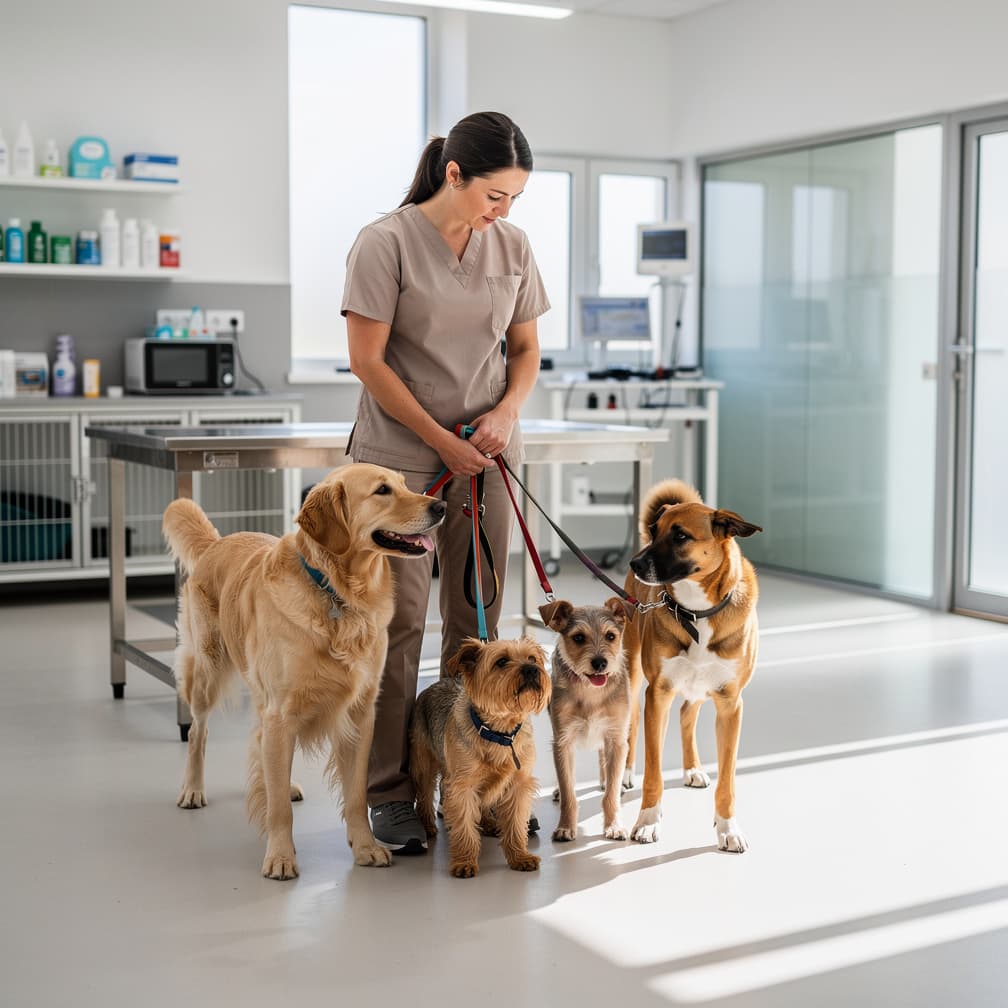

As a dog walker in San Francisco, your calendar is a list of buildings you do not control. Lobbies, elevators, shared courtyards, and stairwells belong to someone whose insurance requirements arrive as a document with a deadline attached. Dog walker insurance in San Francisco is what turns that document into a fob and a schedule. Buildings tend to want the certificate on file before the first visit and updated the day it expires, and a lapse can idle a whole route. Group walks raise the stakes further, because one leash tangle in a crowded lobby can involve several owners, several dogs, and one policy: yours. Limits are the part worth arguing about, rather than the monthly figure. Start with the requirements your clients already handed you and compare from there.
What Makes San Francisco Different
Competition here does not lower your risk; it raises the standard of proof clients expect. When an owner can call four walkers by lunchtime, the one with a certificate ready wins the slot. San Francisco County has about 33,500 businesses, and the sheer number of vendor-managing offices among them normalizes the paperwork request. Once one client asks, the next one asks, and the ask ratchets upward in limits. Dense routes also mean more strangers per walk, more dogs per block, more chances for the sidewalk to get crowded. A leash tangle involving two other owners becomes one claim with three stories in it. Volume does not dilute that; each incident still lands on the person holding the leash. Price the limit for the busiest block on your route in San Francisco, not the quietest.
Local Risk Factors in San Francisco
Wildfire smoke shuts down dog walking well before flames do, and the air in San Francisco can stay unusable for weeks. Walking a flat-faced dog through heavy smoke is a decision a client can later call negligent, and the vet bill gives the allegation teeth. Professional Liability generally addresses that argument, subject to the policy's terms. Evacuation is the other version: clients leave, some with dogs and some asking you to get theirs out. Being the person who enters a home under an evacuation order is a set of legal and practical risks nobody drafted for you. Put the evacuation authority in the client agreement before smoke season starts in San Francisco County, because a text message is not an agreement.
What Coverage Does a Dog Walker in San Francisco Need?
General Liability
A stranger bitten on a sidewalk is the claim this line exists for, along with the neighbor's wrecked fence and the client's scratched floor. Property managers and boarding facilities usually ask to see it before handing over a key. Defense costs commonly run alongside any settlement. The dog in your care is often treated as a separate question and may sit outside it.
Example: A leashed shepherd lunges at a jogger and a wrist gets broken; general liability may respond to the medical bills and the lawyer's letter that follows a month later.
Professional Liability
Allegations about judgment rather than accidents are the point here: a client says you ignored a medication note, took a reactive dog onto a crowded route, or handed the leash to someone else. Written care plans make the accusation specific. This line is generally intended for that argument, including defense costs, and it typically does nothing for physical damage you caused.
Example: A client insists their arthritic terrier was walked twice the agreed distance and now needs surgery in San Francisco; professional liability could take on the negligence claim and the defense.
Commercial Auto
Driving between clients is business use, and a personal auto policy can deny a claim on that basis after the fact. This line is meant for the vehicle you work from, including the trip to an emergency vet with a client's dog in the back. Personal errands and the animal itself may be treated differently, so the terms matter.
Example: You rear-end a sedan on the way to a midday walk with two crates in the back; commercial auto might pick up the other driver's repairs and injury claim.
How Much Does Dog Walker Insurance Cost in San Francisco?
Dog Walker Insurance is a bundle of separate policies, priced separately. The ranges below are typical figures for San Francisco for each line; a quote prices each one against your own operations.
| Coverage | Typical range | What moves your price |
|---|---|---|
| General Liability Insurance | $70 - $240 per month | Industry and risk classification, annual revenue, number of employees |
| Professional Liability Insurance | $55 - $180 per month | The services you actually perform, annual revenue or billed fees, limit and retention selected |
| Commercial Auto Insurance | $240 - $625 per month | Fleet size and vehicle types, driver records and experience, coverage limits and deductibles |
Prices shown are general estimates, not guaranteed rates or quotes. Your actual premium will depend on the insurer, coverage selected, business details, location, claims history, and other underwriting factors. Learn about our pricing methodology.
What Are the Insurance Requirements for a Dog Walker in San Francisco?
Workers' comp is generally required once you have your first employee. California generally requires employers to carry workers' compensation at that point. Common exemptions include sole proprietors and some partners. Confirm current thresholds with your state's workers' compensation agency before you hire.
State auto liability minimums apply to business vehicles. California's minimum auto liability limits are $30,000/$60,000/$15,000 (bodily injury per person / per accident / property damage). Contracts and lenders often require more than the state floor.
Where to verify licensing and coverage rules. The California Department of Insurance publishes consumer guidance and current insurance requirements for California businesses. When a contract or lease demands specific wording, the California Department of Insurance's guidance is the authoritative place to check.
Get Your Dog Walker Quote in San Francisco
Compare rates from multiple carriers. Free quotes, no obligation.
Operating in San Francisco
- About 83 dog walkers work in San Francisco County, and each claim still lands on the individual holding the leash, so market size changes your competition and not your exposure.
- Insurance requirements arrive as a document from a management company with a deadline attached, and the limits it names are theirs to set rather than yours to negotiate.
- A client in San Francisco can cancel a walk for weather and still expect the dog handled somehow, so the written cancellation terms decide who eats the cost of that day.
- Reactive dogs get disclosed inconsistently, and the walker who accepts one without written notes is the walker arguing about instructions a year later.
How to Buy: Advice for San Francisco Owners
Bundle carefully rather than automatically. A packaged quote can look tidy while carrying a low limit on the line you most need, and this trade's expensive claim is the third-party injury. Price General Liability on its own first so you know what the base costs, then see whether adding Professional Liability changes the total less than buying it separately would. If you drive for the business, get Commercial Auto quoted as its own decision, since it is the largest number of the three and the easiest to get wrong. The California Department of Insurance publishes consumer guidance on how small business policies are structured. Ask each quote in San Francisco to show the lines itemized rather than as one figure. Then compare quotes from participating carriers line by line, because a bundle discount is only a discount if the limits underneath match.
FAQ
Dog Walker Insurance in San Francisco: FAQ
Have your legal entity name and start date, your client count, walks per week, revenue, vehicle details and mileage, keys or codes held, and any incident history. Contract requirements matter too, since the limit a client names often sets what you buy. Sending the same file to every carrier is what makes the numbers comparable. A quote in San Francisco County priced on a guess is a quote you cannot rely on when a claim arrives.
Liability lines are about harm to others, so your own leashes, crates, and gear generally sit outside them. Flood specifically sits outside standard property forms and gets priced as its own decision, commonly through the federal program or a separate policy. Storm damage to a vehicle is a question for the auto form rather than the liability one. Ask each quote where your own property lands before assuming anything.
Yes, and it is the least expensive risk control you have. A written scope naming the route, the instructions, the emergency vet permission, and the weather policy turns a later argument into a document. Your policy responds to what happened; the contract frames what everyone claims happened, and the gap between them is money out of your pocket. A client who never asks for proof is often the same one who disputes what was agreed, so write it down in San Francisco the same as anywhere.
The injured person's claim generally lands on you, because you had the leash. Medical bills are only part of it; defense costs can run alongside them even when the allegation goes nowhere. General Liability is the line pointed at third-party bodily injury like that, subject to the policy's own exclusions and limits. Whether the owner is also pulled in depends on the state and on the facts, and it does not remove you from the claim.
Do not plan on it. The owner's policy exists for the owner, and a business providing a service is usually treated as a separate party with its own responsibility. Some homeowners forms address dog bites and some exclude certain situations entirely, and none of that is under your control. Your own coverage is the only part you can verify, price, and produce a certificate from.
The published ranges on this page are the starting point, though your number comes from your own inputs. Client count, walks per week, keys held, miles driven, limits demanded by contracts, and claims history all move it. Two walkers with the same schedule can price differently on history alone. No figure means much until a quote has seen those facts, which is why comparing quotes in San Francisco on identical limits beats comparing headline prices.
Sources
- 1.U.S. Census Bureau, County Business Patterns (2022), San Francisco County(San Francisco County has about 33,500 business establishments.)
- 2.U.S. Census Bureau, County Business Patterns (2023), San Francisco County(San Francisco County has about 83 businesses in this trade's category (NAICS group 812910).)
- 3.California Department of Insurance(California Department of Insurance publishes consumer guidance for insurance buyers.)


