







































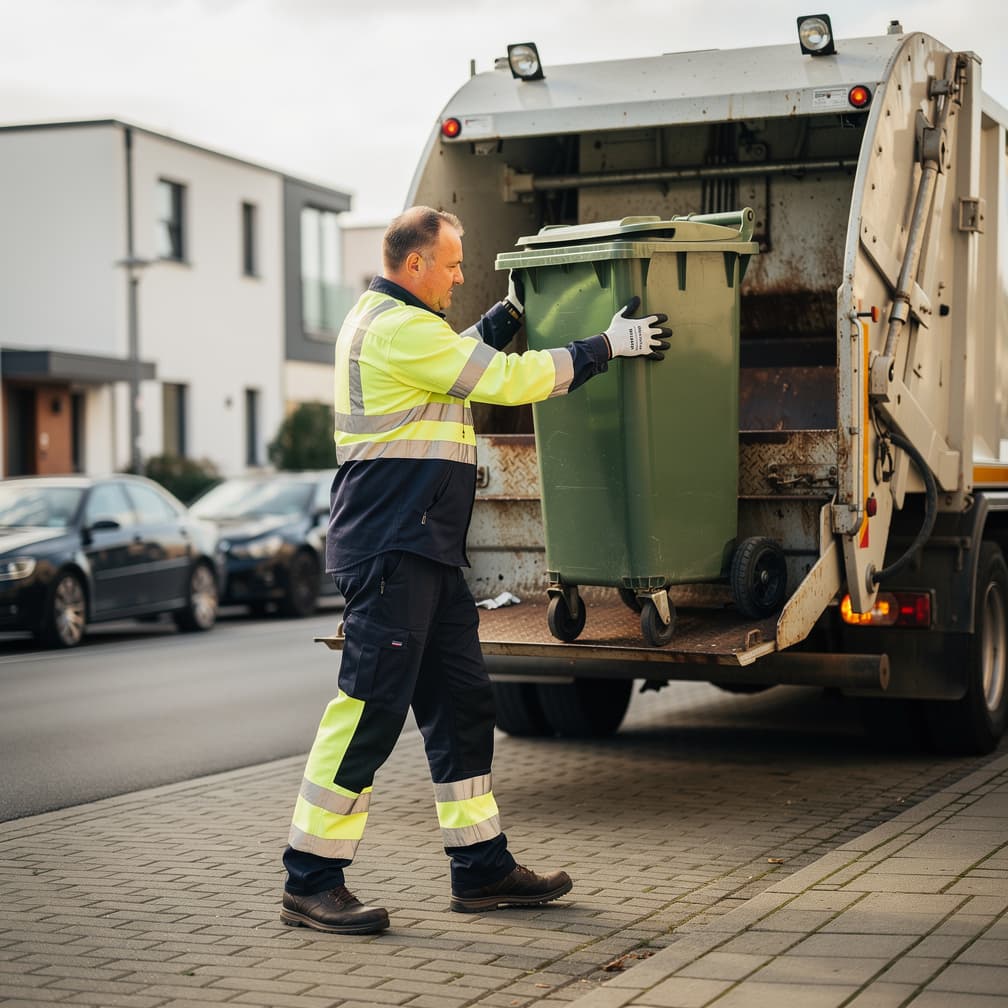

Payroll and truck count are the two dials that set what a hauler pays, and neither one cares how tidy the yard looks. Garbage collection service insurance in San Francisco costs what it costs because a packer truck is heavy, works in reverse near people, and carries crew who lift all day. Commercial Auto typically runs from $140 a month for a light setup and climbs fast with weight, radius, and driver records. Tighten a route to fewer miles and the quote can move. Hire a driver with a marked-up record and it moves the other way, harder. The rest of the page breaks the published ranges down by coverage, names the drivers behind each one, and shows how to line participating carriers in California up against one identical submission.
What Makes San Francisco Different
Landlords, boards, and facility managers all sign different paperwork, and each one can demand its own version of proof from a hauler. San Francisco County has about 33,500 businesses, so the number of separate insurance exhibits you might have to satisfy is not small. Every exhibit is a fresh chance for a mismatch between the entity named on your policy and the entity on the request. A mismatch is not a coverage problem, it is a paperwork problem that stops work just as effectively. Keeping one clean copy of your program summary within reach saves more hours than it sounds like it should. When a new account asks, you answer the same day instead of hunting for a renewal number in an inbox. The hauler who answers the request first often starts the route first. Speed on paperwork is a competitive advantage nobody advertises.
Local Risk Factors in San Francisco
An evacuation order empties the customers off your route and leaves the containers behind, which makes for a strange week in a hauling business. Nobody generates waste in a closed zone and nobody pays for service that did not happen, so revenue stops while the truck payment does not. Then the zone reopens and volume triples with ash, ruined furniture, and material your equipment was never sized to lift. Crews working that cleanup meet nails, glass, and unstable piles, and Workers Compensation is the line generally sitting under those injuries. Lost revenue during a closure is usually not an insurance loss, since interruption wording tends to require physical damage to property you own. Read that section in San Francisco, and read it well before San Francisco County needs it.
What Coverage Does a Garbage Collection Service in San Francisco Need?
General Liability
Property managers and commercial accounts ask for this line by name, and the certificate they want is proof of it. General Liability can help cover injury to a customer near a collection point, plus damage your crew or your container does to somebody else's property. It typically excludes your own equipment, injuries to your own employees, and anything the truck does on the road.
Example: A resident trips over a bin your crew left across a walkway and breaks a wrist; the medical bills and the demand letter behind them are the kind of claim General Liability may answer.
Commercial Auto
A packer truck backing into a parked car is this trade's most predictable loss, and this is the line built for it. Commercial Auto typically responds to damage and injuries your vehicles cause on a route, and it can extend to a truck's own damage when the physical damage section is purchased. Personal auto policies generally exclude hauling waste for pay.
Example: Your driver clips a gate post and a parked sedan in one reverse at a tight commercial stop in San Francisco; repairs to both, and the injury claim that follows, are generally where a Commercial Auto file opens.
Workers Compensation
Lifting is the job, so hands, shoulders, and backs are where this trade's injuries land. Workers Compensation is meant to handle medical care and lost wages for a crew member hurt on the route, whether that is a strain, a cut from a bag of glass, or heat illness. It does not answer for injuries to customers, and requirements vary by state.
Example: A loader tears a rotator cuff dragging an overfilled cart up a slope, and the surgery plus the weeks off the truck are what Workers Compensation is intended to cover.
Commercial Umbrella
Primary limits look enormous until a serious injury involving a heavy truck puts a defense bill and a settlement on the same page. Commercial Umbrella sits above your auto and liability limits and can take over once those are exhausted. It follows the coverage underneath it, so a gap in the primary is usually a gap up here too.
Example: A route collision injures two people and the auto limit is gone before the depositions finish; the layer above is what a Commercial Umbrella might be asked to carry from there.
How Much Does Garbage Collection Service Insurance Cost in San Francisco?
Garbage Collection Service Insurance is a bundle of separate policies, priced separately. The ranges below are typical figures for San Francisco for each line, except workers compensation, which is rated per $100 of payroll; a quote prices each one against your own operations.
| Coverage | Typical range | What moves your price |
|---|---|---|
| General Liability Insurance | $280 - $975 per month | Industry and risk classification, annual revenue, number of employees |
| Commercial Auto Insurance | $1,750 - $5,900 per month | Fleet size and vehicle types, driver records and experience, coverage limits and deductibles |
| Workers Compensation Insurance | $0.75 - $2.74 per $100 of payroll | Employee classification codes, total annual payroll, experience modification rate |
| Commercial Umbrella Insurance | $280 - $1,250 per month | Umbrella limit requested, limits carried on the underlying policies, loss history on those underlying policies |
Prices shown are general estimates, not guaranteed rates or quotes. Your actual premium will depend on the insurer, coverage selected, business details, location, claims history, and other underwriting factors. Learn about our pricing methodology.
What Are the Insurance Requirements for a Garbage Collection Service in San Francisco?
Workers' comp is generally required once you have your first employee. California generally requires employers to carry workers' compensation at that point. Common exemptions include sole proprietors and some partners. Confirm current thresholds with your state's workers' compensation agency before you hire.
State auto liability minimums apply to business vehicles. California's minimum auto liability limits are $30,000/$60,000/$15,000 (bodily injury per person / per accident / property damage). Contracts and lenders often require more than the state floor.
Where to verify licensing and coverage rules. The California Department of Insurance publishes consumer guidance and current insurance requirements for California businesses. When a contract or lease demands specific wording, the California Department of Insurance's guidance is the authoritative place to check.
Get Your Garbage Collection Service Quote in San Francisco
Compare rates from multiple carriers. Free quotes, no obligation.
Operating in San Francisco
- Disposal sites and transfer stations run on accounts and paperwork, and a rejected load does not stop being your load. It rides back to the yard with the shift already gone.
- Backing is where this trade's claims start, and a spotter rule nobody follows reads exactly like no rule at all once an adjuster asks about it.
- Route sheets and timestamps decide who cracked the loading apron at an account several haulers share, and the operator without them tends to lose that argument in San Francisco.
- A low canopy over a dumpster is a clearance note until your raised body finds it, and the roof damage lands on your side rather than the building owner's.
How to Buy: Advice for San Francisco Owners
Start with the contract, because it is the document that picks your limits for you. Pull every service agreement you have signed in San Francisco and read only the insurance paragraphs. Write down each limit, each entity to be named, and each notice requirement in a single list. That list is your shopping specification, and General Liability and Commercial Auto are usually the two lines it names. Bring it to the quoting conversation instead of asking what a hauler normally buys, because normal is a fiction and your contracts are not. The California Department of Insurance publishes consumer guidance on how commercial policies are put together, which is worth twenty minutes before you compare anything. Two quotes answering different questions cannot be compared, however close the totals look, so hand participating carriers in California one identical specification and read the differences.
FAQ
Garbage Collection Service Insurance in San Francisco: FAQ
Yes, though the field narrows and the price moves. Refuse hauling is a heavy-vehicle class, and participating carriers in California have different appetites for it after a loss year. Evidence helps: a written backing procedure, a spotter rule, cameras on the truck, and a closed reserve on the old file. Ask the prior carrier to confirm in writing that the claim is closed, because an open reserve gets priced as though it might still grow.
A vehicle list with weights and radius, a driver list with license numbers, payroll split by job class, your loss runs, and the insurance exhibits from your contracts in San Francisco. Missing pieces get filled with assumptions, and assumptions are what make two quotes look different when the operation underneath is identical. Loss runs take days to arrive from a prior carrier, so ask for them first. The rest is one afternoon of paperwork.
Not by the liability side. General Liability answers for harm your work does to other people and their property, which points the other direction entirely. Containers sitting at customer sites are your own property away from your premises, and insuring them is a separate conversation with its own limit and deductible. Keep an asset list with serial numbers and locations, because a claim without a list becomes an argument about what existed in the first place.
That depends on your contracts and on what a loaded truck can do on a bad morning. An umbrella sits above the auto and liability limits and takes over once the primary is exhausted, which is the exact shape of a serious injury claim involving a heavy vehicle. An account in San Francisco can demand a combined limit no primary policy alone will reach. Price it before a contract forces the purchase, because forced purchases price badly.
Employee injuries are the Workers Compensation question, and sharps hidden in a bag are one of the routine ways this trade produces them. Report it immediately and document the stop, because a late report is what turns a simple claim complicated. Gloves, hooks, and a rule about compacting unknown bags belong in a written program, since carriers tend to price a documented crew differently from an undocumented one.
Ask specifically about hired and non-owned auto, because a Commercial Auto policy built around your scheduled trucks may not follow an employee's personal vehicle. The exposure is real: a helper running a bulk item across town in his own truck is doing your work with your name on it. Get the wording confirmed before it happens, and put the vehicle on the schedule if it runs routes with any regularity.
Sources
- 1.U.S. Census Bureau, County Business Patterns (2022), San Francisco County(San Francisco County has about 33,500 business establishments.)
- 2.California Department of Insurance(California Department of Insurance publishes consumer guidance for insurance buyers.)


