







































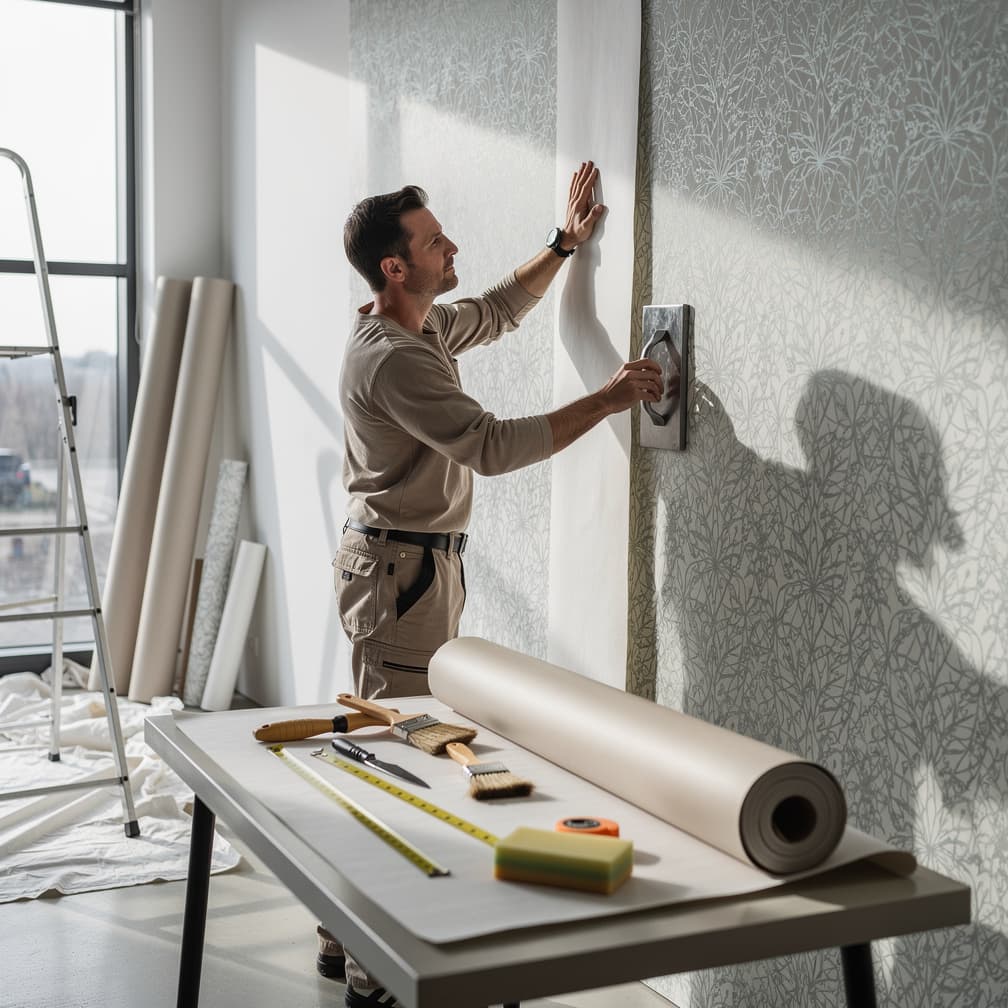

Steam and scoring do more damage than the wallpaper ever did. Pulling old vinyl off a plaster wall can take the surface with it, and the client sees a repair bill where a removal fee used to be. That is a third-party property damage claim, and it starts with a phone call instead of a lawsuit, which is exactly why it gets mishandled. Anyone shopping paperhanger insurance in San Francisco should ask how a participating carrier in California treats damage to the very surface you were hired to work on, because that boundary is where the honest gaps live. Your own tools and stock are a separate question again. Read the sections below with your last removal job in mind, and check whether the policy you are quoting would have answered for it.
What Makes San Francisco Different
The design firm that books you often works for a client who answers to a building's management. Dense commercial markets stack those approvals, so one job can carry three separate demands for proof. Each party wants its own name on your certificate, and each has a form it will not change. A hotel corridor job in San Francisco can stall for a week over one line of additional insured wording. Nobody involved cares that the wallpaper is already cut and the crew is already booked. Participating carriers in California differ in how fast they issue amended certificates, which is a scheduling fact. Ask for the required wording before you accept the date, rather than after you have promised it. The cost of getting this wrong gets measured in lost days, and premium never enters the arithmetic.
Local Risk Factors in San Francisco
A canceled month is what a wildfire costs a paperhanger, including one working nowhere near the flames. Air quality closes sites, clients postpone finish work, and a schedule built around other trades collapses. When the work returns it arrives all at once, and the material lead times have not moved an inch. Your shop is a separate question: stored paper, adhesive, and a steamer under one roof become a property claim if fire or smoke reaches them. A Business Owners Policy commonly packages that stock with liability for a small operation in San Francisco. Wildfire exposure in California varies enormously, so ask how a carrier reads your own address instead of assuming.
What Coverage Does a Paperhanger in San Francisco Need?
General Liability
Designers, builders, and property managers ask for this line before a ladder goes into a finished room. It generally handles injury to other people and damage to their property: a guest who slips on your drop cloth, paste that soaks a client's rug. Damage to your own work is often treated another way, which is worth asking about early.
Example: A seam roller knocks a lamp off a console table in a staged living room, and both the shade and the base are ruined. General Liability might take that property damage claim, subject to your deductible.
Commercial Property
Rolls, adhesive, ladders, trays, and a steamer are the pile this line is built around. Theft from a locked shop, fire, or vandalism can trigger it, subject to the perils listed and the deductible you choose. Flood typically sits outside the form and is bought separately, which catches owners who store stock at floor level.
Example: Somebody forces the shop door overnight and walks off with the steamer, two ladders, and a client's mural order. Commercial Property could answer for the gear and stock, while the lost bookings stay with you.
Workers Compensation
Injuries to you and your crew sit outside a liability form entirely, and that gap is what this line exists to fill. Medical costs and lost wages after a fall from a ladder, a cut from a scoring tool, or a heat-related collapse are the usual claims. Pricing runs on payroll, and requirements vary by state.
Example: A helper carrying a full paste bucket up a stairwell slips on a drop cloth and breaks a wrist. Workers Compensation is typically where the medical bills and the lost time get handled.
Business Owners Policy
Buying liability and property separately works, and a package can cost less and renew on one date instead of two. A Business Owners Policy generally suits a hanger with a shop: gear, stock, and third-party claims under a single contract. Injuries to your crew stay outside it, and the packaged limits may not clear what a commercial job demands.
Example: One renewal date sits behind the shop full of rolls and the paste that stained a client's oak floor in San Francisco. A package like that may answer on both sides, depending on the limits you picked.
How Much Does Paperhanger Insurance Cost in San Francisco?
Paperhanger Insurance is a bundle of separate policies, priced separately. The ranges below are typical figures for San Francisco for each line, except workers compensation, which is rated per $100 of payroll; a quote prices each one against your own operations.
| Coverage | Typical range | What moves your price |
|---|---|---|
| General Liability Insurance | $75 - $240 per month | Industry and risk classification, annual revenue, number of employees |
| Commercial Property Insurance | $95 - $290 per month | Building value and construction type, roof age and condition, fire protection class |
| Workers Compensation Insurance | $0.75 - $2.74 per $100 of payroll | Employee classification codes, total annual payroll, experience modification rate |
| Business Owners Policy Insurance | $120 - $320 per month | Annual revenue and industry class, building and contents values, square footage and building age |
Prices shown are general estimates, not guaranteed rates or quotes. Your actual premium will depend on the insurer, coverage selected, business details, location, claims history, and other underwriting factors. Learn about our pricing methodology.
What Are the Insurance Requirements for a Paperhanger in San Francisco?
Workers' comp is generally required once you have your first employee. California generally requires employers to carry workers' compensation at that point. Common exemptions include sole proprietors and some partners. Confirm current thresholds with your state's workers' compensation agency before you hire.
Flood damage is typically excluded from standard policies. Standard commercial property and builders-risk-type policies typically exclude flood damage. Flood exposure varies address by address, so check your premises in FEMA's Flood Map Service Center before deciding; if you sit in a mapped flood zone, a separate policy through the National Flood Insurance Program is the usual starting point.
Where to verify licensing and coverage rules. The California Department of Insurance publishes consumer guidance and current insurance requirements for California businesses. When a contract or lease demands specific wording, the California Department of Insurance's guidance is the authoritative place to check.
Get Your Paperhanger Quote in San Francisco
Compare rates from multiple carriers. Free quotes, no obligation.
Operating in San Francisco
- A designer's client, the building owner, and the general contractor in San Francisco can all read one claim differently, which is why the wording on your certificate outranks the premium.
- About 133 paperhangers work in San Francisco County, so when your steamer quits midweek there may be nobody nearby to borrow from and the job simply sits open.
- Removal jobs hide their risk: nobody knows what old adhesive did to the plaster until you are halfway through the wall and the repair conversation has already started.
- Drop cloths, cords, and a ladder in a hallway put your gear exactly where a client's family walks, which is how a bodily injury claim starts in a house you were only papering.
How to Buy: Advice for San Francisco Owners
Gather your payroll figures, last year's revenue, an equipment list, and any open claims before you request a single quote in San Francisco. Those four items decide most of the price, and guessing at them produces numbers you cannot rely on. Value the steamer, the ladders, the trays, and the rolls sitting in your shop honestly, because Commercial Property pricing follows what you say is there. Add the mural orders you hold for clients, since custom stock is expensive and slow to replace. General Liability asks about the work itself: removal versus hanging, residential versus commercial, and how much of each. Check the California Department of Insurance's guidance before deciding what to carry for staff. With one clean set of facts you can put quotes from participating carriers side by side and see what is genuinely different between them.
FAQ
Paperhanger Insurance in San Francisco: FAQ
Payroll, revenue, your claims record, and the limits your contracts demand move the price more than anything else. The work mix matters too, since stripping old paper creates more third-party damage than clean hanging, and commercial interiors are worth far more than the material going on them. Where you work in California plays a part as well, because participating carriers price the same submission differently.
Property managers, general contractors, design firms, staging companies, and building owners all ask, and usually before your first day rather than after it. The request comes from a compliance desk that has never seen your seams and cares only about wording. A building in San Francisco can hold your crew at reception when the document names the wrong entity or has quietly lapsed. Read the exhibit before you accept a start date.
That is the classic third-party property damage claim in this trade, and General Liability is typically the line anyone would look at first. Whether it responds depends on the wording, the deductible, and how the form treats damage arising out of your work. Refinishing an entire floor to match one stained board is what turns a small slip into a real number.
Steam and scoring can pull plaster away with the paper, and the client sees a repair bill where a removal fee used to be. Damage to the surface you were hired to work on is the gray zone here: a liability form generally looks at damage to other property, and your own work is often treated another way. Ask a carrier that question in plain words before you buy anything.
Commercial Property is typically the line for a steamer, ladders, trays, and rolls taken from a locked shop in San Francisco, subject to the perils on the form and the deductible you chose. Where the gear sleeps matters, because items left at a client's site overnight or in a vehicle can be treated differently. Replacement time is the part no form fixes, since a stalled job empties the week behind it.
It extends certain rights under your liability policy to another party, usually the building owner or the general contractor who let you in. Contracts ask for it because they want your policy involved when your paste ruins their floor. Blanket and scheduled wording are different animals, and the exhibit for a job in San Francisco normally specifies one of them. A certificate without the endorsement behind it gets bounced at the desk.
Sources
- 1.U.S. Census Bureau, County Business Patterns (2023), San Francisco County(San Francisco County has about 133 businesses in this trade's category (NAICS group 238320).)
- 2.California Department of Insurance(California Department of Insurance publishes consumer guidance for insurance buyers.)
- 3.FEMA / FloodSmart(Flood coverage is typically purchased separately; FEMA administers the National Flood Insurance Program.)


