







































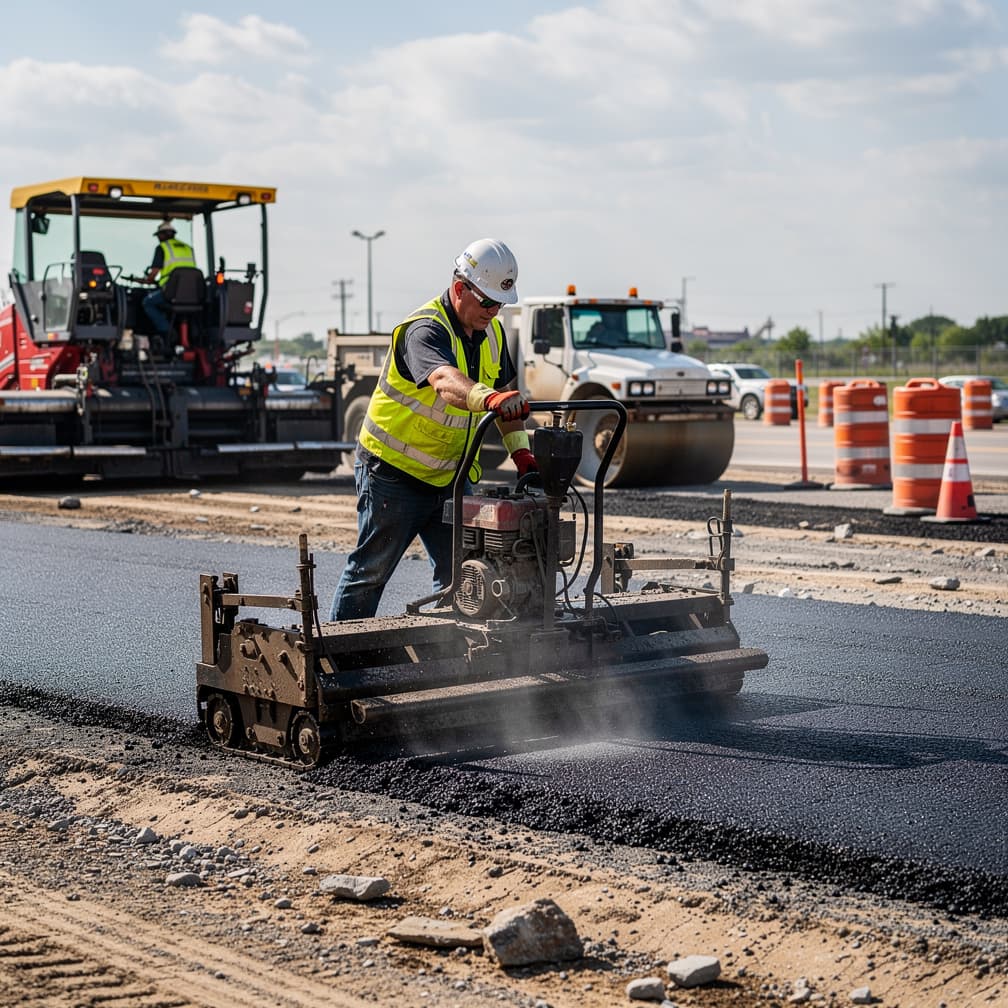

Two paving contractors bidding the same lot can carry premiums that differ by half, and the reason is almost never luck. Rating starts with payroll and the vehicle list, then bends around loss history, limits, and the additional insured wording your customers demand. In a market the size of San Francisco County, layered contracts push required limits up, and the umbrella sitting above them stops feeling optional. Paving and asphalt contractor insurance in San Francisco therefore costs what your contracts make it cost, more than what your size suggests. An owner with three trucks and heavy commercial work can pay more than one with six trucks and residential driveways. Ask what class codes a quote assumed before you set it beside another. The sections below break the drivers down one at a time.
What Makes San Francisco Different
The general contractor above you carries obligations downhill, and insurance requirements are the first thing to roll. Layered projects mean an owner, a construction manager, and a lead contractor can each want naming on your certificate. Every added party is another set of wording to match, and a mismatch stalls payment on finished work. In a metro like San Francisco, that stack of counterparties is normal rather than exceptional for commercial paving. The practical effect is that your policy stops being your decision and becomes a contract deliverable. Renewal timing matters more too, because a lapse mid-project can pull you off a San Francisco site entirely. Keep a copy of every insurance requirement you have agreed to in one place, not in email threads. Read the insurance exhibit before you price the job, because it is priced work.
Local Risk Factors in San Francisco
Wildfire smoke and closures stop paving work without ever touching your equipment. Crews cannot work in heavy smoke, roads close, and a site inside an evacuation zone is simply unreachable for days. Those are schedule losses, and schedule losses usually sit outside insurance and inside your contract instead. Where fire does reach property, machines and material left on site are exposed and rarely moved in time. A yard near San Francisco at the edge of open country faces a different question than one on an industrial block. Ask what your equipment schedule says about location, since where a machine was parked can shape the claim. The California Department of Insurance publishes consumer guidance on wildfire coverage for businesses in California.
What Coverage Does a Paving & Asphalt Contractor in San Francisco Need?
General Liability
Owners, general contractors, and landlords ask for this one by name before a crew mobilizes, and the certificate usually has to show it. It generally responds to bodily injury and property damage your work does to other people: a clipped storefront apron, a visitor who trips at an open site. Damage to your own mat, and the cost of redoing it, typically sits outside.
Example: A compactor nudges a bollard into a client's glass entry while the crew finishes a San Francisco apron. The repair bill and the complaint that follows are the kind of loss this line may take on.
Workers Compensation
Hot mix, moving rollers, and live traffic put a paving crew within reach of a serious injury every working day. This line is meant for employee injuries: medical treatment and a share of lost wages after someone gets hurt on the job. Liability forms typically exclude those claims, and what employers must carry varies from state to state.
Example: A screed operator takes a burn through a glove reaching across fresh mat, and treatment runs into weeks of follow-up visits. Medical costs and part of the missed pay could fall here.
Commercial Auto
A personal auto policy usually walks away the moment a vehicle is used for the business, which is where this line starts. Trucks, dumps, and the trailers hauling rollers between jobs get rated on units, drivers, and how far they run. Injury and damage to others in an at-fault wreck are the core of it; the machine riding on the trailer is generally handled elsewhere.
Example: A loaded trailer clips a parked sedan while backing into a tight San Francisco lot, and the other driver reports an injury the next morning. Costs on their side are what this coverage is intended to meet.
Commercial Umbrella
Where the underlying limits stop, this one is designed to keep going, sitting above General Liability and Commercial Auto rather than replacing either. Contracts on larger paving jobs often demand limits the base program cannot show on a certificate. It typically inherits the exclusions beneath it, so a gap downstairs stays a gap upstairs.
Example: A multi-vehicle wreck involving a paving truck exhausts the auto limit before the medical bills are even counted. Whatever is left of the claim may find its way here, subject to the terms.
How Much Does Paving & Asphalt Contractor Insurance Cost in San Francisco?
Paving & Asphalt Contractor Insurance is a bundle of separate policies, priced separately. The ranges below are typical figures for San Francisco for each line, except workers compensation, which is rated per $100 of payroll; a quote prices each one against your own operations.
| Coverage | Typical range | What moves your price |
|---|---|---|
| General Liability Insurance | $340 - $1,125 per month | Industry and risk classification, annual revenue, number of employees |
| Workers Compensation Insurance | $0.75 - $2.74 per $100 of payroll | Employee classification codes, total annual payroll, experience modification rate |
| Commercial Auto Insurance | $775 - $2,200 per month | Fleet size and vehicle types, driver records and experience, coverage limits and deductibles |
| Commercial Umbrella Insurance | $160 - $600 per month | Umbrella limit requested, limits carried on the underlying policies, loss history on those underlying policies |
Prices shown are general estimates, not guaranteed rates or quotes. Your actual premium will depend on the insurer, coverage selected, business details, location, claims history, and other underwriting factors. Learn about our pricing methodology.
What Are the Insurance Requirements for a Paving & Asphalt Contractor in San Francisco?
Workers' comp is generally required once you have your first employee. California generally requires employers to carry workers' compensation at that point. Common exemptions include sole proprietors and some partners. Confirm current thresholds with your state's workers' compensation agency before you hire.
State auto liability minimums apply to business vehicles. California's minimum auto liability limits are $30,000/$60,000/$15,000 (bodily injury per person / per accident / property damage). Contracts and lenders often require more than the state floor.
Where to verify licensing and coverage rules. The California Department of Insurance publishes consumer guidance and current insurance requirements for California businesses. When a contract or lease demands specific wording, the California Department of Insurance's guidance is the authoritative place to check.
Get Your Paving & Asphalt Contractor Quote in San Francisco
Compare rates from multiple carriers. Free quotes, no obligation.
Operating in San Francisco
- Equipment values drift every single year. A paver scheduled at what you paid in a different market quietly funds part of its own replacement, and nobody finds the gap until the machine is already gone.
- Your trucks spend more of the week on public roads than the crew spends on any single lot in San Francisco, which is why driving records move a premium further than the paving itself ever does.
- Backing accidents in tight lots are the most common vehicle claim in this trade. A spotter costs nothing, and a struck parked car costs a deductible plus the customer who owned it.
- Seasonal crews mean payroll swings hard between the busy months and the quiet ones, and Workers' Compensation is rated on payroll, so reporting the change beats letting the audit find it later.
How to Buy: Advice for San Francisco Owners
Gather the boring documents before you ask anyone for a number: payroll by job type, annual revenue, a vehicle list with drivers, and an equipment schedule with current values. A quote built on guesses gets corrected at audit, and the correction is always less pleasant than the guess was. Workers' Compensation prices off payroll, so the split between office time and time on the mat changes what you pay. General Liability leans on revenue and the mix of work behind it, which is why a move into commercial lots matters. Keep last year's loss runs handy too, since nothing shapes an offer faster. The California Department of Insurance publishes consumer guidance on the information carriers may request from a business. With the file assembled, comparing quotes from participating carriers in California takes an afternoon instead of a month.
FAQ
Paving & Asphalt Contractor Insurance in San Francisco: FAQ
Usually not. Redoing your own defective work is a workmanship question, and policies generally treat it as a cost of doing business rather than an insured loss. What may respond is damage your faulty work does to somebody else's property, such as water that undermines a neighboring structure. That distinction decides how much you hold back for callbacks. Price rework into the bid and treat the policy as protection against the bigger, third-party half of the problem.
Anyone with leverage: the owner of the lot, the general contractor above you, the landlord of your yard, sometimes a lender. Additional insured status is granted by endorsement, and the wording matters as much as the name. Blanket wording can handle everyone your contracts require, while per-project endorsements get issued one at a time and slow the paperwork down. Ask which one your General Liability carries before a San Francisco client asks you for it.
It is rated per $100 of payroll, at a rate tied to the class code describing the work. Time on the mat and time in the office are not priced alike, so the split between them matters. The premium starts as an estimate and gets trued up at audit against what you actually paid out. Keeping payroll records by class code through the season is the surest way to control the final number.
No. A certificate is evidence that a policy existed on the day it was issued, and nothing more. It does not amend the policy, and it can be out of date the moment something is cancelled or changed. Clients sometimes treat it as a promise; carriers do not. If a contract requires specific wording, that wording has to live in the policy itself rather than on the certificate alone.
Theft away from your yard is a schedule question. Whether the machine is listed, at what value, and where it was parked on the San Francisco job all shape the answer. Equipment insured at what you paid years ago can leave a gap you end up funding yourself. Report values you would actually pay to replace the machine today. Downtime is the other cost, and it usually sits outside the equipment conversation entirely.
The trailer is rarely the issue; the truck pulling it is, and a personal auto policy typically excludes vehicles used in a business. Weight, use, and who drives all matter to how a unit gets rated. An at-fault wreck on the way to a San Francisco job is the loss most likely to blow past a small limit. Get the vehicle list right before anyone drives, because a claim is a poor moment to learn the truck was never listed.
Sources
- 1.California Department of Insurance(California Department of Insurance publishes consumer guidance for insurance buyers.)


