







































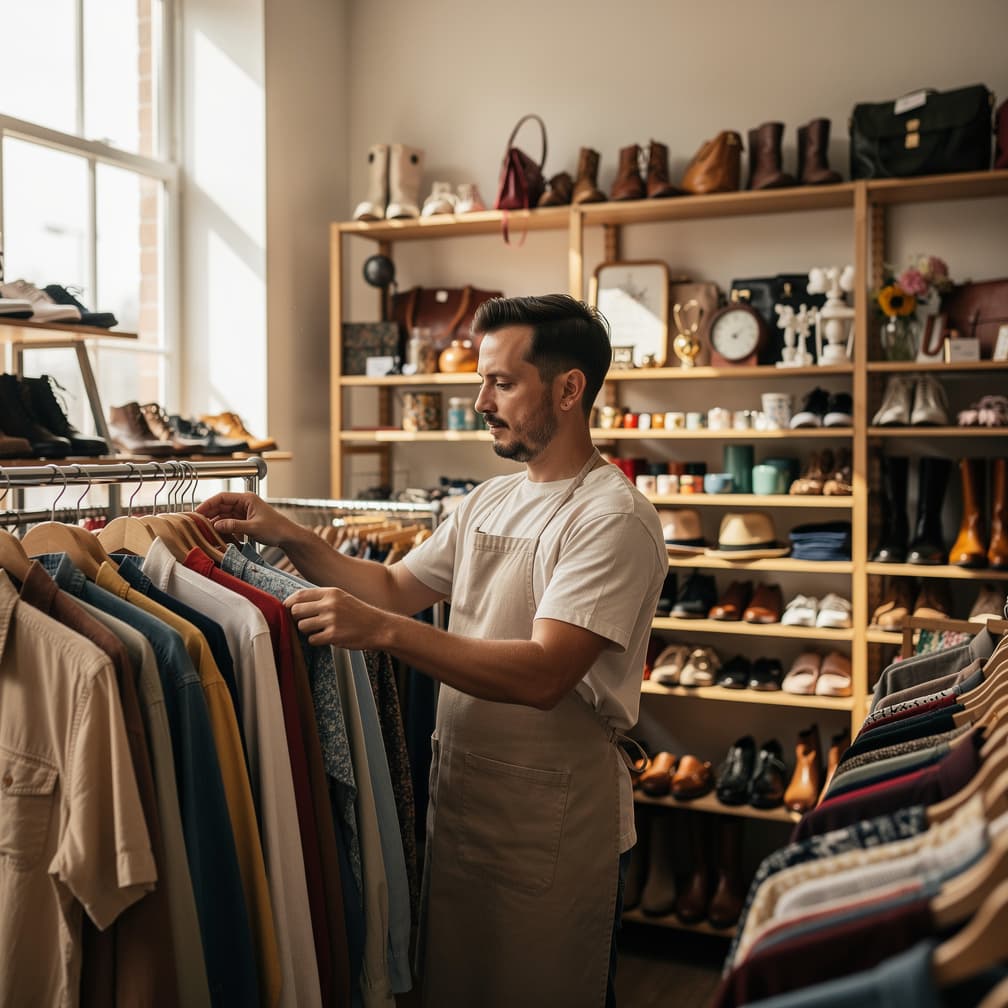

Falling merchandise hurts people. A stack of boxed housewares on a top shelf, a rack loaded past what its base can hold, a child pulling at a bin near the checkout line: each one is a bodily injury claim waiting on a witness. Thrift store insurance in San Francisco exists for the gap between a sales floor you sweep twice a day and the one hour you did not. Aisles narrow as donations pile up, and narrow aisles are where feet catch. Employees sorting and lifting donated goods get hurt on their own side of the ledger, which is a separate question with a separate price. Participating carriers in California weigh those two sides differently, which is the whole reason to compare. Below you will find what each line does and what a quote asks of you.
What Makes San Francisco Different
Claims history moves your renewal more than any shopping tactic you could reach for later on. Two slip claims in one year reads as a floor problem, and underwriters price floor problems accordingly. The fix is unglamorous: aisle widths, spill routines, an incident pad, and someone whose job is walking the floor. In a crowded market like San Francisco, participating carriers already hold plenty of loss data on this class. Deviation is the whole game, because California rating tables already carry the class average inside them. A store with logs and photographs argues from evidence; a store without them argues from adjectives. Deductibles are your other lever, and raising one trades a lower monthly number for a harder claim day. Decide which of those two you can actually afford before a quote decides it for you.
Local Risk Factors in San Francisco
Keep your inventory records somewhere outside the building, because a fire that reaches the block takes the paperwork along with the stock. Donated goods have no invoices, so the photographs and intake logs you kept are the entire valuation argument, and losing them means starting from zero. Cloud storage costs nothing and settles the question. A business owners policy can help with stock, fixtures, and improvements after a fire, subject to the sublimits inside the package you bought. Read those sublimits now. A store in San Francisco that knows its own numbers gets further with a California adjuster than one guessing after the fact.
What Coverage Does a Thrift Store in San Francisco Need?
General Liability
Your landlord asks for this one by name, and a center office will ask again before you open the doors. General Liability is aimed at third-party injury and property damage: a customer who slips in an aisle, a shopper struck by falling merchandise, damage you cause to the space you rent. It does not answer for your own employees, and it typically excludes anything done deliberately.
Example: A child tugs a boxed lamp off a top shelf and it catches a shopper's shoulder on the way down. The medical bill and the demand letter that follows are the kind of claim this line is meant to meet.
Commercial Property
Flood is the first thing to know about here, since standard property forms leave it out and price it on its own. What remains is your side of the building: shelving, fixtures, terminals, the improvements you installed, and the donated stock on the floor. Fire, burst pipes, and storm damage are the usual triggers, and the valuation language on inventory without invoices decides what a claim is worth.
Example: A power strip behind a display shorts overnight and smoke reaches every rack in your San Francisco store. The fixtures survive, the clothing does not, and a claim on that stock could turn on the photographs you took.
Business Owners Policy
Buying liability and property apart gives you control; a Business Owners Policy gives you a package that usually costs less. It folds both into one form for a single-location store and often carries business interruption terms inside it. The catch is sublimits: categories like stock may be capped tighter than you would choose, and the package wording is not yours to negotiate.
Example: Your store closes for three weeks after a roof leak soaks the sales floor. The repairs sit on the property side of the package, while the lost trading weeks may fall to the interruption clause and its waiting period.
Workers Compensation
Someone lifts a box of hardback books wrong and cannot work for a month. Workers Compensation is built for your own staff rather than your customers, and it can help with medical treatment and a share of lost wages. It is rated against payroll, so hours at the sorting table drive the price. Whether unpaid help at your intake door counts as staff is a question your state answers, not your policy.
Example: A part-timer pricing furniture drops a drawer front on their foot during an intake rush. The treatment and the days missed afterward are what this coverage is generally intended to handle.
How Much Does Thrift Store Insurance Cost in San Francisco?
Thrift Store Insurance is a bundle of separate policies, priced separately. The ranges below are typical figures for San Francisco for each line, except workers compensation, which is rated per $100 of payroll; a quote prices each one against your own operations.
| Coverage | Typical range | What moves your price |
|---|---|---|
| General Liability Insurance | $75 - $220 per month | Industry and risk classification, annual revenue, number of employees |
| Commercial Property Insurance | $140 - $500 per month | Building value and construction type, roof age and condition, fire protection class |
| Business Owners Policy Insurance | $140 - $420 per month | Annual revenue and industry class, building and contents values, square footage and building age |
| Workers Compensation Insurance | $0.75 - $2.74 per $100 of payroll | Employee classification codes, total annual payroll, experience modification rate |
Prices shown are general estimates, not guaranteed rates or quotes. Your actual premium will depend on the insurer, coverage selected, business details, location, claims history, and other underwriting factors. Learn about our pricing methodology.
What Are the Insurance Requirements for a Thrift Store in San Francisco?
Workers' comp is generally required once you have your first employee. California generally requires employers to carry workers' compensation at that point. Common exemptions include sole proprietors and some partners. Confirm current thresholds with your state's workers' compensation agency before you hire.
Flood damage is typically excluded from standard policies. Standard commercial property and builders-risk-type policies typically exclude flood damage. Flood exposure varies address by address, so check your premises in FEMA's Flood Map Service Center before deciding; if you sit in a mapped flood zone, a separate policy through the National Flood Insurance Program is the usual starting point.
Where to verify licensing and coverage rules. The California Department of Insurance publishes consumer guidance and current insurance requirements for California businesses. When a contract or lease demands specific wording, the California Department of Insurance's guidance is the authoritative place to check.
Get Your Thrift Store Quote in San Francisco
Compare rates from multiple carriers. Free quotes, no obligation.
Operating in San Francisco
- Your legal entity name, your registered address, and the name painted on the sign are frequently three different strings, and a certificate carrying the wrong one protects nobody at all.
- A store in San Francisco County may sit far enough from restoration contractors that a dry-out after a burst pipe runs on their travel schedule instead of your reopening plan.
- Fitting rooms are unsupervised space the public occupies alone, which raises theft and injury questions together, and underwriters in California ask about them by name.
- Incident pads get filled in for falls that look serious and skipped for the ones that look fine. It is usually the second kind that resurfaces a year later as a demand letter.
How to Buy: Advice for San Francisco Owners
Your loss runs are the first thing an underwriter reads and the last thing you can change. Request five years of them from your current participating carrier before you shop, because a surprise on that report is worse than a bad number you can explain. Two slip claims at a San Francisco storefront read as a floor problem unless you can show what changed: wider aisles, a spill routine, an incident pad someone actually fills in. That story moves General Liability pricing further than any negotiation will. The same holds for lifting injuries and Workers Compensation, where a written handling rule is worth real money at renewal. Check the California Department of Insurance's guidance before deciding how to handle a disputed claim on your record. Then let CPK set participating carriers side by side with your explanation attached.
FAQ
Thrift Store Insurance in San Francisco: FAQ
Often, yes. A Business Owners Policy bundles liability and property into one form and typically prices below buying the two separately, which suits a store trading out of a single address. The trade-off is flexibility: sublimits on categories like stock may run tighter than you would pick, and the package terms are not yours to draft. Read the sublimits before the total.
Payroll by role, square footage, a replacement estimate on fixtures and equipment, and roughly five years of loss history. Write the operation up once, including the intake door and how high you stack, then reuse that same description with every participating carrier in California. Inconsistent submissions get offers withdrawn, and a vague one gets priced conservatively, which you pay for monthly.
Sometimes, under a separate clause with its own trigger and its own waiting period. Business interruption terms usually require physical damage first, which means a closure caused by an outage or a blocked street may fall outside them entirely. Ask what starts the clock and what stops it before you compare monthly numbers, because that clause is where a low quote quietly finds its price.
Usually not the way owners hope. Property forms in California tend to separate burglary, which involves forced entry, from merchandise walking out during open hours, and the second is commonly excluded or narrowly limited. Read the theft conditions, including anything about how the building must be secured after closing. Shrinkage is a floor problem to manage, rather than an insurance recovery.
Only as far as what you could write a check for tomorrow. A higher deductible does reduce the premium, and it also hands you a worse morning after a rack collapse or a soaked stockroom. The right number is the one your cash flow survives, rather than the one that makes a quote look good on a comparison page.
Yes, and it is a different line from the one that meets customer injuries. Workers Compensation is built for your own staff, and sorting, lifting, and hauling donated goods carries real injury frequency. It is rated against payroll, so hours at the intake table show up when a participating carrier audits you after the policy year. Report payroll honestly and the audit stays routine.
Sources
- 1.California Department of Insurance(California Department of Insurance publishes consumer guidance for insurance buyers.)
- 2.FEMA / FloodSmart(Flood coverage is typically purchased separately; FEMA administers the National Flood Insurance Program.)


