







































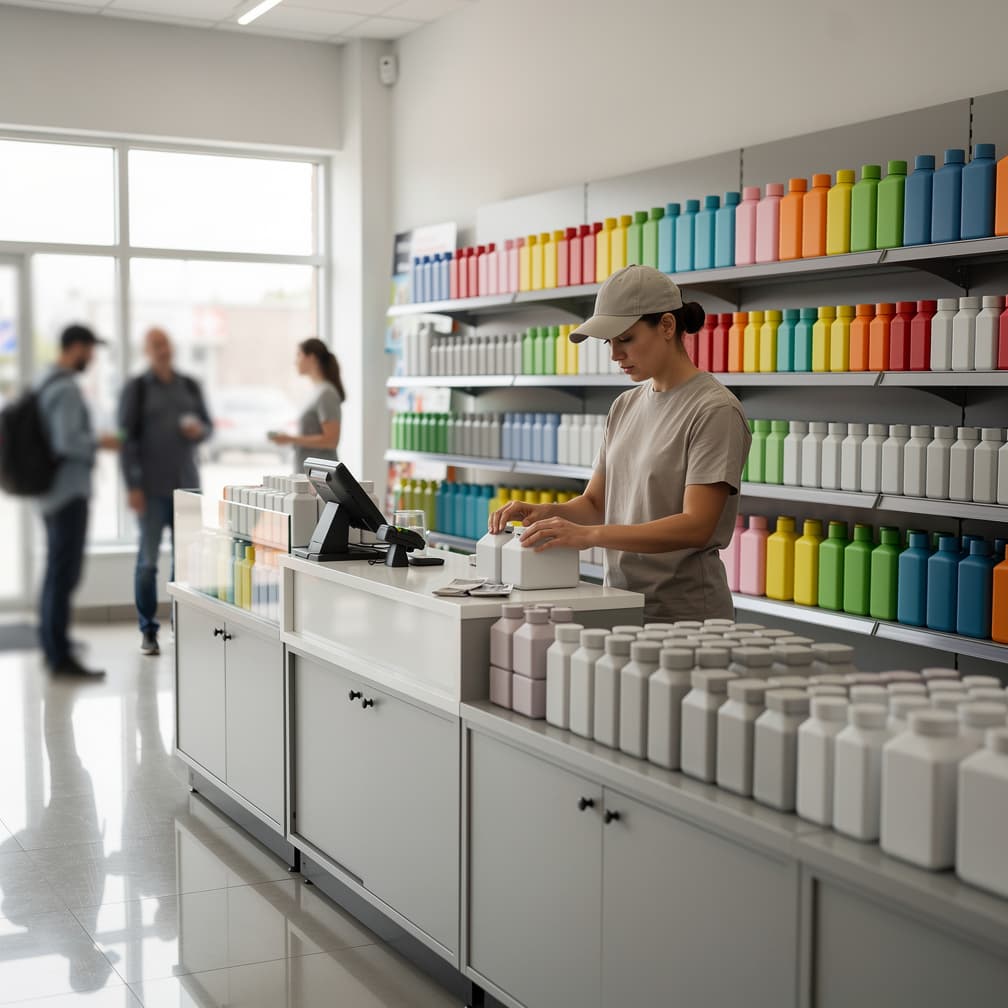

Santa Clara County has about 49,000 businesses, and every one of them is a potential customer walking across your lot with a hot coffee. Foot traffic is the exposure; the store is only the container for it. Gas station insurance in San Jose has to answer for people you never invited and cannot screen, which is why General Liability sits at the center of a station's stack rather than at its edge. Volume also brings witnesses, footage requests, and attorneys who handle these claims by the dozen. A slip claim at a busy site is rarely the last one you see. What follows explains which lines respond to premises injuries, what pushes their pricing, and how to compare limits rather than monthly totals.
What Makes San Jose Different
Repair labor gets bid up, not down, in a market where every trade already has work booked. Rebuilding a canopy or replacing a cooler costs what local contractors charge, not what you budgeted. That is why a limit set five years ago can fall well short of today's repair invoice. Underinsurance is a pricing decision you make by accident, usually by never revisiting the number. Get a real replacement figure for the building and the contents, and then quote against that. The premium goes up, and the gap you would otherwise have funded yourself goes away. Coinsurance clauses punish the shortfall on top of that, which is a penalty for guessing low. Ask each carrier in California whether one applies to a San Jose site, and at what percentage.
Local Risk Factors in San Jose
Before a fire season, ask two questions and write the answers down. Does your policy include civil authority terms, and how many days do they run? Does it treat smoke damage to stock as well as to the building, or only to the building? Those two answers decide whether a wildfire that never reaches your forecourt is a bad month or a covered loss. Commercial Property may respond where flame or smoke actually touches the site, and the rest is a matter of endorsements you have to request by name. The California Department of Insurance publishes consumer guidance on wildfire coverage, and carriers in California apply their own wording to it.
What Coverage Does a Gas Station in San Jose Need?
General Liability
A customer crossing your lot is a stranger you cannot screen, and General Liability is the line built for what happens to them: slips at the pump island, falls on wet tile by the coffee, property damaged by conditions on your premises. Landlords and fuel suppliers usually demand it by name. Pollution and your own employees' injuries typically sit outside it.
Example: A customer steps in a fuel drip at the island, goes down hard, and calls an attorney six months later; General Liability can help cover the defense and the settlement behind it.
Commercial Property
Flood and wear and tear sit outside this line from the start, which is worth knowing before anything else. What Commercial Property is designed for is sudden damage to the building, the canopy, the dispensers, and the stock inside: fire, storm, vandalism, theft. Lenders and landlords often require it in writing.
Example: A fire in the back room takes the stockroom and smoke-damages every shelf in the store overnight; Commercial Property may respond to the building repairs and the ruined inventory alike.
Workers Compensation
State rules, rather than your landlord, drive this one, and thresholds differ everywhere. For a station it stands behind the clerk hurt during a robbery, the back strain from a delivery, the burn at a food counter. It is rated against payroll rather than charged flat, and it does not answer for customers.
Example: An overnight clerk is injured during a robbery at a San Jose station; Workers Compensation is generally intended to take care of the medical bills and the wages missed during recovery.
Commercial Umbrella
Where General Liability stops, this one starts. A serious injury on a forecourt, or a fire that spreads past your lot, can produce a demand larger than any base limit, and Commercial Umbrella is meant to sit above it. It only rides over the policies it schedules, so check what those are.
Example: A fire starting at your pumps spreads to the building next door and the claims arrive together; once the underlying limit is exhausted, a Commercial Umbrella could pick up what remains.
Commercial Crime
Cash, and the people who handle it, are what this line watches. Commercial Crime is meant for employee theft, forged checks, embezzlement, a funds transfer sent to the wrong account, or a social engineering scam. Burglary by an outsider is treated separately, so ask how your form splits the two.
Example: A long-serving clerk skims the drawer a little at a time for eleven months before an audit finds it; Commercial Crime may step in for the loss you can document.
How Much Does Gas Station Insurance Cost in San Jose?
Gas Station Insurance is a bundle of separate policies, priced separately. The ranges below are typical figures for San Jose for each line, except workers compensation, which is rated per $100 of payroll; a quote prices each one against your own operations.
| Coverage | Typical range | What moves your price |
|---|---|---|
| General Liability Insurance | $190 - $650 per month | Industry and risk classification, annual revenue, number of employees |
| Commercial Property Insurance | $480 - $1,700 per month | Building value and construction type, roof age and condition, fire protection class |
| Workers Compensation Insurance | $0.75 - $2.74 per $100 of payroll | Employee classification codes, total annual payroll, experience modification rate |
| Commercial Umbrella Insurance | $120 - $400 per month | Umbrella limit requested, limits carried on the underlying policies, loss history on those underlying policies |
| Commercial Crime Insurance | $30 - $110 per month | Employees who handle money or inventory, internal controls and separation of duties, funds and securities on hand |
Prices shown are general estimates, not guaranteed rates or quotes. Your actual premium will depend on the insurer, coverage selected, business details, location, claims history, and other underwriting factors. Learn about our pricing methodology.
What Are the Insurance Requirements for a Gas Station in San Jose?
Workers' comp is generally required once you have your first employee. California generally requires employers to carry workers' compensation at that point. Common exemptions include sole proprietors and some partners. Confirm current thresholds with your state's workers' compensation agency before you hire.
Flood damage is typically excluded from standard policies. Standard commercial property and builders-risk-type policies typically exclude flood damage. Flood exposure varies address by address, so check your premises in FEMA's Flood Map Service Center before deciding; if you sit in a mapped flood zone, a separate policy through the National Flood Insurance Program is the usual starting point.
Where to verify licensing and coverage rules. The California Department of Insurance publishes consumer guidance and current insurance requirements for California businesses. When a contract or lease demands specific wording, the California Department of Insurance's guidance is the authoritative place to check.
Get Your Gas Station Quote in San Jose
Compare rates from multiple carriers. Free quotes, no obligation.
Operating in San Jose
- An adjuster reaching a Santa Clara County site can take days, and what you photographed before the loss usually matters more to the outcome than what you say afterward.
- Refrigeration failures happen quietly and get discovered by smell; by the time anyone notices, the stock is gone and the replacement invoice is entirely real.
- Staff turnover behind a register in San Jose is an insurance fact rather than only a hiring one, because every departure changes who still knows the safe combination.
- Air pumps, vacuums, and ice machines sit outside your line of sight and inside the ground you answer for, which is where forgotten equipment usually ends up in a claim.
How to Buy: Advice for San Jose Owners
Two quotes are only comparable when they are quoting the same thing, and most are not. Line them up on one page and check five columns: the limit, the deductible, the aggregate, what is excluded, and what endorsements are included rather than optional. A lower monthly figure with a higher deductible and a narrower form is not a better deal; it is a different product. Commercial Property quotes diverge most on valuation, so check whether one says replacement cost and the other says actual cash value, because that single word changes the payout. General Liability quotes diverge on exclusions instead. Check the California Department of Insurance's guidance before deciding which differences you can live with. CPK exists to make that side-by-side easy, so use it to weigh participating carriers on terms first and price second, whatever a San Jose lease demands.
FAQ
Gas Station Insurance in San Jose: FAQ
Yes, through the aggregate. Your policy carries one ceiling for any single claim and a second ceiling for everything the year produces together. Three modest falls on the forecourt can quietly drain that annual ceiling while each individual file looked harmless on its own. When it empties, the limit your lease demands is no longer there, and no notice goes out to tell you. Ask where yours stands at midyear, and ask whether a reinstatement endorsement is available.
Generally no. Property forms typically exclude flood, which is why flood gets priced as its own separate decision. That matters at a station because the ground-level exposure is your stock, your dispensers, and whatever sits low in the back room. Check what a San Jose site's flood zone actually is before assuming the question is theoretical. The answer changes what you buy, not only what you pay.
Through Commercial Crime, which is built for exactly this: cash skimmed from a drawer, forged checks, a funds transfer sent to the wrong account, or inventory walking out the back door. A property policy generally thinks about damage rather than dishonesty. Inside losses tend to run quietly for months, so set the limit against a stretch of takings rather than a single day's.
Square footage, building age, tank age and material, dispenser count, annual fuel volume, inside sales, payroll broken out by role, and five years of loss runs. Missing pieces get filled with assumptions, and assumptions get corrected upward later. Send the same sheet to every carrier quoting in California, because two quotes built on different inputs cannot be compared honestly however similar they look.
Sometimes, and only under specific conditions. Business income terms usually require physical damage from a covered cause first, then apply a waiting period before anything begins. A dispenser that simply failed mechanically may not qualify unless breakdown coverage was added. Read the waiting period and the length of the payment window on every quote you get in San Jose, because those two numbers decide whether a claim is worth filing.
It proves a policy existed on the day it was issued, and little more than that. It is a snapshot, not a contract, and it does not amend the policy behind it. If a lease requires additional insured status, an endorsement is what delivers that; the certificate merely reports it. Ask for the endorsement itself when the requirement matters, because that is what a claim gets argued against.
Sources
- 1.U.S. Census Bureau, County Business Patterns (2022), Santa Clara County(Santa Clara County has about 49,000 business establishments.)
- 2.California Department of Insurance(California Department of Insurance publishes consumer guidance for insurance buyers.)
- 3.FEMA / FloodSmart(Flood coverage is typically purchased separately; FEMA administers the National Flood Insurance Program.)


