







































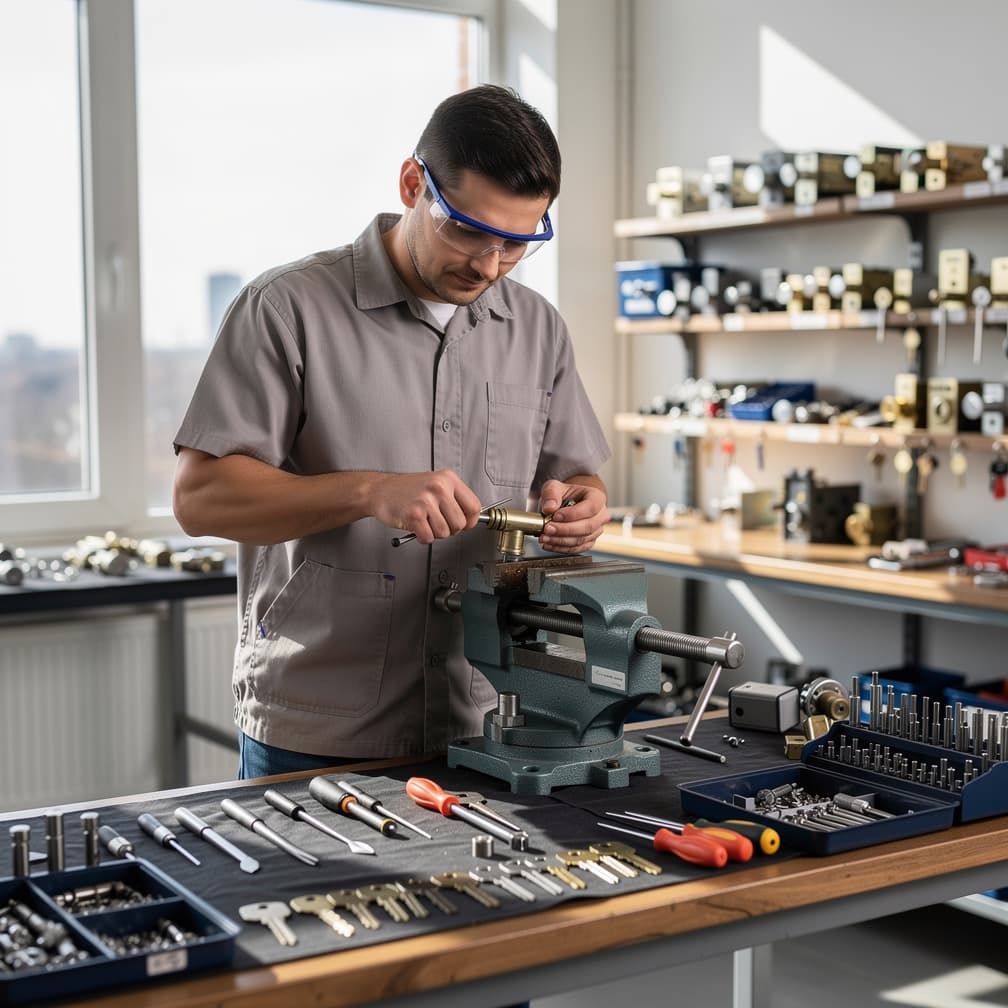

Orange County has about 106,000 businesses, and each one is a building with doors, an owner, and a reason to call a locksmith at an hour nobody enjoys. That volume changes the insurance picture more than it changes the work: the more parties on a site, the more names end up on one claim after a door fails. A tenant, a landlord, a management company, and a general contractor can all point at the same cylinder you installed last spring. Locksmith insurance in Santa Ana is what keeps that pile-up from becoming a personal problem, assuming the limits were set with a pile-up in mind. Vendor agreements in a market this size tend to be drafted by lawyers who do not know you. Read the ranges and the drivers below before you sign one.
What Makes Santa Ana Different
A certificate is a snapshot, and snapshots go stale on a schedule nobody synchronizes with your work. Your renewal date, the property's audit date, and the work order date have nothing to do with each other. That mismatch is how a shop with continuous coverage still gets flagged as uninsured on paper. The document says what was true the day it was issued and promises nothing past that morning. If a client in Santa Ana holds a certificate from last spring, it proves very little about this week. Keep the current one moving to everyone who asked for the old one, without waiting to be asked. What a certificate must show varies by state, and the California market has habits of its own. The paperwork is administrative until it becomes evidence, and then it is all anybody reads.
Local Risk Factors in Santa Ana
Photograph the shop, the bench, the machines, and the key stock before the season, then store the file somewhere other than the shop. Proving what existed is half of any property claim, and nobody assembles an inventory during an evacuation. Standard forms treat fire differently than they treat flood, and the details vary from form to form, so read yours instead of assuming. Check the California Department of Insurance's guidance before deciding which documentation matters most. A locksmith in Santa Ana who can produce a list on demand is having a very different conversation than one working from memory.
What Coverage Does a Locksmith in Santa Ana Need?
General Liability
Landlords, property managers, and dealerships ask for this one by name before a locksmith touches a door. It generally responds to third-party injury and to damage your work does to somebody else's property: a split frame, a cracked storefront, a customer who slips at your counter. It typically will not answer the claim that the service itself was performed wrong.
Example: A drill slips as a deadbolt comes out and the door frame splits down its length; general liability can help cover the repair and the claim the owner files afterwards.
Commercial Auto
The van does the work, and a personal auto policy commonly excludes the business use that puts it on the road. This line is generally aimed at the driving itself: collisions, third-party injury, and damage the vehicle does on the way to a call. Tools riding in the back are usually a separate question, and hired or non-owned vehicles are their own conversation.
Example: A rear-end collision on the way to a two in the morning lockout puts the van in a body shop for a week; commercial auto may respond to the damage and the injury claim behind it.
Professional Liability
Broken frames belong to another line; this one is aimed at the accusation that the work itself was wrong. A rekey that missed a cylinder, a master chart entered incorrectly, an access control system programmed to fail open: allegations of negligence or omissions in the service are what it is meant for. Defense costs often begin before fault is decided.
Example: A unit is entered a month after your rekey and the owner alleges the job was done incorrectly; professional liability is intended to answer that allegation and the defense it drags along.
Tools & Equipment (Inland Marine)
Key machines, transponder programmers, pick sets, scopes, and the stock of blanks in the van are the business, and they spend the day away from any fixed address. This line typically follows equipment that travels, whether it sits in the truck, at a site, or on a bench between jobs. Read how a form treats an unattended vehicle, because that condition decides claims.
Example: A van is emptied overnight outside a Santa Ana apartment building and the key machine goes with it; the truck and the tools can become two claims, with inland marine taking the gear side.
How Much Does Locksmith Insurance Cost in Santa Ana?
Locksmith Insurance is a bundle of separate policies, priced separately. The ranges below are typical figures for Santa Ana for each line; a quote prices each one against your own operations.
| Coverage | Typical range | What moves your price |
|---|---|---|
| General Liability Insurance | $80 - $230 per month | Industry and risk classification, annual revenue, number of employees |
| Commercial Auto Insurance | $230 - $650 per month | Fleet size and vehicle types, driver records and experience, coverage limits and deductibles |
| Professional Liability Insurance | $70 - $210 per month | The services you actually perform, annual revenue or billed fees, limit and retention selected |
| Inland Marine Insurance | $30 - $110 per month | Total insured value of the scheduled property, type and age of the equipment, where it is stored and how far it travels |
Prices shown are general estimates, not guaranteed rates or quotes. Your actual premium will depend on the insurer, coverage selected, business details, location, claims history, and other underwriting factors. Learn about our pricing methodology.
What Are the Insurance Requirements for a Locksmith in Santa Ana?
Workers' comp is generally required once you have your first employee. California generally requires employers to carry workers' compensation at that point. Common exemptions include sole proprietors and some partners. Confirm current thresholds with your state's workers' compensation agency before you hire.
State auto liability minimums apply to business vehicles. California's minimum auto liability limits are $30,000/$60,000/$15,000 (bodily injury per person / per accident / property damage). Contracts and lenders often require more than the state floor.
Where to verify licensing and coverage rules. The California Department of Insurance publishes consumer guidance and current insurance requirements for California businesses. When a contract or lease demands specific wording, the California Department of Insurance's guidance is the authoritative place to check.
Get Your Locksmith Quote in Santa Ana
Compare rates from multiple carriers. Free quotes, no obligation.
Operating in Santa Ana
- Equipment value creeps upward quietly. A code machine, a scope, a transponder programmer, and a full pick set add up to more than most owners guess when a quote in Santa Ana asks for a number.
- Vendor portals deactivate an expired certificate without telling anyone, so a Santa Ana shop can lose work orders for a week before noticing the phone went quiet at the wrong time of year.
- Blame follows the last hand on the lock. A door that binds after a wet month, a cylinder that fails in year three, and a burglary next door all point back to your visit first.
- Jobs that pay well often sit an hour out, sometimes past the Orange County line, and every mile of that drive is vehicle exposure carrying the entire toolset in the back.
How to Buy: Advice for Santa Ana Owners
Gather five things before you shop and the process takes an afternoon instead of a week: last year's revenue, the split between residential, automotive, and commercial work, your service radius, a list of vehicles with the people who drive them, and a replacement value for the gear in each van. Every one of those figures moves a number on the quote. Guessing at the equipment value is the common mistake, because a key machine, a scope, and programming tools add up quietly over years. Undercount it and Inland Marine has less to work with than you assumed on the day the van gets emptied. Undercount the revenue and the audit corrects you later. The California Department of Insurance publishes consumer guidance on what insurers may ask for at audit, which is worth a look before your first renewal. A locksmith in Santa Ana who brings real numbers gets quotes from participating carriers that describe the same business, which is the only way a comparison means anything.
FAQ
Locksmith Insurance in Santa Ana: FAQ
Yes, and that is the exposure owners underestimate. If a unit is entered a week later, the person who last touched the lock is the first name anyone thinks of. Whether coverage responds depends on the allegation: physical damage points one way, a claim that the service itself was mishandled points another. Records of the authorization and the work performed are what shorten the argument.
High enough to satisfy the toughest contract you hold, and high enough to survive the worst plausible version of a job rather than the average one. A contract in Santa Ana can name an amount, and that amount is the floor rather than the target. Look at defense costs too, since defending a claim you eventually win can still eat into the limit under some policies.
It proves a policy existed on the day it was issued, carrying the limits printed on it. The certificate is not the policy and promises nothing about next month. If a client asks for additional insured status, the certificate showing it is only the receipt; the endorsement on the policy is what does the work. Keep a list of everyone holding one so a renewal reaches them without being chased.
Property managers, facilities teams, dealerships, general contractors running hardware installs, and landlords writing a shop lease. A building manager in Santa Ana can require a current certificate before adding you to a vendor list, and a lot manager can require one before a van passes the gate. The request usually names limits and specific wording rather than simply asking whether you carry insurance.
Revenue, the mix of residential, automotive, and commercial work, your service radius, the vehicles and the people who drive them, the replacement value of your equipment, your claims history, and the limits your contracts name. Cutting keys is not the driver. After-hours emergency work generally prices differently from scheduled work, because a hurried job leaves less room to catch a mistake before it becomes a claim.
Damage to a customer's property during your work is usually a General Liability question, and that line may help cover the repair along with any claim that follows. One exception is worth knowing: damage you caused deliberately, with the customer's authorization, to get a door open is typically a billing conversation rather than a claim. That is exactly why a signed authorization matters before the drill comes out on a Santa Ana call.
Sources
- 1.U.S. Census Bureau, County Business Patterns (2022), Orange County(Orange County has about 106,000 business establishments.)
- 2.California Department of Insurance(California Department of Insurance publishes consumer guidance for insurance buyers.)


