







































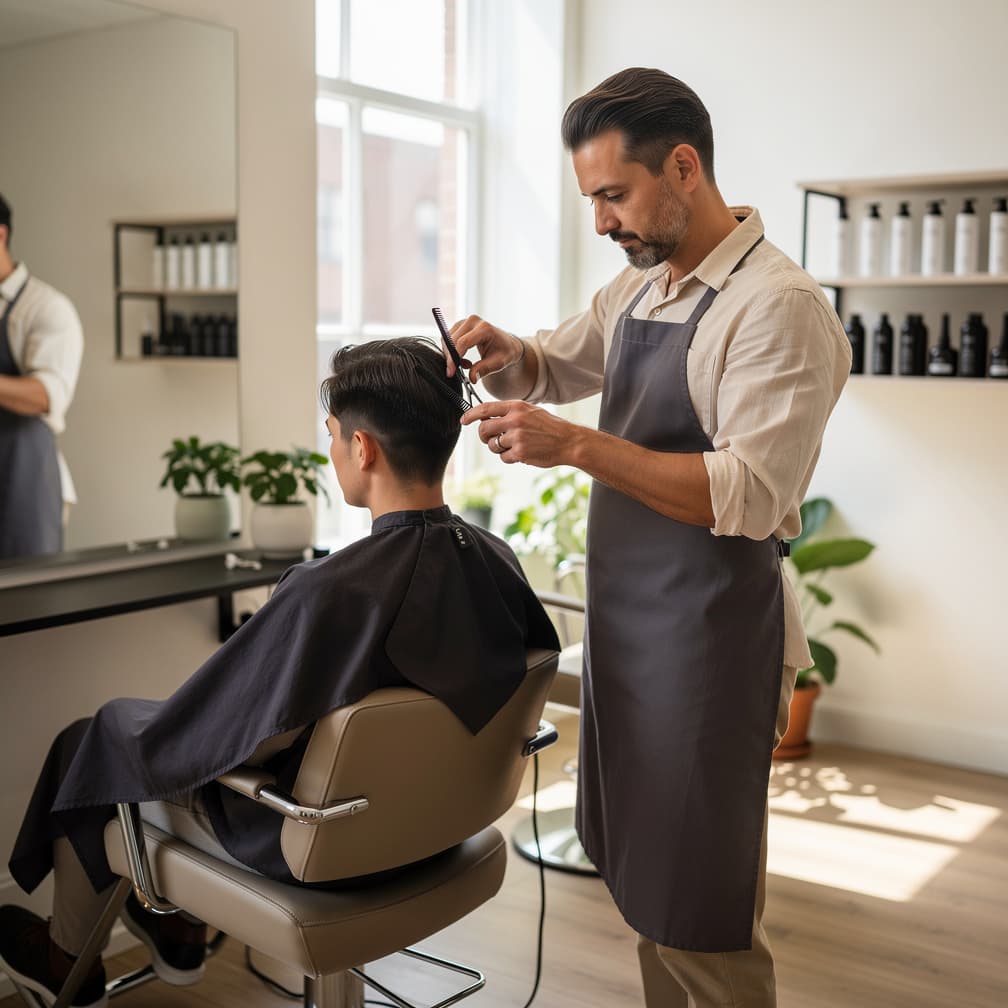

A wet floor by the shampoo bowl is the least expensive thing in your shop to fix and the most expensive thing to ignore. Hair salon insurance in Santa Clarita is built around the ordinary hour: a client who slips walking to a chair, color that lands on a cashmere sweater, a flat iron that scorches a station. Any one of those can turn into a demand letter before the appointment book closes. Los Angeles County has about 304,000 businesses, and the landlord behind any of those storefronts can ask for proof of coverage before handing over keys. Producing the certificate is quick; the harder question is whether the limits behind it match what your lease actually demands. What follows lays out what salons carry, what moves the price, and where the gaps sit.
What Makes Santa Clarita Different
Waivers of subrogation show up in salon leases and almost nobody asks what they actually do. The waiver stops your carrier from chasing the landlord after paying for damage the landlord caused. Carriers price that clause, because it removes money they might otherwise recover after a loss. Nothing about it is unusual in California, and refusing it usually is not on the table. Knowing it exists is what stops the surprise when your quote comes back higher than expected. Per-occurrence and aggregate limits sit in the same paragraph and get read as one number. They are two numbers: one claim, and everything the policy may handle across a whole year. A busy Santa Clarita salon with three small claims can find the aggregate before it expects to.
Local Risk Factors in Santa Clarita
Wildfire reaches a salon through the air long before it reaches the block. Smoke settles into towels, capes, retail packaging, and the ventilation a chemical service depends on, and clients notice the smell before you do. Evacuation orders close a shop that never burned at all. Commercial Property may respond to smoke damage as physical loss, though a policy usually wants to see damage rather than inconvenience, and a closure ordered with no damage nearby often falls outside it. Ask a California carrier how it treats smoke and how it treats a civil authority closure, since those are two separate questions with two separate answers. A Santa Clarita salon can meet both in one week.
What Coverage Does a Hair Salon in Santa Clarita Need?
General Liability
A client slips near a shampoo bowl and the injury claim arrives with a lawyer attached. That is the third-party territory this line is built for: bodily injury on your floor, damage to a customer's property in your care, and the defense costs behind both. It typically leaves out injuries to your own staff, and complaints that the service itself was performed badly.
Example: A toddler waiting for a haircut pulls a rolling cart over and needs stitches; general liability may help cover the emergency bill and the demand letter that arrives afterward.
Professional Liability
Where general liability argues about the floor, this line argues about the work. A relaxer that damages hair, a color correction that goes wrong, advice that costs a client her length: the allegation is that the service was performed badly. Defense costs are often the larger half, and they usually arrive before fault is settled. Physical damage to your building sits elsewhere.
Example: A bridal party's lightening service leaves breakage the day before the wedding and the client demands payment for extensions; professional liability might respond to that claim and its defense.
Commercial Property
Mirrors, stations, dryers, washers, and a wall of retail stock are what a salon actually owns, and this is the line written to that figure. Fire, theft, vandalism, and storm damage are the usual triggers, and a settlement follows the contents number you supplied rather than the room you have. Flood typically sits outside it, and a worn-out dryer motor reads as maintenance.
Example: Somebody breaks the front glass overnight and clears the retail shelf in Santa Clarita; commercial property might answer for the stock, the glass, and the mess left behind.
Workers Compensation
States ask for this one as soon as you have employees, and the threshold varies, so the California Department of Insurance publishes the current requirements for employers. Salon injuries are ordinary rather than dramatic: a burn from a hot tool, a cut from shears, a back that gives out after nine hours standing, and this line is meant for those. It is rated per hundred dollars of payroll.
Example: A stylist steadies a client, catches her wrist on a hot iron, and misses three weeks; workers compensation is generally intended to handle the treatment and part of the lost wages.
Business Owners Policy
One package instead of two policies: property and liability written together, usually at a better number than the pieces bought apart. For a small salon it is often the sensible core, and landlords generally accept it as proof of coverage. Workers compensation is not part of it, and a heavy chemical or skin-treatment menu can push a shop outside a standard bundle.
Example: A back room fire closes a two-chair shop for a month; a business owners policy can help with the repairs and, where income protection is included, some of the lost bookings.
How Much Does Hair Salon Insurance Cost in Santa Clarita?
Hair Salon Insurance is a bundle of separate policies, priced separately. The ranges below are typical figures for Santa Clarita for each line, except workers compensation, which is rated per $100 of payroll; a quote prices each one against your own operations.
| Coverage | Typical range | What moves your price |
|---|---|---|
| General Liability Insurance | $45 - $130 per month | Industry and risk classification, annual revenue, number of employees |
| Professional Liability Insurance | $40 - $140 per month | The services you actually perform, annual revenue or billed fees, limit and retention selected |
| Commercial Property Insurance | $95 - $310 per month | Building value and construction type, roof age and condition, fire protection class |
| Workers Compensation Insurance | $0.75 - $2.74 per $100 of payroll | Employee classification codes, total annual payroll, experience modification rate |
| Business Owners Policy Insurance | $90 - $260 per month | Annual revenue and industry class, building and contents values, square footage and building age |
Prices shown are general estimates, not guaranteed rates or quotes. Your actual premium will depend on the insurer, coverage selected, business details, location, claims history, and other underwriting factors. Learn about our pricing methodology.
What Are the Insurance Requirements for a Hair Salon in Santa Clarita?
Workers' comp is generally required once you have your first employee. California generally requires employers to carry workers' compensation at that point. Common exemptions include sole proprietors and some partners. Confirm current thresholds with your state's workers' compensation agency before you hire.
Flood damage is typically excluded from standard policies. Standard commercial property and builders-risk-type policies typically exclude flood damage. Flood exposure varies address by address, so check your premises in FEMA's Flood Map Service Center before deciding; if you sit in a mapped flood zone, a separate policy through the National Flood Insurance Program is the usual starting point.
Where to verify licensing and coverage rules. The California Department of Insurance publishes consumer guidance and current insurance requirements for California businesses. When a contract or lease demands specific wording, the California Department of Insurance's guidance is the authoritative place to check.
Get Your Hair Salon Quote in Santa Clarita
Compare rates from multiple carriers. Free quotes, no obligation.
Operating in Santa Clarita
- Your busiest hours put the most people on the wettest floor in a Santa Clarita salon, which is why a slip claim tends to arrive on a full book rather than a quiet one.
- Clients hand you coats, bags, and phones without thinking twice, and property sitting in your care gets treated differently by many policies than property you own outright.
- A stylist in Santa Clarita who takes a chair somewhere else on her day off is still a payroll question at your audit, whether or not anyone thought to mention her.
- Water runs all day through bowls, washers, and heaters, so the supply line that lets go at three in the morning is this trade's most common overnight loss.
How to Buy: Advice for Santa Clarita Owners
Cash flow decides more of this than risk appetite does, so build the purchase around what you can sustain. A policy you cancel in month four protects nothing and leaves a gap on your record that carriers can see later. Price a Business Owners Policy first, because bundling property and liability is usually the tighter structure for a small Santa Clarita shop. Then price the pieces separately and compare, since a bundle is not automatically better for a salon with unusual services. Add Workers Compensation against real payroll only, and ask about pay-as-you-go billing if your seasons swing hard. Check the California Department of Insurance's guidance before deciding how to structure a premium payment plan. Ask what happens if a payment lands late, because the answers vary far more than owners expect. Then compare quotes from participating carriers with those terms on the table rather than the premium alone.
FAQ
Hair Salon Insurance in Santa Clarita: FAQ
Off-site work is worth asking about out loud, because some forms concentrate on the premises. Injury to a client at a location you do not control, and damage to tools you carried there, can be handled quite differently from the same events inside your salon. Tell a carrier how often you work away from the chair. A yes you assumed is worth less than a yes in writing.
Expect questions about payroll, your service list, square footage, contents value, and loss history. Chemical services get their own attention, and so does anything touching skin. Booth renters come up as well, along with whether you hold current certificates from them. Gather all of it onto one page before you shop, since sending the same facts to everyone is what makes participating carriers' quotes comparable at all.
Selling retail puts you inside a distribution chain, and a reaction to a product on your shelf can name you next to its maker. General Liability often includes products and completed operations, though that is worth confirming rather than assuming. Stock also rates differently from equipment when a fire takes both. Tell every carrier what you sell, not only what you do at the chair.
Damage to a customer's property while it sits in your care is a common small claim, and it is worth knowing your options before one happens. General Liability might respond depending on how a form treats property in your custody, and some policies restrict exactly that. Paying a few hundred dollars yourself can cost less than a claim that reprices a renewal for years. Ask what your deductible does to a loss that size.
Most landlords ask for proof before handing over keys, and a Santa Clarita lease usually names the limit you have to carry. Getting a quote first tells you what that clause actually costs while you can still negotiate it. General Liability is the line the paragraph is normally aimed at. Sign first and you pay whatever the paragraph demands, without any leverage left.
Nobody can price it from a page. The number gets built from your payroll, your service menu, your contents value, and your claims history. A one-chair shop and a twelve-station salon running chemical services are different risks entirely. The cost table on this page shows the published ranges by coverage, and where you land inside them depends on facts a carrier asks you for directly. Compare quotes with identical inputs so the ranges mean something.
Sources
- 1.U.S. Census Bureau, County Business Patterns (2022), Los Angeles County(Los Angeles County has about 304,000 business establishments.)
- 2.California Department of Insurance(California Department of Insurance publishes consumer guidance for insurance buyers.)
- 3.FEMA / FloodSmart(Flood coverage is typically purchased separately; FEMA administers the National Flood Insurance Program.)


