







































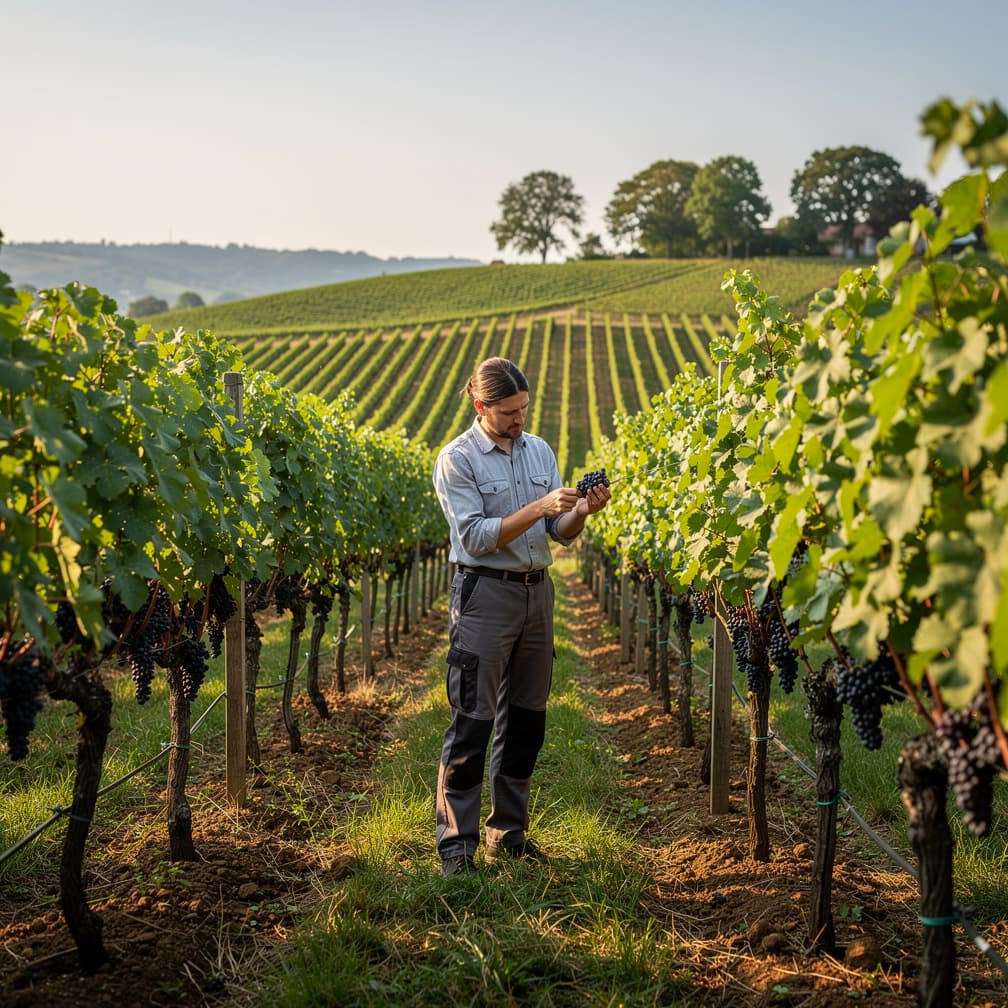

Frost settles into the low rows overnight and the shoots that looked fine at dusk are brown by morning. Nothing burned and nothing broke, yet the loss is real: the block yields less at harvest and the cellar runs short. This is the gap that surprises people shopping for vineyard insurance in Santa Clarita, because a standard property form is written around buildings and contents, and fruit still hanging on the vine typically sits outside it. Growing crops usually need their own arrangement, priced on their own terms. In a thin county like Los Angeles County, the roster of carriers willing to look at both the estate and the acreage can be short, which makes the order you ask questions in matter. Ask what happens to the fruit before you ask what happens to the barn.
What Makes Santa Clarita Different
Wind takes the light things first: netting, shade sails, signage, the canopy over a patio bar. None of that feels like a real loss until a guest is standing underneath it. Then a weather event becomes a liability question about what you secured and when you last checked. Keeping a maintenance log is unglamorous, and it is the plainest claim defense a vineyard owns. Photographs before a storm and after one settle arguments that memory alone cannot settle later. A vineyard in Santa Clarita with regular public hours should log inspections along the guest paths. Carriers in California weigh that documentation when a claim turns into an argument about negligence. Habits like that cost nothing and quietly change how a bad afternoon ends for everyone.
Local Risk Factors in Santa Clarita
Wildfire threatens a vineyard twice: the fire itself, and everything the smoke does before it arrives. Flame can take a barn, a fence line, and the equipment stored beside it, and Commercial Property may respond for those structures subject to the terms you agreed to. Smoke is the harder conversation, because taint in the fruit, closed roads, and cancelled events cause losses that look nothing like a burned building, and many forms want physical damage to your own property first. Air quality that keeps guests home is usually not a claim. Ask a plain question of every quote in California: what happens when nothing on the estate burns and the season is lost anyway? The answer is worth knowing before smoke reaches Santa Clarita.
What Coverage Does a Vineyard in Santa Clarita Need?
General Liability
Anyone who walks onto the property for a tasting, a tour, or a wedding brings the exposure General Liability is built around: a slip on a wet tasting room floor, a child who pulls a stack of cases over, a guest hurt on a gravel path. Venues and planners commonly demand it before booking. Injuries to your own crew typically sit elsewhere, with Workers' Compensation.
Example: A tour group cuts across a hose left on the walkway, and one guest goes down and breaks a wrist. The medical bills and the letter that follows are what this line may take up.
Commercial Property
Barns, the tasting room, storage buildings, tanks, fences, and gates sit on a schedule, and that schedule is what Commercial Property gets quoted from. Damage from fire, wind, or a burst line may be paid up to the listed values, so old values quietly become your problem. Flood typically falls outside the form, and fruit still growing in the block usually does too.
Example: Wind peels half the roof off the barrel storage barn and rain reaches what is inside overnight. Rebuilding the structure and replacing the soaked contents is the claim this line is meant to handle.
Workers Compensation
Guest injuries and staff injuries go to different places, and Workers' Compensation is the staff side: a cellar hand lifting a hose, a picker working a slope, a server carrying cases up steps. Medical care and lost wages generally land here. It is priced per hundred dollars of payroll rather than as a flat monthly figure, and requirements vary by state.
Example: A seasonal worker slips off a bin trailer during crush and cannot lift anything for six weeks. Wage replacement and the treatment that follows are what this line typically takes on.
Tools & Equipment (Inland Marine)
The tractor, the sprayer, and the pruning tools never stay put, and a building policy tends to stop at the wall. Inland Marine is the line that follows mobile property around the block and off the estate, where theft or sudden damage to scheduled gear might be answered. Wear, rust, and mechanical failure from age are usually excluded.
Example: Someone lifts a sprayer out of an unlocked barn overnight and a block goes unsprayed for a week in Santa Clarita. Replacing the unit is what a scheduled equipment claim could come down to.
How Much Does Vineyard Insurance Cost in Santa Clarita?
Vineyard Insurance is a bundle of separate policies, priced separately. The ranges below are typical figures for Santa Clarita for each line, except workers compensation, which is rated per $100 of payroll; a quote prices each one against your own operations.
| Coverage | Typical range | What moves your price |
|---|---|---|
| General Liability Insurance | $120 - $490 per month | Industry and risk classification, annual revenue, number of employees |
| Commercial Property Insurance | $350 - $1,350 per month | Building value and construction type, roof age and condition, fire protection class |
| Workers Compensation Insurance | $0.75 - $2.74 per $100 of payroll | Employee classification codes, total annual payroll, experience modification rate |
| Inland Marine Insurance | $65 - $280 per month | Total insured value of the scheduled property, type and age of the equipment, where it is stored and how far it travels |
Prices shown are general estimates, not guaranteed rates or quotes. Your actual premium will depend on the insurer, coverage selected, business details, location, claims history, and other underwriting factors. Learn about our pricing methodology.
What Are the Insurance Requirements for a Vineyard in Santa Clarita?
Workers' comp is generally required once you have your first employee. California generally requires employers to carry workers' compensation at that point. Common exemptions include sole proprietors and some partners. Confirm current thresholds with your state's workers' compensation agency before you hire.
Flood damage is typically excluded from standard policies. Standard commercial property and builders-risk-type policies typically exclude flood damage. Flood exposure varies address by address, so check your premises in FEMA's Flood Map Service Center before deciding; if you sit in a mapped flood zone, a separate policy through the National Flood Insurance Program is the usual starting point.
Where to verify licensing and coverage rules. The California Department of Insurance publishes consumer guidance and current insurance requirements for California businesses. When a contract or lease demands specific wording, the California Department of Insurance's guidance is the authoritative place to check.
Get Your Vineyard Quote in Santa Clarita
Compare rates from multiple carriers. Free quotes, no obligation.
Operating in Santa Clarita
- A tour group walks past equipment that was never staged for visitors, and the difference between a working yard and a guest area is often a single rope.
- Wine club fulfillment contracts carry their own insurance clause, and it rarely matches the clause a venue partner in Santa Clarita insisted on last season.
- Seasonal staff turn over every year, which means the safety walkthrough that happened once has to happen again before the first busy weekend of the season.
- Barrels and tanks are heavy, and moving them is the kind of routine work that produces the injury claims nobody saw coming out of a quiet week.
How to Buy: Advice for Santa Clarita Owners
Claims start with a moment, not a form: a guest on the ground, a missing sprayer, water standing in the barn. What you do in the first hour shapes everything after it. Photograph the scene, get names, and call the carrier that same day rather than waiting to see whether it turns into something. Before you buy, ask how a claim gets reported, who inspects it, and how long scheduling takes when a whole area files at once. General Liability claims often arrive months later as a letter, so keep incident notes even when nobody complains on the day. Inland Marine claims want the serial numbers you meant to write down last spring. An estate in Santa Clarita that keeps a simple incident log earns a better claim and a better renewal. Weigh participating carriers in California on claim terms too, not price alone.
FAQ
Vineyard Insurance in Santa Clarita: FAQ
Typically not under a standard form. Commercial Property policies generally exclude flood, and rising water is priced separately through its own program. That surprises owners whose lowest building sits beside a creek that never caused trouble before. Ask where the boundary falls between wind-driven rain, a burst pipe, and surface water, because the three can be treated very differently. The answer decides whether one storm becomes a claim or nothing at all.
A vineyard runs two businesses on one property: agriculture and hospitality. The acreage side asks about crops, equipment, and weather. The tasting room side asks about guest counts, events, and who pours. A quote built only on farm assumptions can miss the visitor exposure entirely, and one built only on retail assumptions can miss the field gear. Describe both halves to every carrier in California, or you get a price for a business you do not run.
Often not on its own. Most forms want physical damage first, so an empty parking area and a cancelled event with nothing broken usually falls outside business interruption terms. Where damage does occur, the waiting period decides what the claim is worth. Ask what specifically triggers a lost income payment, and whether blocked guest access counts by itself. Write that answer down before the season, because nobody reads a form well during a bad week.
Payroll by role instead of one lump number, revenue split between wine sales and hospitality, a building schedule at replacement cost, an equipment list with serial numbers, an event calendar, and any contract that mentions insurance. That packet is the whole difference between comparing quotes and comparing guesses. Send the identical set to every participating carrier you approach, since a quote built on different assumptions is not a competing quote.
Not automatically, and the answer varies more than owners expect. Some carriers treat unpaid help as employees for injury purposes, some do not, and some ask about it before they will quote at all. Workers' Compensation is where the question usually lands, and it can hinge on how your state defines the relationship. Check the California Department of Insurance's guidance before deciding, and tell your carrier who is actually on the property during harvest.
Sometimes, and sometimes only with an endorsement. Pouring away from your own property can be treated as a different exposure, and the organizer will likely want naming on a certificate regardless. Ask whether off-premises events are contemplated in your form and whether a late one-off addition is possible. General Liability is the line that usually travels, though assuming it does without asking is how a booth ends up bare.
Sources
- 1.California Department of Insurance(California Department of Insurance publishes consumer guidance for insurance buyers.)
- 2.FEMA / FloodSmart(Flood coverage is typically purchased separately; FEMA administers the National Flood Insurance Program.)


