







































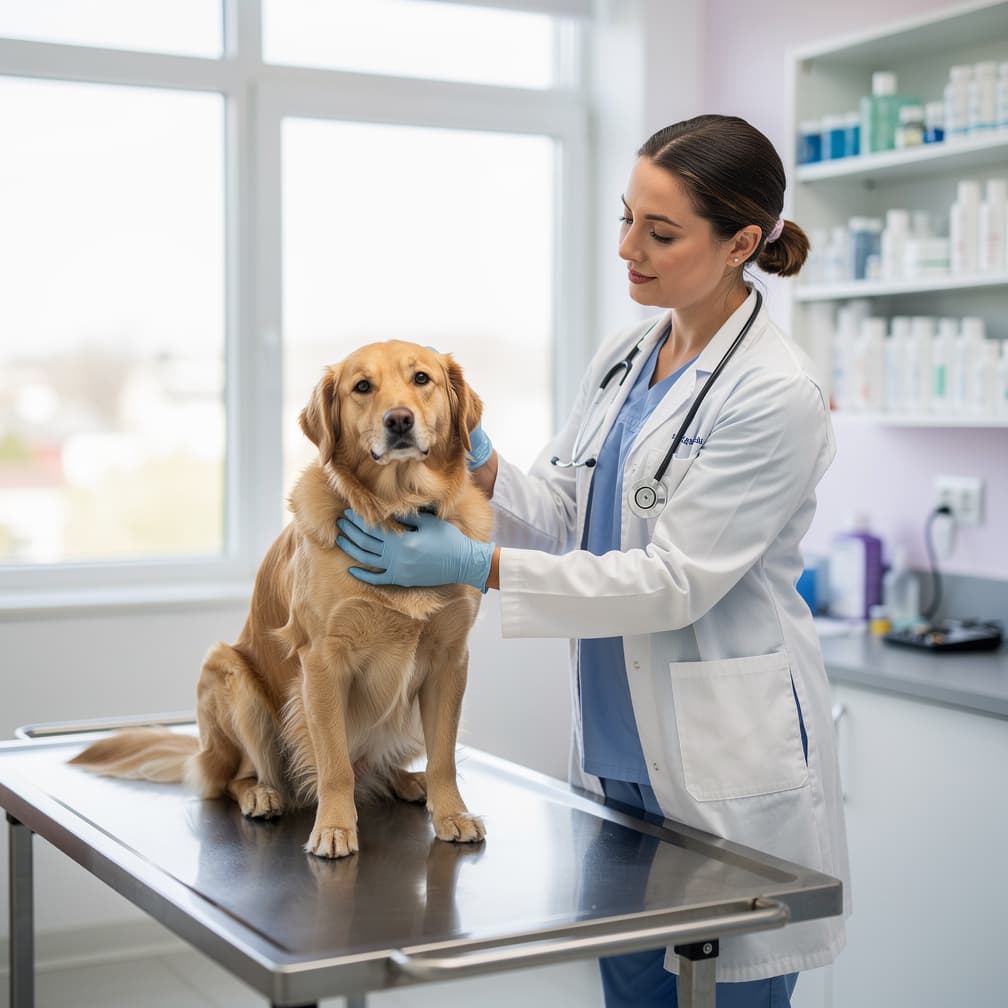

As a veterinary clinic in Santa Maria, you hold three businesses at once that rarely sit under one roof: a medical practice, a pharmacy counter, and a boarding operation with living inventory. Veterinary clinic insurance in Santa Maria has to reach all three, and most owners find the seams only when a claim lands in one of them. A drug dispensed against the wrong chart is a professional question. A dog bitten in a run is a custody question. A stolen laptop full of client records is a records question. One incident can raise two of those at once, and the answer usually depends on wording you agreed to months earlier. Read the definitions before the price sheet.
What Makes Santa Maria Different
Storm season disrupts staffing before it disrupts buildings, and a clinic without technicians cannot run a surgery day. Roads close, schools close, and the people who restrain animals for a living are the ones who cannot get in. You still have inpatients, and somebody has to be there whether the schedule survived the morning or not. That is an operations problem with an insurance shadow: an injured employee on a short shift is a workers compensation question. Fatigue and improvisation are how staff injuries actually happen, not because anybody was being careless. A Santa Maria clinic that plans its coverage gaps early is managing a claim it never has to file. Weather also postpones elective procedures, which return later as a compressed week and more chances to err. Ask what your California policy assumes about staffing, because the assumption gets priced whether or not it holds.
Local Risk Factors in Santa Maria
Decide where the animals go before anybody tells you to leave. A written evacuation plan with crates, transport, a destination, and a staff roster is worth more than any endorsement during the hour it matters, and underwriters ask about it. Then build the property file: photograph equipment, store serial numbers off-site, and keep the drug log somewhere that is not the drug room. Coverage questions follow from all of that, because a claim is a documentation exercise conducted under stress. Ask what your Santa Maria form says about smoke contamination and what it leaves out. The California Department of Insurance publishes consumer guidance on commercial property terms in California.
What Coverage Does a Veterinary Clinic in Santa Maria Need?
Professional Liability
A client disputes a diagnosis, a dosage, or a surgical decision, and the argument arrives as a letter rather than a conversation. Professional Liability is meant for exactly that: the claim about your medical judgment and the legal defense that trails it. It typically does not reach a lobby injury or damage to your building, which live elsewhere.
Example: A dog is discharged after routine surgery and a complication follows; eleven months later the owner's attorney requests the full record and files a claim. Professional Liability may respond to the defense costs and any settlement, depending on the form.
General Liability
Landlords, lenders, and referral partners ask for this one by name, usually before you have treated anybody. General Liability generally addresses third-party injury and property damage at your premises: the client who slips in reception, the visitor bitten in the waiting room. Treatment decisions sit outside it, and so does harm to an animal in your custody.
Example: A client steps onto a wet entry mat, goes down hard, and leaves with a fractured wrist and an attorney's card. General Liability can help cover the medical claim and the defense that follows in Santa Maria.
Commercial Property
Wear, tear, and machines that quit on their own are typically outside this one, which is written for sudden events instead. Commercial Property could respond to fire, storm, theft, or vandalism damage to your building, exam tables, lab equipment, and refrigeration. Rising water is usually excluded and priced on a policy of its own.
Example: Somebody forces the back door overnight and leaves with a laptop, a monitor, and whatever was easy to carry. Commercial Property might answer for the door, the hardware, and the mess left behind at a Santa Maria clinic.
Workers Compensation
Bites, scratches, needlesticks, and lifting injuries are the routine hazards of restraining frightened animals for a living. Workers Compensation is intended to address employee medical costs and lost wages after those injuries, and it prices off payroll and class code rather than your square footage. Requirements for employers vary by state.
Example: A technician holding a cat for a blood draw takes a deep bite through the thumb and misses three weeks of shifts. Workers Compensation could pick up the treatment and part of the lost wages.
Cyber Liability
Where the other lines follow physical things, this one follows your records. Cyber Liability is designed to address a breach of patient files, payment data, or your scheduling system: notification, forensics, and the income lost while nobody can book an appointment. A paper chart left in an exam room is usually a different conversation.
Example: A phishing email reaches whoever reconciles the card terminal, and the practice software is locked by opening. Cyber Liability might fund the response and the days you cannot schedule.
How Much Does Veterinary Clinic Insurance Cost in Santa Maria?
Veterinary Clinic Insurance is a bundle of separate policies, priced separately. The ranges below are typical figures for Santa Maria for each line, except workers compensation, which is rated per $100 of payroll; a quote prices each one against your own operations.
| Coverage | Typical range | What moves your price |
|---|---|---|
| Professional Liability Insurance | $95 - $320 per month | The services you actually perform, annual revenue or billed fees, limit and retention selected |
| General Liability Insurance | $65 - $200 per month | Industry and risk classification, annual revenue, number of employees |
| Commercial Property Insurance | $160 - $525 per month | Building value and construction type, roof age and condition, fire protection class |
| Workers Compensation Insurance | $0.75 - $2.74 per $100 of payroll | Employee classification codes, total annual payroll, experience modification rate |
| Cyber Liability Insurance | $45 - $160 per month | Records held and how sensitive they are, annual revenue and industry, multi-factor authentication and backup practices |
Prices shown are general estimates, not guaranteed rates or quotes. Your actual premium will depend on the insurer, coverage selected, business details, location, claims history, and other underwriting factors. Learn about our pricing methodology.
What Are the Insurance Requirements for a Veterinary Clinic in Santa Maria?
Workers' comp is generally required once you have your first employee. California generally requires employers to carry workers' compensation at that point. Common exemptions include sole proprietors and some partners. Confirm current thresholds with your state's workers' compensation agency before you hire.
Flood damage is typically excluded from standard policies. Standard commercial property and builders-risk-type policies typically exclude flood damage. Flood exposure varies address by address, so check your premises in FEMA's Flood Map Service Center before deciding; if you sit in a mapped flood zone, a separate policy through the National Flood Insurance Program is the usual starting point.
Where to verify licensing and coverage rules. The California Department of Insurance publishes consumer guidance and current insurance requirements for California businesses. When a contract or lease demands specific wording, the California Department of Insurance's guidance is the authoritative place to check.
Get Your Veterinary Clinic Quote in Santa Maria
Compare rates from multiple carriers. Free quotes, no obligation.
Operating in Santa Maria
- Your certificate carries an expiration date that a counterparty's tracking service reads more faithfully than any human being ever will.
- An after-hours emergency in Santa Barbara County can arrive with an owner you have never met and a history nobody can verify, which is precisely the file that gets read line by line later.
- Equipment ages quietly, and a policy paying actual cash value on a ten-year-old analyzer settles for noticeably less than the replacement invoice asks.
- Construction next door can cut power or water to a Santa Maria suite, and a clinic without either cannot run a surgery day even with a completely undamaged building.
How to Buy: Advice for Santa Maria Owners
Decide who signs before you decide what to buy, because the entity on the policy has to match the entity on the lease. A clinic owned by one company and operating under another creates a mismatch that surfaces at the worst possible time. Confirm the legal name, the California registration, and any affiliated entities you want named on the policy. Then map coverage to exposure in plain language: people, patients, property, records. Workers Compensation answers the first, Professional Liability speaks to the second, and Commercial Property the third, subject to what each form actually says. Records ride on their own line and rarely fit anywhere else. Write your exposures down one side and the quotes down the other, then look for what has no partner. A gap you can name in Santa Maria is a gap you can price, and CPK sets quotes from participating carriers next to each other so the gaps show.
FAQ
Veterinary Clinic Insurance in Santa Maria: FAQ
Usually the lease decides that for you. A landlord can require proof of coverage, specific limits, and additional insured status before it hands over keys, and the demand sits in the insurance exhibit rather than the body of the agreement. Read the exhibit before you shop, because it names your floor. What a Santa Maria landlord can ask for is a contract question, so the document itself is the authority.
Cost tracks what you do far more than where you are. Payroll by role, surgical volume, whether you board animals overnight, your claims history, and the limits your lease demands are the levers underwriters pull. A clinic running a busy surgical schedule with kennel staff prices differently than one that mostly vaccinates. The cost table on this page shows published ranges, and your application is what turns a range into a number.
That is a custody question rather than an ordinary injury claim. An animal in your care is property you are holding, and General Liability forms commonly limit or exclude damage to property in your care, custody, and control. Animal bailee terms are what usually address it, either built into a clinic form or added by endorsement and capped by a sublimit. Ask which applies before a Santa Maria boarding weekend makes it urgent.
Generally not. Liability forms typically carve out professional services, and a diagnosis, a dosage, or a surgical decision is exactly that. The lobby slip and the treatment dispute are two different claims, and they usually live on two different lines. Professional Liability is the one meant for the second, subject to how the form defines the covered service and when it treats the claim as made.
It proves a policy existed on the day the form was issued and that somebody was named on it. It does not prove the limits fit your contract, that the coverage is still in force, or that the wording your counterparty wanted was ever endorsed on. A certificate is a snapshot rather than a promise. The endorsement sitting behind it is the part that does the work.
The per-occurrence limit is the most available for any one claim. The aggregate is the most available across the entire policy year, no matter how many claims arrive. A clinic that has a bad spring, say two lobby injuries and a boarding incident, can draw an aggregate down before summer. The next claim then meets whatever is left, even though the premium was paid in full.
Sources
- 1.California Department of Insurance(California Department of Insurance publishes consumer guidance for insurance buyers.)
- 2.FEMA / FloodSmart(Flood coverage is typically purchased separately; FEMA administers the National Flood Insurance Program.)


