







































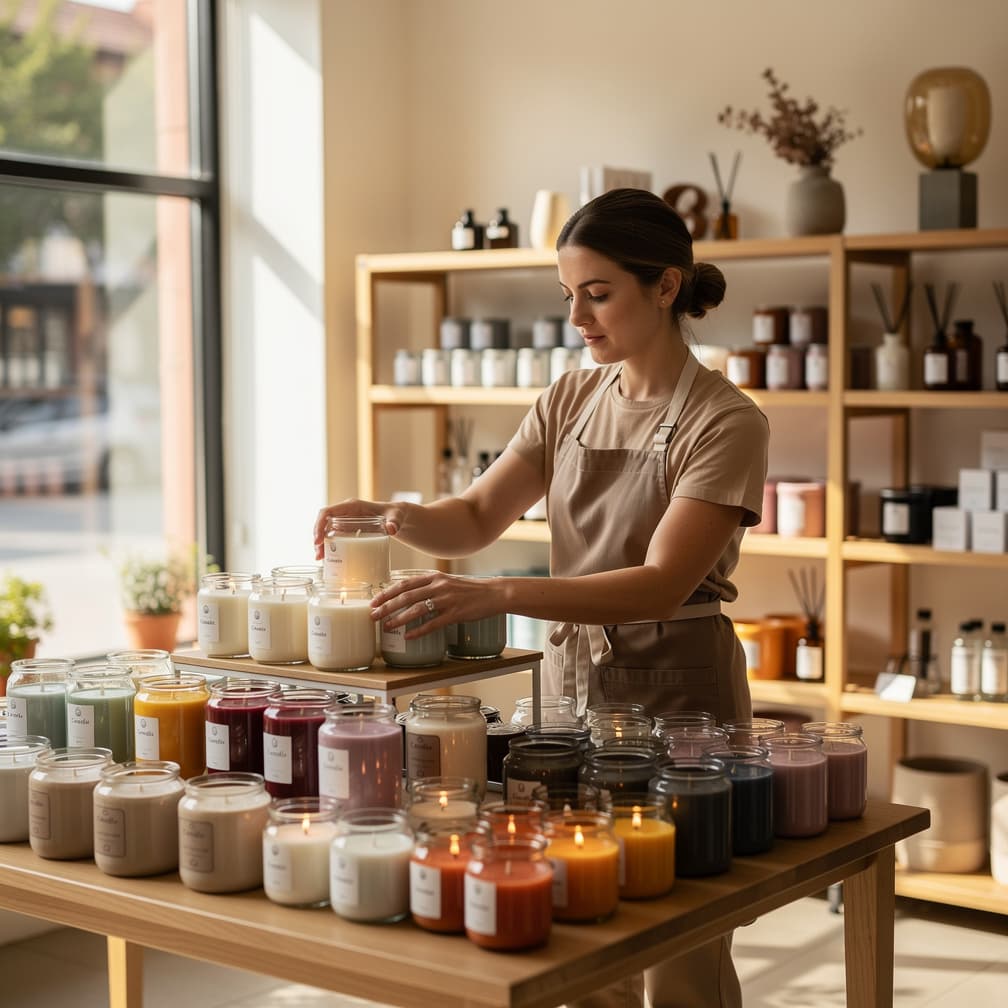

As a candle store in Simi Valley, you sign a lease written for a general retailer and then you fill the space with fuel. That mismatch is where the insurance conversation starts. Candle store insurance in Simi Valley has to satisfy a landlord's boilerplate first, and the boilerplate rarely mentions wax, testers, or the burn bar you set up near the entrance. Tell the carrier about all of it anyway. An underwriter who learns about open flame after a loss has a very different conversation with you than one who priced it on day one. Silence at quote time is how a covered fire turns into a contested one. Fifteen minutes of honesty on the application does more for your position than any limit you can buy.
What Makes Simi Valley Different
Your claims history moves the premium more than anything else you can change this month. Two small slip claims can cost you more in renewal pricing than they ever paid out to anyone. That arithmetic is uncomfortable, and it is why small losses are sometimes worth paying yourself. The deductible is the lever, and a higher one buys a lower premium and more of your own exposure. Set it at a level you could actually absorb during your slowest month, not your best one. A shop in Simi Valley with steady cash flow can carry more deductible than one running tight. Ask every participating carrier in California to quote two deductible levels on the same submission. The spread between the two tells you what a carrier actually thinks of your shop.
Local Risk Factors in Simi Valley
Before a dry season, photograph the stockroom and record what is on the shelves, because smoke claims settle on documentation and very little else. A candle store's inventory absorbs odor in a way a hardware store's does not, and proving that stock is unsellable is harder than proving it burned. Air handling matters too: filters and a sealed stockroom change how much of the floor survives. A business owners policy can help cover contaminated inventory and the closure that follows, though a policy generally will not pay for stock you simply decided not to sell. That line between damaged and devalued is where wildfire claims in California get argued, and it is worth asking about in Simi Valley before the smoke arrives.
What Coverage Does a Candle Store in Simi Valley Need?
General Liability
A shopper turns quickly near a seasonal table, catches a display corner, and lands on the floor: that claim is what General Liability is generally written to answer. It may help cover third-party injury, damage you cause to someone else's property, and the defense costs that usually outrun both. Your own stock and fixtures sit outside it entirely.
Example: A customer's child pulls a jar off a shelf and cuts a hand on the glass in Simi Valley; general liability may respond to the medical claim and the letter that follows it.
Commercial Property
Lenders and landlords ask about this line first, because it is the one answering for the building, the fixtures, and the stock inside them. It typically responds to fire, storm damage, vandalism, and theft, subject to your deductible and to how the inventory was valued. Flood and gradual deterioration usually fall outside it.
Example: A stockroom fire ruins cartons of finished candles and the shelving holding them; commercial property could help pay to replace both, once the valuation is settled.
Workers Compensation
Injuries to your own staff are not a liability claim; they run through Workers Compensation instead, which most states require once you have employees. It can help cover medical treatment and a share of lost wages after a burn, a lift, or a fall behind the counter. Requirements and thresholds vary, and the California Department of Insurance publishes the current requirements for employers.
Example: A part-time employee tips a wax melter and scalds a forearm while restocking testers; workers compensation is intended to handle the treatment and the time off.
Business Owners Policy
Buying liability and property separately works fine; a Business Owners Policy puts them in one contract instead, which is why it suits a single-location retail shop. It often adds business income terms for a closure that follows a covered loss. Sublimits inside a package can sit below what a lease demands, so check the numbers rather than the label.
Example: Smoke from a neighboring unit closes a Simi Valley shop for ten days and taints the stock; a business owners policy might address the ruined inventory and the missing sales together.
How Much Does Candle Store Insurance Cost in Simi Valley?
Candle Store Insurance is a bundle of separate policies, priced separately. The ranges below are typical figures for Simi Valley for each line, except workers compensation, which is rated per $100 of payroll; a quote prices each one against your own operations.
| Coverage | Typical range | What moves your price |
|---|---|---|
| General Liability Insurance | $50 - $160 per month | Industry and risk classification, annual revenue, number of employees |
| Commercial Property Insurance | $130 - $430 per month | Building value and construction type, roof age and condition, fire protection class |
| Workers Compensation Insurance | $0.75 - $2.74 per $100 of payroll | Employee classification codes, total annual payroll, experience modification rate |
| Business Owners Policy Insurance | $100 - $310 per month | Annual revenue and industry class, building and contents values, square footage and building age |
Prices shown are general estimates, not guaranteed rates or quotes. Your actual premium will depend on the insurer, coverage selected, business details, location, claims history, and other underwriting factors. Learn about our pricing methodology.
What Are the Insurance Requirements for a Candle Store in Simi Valley?
Workers' comp is generally required once you have your first employee. California generally requires employers to carry workers' compensation at that point. Common exemptions include sole proprietors and some partners. Confirm current thresholds with your state's workers' compensation agency before you hire.
Flood damage is typically excluded from standard policies. Standard commercial property and builders-risk-type policies typically exclude flood damage. Flood exposure varies address by address, so check your premises in FEMA's Flood Map Service Center before deciding; if you sit in a mapped flood zone, a separate policy through the National Flood Insurance Program is the usual starting point.
Where to verify licensing and coverage rules. The California Department of Insurance publishes consumer guidance and current insurance requirements for California businesses. When a contract or lease demands specific wording, the California Department of Insurance's guidance is the authoritative place to check.
Get Your Candle Store Quote in Simi Valley
Compare rates from multiple carriers. Free quotes, no obligation.
Operating in Simi Valley
- Rebuilding a retail floor in Simi Valley takes longer than replacing the stock that sat on it, and your business income limit has to carry the slower of the two.
- A landlord behind a Simi Valley storefront can hold occupancy until your certificate of insurance is on file and names them correctly, so a wrong endorsement costs you rent weeks before it ever costs you a claim.
- Wholesale accounts often send a vendor packet with the insurance requirements buried on page four, and the buyer who wants your candles will not chase you for it.
- Seasonal promotional tables narrow your aisles exactly when foot traffic peaks, which is precisely when a slip claim is most likely to start.
How to Buy: Advice for Simi Valley Owners
Ask every carrier one question early: how does this policy treat a candle after it leaves the store? Product claims are the exposure owners forget, and they arrive months late from a customer's living room. Read whether products and completed operations sit inside your General Liability limit or beside it, because sharing the aggregate changes what a bad year looks like. If you sell wholesale, expect buyers to ask for additional insured status, and expect that request to come with wording you did not write. Keep your supplier invoices and batch records, because a defect argued back up the chain needs evidence. Commercial Property does not reach that exposure at all, and knowing the boundary beats assuming. Check the California Department of Insurance's guidance before deciding what a product exposure means for your shop in Simi Valley, then compare quotes from participating carriers with that question already asked.
FAQ
Candle Store Insurance in Simi Valley: FAQ
Request the endorsement, because the status is never automatic. Additional insured is a piece of policy wording rather than a courtesy: it has to be asked for, issued, and then reflected on the certificate you hand over. The form matters too, since some extend only to claims arising out of your operations. A landlord in Simi Valley can hold occupancy until that paperwork matches the lease exactly.
The deductible comes off your side of every property loss, which means small losses are yours by design. A cracked display case or one ruined carton rarely clears it. Raising the deductible lowers the premium and moves more of the ordinary breakage onto you. Pick a number you could actually write a check for in a bad week, not the one that makes a quote look attractive.
Often yes, if selling off-site fits how the policy describes your operations, but do not assume it. Some forms limit coverage to the described premises, and an organizer running a market in Simi Valley may demand additional insured status before assigning you a table. Tell a carrier about off-site selling at quote time rather than after a claim. Misdescribed operations are how coverage arguments start.
Something changed, just not at your shop. Property rates move with rebuilding costs, regional loss experience, and how participating carriers in California read retail fire risk this year. Your stock value probably drifted upward too, and the insurance-to-value calculation follows it. Ask what specifically moved before shopping, because the same driver may sit inside every quote you gather.
Open flame changes how an underwriter reads a retail shop, and some carriers price it, restrict it, or decline it outright. It is rarely a coverage problem by itself; it becomes one when it goes unmentioned. Say it out loud at quote time. A fire traced to a tester left on an unattended counter is the scenario every question about it is trying to price.
Wear and tear, gradual deterioration, and anything you damage on purpose sit outside every form. Employee theft is usually its own coverage rather than part of a property line. Flood and earth movement typically fall outside a standard property policy too. Recalls of product you sold are generally excluded unless something specific is added. Read the exclusions page before the declarations page.
Sources
- 1.California Department of Insurance(California Department of Insurance publishes consumer guidance for insurance buyers.)
- 2.FEMA / FloodSmart(Flood coverage is typically purchased separately; FEMA administers the National Flood Insurance Program.)


