







































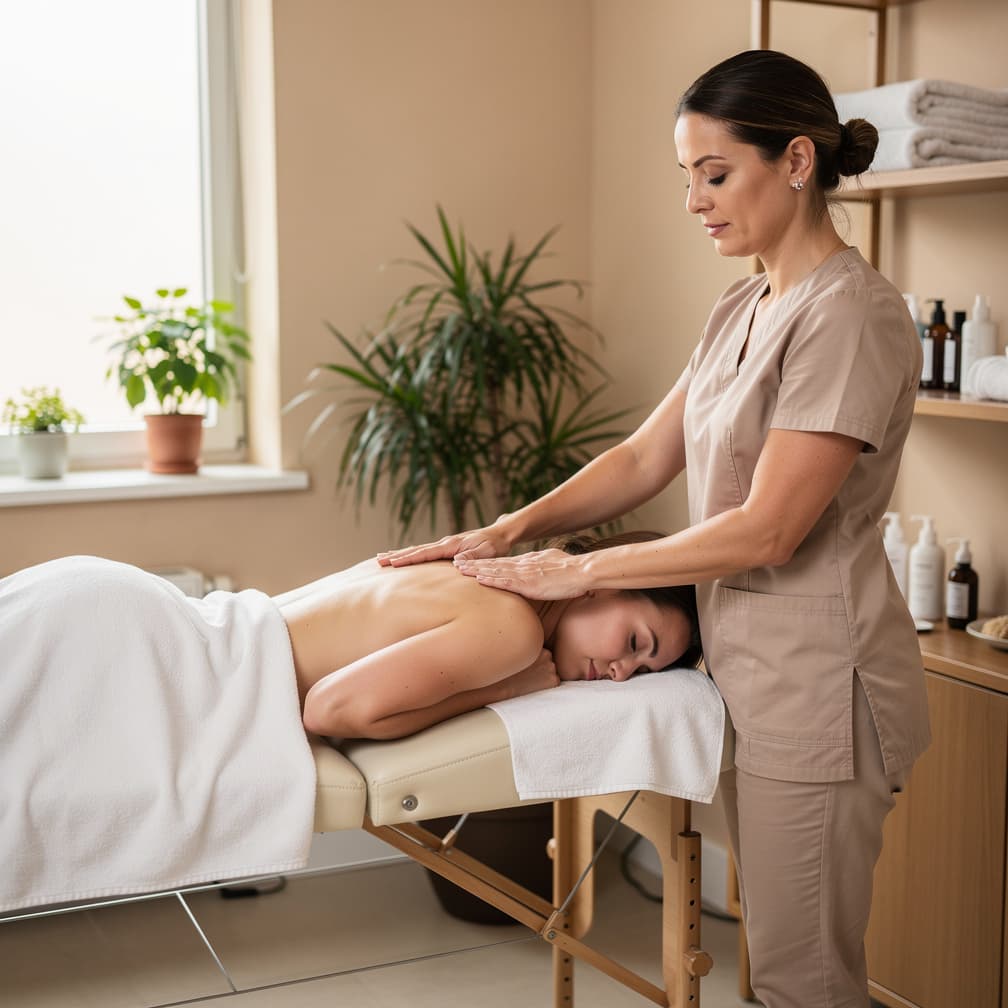

Oils and lotions sit on skin for an hour, and skin sometimes reacts. A client who leaves with a rash, a deep bruise, or a strained muscle can turn a glowing review into a demand letter inside a week. Massage business insurance in Aurora is built around the distance between what happened on the table and what the client later says happened. Around that sit the ordinary losses: someone trips in the hallway, a phone slides off a shelf while a client dresses, a fire takes out four tables and every set of linens you own. Each one starts as an apology and ends as a claim number. Participating carriers in Colorado read the same booking history differently, which is why a single quote proves very little on its own.
What Makes Aurora Different
Rain, wind, or a power cut end a massage session the same way: the room goes cold and dark. Warmth, quiet, and low light are the product, so losing utilities means losing the service itself. Damage to your own suite is the usual trigger for a property claim, and a neighbour's damage often is not. A closed street in Aurora, or a dark building with no damage to your space, sits in an awkward gap. That gap has a name in the forms, and a participating carrier can be asked to explain it in plain words. Keeping linens, oils, and electronics off the floor is unglamorous, and it decides how large a small flood gets. Photograph the storage room now, because an adjuster in Colorado has never seen it and will ask. Preparation is the part of a claim you can still control once the weather has stopped.
Local Risk Factors in Aurora
A hail-damaged roof takes a studio out of service for the wrong reason: not because anything collapsed, but because a contractor needs your rooms empty for a week. Tables get moved, linens get boxed, and bookings stop while somebody works overhead. Damage that happens during that scramble is still damage, and Colorado forms read it differently in a file than damage caused by the storm itself. Note what you moved and when you moved it. If a landlord in Aurora schedules the repair, ask in writing whether the weeks you lose are anybody's problem but yours, because the answer is frequently no.
What Coverage Does a Massage Business in Aurora Need?
Professional Liability
A client who says the session left them in more pain than they arrived with is making a claim about your judgement rather than your floor. Professional Liability is the line generally aimed at that: the alleged injury, the skin reaction, the pressure that went further than it should have. It typically does nothing about a slip in the hallway.
Example: Two days after a deep tissue session a client sees a doctor about a strained shoulder and sends a demand letter naming your studio; Professional Liability may respond to the claim and to the defense that follows it.
General Liability
Wet floors, tight hallways, and clients moving slowly after a treatment produce the ordinary injuries that have nothing to do with your hands. General Liability is what landlords and hosts want proof of, and it can help cover a client's fall on your premises or a coat ruined in your room. Complaints about the treatment itself sit elsewhere.
Example: A client stands up too quickly, catches a table leg, and breaks a wrist on an Aurora reception floor; general liability limits are typically what the resulting claim gets argued against.
Commercial Property
Tables, warmers, linens, oil stock, cabinetry, and the leasehold work you paid for are the studio, and all of it sits inside a few small rooms. Commercial Property is generally built around fire, storm, theft, and vandalism damage to those things, subject to your deductible. Rising water is usually excluded and priced as a separate decision.
Example: A fire in the unit next door leaves four massage tables and every set of linens smoke-damaged; a commercial property claim could cover replacing the contents once their values are documented.
Business Owners Policy
Buying the property side and the premises liability side apart usually costs more than buying them together, which is why a Business Owners Policy is the common starting structure for a studio with its own suite. It often adds interruption terms for the weeks a covered loss keeps rooms closed. The treatment complaint is usually not inside it.
Example: A storm opens the roof above an Aurora studio and the rooms sit closed for three weeks; a business owners policy might answer for the damaged contents and for part of the income lost while everything dries.
How Much Does Massage Business Insurance Cost in Aurora?
Massage Business Insurance is a bundle of separate policies, priced separately. The ranges below are typical figures for Aurora for each line; a quote prices each one against your own operations.
| Coverage | Typical range | What moves your price |
|---|---|---|
| Professional Liability Insurance | $45 - $150 per month | The services you actually perform, annual revenue or billed fees, limit and retention selected |
| General Liability Insurance | $40 - $130 per month | Industry and risk classification, annual revenue, number of employees |
| Commercial Property Insurance | $40 - $160 per month | Building value and construction type, roof age and condition, fire protection class |
| Business Owners Policy Insurance | $65 - $190 per month | Annual revenue and industry class, building and contents values, square footage and building age |
Prices shown are general estimates, not guaranteed rates or quotes. Your actual premium will depend on the insurer, coverage selected, business details, location, claims history, and other underwriting factors. Learn about our pricing methodology.
What Are the Insurance Requirements for a Massage Business in Aurora?
Workers' comp is generally required once you have your first employee. Colorado generally requires employers to carry workers' compensation at that point. Common exemptions include sole proprietors, partners in partnerships, and members of LLCs. Confirm current thresholds with your state's workers' compensation agency before you hire.
Where to verify licensing and coverage rules. The Colorado Division of Insurance publishes consumer guidance and current insurance requirements for Colorado businesses. When a contract or lease demands specific wording, the Colorado Division of Insurance's guidance is the authoritative place to check.
Get Your Massage Business Quote in Aurora
Compare rates from multiple carriers. Free quotes, no obligation.
Operating in Aurora
- A slip in your hallway is a premises claim, and it does not care whether the water arrived on a client's umbrella or out of your own mop bucket.
- Clients leave phones, watches, and coats in a room where they undress, and a damaged one becomes your problem the moment they mention it at the desk.
- About 100 massage businesses operate in Arapahoe County, so the adjuster handling your claim may be pricing a treatment table and a case of linens for the first time.
- Reopening after water damage waits on drying rather than on repairs, and the appointment book stays empty for all of it while the rent keeps arriving on schedule.
How to Buy: Advice for Aurora Owners
Compare more than the monthly figure, because the figure is the least informative thing in a quote. Read what triggers the coverage, what sits outside it, how defense costs are treated, and what happens if a complaint from last year is still open. Read who has to be added and whether that naming costs extra. General Liability, Professional Liability, and a Business Owners Policy are three answers to three different questions, and buying one while assuming it did the work of the others is the common mistake. The Colorado Division of Insurance publishes consumer guidance on comparing commercial insurance offers. Give participating carriers in Colorado identical facts about your Aurora studio, then decide with three comparable answers rather than one.
FAQ
Massage Business Insurance in Aurora: FAQ
Flood generally sits outside a standard commercial property form and gets priced as its own decision, which surprises owners whose tables and linens live at ground level. Rising water from a storm or an overwhelmed drain is treated differently from a pipe letting go inside a wall, and the second is the one a property form is far more likely to answer. Read what your own form says about water.
Renting a room does not put you under the host's policy, and hosts generally want the opposite: your own coverage, with them named on it. A complaint about a session follows the hands that gave it, wherever the table happened to stand. Get the requirements in writing before your first shift, since a wellness center in Aurora can bar the door over one missing endorsement.
They can, and it is a small claim that behaves like a large one. A customer's property damaged while they are on your premises is a premises exposure, and General Liability is generally the line pointed at it. Whether reporting it is worth doing depends on your deductible, since a cracked phone can cost less than the deductible it would run through. Report anything a client says they intend to pursue.
Underwriters read a claim's resolution as closely as its allegation, so a complaint that was documented and handled cleanly reads very differently from one with no paper behind it. Nothing has to have been paid out for a complaint to show up on a submission. Keep intake forms and session notes, because they are what make a resolved complaint look resolved to somebody reading the file years later.
Not automatically, and this is where studios get caught. Whoever performed the session tends to be named in a complaint alongside the business, and a form may or may not reach an independent contractor working under your name. Ask the question in writing, list the contractors on the application, and ask each of them what they hold. Participating carriers in Colorado treat that exposure differently, so the answer moves the price.
The occurrence figure is what a single client's claim can reach. The aggregate is what an entire policy year can spend across every claim combined. A studio with a full schedule works through an aggregate faster, and once it is exhausted the next complaint meets nothing. Contracts often specify both numbers for exactly that reason. Ask whether defense costs come out of those limits, since that changes what the numbers are worth.
Sources
- 1.U.S. Census Bureau, County Business Patterns (2023), Arapahoe County(Arapahoe County has about 100 businesses in this trade's category (NAICS group 812199).)
- 2.Colorado Division of Insurance(Colorado Division of Insurance publishes consumer guidance for insurance buyers.)


