







































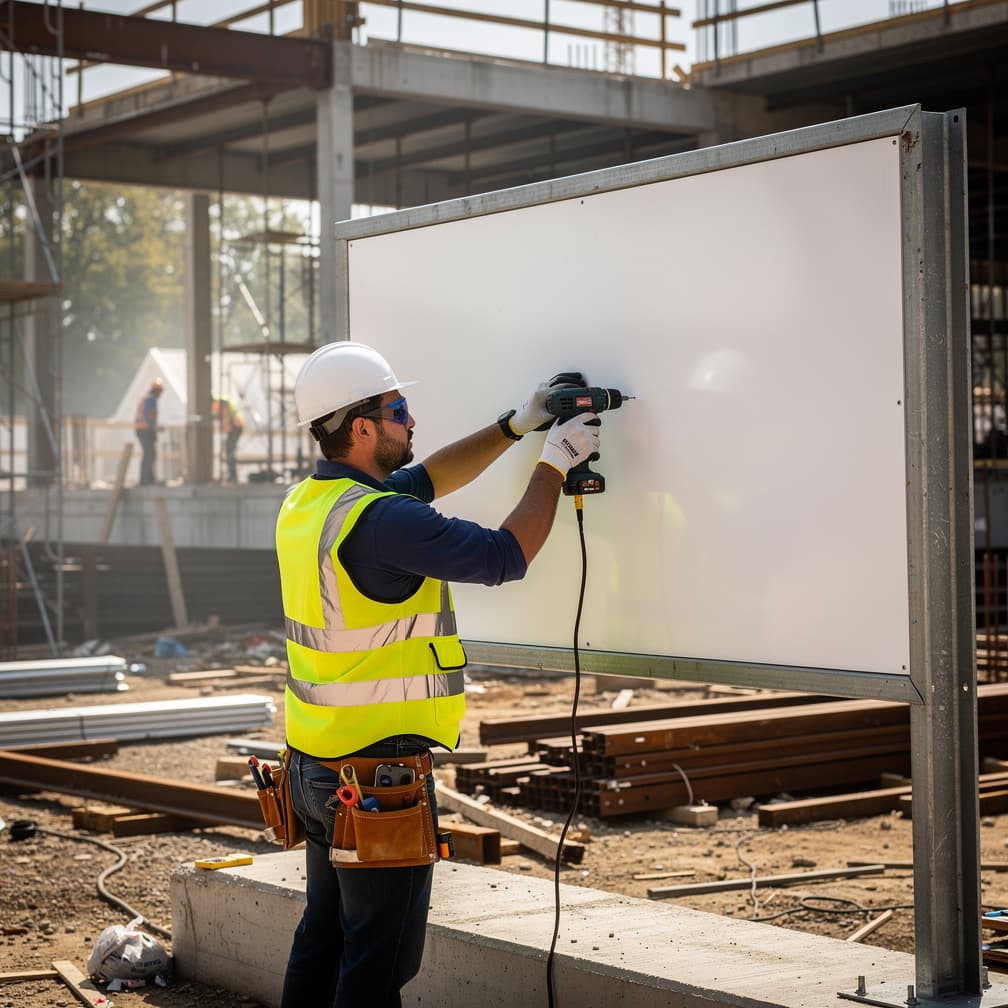

With about 20,000 businesses in Arapahoe County, the supply of walls that eventually want lettering is not the constraint on your calendar. Risk is. Sign installation contractor insurance in Aurora is what lets you say yes to the job on the tall facade instead of the easy one at eye level. Every storefront you mount to belongs to somebody with a lease, a landlord, and an opinion about who pays when the glass cracks. That chain is the reason certificates get demanded before the first bolt goes in. The height, the electrical, and the drive between sites are the three things that decide what a policy has to reach. Below, each line is laid out with its published range and its limits, so a quote stops being a mystery number.
What Makes Aurora Different
Additional insured is the phrase that costs sign contractors the most and gets read the least. It can extend your liability protection to another party for the work you performed for them. A building owner asking for it wants your policy to answer before their own policy does. That is what primary and non-contributory wording means, stripped of the legal vocabulary around it. These endorsements are never automatic, and a certificate on its own does not create them. Ask your carrier to confirm the endorsement exists, in writing, before the crew ever rolls. If a contract in Aurora demands wording your policy lacks, you find out at claim time. That is the worst possible moment to learn what you agreed to in Colorado.
Local Risk Factors in Aurora
Panels stored outside are the loss nobody budgets for. One hail event can pit or crack a whole staging area of finished substrate, and a custom sign has no salvage value at all. Then the phone rings, because every client's sign took the same storm, and now you are quoting replacements while your own inventory is gone. Commercial Property may respond to hail damage at your premises in Aurora, though property left in the open is often treated differently than property inside a building. Read that distinction closely. A shop in Colorado that stages work under cover has a cheaper conversation with an adjuster.
What Coverage Does a Sign Installation Contractor in Aurora Need?
General Liability
Landlords, general contractors, and franchise facility teams ask for this one by name before a lift ever touches their property. It can respond when your work damages a customer's building or injures somebody nearby, and completed-operations wording extends that reach to failures showing up after you leave. Damage to the sign itself, caused by your own faulty work, is typically excluded.
Example: A channel letter slips during a second-story mount and cracks the storefront glass below; general liability can help cover the window, the cleanup, and the claim the tenant files afterward.
Workers Compensation
Injuries to your own crew sit outside General Liability, and that gap is what this line fills. A fall from a lift, a shoulder torn lifting a panel, or heat illness on a roof deck may be handled here, including medical bills and a portion of lost wages. Requirements vary by state, and the Colorado Division of Insurance publishes the current requirements for employers in Colorado.
Example: A groundman steadying a pylon panel takes the weight wrong and tears a shoulder; workers compensation is generally where the surgery and the missed weeks get sorted out.
Commercial Auto
Trucks, trailers, and the lift towed behind them are business vehicles, and personal auto policies commonly exclude business use altogether. This line rates on what you drive, how far, and who is behind the wheel. It might answer for damage you cause in a parking lot as well as damage to your own vehicle. Tools riding inside are a separate question worth asking about.
Example: Backing a bucket truck into a tight lot in Aurora, your crew catches a parked sedan's fender; commercial auto is typically the line that settles that repair.
Commercial Property
Everything the other lines ignore lives here: the shop, the fabrication equipment, the vinyl and substrate on the racks, and finished panels waiting on an install date. Fire, theft, and named storm perils are the usual causes of loss. Flood is typically excluded and priced separately, and tools away from the premises often fall outside this form as well.
Example: Somebody cuts the lock on your yard overnight, and the ladders, hardware, and two pallets of substrate are gone by morning; commercial property may pick up the replacement cost.
How Much Does Sign Installation Contractor Insurance Cost in Aurora?
Sign Installation Contractor Insurance is a bundle of separate policies, priced separately. The ranges below are typical figures for Aurora for each line, except workers compensation, which is rated per $100 of payroll; a quote prices each one against your own operations.
| Coverage | Typical range | What moves your price |
|---|---|---|
| General Liability Insurance | $220 - $725 per month | Industry and risk classification, annual revenue, number of employees |
| Workers Compensation Insurance | $0.75 - $2.74 per $100 of payroll | Employee classification codes, total annual payroll, experience modification rate |
| Commercial Auto Insurance | $380 - $1,050 per month | Fleet size and vehicle types, driver records and experience, coverage limits and deductibles |
| Commercial Property Insurance | $130 - $460 per month | Building value and construction type, roof age and condition, fire protection class |
Prices shown are general estimates, not guaranteed rates or quotes. Your actual premium will depend on the insurer, coverage selected, business details, location, claims history, and other underwriting factors. Learn about our pricing methodology.
What Are the Insurance Requirements for a Sign Installation Contractor in Aurora?
Workers' comp is generally required once you have your first employee. Colorado generally requires employers to carry workers' compensation at that point. Common exemptions include sole proprietors, partners in partnerships, and members of LLCs. Confirm current thresholds with your state's workers' compensation agency before you hire.
State auto liability minimums apply to business vehicles. Colorado's minimum auto liability limits are $25,000/$50,000/$15,000 (bodily injury per person / per accident / property damage). Contracts and lenders often require more than the state floor.
Where to verify licensing and coverage rules. The Colorado Division of Insurance publishes consumer guidance and current insurance requirements for Colorado businesses. When a contract or lease demands specific wording, the Colorado Division of Insurance's guidance is the authoritative place to check.
Get Your Sign Installation Contractor Quote in Aurora
Compare rates from multiple carriers. Free quotes, no obligation.
Operating in Aurora
- Drops tend to happen during the lift rather than the mount: a panel is heaviest and least controlled in the seconds it leaves the truck bed.
- A storefront install in Aurora puts your crew directly over a public sidewalk, which turns pedestrian control into an insurance decision rather than a courtesy.
- Electrical hookups extend your exposure past the day you leave, because a connection blamed for a failure months later is still your connection.
- Landlords in Aurora can require that the building owner and the management company both be named, and that is two endorsement requests rather than one.
How to Buy: Advice for Aurora Owners
Subcontractors are the gap most sign shops discover at audit rather than at binding. Hire a crane operator or an electrician for a day and your policy may treat them as your employees unless they carry their own coverage and you hold the certificate proving it. Collect that certificate before the work, not after, because General Liability rates and Workers Compensation audits both reach back into what you paid out. An uninsured sub can turn one subcontracted hour into your claim. Keep a folder of their certificates with expiration dates somebody actually watches. The Colorado Division of Insurance publishes consumer guidance on contractor coverage questions in Colorado. Ask participating carriers how they handle subcontracted labor in Aurora before assuming it is included.
FAQ
Sign Installation Contractor Insurance in Aurora: FAQ
Usually, though the price and the terms change. Participating carriers in Colorado weigh how recent the claim is, what caused it, and what you changed afterward. A documented tie-off routine or a new spotter policy adopted after an incident is evidence, and evidence is what moves an underwriter. Three clean years does more for a renewal than any negotiating tactic, so the fix starts on the jobsite.
Often, yes. A contract states a minimum, and that minimum was set by someone protecting their building, not your business. The facade you mount to and the people walking under it can produce a claim larger than any limit a work order names. Raising a limit tends to be cheap per dollar next to the first dollar of coverage. Ask for two options in Aurora and compare.
Licensing rules vary by state and city, so the reliable answer is simpler: the landlord will ask. Property owners and management companies routinely require a certificate of insurance, with named limits, before a lift comes onto their property. That requirement lives in the contract rather than anywhere else, which means it shifts from client to client. Get the wording from them before you price the job.
A quote in Aurora turns on payroll, the height you work at, how many vehicles you run, and your claims history. A one-truck shop doing ground-level work and a crew running a boom lift on tall facades are not the same risk, and the pricing reflects that. Published ranges for each coverage sit in the cost table further down. Bring payroll and loss runs to a quote and the number gets specific fast.
General Liability is the line usually built for damage to someone else's property caused by your work. It can also respond when a passerby is injured by that same fall. What it typically will not do is fund redoing the sign itself, since your own workmanship is generally excluded. Read the exclusions with your carrier so the gap becomes a decision instead of a discovery.
Usually not. Personal policies commonly exclude vehicles used in a business, and hauling panels, ladders, and mounting hardware is business use by almost any definition. Commercial Auto is the form written for it, and it also weighs your radius, the trailer, and who drives. A denial after an accident is an expensive way to learn where that line sits.
Sources
- 1.U.S. Census Bureau, County Business Patterns (2022), Arapahoe County(Arapahoe County has about 20,000 business establishments.)
- 2.Colorado Division of Insurance(Colorado Division of Insurance publishes consumer guidance for insurance buyers.)


