







































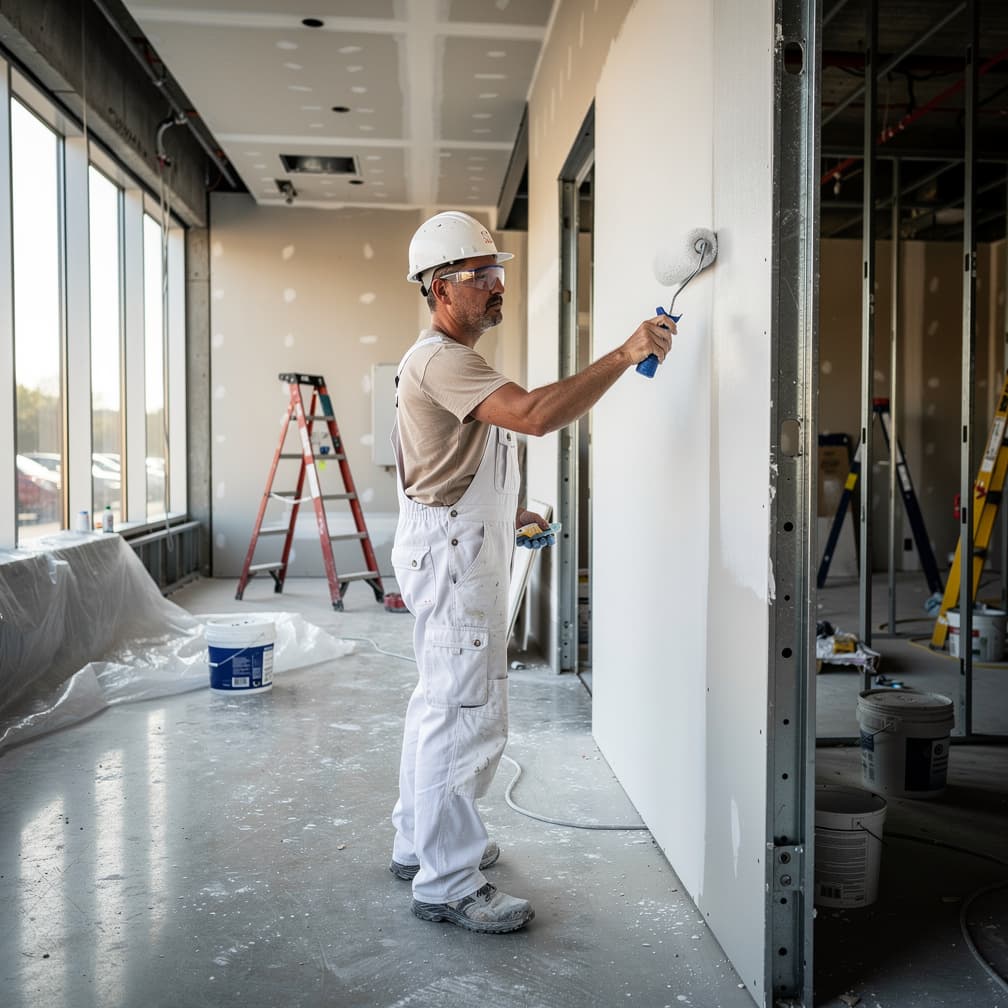

As a painting contractor in Boulder, you are hired to change one surface and expected to leave every other surface exactly as you found it. That is the whole job description, and it is also the whole liability picture. Masking fails. A tarp slides. A sprayer tip drifts. The client's tile, carpet, or countertop absorbs the difference, and the repair comes out of your margin or out of a policy. Painting contractor insurance in Boulder exists for the gap between careful work and a bad ten seconds. Put a crew on the payroll and a second obligation arrives, because injuries to your own people run on rules that change at the state line. The sections below take those two problems in order, with what each one costs.
What Makes Boulder Different
Certificate holders and additional insureds are different things, and contracts use the words as though they were the same. A holder gets notified, while an additional insured gets rights under the policy, which is a much bigger ask. Agreeing to the second while buying the first is how painting crews end up bare on the exact job. The gap only surfaces when a claim lands, which is the worst possible moment to learn new vocabulary. Read the insurance exhibit and ask a participating carrier to confirm the form numbers can actually meet it. If a client in Boulder sends a sample certificate, use it, since it shows what they will accept. Requirements travel with the project, so the same client can ask for different wording on the next building. Comparing quotes from participating carriers in Colorado only works when every quote answers the same exhibit.
Local Risk Factors in Boulder
Hail in Boulder does two things to a painting contractor at once: it dents the truck parked at the job site and it stops exterior work cold. Vehicle damage from hail is a Commercial Auto question, and comprehensive is generally the part of that policy asked to address it. Dropping comprehensive to trim a monthly bill is a decision people regret in one afternoon. The trailer and the staging are a separate purchase again. Clients whose siding got hit may want a repaint sooner than you can schedule one, and that surge carries its own risks anywhere in Colorado.
What Coverage Does a Painting Contractor in Boulder Need?
General Liability
Builders, property managers, and homeowners ask for this one by name before a crew opens a can. It is the line that typically answers when your work damages somebody else's property or injures somebody who is not on your payroll. Correcting your own defective coat generally sits outside it, and so does damage to your own tools.
Example: A ladder shifts against a bay window and the glass cracks while the client watches from the driveway. The replacement and the trim repair could fall to this line, subject to your deductible.
Workers Compensation
Injuries to your own crew sit outside a liability form entirely, and that gap is what this line exists to close. Medical care and a share of lost wages for a painter hurt on a ladder are what it is generally built around. Thresholds and rates differ by state, and contracts often demand it regardless of what any threshold says.
Example: A painter misses the last rung carrying a five-gallon bucket and lands wrong on a concrete slab. The emergency visit and the weeks he cannot hold a roller are the sort of cost this coverage is meant to absorb.
Commercial Auto
The truck hauling your crew, your ladder rack, and a trailer full of sprayers is doing business work, and personal auto policies typically exclude exactly that use. This line is intended for vehicles owned by or titled to the business, and it prices on who is behind the wheel. Comprehensive is the piece that takes on hail, theft, and a tree in the parking lot.
Example: Your foreman rear-ends a sedan on the way to a job in Boulder with the trailer still hitched. Injury claims and the other driver's repairs may run through this policy rather than out of your bank account.
Tools & Equipment (Inland Marine)
Liability forms look at what you did to other people; this one looks at what happened to your own portable equipment. Sprayers, compressors, ladders, staging, and sanders are what it generally schedules, whether they sit in a truck, a trailer, or a locked shop. Wear, mechanical breakdown, and flood are common exclusions worth reading before you buy.
Example: A trailer gets popped open overnight and two sprayers and a stack of ladders are gone by morning. What you can recover depends on the schedule you filed and on where that trailer was parked.
How Much Does Painting Contractor Insurance Cost in Boulder?
Painting Contractor Insurance is a bundle of separate policies, priced separately. The ranges below are typical figures for Boulder for each line, except workers compensation, which is rated per $100 of payroll; a quote prices each one against your own operations.
| Coverage | Typical range | What moves your price |
|---|---|---|
| General Liability Insurance | $100 - $350 per month | Industry and risk classification, annual revenue, number of employees |
| Workers Compensation Insurance | $0.75 - $2.74 per $100 of payroll | Employee classification codes, total annual payroll, experience modification rate |
| Commercial Auto Insurance | $190 - $525 per month | Fleet size and vehicle types, driver records and experience, coverage limits and deductibles |
| Inland Marine Insurance | $25 - $110 per month | Total insured value of the scheduled property, type and age of the equipment, where it is stored and how far it travels |
Prices shown are general estimates, not guaranteed rates or quotes. Your actual premium will depend on the insurer, coverage selected, business details, location, claims history, and other underwriting factors. Learn about our pricing methodology.
What Are the Insurance Requirements for a Painting Contractor in Boulder?
Workers' comp is generally required once you have your first employee. Colorado generally requires employers to carry workers' compensation at that point. Common exemptions include sole proprietors, partners in partnerships, and members of LLCs. Confirm current thresholds with your state's workers' compensation agency before you hire.
State auto liability minimums apply to business vehicles. Colorado's minimum auto liability limits are $25,000/$50,000/$15,000 (bodily injury per person / per accident / property damage). Contracts and lenders often require more than the state floor.
Where to verify licensing and coverage rules. The Colorado Division of Insurance publishes consumer guidance and current insurance requirements for Colorado businesses. When a contract or lease demands specific wording, the Colorado Division of Insurance's guidance is the authoritative place to check.
Get Your Painting Contractor Quote in Boulder
Compare rates from multiple carriers. Free quotes, no obligation.
Operating in Boulder
- A property manager in Boulder can withhold building access until a certificate names the ownership entity exactly right, and a misspelled entity is a rejected document. The crew still shows up, and the clock still runs.
- Ladders live on the truck rack, which makes them visible from the street and easy to lift at a light or overnight. The replacement cost is annoying; the day your crew cannot reach a second floor is the real loss.
- Sprayers need cleaning, tips wear out, and the machine that dies midweek stops production for everyone standing around it. Owners rarely price that downtime into a bid, and it arrives on schedule anyway.
- Every occupied repaint in Boulder puts your crew between somebody's furniture and somebody's floor, with the client home to watch it happen. That proximity is why interior work generates the frequent, small property damage claims rather than the dramatic ones.
How to Buy: Advice for Boulder Owners
Before the busy stretch starts, do the boring hour. Pull your loss runs, update the vehicle list, count the tools, and check whether your limits still match the biggest contract you signed last year. Renewal is the one moment you can change things without a deadline pressing on the conversation. Workers' Compensation payroll estimates deserve the same update, since an estimate carried over from a slower year invites an expensive audit. General Liability limits should be measured against the exhibits you expect to see, rather than the ones you already met. Check the Colorado Division of Insurance's guidance before deciding how to handle a coverage change mid-year. An hour now turns into a real comparison of quotes from participating carriers in Boulder, instead of a scramble across Boulder County the week a contract lands.
FAQ
Painting Contractor Insurance in Boulder: FAQ
Generally no. Workmanship and the cost of correcting your own work sit outside standard liability forms, which are built around damage to other people's property and injuries to other people. A callback is a business cost. That distinction settles more disputes than any limit does, and it is worth confirming in writing before you assume otherwise.
The claim from his mistake tends to walk uphill toward you, and your own policy may end up answering for it. Audits can treat uninsured subs as though they were your payroll, so the helper who looked inexpensive gets repriced a year later. Collect a certificate before he opens a can, and read the expiration date rather than the logo.
Standard property forms typically exclude flood, and the exclusion reaches your gear in a trailer as readily as it reaches a building. Flood is written and priced separately through its own program. Water from a burst pipe is a different question with a different answer, which is why describing the source accurately matters at claim time.
Nobody can promise a number, and the direction is predictable enough. Frequency usually matters more than size, so three small ruined-floor claims can read worse than one larger loss. Underwriters look across several years rather than one. That is the honest argument for a higher deductible: absorbing the small ones quietly can keep your record readable, provided the cash is there when it happens.
Annual revenue, gross payroll, a list of vehicles and who drives them, a list of tools with values, and the limits your contracts demand. Loss runs help too. Gather them once and every quote answers the same question, which is the only way a comparison means anything. Guessing at payroll produces a price that gets corrected later at audit.
The questions change, and so does the answer. Height, ladders, scaffolding, and lifts are all underwriting subjects, and older coatings raise a set of their own. Interior work puts the crew inside finished rooms where one spill can cost more than the job. Underwriters price both, and your mix between them moves the number more than your address in Boulder does.
Sources
- 1.Colorado Division of Insurance(Colorado Division of Insurance publishes consumer guidance for insurance buyers.)


