







































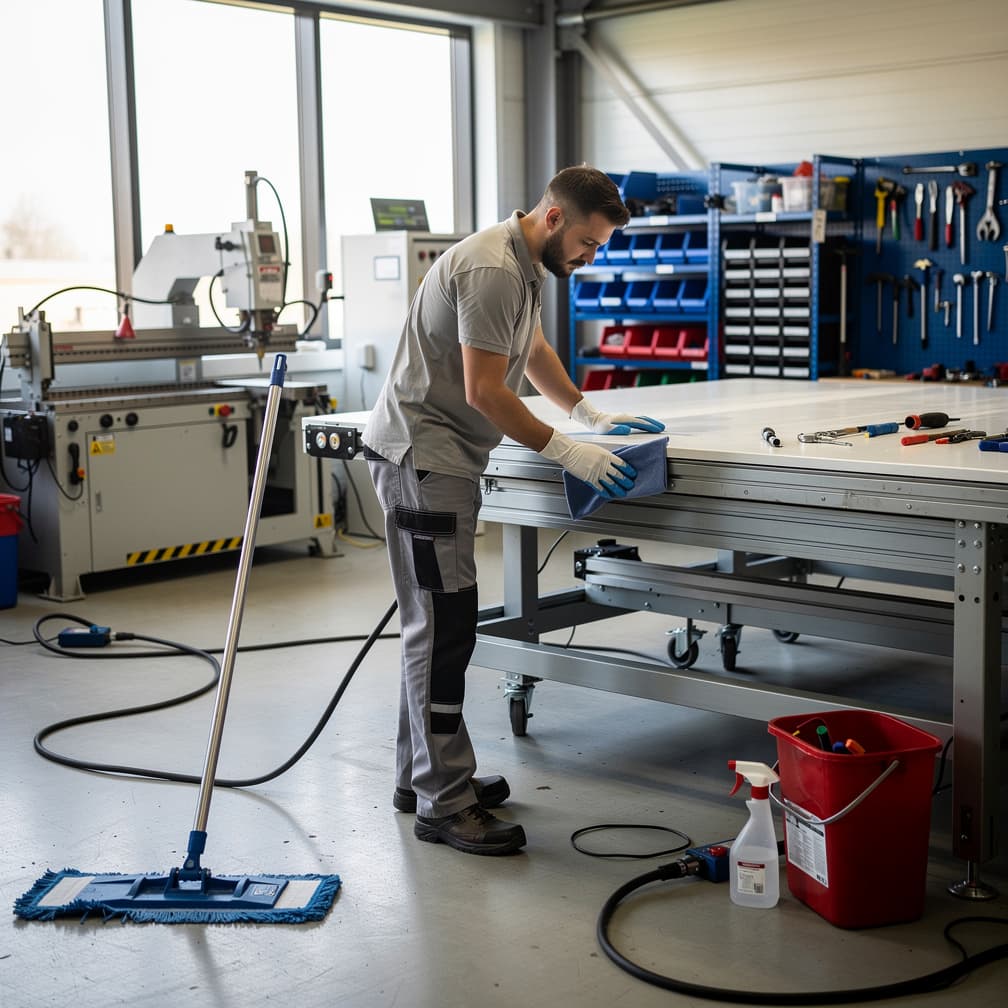

Wet floor signs cost a few dollars and are the first thing a defense lawyer asks about. A visitor who slips in a lobby your crew just finished can sue the building owner, and the owner's contract tends to send that claim back to you. Broken glass, a cart gouge across a wood floor, a vacuum that catches a cord and drops a monitor: they all end the same way, with someone billing you for property you were hired to look after. That is the working shape of cleaning service insurance in Centennial, and it is why limits and additional-insured wording matter more than logos. Quotes hang on payroll, crew size, the kinds of buildings you enter, and what you have already paid out. Read on for how each of those pushes the number on a Centennial quote.
What Makes Centennial Different
Additional-insured wording trips more cleaning contracts than the limit on the certificate ever does. Naming your client is easy; naming the owner, the manager, and their lender takes an endorsement. Endorsements are not free, not automatic, and nobody mentions that until the certificate bounces back. Ask for the exact legal names in writing, because a compliance portal will reject a near match. A property manager in Centennial can require the wording on the policy form, not merely on the certificate. Those are different documents, and only one of them means anything to an adjuster later. General Liability typically grants that status by endorsement, subject to what the form actually allows. Read what the endorsement grants before you promise a client in Centennial that it says what they want.
Local Risk Factors in Centennial
Before you pick a comprehensive deductible, price it against a hail week rather than a quiet one. One storm can hit every vehicle you own at the same moment, which is what makes hail different: it is not one claim, it is the whole fleet on one day. A deductible that looked clever per vehicle multiplies fast. Ask how a carrier in Colorado applies it when several vans are damaged in a single event, because the answer varies and it is not on the quote summary. Then look at where the vehicles sit overnight in Centennial, since covered parking is a cheaper control than any endorsement you can buy.
What Coverage Does a Cleaning Service in Centennial Need?
General Liability
Nearly every cleaning contract names this line, because a fall in a client hallway is the loss a building owner is worried about. General Liability may answer for bodily injury to a tenant or visitor and for damage to property you do not own, subject to the form you buy. Property in your care, custody, or control is typically excluded, so the floor you are servicing can sit outside it.
Example: A visitor slips on a lobby floor your crew finished twenty minutes earlier and sues over a broken wrist. Defense costs and a settlement of that kind may fall inside the policy, subject to your limits.
Workers Compensation
A crew member comes off a ladder during high dusting, and the medical bill and the lost wages are a payroll matter rather than a liability one. Workers Compensation is rated per hundred dollars of payroll and on job classification, so a floor tech and an office cleaner price differently. What is required varies by state and by how workers are classified.
Example: A night crew member slips carrying an extractor down a stairwell and misses six weeks. Treatment and a share of lost wages are typically handled through this line, depending on how the claim gets classified.
Commercial Auto
Personal auto forms typically exclude business use, which is where cleaning crews get caught: the van carrying supplies between job sites sits outside that policy the moment it is working. Commercial Auto is written for the use and might respond to collision damage, injury to others, and, where comprehensive is included, theft or storm damage. Equipment inside the vehicle is often a separate question with its own limit.
Example: A van rear-ends a car at a light on the way to the second job of the day, with a buffer and a case of solution in the back. Repairs and the other driver's claim could be handled here, subject to the deductible.
Business Owners Policy
Where General Liability deals with what your crew does to other people, a Business Owners Policy bundles that liability with coverage for property you own: the machines, the supplies, the contents of a storage space. Small cleaning operations buy it for the simplicity. Equipment away from your own premises is often limited, and rising water generally sits outside the form entirely.
Example: A storage space is broken into overnight in Centennial, and the buffer, the extractor, and a pallet of supplies are gone before the first shift. A theft loss like that is commonly what this policy is meant to address.
How Much Does Cleaning Service Insurance Cost in Centennial?
Cleaning Service Insurance is a bundle of separate policies, priced separately. The ranges below are typical figures for Centennial for each line, except workers compensation, which is rated per $100 of payroll; a quote prices each one against your own operations.
| Coverage | Typical range | What moves your price |
|---|---|---|
| General Liability Insurance | $50 - $150 per month | Industry and risk classification, annual revenue, number of employees |
| Workers Compensation Insurance | $0.75 - $2.74 per $100 of payroll | Employee classification codes, total annual payroll, experience modification rate |
| Commercial Auto Insurance | $170 - $450 per month | Fleet size and vehicle types, driver records and experience, coverage limits and deductibles |
| Business Owners Policy Insurance | $65 - $180 per month | Annual revenue and industry class, building and contents values, square footage and building age |
Prices shown are general estimates, not guaranteed rates or quotes. Your actual premium will depend on the insurer, coverage selected, business details, location, claims history, and other underwriting factors. Learn about our pricing methodology.
What Are the Insurance Requirements for a Cleaning Service in Centennial?
Workers' comp is generally required once you have your first employee. Colorado generally requires employers to carry workers' compensation at that point. Common exemptions include sole proprietors, partners in partnerships, and members of LLCs. Confirm current thresholds with your state's workers' compensation agency before you hire.
State auto liability minimums apply to business vehicles. Colorado's minimum auto liability limits are $25,000/$50,000/$15,000 (bodily injury per person / per accident / property damage). Contracts and lenders often require more than the state floor.
Where to verify licensing and coverage rules. The Colorado Division of Insurance publishes consumer guidance and current insurance requirements for Colorado businesses. When a contract or lease demands specific wording, the Colorado Division of Insurance's guidance is the authoritative place to check.
Get Your Cleaning Service Quote in Centennial
Compare rates from multiple carriers. Free quotes, no obligation.
Operating in Centennial
- A caution sign costs almost nothing and is the first thing anyone asks about after a visitor falls in a hallway your crew just finished. Its absence tends to be the whole claim.
- Move-out cleans end with a property manager in Centennial wanting photos before the keys change hands, and those photos become your record of what was already damaged when the crew arrived.
- Compliance portals cut access automatically when a certificate expires, so a lapse in Centennial can stop a shift without anyone deciding to punish you, and the billing for that night is simply gone.
- Night work means no witnesses. A crew member who twists an ankle at two in the morning and mentions it two days later turns an ordinary injury into a contested one, so same-shift reporting is worth enforcing.
How to Buy: Advice for Centennial Owners
Start with the contracts that pay your bills, not with a price. Pull every active Centennial agreement and copy out the insurance clause: the limit, the additional-insured language, any notice requirement. That list is your specification. Cleaning contracts land on General Liability first, because a slip in a client hallway is the loss the buyer is worried about. If people are on payroll, Workers Compensation is usually the second demand, and it is rated on wages rather than revenue. Bring both numbers to the conversation. The Colorado Division of Insurance publishes the current requirements for employers, which is a better place to check what applies to you than a client's opinion. Then compare quotes from participating carriers against the same clause list, and take the one that satisfies your strictest buyer without paying for coverage nobody asked for.
FAQ
Cleaning Service Insurance in Centennial: FAQ
A building owner or property manager will usually ask for proof of coverage before your crew gets access, and the contract, not a rule of thumb, decides what you carry. General Liability is the line most cleaning agreements name, since a slip in a client hallway is the loss they expect. Read the clause first: it states the limit and who has to appear on the certificate.
No single number fits, because the price gets built from payroll, the tasks your crew performs, the vehicles you run, and the claims already behind you. A team that strips floors and works at height prices differently than one doing daytime dusting. Compare a few quotes on identical payroll figures and the range stops being abstract for your Centennial operation.
Property managers, building owners, a general contractor on a post-construction job, and sometimes a tenant's own compliance team. Each may want different entities named and a different limit shown. The certificate is a snapshot; the endorsement on the policy is what an adjuster reads later. Get the exact legal names in writing before requesting the document, because a portal rejects a near match without explaining why.
Not automatically. General Liability may answer for damage to property you do not own, but the standard form typically excludes property in your care, custody, or control, which is exactly what a floor you are servicing can be. Ask whether an endorsement addresses that gap and what it changes. Settle it before a cart gouges a finish in a Centennial lobby, not after.
Yes, and the request is routine. Additional-insured status is usually added by endorsement rather than by typing a name onto a certificate, and the two are not the same thing. A landlord behind a Centennial building can require it, and the wording may reach parties you have never met. Ask a carrier what the endorsement grants before you promise a client it does what they assume.
One is the most a policy might pay for a single incident; the other is the ceiling for the entire policy year. A slip claim in the spring and a ruined floor in the autumn draw on the same annual pot, so a healthy per-occurrence figure on a certificate says nothing about what remains underneath. Ask whether the aggregate can be restored, and what that costs.
Sources
- 1.Colorado Division of Insurance(Colorado Division of Insurance publishes consumer guidance for insurance buyers.)


