







































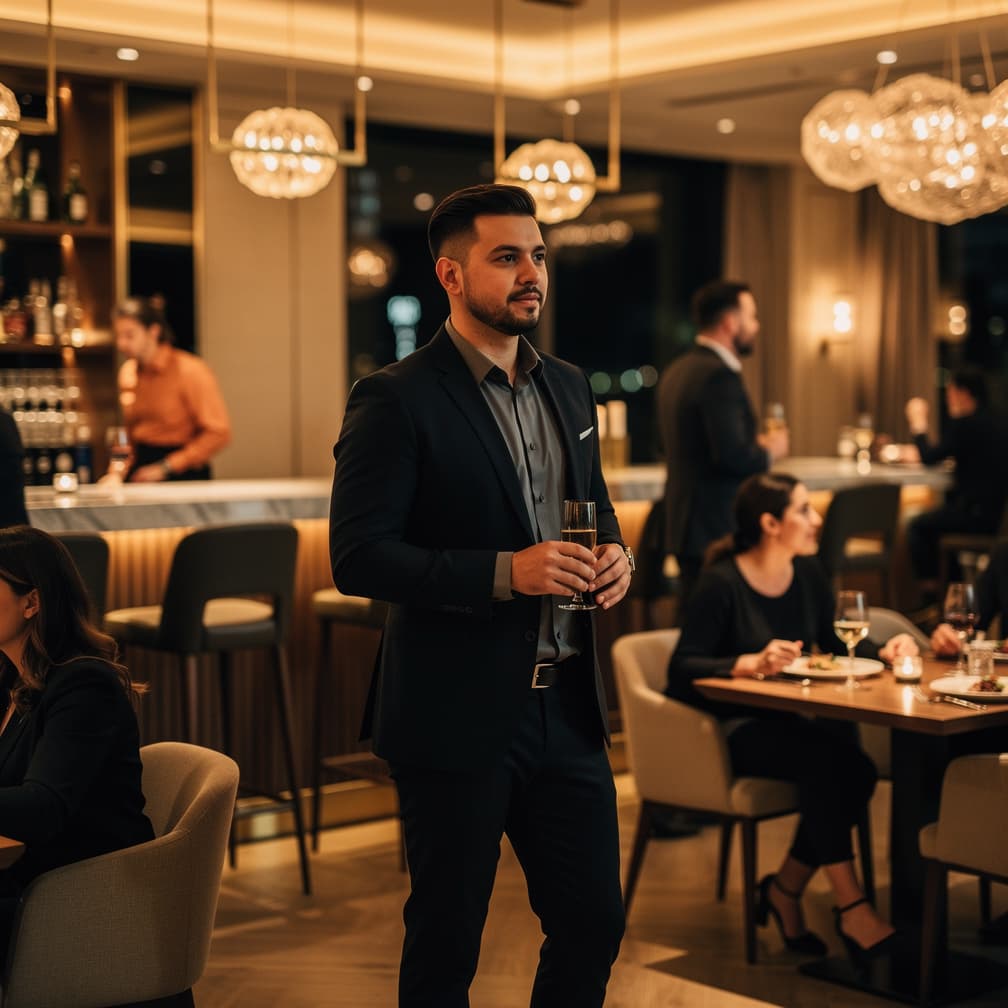

A guest goes down on a wet floor at closing time, and the injury claim that follows is aimed at the venue, never at whoever spilled the drink. Nightclub insurance in Centennial is bought for the distance between what you did and what you get blamed for. The room owns the floor, the stairs, the entrance, and the last drink poured, and a plaintiff's lawyer argues all four at once. Limits are the whole conversation: the number you pick in a quiet week is the number a jury starts from. Liquor Liability is the line that draws the hardest look, because alcohol is what turns an incident into a verdict. A landlord, a promoter, and a beverage distributor can each demand proof before a Centennial door opens, and each asks for different wording. The sections below lay out the published ranges and where the cost drivers sit.
What Makes Centennial Different
Opening a room means proving things to people who do not care about your schedule. A permit office, a landlord, and a distributor each want paper before anything else moves. The order is not negotiable, because none of them wait on the same clock that you do. Bind the policy earlier than feels necessary, since a certificate cannot precede the coverage behind it. Rules vary by state and city, and the Colorado Division of Insurance publishes the current requirements for proof of coverage. A venue in Centennial working backwards from an opening date should start with quotes, then endorsements. Certificates come last, and they take a carrier's time rather than yours to actually produce. An opening delayed by paperwork is the smallest mistake available here, and still an expensive one.
Local Risk Factors in Centennial
Hail is a roof problem that becomes an interior problem about six hours later. A bruised membrane on a Centennial building may not leak until the next rain, and by then the sound system underneath it is the loss. Commercial Property may respond to hail damage, though many forms carry a separate wind and hail deductible written as a percentage of building value. Cosmetic damage exclusions are common too, meaning a dented roof that still sheds water might not be a claim at all. The argument is rarely about coverage; it is about the deductible and that exclusion. Ask a carrier writing in Colorado how both read before you compare two property quotes on price alone.
What Coverage Does a Nightclub in Centennial Need?
Liquor Liability
Alcohol is what separates a nightclub from any other room with a stage. Liquor Liability is generally written for claims alleging a venue served someone who then hurt themselves or somebody else, including a crash hours after last call. Landlords and promoters often demand proof of it by name. It does nothing for your own property, and assault and battery may be sublimited or excluded, so the endorsement pages matter more than the coverage name.
Example: A guest leaves a Centennial club after a long night and is hurt in a crash on the way home; the venue gets named in the suit, and whether Liquor Liability answers may turn on what the service records show.
General Liability
If a promoter or a landlord wants to be named on something before the doors open, this is usually the policy they mean. General Liability is aimed at third-party harm: a guest who slips at the bar rail, a fall on a dark stair, damage to somebody else's property. It generally steps aside where alcohol is alleged to be the cause, and assault and battery treatment varies from form to form.
Example: A guest catches a heel on an unlit step and breaks a wrist. The medical bill is modest; the defense costs behind it are generally the part General Liability earns its premium on.
Commercial Property
Everything you own inside the building lives here: the bar, the sound rig, the lighting, the coolers, the stock. Commercial Property is generally written around named perils such as fire, theft, vandalism, and wind, and the limits come from a schedule you have to write yourself. Flood is typically excluded and priced separately. Business interruption usually attaches here too, turning on a covered physical loss rather than on an empty room.
Example: A fire in the back of house closes the room for two months. Commercial Property might answer for the rebuild, though it is the business interruption clause that decides whether rent gets paid meanwhile.
Workers Compensation
Bartenders, door staff, and cleanup crews get hurt, and Workers Compensation is the policy built for their medical costs and lost wages. It is rated per hundred dollars of payroll rather than charged flat, so headcount and job class drive the number directly. Requirements vary by state. It generally does nothing for a guest's injury, which belongs to the liability side of the package.
Example: A door supervisor separating two guests at a Centennial club tears a shoulder and misses six weeks; the medical bills and a share of lost wages typically run through Workers Compensation rather than your own account.
Commercial Umbrella
Primary limits are a number somebody chose in advance, and a jury is under no obligation to respect it. A Commercial Umbrella sits above those limits for the claim that blows past them, which for a nightclub is usually a liquor claim with a serious injury behind it. It follows the underlying policies, so a gap below tends to stay a gap above.
Example: One bad night produces a liquor claim that settles above the primary limit. With no umbrella underneath that number, the difference is simply a bill the venue could end up paying itself.
How Much Does Nightclub Insurance Cost in Centennial?
Nightclub Insurance is a bundle of separate policies, priced separately. The ranges below are typical figures for Centennial for each line, except workers compensation, which is rated per $100 of payroll; a quote prices each one against your own operations.
| Coverage | Typical range | What moves your price |
|---|---|---|
| Liquor Liability Insurance | $350 - $1,550 per month | Share of sales that comes from alcohol, type of venue and how late you serve, server training and service procedures |
| General Liability Insurance | $390 - $1,575 per month | Industry and risk classification, annual revenue, number of employees |
| Commercial Property Insurance | $250 - $1,000 per month | Building value and construction type, roof age and condition, fire protection class |
| Workers Compensation Insurance | $0.75 - $2.74 per $100 of payroll | Employee classification codes, total annual payroll, experience modification rate |
| Commercial Umbrella Insurance | $270 - $1,375 per month | Umbrella limit requested, limits carried on the underlying policies, loss history on those underlying policies |
Prices shown are general estimates, not guaranteed rates or quotes. Your actual premium will depend on the insurer, coverage selected, business details, location, claims history, and other underwriting factors. Learn about our pricing methodology.
What Are the Insurance Requirements for a Nightclub in Centennial?
Workers' comp is generally required once you have your first employee. Colorado generally requires employers to carry workers' compensation at that point. Common exemptions include sole proprietors, partners in partnerships, and members of LLCs. Confirm current thresholds with your state's workers' compensation agency before you hire.
Where to verify licensing and coverage rules. The Colorado Division of Insurance publishes consumer guidance and current insurance requirements for Colorado businesses. When a contract or lease demands specific wording, the Colorado Division of Insurance's guidance is the authoritative place to check.
Get Your Nightclub Quote in Centennial
Compare rates from multiple carriers. Free quotes, no obligation.
Operating in Centennial
- Live acts arrive with riders demanding limits and additional insured status, and a Centennial booking can die over a wording request that takes a carrier a week to answer.
- Power failures empty a room without touching it, and business interruption usually turns on physical damage, so a dark night can cost everything and trigger nothing; utility-service wording varies between forms filed in Colorado.
- Renting the room out for a private party turns a stranger into a certificate holder overnight, and their broker can ask a Centennial venue for wording its policy does not carry.
- Loss runs take days to pull and quotes stall without them, so a Centennial venue that waits until renewal week ends up choosing from whatever happened to arrive in time.
How to Buy: Advice for Centennial Owners
Two identical premiums can hide completely different policies, so build a comparison sheet before the first quote lands. Columns: per-occurrence limit, aggregate, deductible, assault and battery treatment, business interruption trigger, and whether a Commercial Umbrella sits above everything or only above the liability line. Rows: each carrier. Fill it in from the form language, not from the summary email. Liquor Liability deserves its own row for sublimits alone. Ask whether the form is filed in Colorado, since wording varies from one company to the next. A venue in Centennial that does this once owns a document worth reusing at every renewal, which is where the quiet savings accumulate. When the sheet is full the decision tends to make itself, and CPK is where the last step happens: quotes from participating carriers, side by side, on the exposures you actually described.
FAQ
Nightclub Insurance in Centennial: FAQ
Yes, and it happens constantly. A lease can name a per-occurrence limit, an aggregate, additional insured status, and sometimes a Commercial Umbrella above all of it. Those terms are contractual rather than regulatory, which makes them negotiable before signing and binding afterward. A landlord in Centennial can hold occupancy until the certificate matches the exhibit word for word. Read the insurance section before the rent section, because it can change what a space actually costs you.
Naming someone as an additional insured extends your policy's defense and indemnity to them for claims arising out of your operations. Promoters, landlords, and event hosts ask for it because it puts your carrier in front of theirs. It usually attaches by endorsement to General Liability, sometimes to Liquor Liability, and it is not always free. Confirm the endorsement was actually issued instead of trusting a checked box on a certificate.
Flood damage sits outside a standard Commercial Property form, and it is usually bought separately through a federal program or a surplus carrier. A burst pipe inside the building is a different peril and might be included where the form allows. Water rising from outside generally is not. FEMA publishes flood mapping that lenders and landlords in Colorado rely on. Check what your form excludes before a wet season answers the question for you.
Underwriters read the entrance as the place claims begin. In-house security puts staff injuries on Workers Compensation and guest claims on General Liability. Contracted firms shift some of that, provided their certificate names your venue as an additional insured and stays current. Either way, training records, incident logs, and camera coverage give a carrier a reason to price you as the better risk. A venue without records is asking to be rated on assumptions.
Have payroll broken out by role, capacity, hours and last call, alcohol as a percentage of sales, construction and protection details, a schedule of sound and lighting equipment, and loss runs for three years. Alcohol share and payroll are the two numbers that move a quote most. Supplying all of it upfront gets you comparable quotes instead of placeholders that shift once an underwriter digs in.
Business interruption is the piece that answers a closure, and it usually rides on Commercial Property rather than standing alone. It typically turns on a covered physical loss, so a shutdown caused by something else, such as an outage down the street, might not trigger it. Limits are written in time as much as in money, and a slow rebuild can outlast the period you bought. Ask what the restoration period includes before you pick a limit.
Sources
- 1.Colorado Division of Insurance(Colorado Division of Insurance publishes consumer guidance for insurance buyers.)


