







































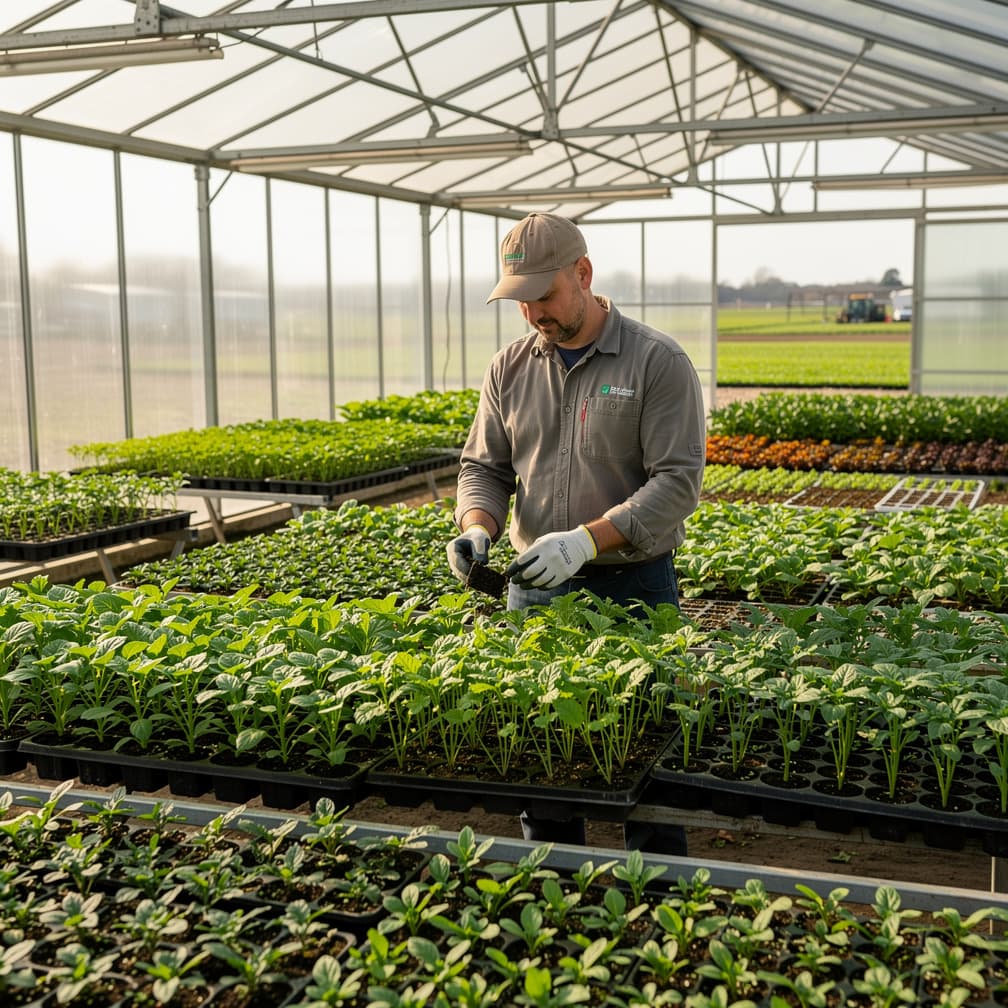

Quoted on its own, general liability for a nursery and greenhouse business can start around $35 a month, and that figure moves the moment payroll, retail square footage, or a claim history enters the file. Foot traffic is the driver owners underestimate: every customer walking a damp aisle is an injury waiting for a bad step, and a retail yard prices differently than a wholesale growing operation. Nursery and greenhouse insurance in Denver gets quoted off what you tell underwriters, so vague answers buy vague pricing. Have payroll figures, building and greenhouse values, and an equipment list ready before you ask anyone for a number. Two participating carriers looking at the same yard in Denver can land far apart on the same benches and the same aisles. Shop the file, not the renewal notice.
What Makes Denver Different
Certificates are the currency of access in this trade. A property manager, an event coordinator, or a wholesale buyer can hold your entry until proof of coverage exists on file. None of them read the policy. They read the certificate and the limits printed across it. If a venue in Denver sets a limit you cannot show, your booth stays empty and your stock stays home. That is a sales problem wearing an insurance costume, and it lands hardest in the weeks you can least afford it. Keep a current certificate ready to send and know who issues one on your behalf. Ask how fast participating carriers in Colorado turn around an additional insured request, because the answer decides how many of these openings you can take.
Local Risk Factors in Denver
After a hailstorm, get on a ladder with a camera before you call anybody. Perforations in film are best counted against the sky, and an adjuster arriving weeks later sees a house that has already been patched. Your own fast repair, done to save the crop, can make the damage invisible. Photograph first, patch second, file third, and keep receipts for the temporary work, since some forms treat that as an expense worth submitting. Ask which yours does. Glazing age matters too, because an older house can be settled on depreciated value rather than replacement cost. Confirm which basis your Denver buildings sit on with participating carriers in Colorado while the sky is still clear.
What Coverage Does a Nursery & Greenhouse in Denver Need?
General Liability
Landlords, wholesale buyers, and event coordinators ask for this one by name before you open, ship, or set up a stand. It generally answers third-party injury and property damage: the shopper who goes down on a wet aisle, the basket that falls off its hook onto someone. Your own crew's injuries and damage to your own stock sit elsewhere.
Example: A customer reaches for a pot near the top of a display, the stack shifts, and a falling planter breaks her wrist beside the register. A claim like that may respond to her medical bills and the suit that follows.
Commercial Property
Glass, poly film, hoop ribs, benches, heaters, controllers, and the stock standing under all of it: this line is built around the things you own. Fire, storm damage, theft, and vandalism are the usual covered causes, subject to your values and your deductible. Flood typically sits outside it, and wear on hard-run equipment usually does too.
Example: A heater in the propagation house shorts overnight and fire takes the structure, the benches, and six weeks of seedlings with it. Commercial Property could pick up the rebuild and the lost stock, up to the values on your schedule.
Workers Compensation
General Liability does nothing for your own people, and that gap is what this line exists to fill. Medical care and lost wages after a work injury are the core of it: a back strained on a balled tree, a hand caught under a cart, heat illness in a closed house. Rules vary by state, and the Colorado Division of Insurance publishes the current requirements for employers.
Example: A seasonal hire lifts a heavy container off a low bench, feels something give in his back, and is out for a month at the worst point of the year. Workers Compensation might handle the treatment and part of his lost pay.
Business Owners Policy
Buying the property and liability pieces separately works fine; bundling them into a single form is often cheaper for a small yard, and that bundle is the Business Owners Policy. It typically packages buildings, stock, and third-party injury together, sometimes with income provisions attached. Unusual structures or heavy outdoor inventory can outgrow the form.
Example: Hail perforates the film on two houses in Denver, the stock beneath is stripped bare, and sales stop for a month. One packaged policy might take the repairs, the ruined plants, and a share of the lost income together.
How Much Does Nursery & Greenhouse Insurance Cost in Denver?
Nursery & Greenhouse Insurance is a bundle of separate policies, priced separately. The ranges below are typical figures for Denver for each line, except workers compensation, which is rated per $100 of payroll; a quote prices each one against your own operations.
| Coverage | Typical range | What moves your price |
|---|---|---|
| General Liability Insurance | $80 - $270 per month | Industry and risk classification, annual revenue, number of employees |
| Commercial Property Insurance | $200 - $775 per month | Building value and construction type, roof age and condition, fire protection class |
| Workers Compensation Insurance | $0.75 - $2.74 per $100 of payroll | Employee classification codes, total annual payroll, experience modification rate |
| Business Owners Policy Insurance | $170 - $480 per month | Annual revenue and industry class, building and contents values, square footage and building age |
Prices shown are general estimates, not guaranteed rates or quotes. Your actual premium will depend on the insurer, coverage selected, business details, location, claims history, and other underwriting factors. Learn about our pricing methodology.
What Are the Insurance Requirements for a Nursery & Greenhouse in Denver?
Workers' comp is generally required once you have your first employee. Colorado generally requires employers to carry workers' compensation at that point. Common exemptions include sole proprietors, partners in partnerships, and members of LLCs. Confirm current thresholds with your state's workers' compensation agency before you hire.
Where to verify licensing and coverage rules. The Colorado Division of Insurance publishes consumer guidance and current insurance requirements for Colorado businesses. When a contract or lease demands specific wording, the Colorado Division of Insurance's guidance is the authoritative place to check.
Get Your Nursery & Greenhouse Quote in Denver
Compare rates from multiple carriers. Free quotes, no obligation.
Operating in Denver
- Payroll triples for a few weeks and then disappears, and the workers compensation audit at renewal squares your estimate either way. Guess low and a bill arrives; guess high and you financed somebody else's year.
- Delivery trucks, customer cars, and a cart loaded with trees share one strip of concrete at the gate. A lease in Denver can make that apron your responsibility whether or not you ever wanted it.
- A wholesale buyer in Denver can withhold a purchase order until the certificate names its parent entity correctly, and that correction takes days you do not have in the middle of the season.
- When the nearest glazier who repairs commercial growing structures works outside Denver County, a torn house waits on their calendar. A claim payment shortens the paperwork, never the wait.
How to Buy: Advice for Denver Owners
Limits and deductibles are the two decisions that actually change your outcome. A limit is what stands between a bad claim and your own money. A deductible is what you volunteer to lose on every small one. This trade generates small losses constantly, so a high deductible bought to shave the premium can cost more across one season than it saves. Per-occurrence and aggregate limits deserve their own question, because a busy year can exhaust an aggregate before the second claim lands. General Liability and Commercial Property carry separate limits and can be used up independently. The Colorado Division of Insurance publishes consumer guidance on how limits and deductibles work. Set both deliberately, then have participating carriers in Colorado quote at identical numbers so the comparison means something.
FAQ
Nursery & Greenhouse Insurance in Denver: FAQ
Often, though it turns on the form and the location. Policies describe covered premises specifically, and a tent or lot on ground you do not own can sit outside that description. If a site in Denver requires proof of coverage naming the property owner, that request is a separate step from extending your own coverage to the spot. Ask about both before you commit to the space.
Payroll by job type, annual revenue, square footage under glass, values on every structure, an equipment list with ages, your retail versus wholesale mix, and a few years of claims. If your Denver County operation runs both retail and growing, they want the split. Anything left vague gets filled with an assumption, and assumptions favor the carrier. Send the identical file to everyone you ask.
That turns on whether the work is finished and what the form says about completed operations. Liability forms draw a line between damage to someone else's property while you are working and damage to the work itself, and the second is often excluded. Planting that dies weeks after installation is exactly where the argument lands. Ask how your form handles completed work before quoting a large install.
A serious claim moves your number further than any amount of shopping will, and it sits in the file for years. Frequency counts as much as severity, since three small injury claims can read worse to an underwriter than one large one. That is the argument for spending on lighting, walkway routines, and bench guards first. Ask participating carriers in Colorado how they weigh recent claims, because they differ.
Owning the ground removes the landlord who would have demanded proof. It does not remove the customer who falls. Ownership raises the property question instead, since the glass, the poly, the growing structures, and the sheds are all yours to replace. Wholesale buyers and event coordinators still ask for certificates regardless of the deed. If your Denver yard is paid off, the risk moved onto your own balance sheet.
Nobody hands you a slip that says insurance, but the people around you ask anyway. A landlord in Denver can want proof before keys change hands, and a wholesale supplier can want a certificate before the first delivery lands. Past the paperwork, the day you let strangers walk your aisles is the day a fall becomes your problem. General Liability is the line those requests usually name.
Sources
- 1.Colorado Division of Insurance(Colorado Division of Insurance publishes consumer guidance for insurance buyers.)


