







































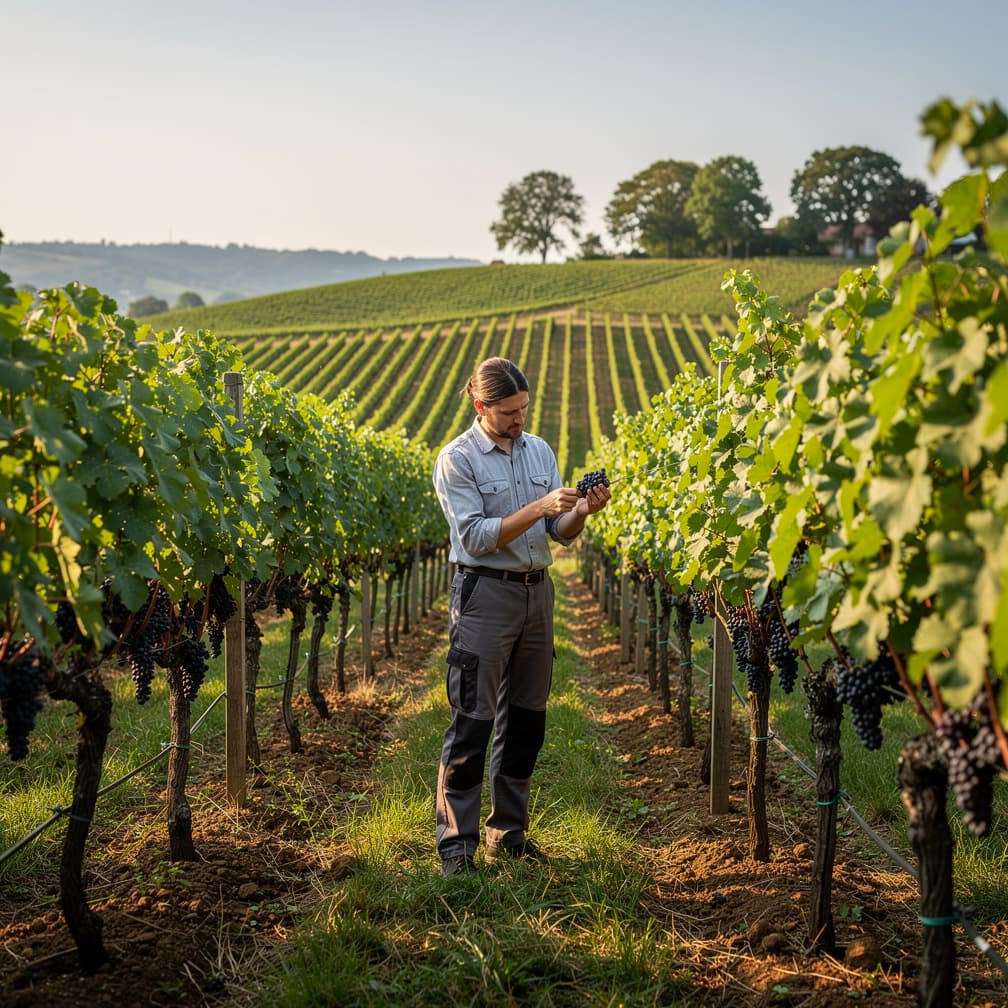

As a vineyard in Denver, the most valuable thing you own may be sitting in a row, uninsured, with three months left to ripen. Estate buildings, tanks, and the bottling line are easy to schedule; the fruit itself is a different conversation, and standard property forms typically leave growing crops out of it. That single gap does more damage to a vineyard's year than any tasting room slip. Shopping vineyard insurance in Denver without settling it means buying the comfortable half of the risk. Ask each quote to state plainly what happens to a block that loses its crop, and get the exclusion read aloud if one exists. The answer either changes your season or confirms you already carry that risk elsewhere.
What Makes Denver Different
Insurance requirements follow the wine, not the vineyard, once a bottle leaves your gate for good. A wholesaler's agreement, a shipper's terms, and a club fulfillment contract each carry their own clause. The exposures are different from the ones a tasting room creates, and the paperwork reflects that. Owners who bought coverage for visitors are sometimes surprised to owe proof on the wholesale side. A Denver estate selling through several channels should list every agreement that mentions insurance anywhere. Then check which single policy is being asked to satisfy all of them at the same time. Usually one is, and usually nobody has checked whether it can, until a claim asks first. Do that review in the quiet season with a carrier licensed in Colorado, never during harvest.
Local Risk Factors in Denver
Bruised fruit does not always look like a claim. A block can take hail, keep hanging, and still come in short or come in unusable, and the loss only surfaces at the scale and in the tank. That timing matters, because a policy wants an event reported near when it happened rather than discovered months later. Photograph the block the same day, note the hour, and tell your carrier even when you are unsure anything is claimable. Netting and shade structures take the same beating and often are not scheduled at all. Ask which estate features are actually listed on your Colorado policy, then walk a Denver property with that list once a year.
What Coverage Does a Vineyard in Denver Need?
General Liability
Anyone who walks onto the property for a tasting, a tour, or a wedding brings the exposure General Liability is built around: a slip on a wet tasting room floor, a child who pulls a stack of cases over, a guest hurt on a gravel path. Venues and planners commonly demand it before booking. Injuries to your own crew typically sit elsewhere, with Workers' Compensation.
Example: A tour group cuts across a hose left on the walkway, and one guest goes down and breaks a wrist. The medical bills and the letter that follows are what this line may take up.
Commercial Property
Barns, the tasting room, storage buildings, tanks, fences, and gates sit on a schedule, and that schedule is what Commercial Property gets quoted from. Damage from fire, wind, or a burst line may be paid up to the listed values, so old values quietly become your problem. Flood typically falls outside the form, and fruit still growing in the block usually does too.
Example: Wind peels half the roof off the barrel storage barn and rain reaches what is inside overnight. Rebuilding the structure and replacing the soaked contents is the claim this line is meant to handle.
Workers Compensation
Guest injuries and staff injuries go to different places, and Workers' Compensation is the staff side: a cellar hand lifting a hose, a picker working a slope, a server carrying cases up steps. Medical care and lost wages generally land here. It is priced per hundred dollars of payroll rather than as a flat monthly figure, and requirements vary by state.
Example: A seasonal worker slips off a bin trailer during crush and cannot lift anything for six weeks. Wage replacement and the treatment that follows are what this line typically takes on.
Tools & Equipment (Inland Marine)
The tractor, the sprayer, and the pruning tools never stay put, and a building policy tends to stop at the wall. Inland Marine is the line that follows mobile property around the block and off the estate, where theft or sudden damage to scheduled gear might be answered. Wear, rust, and mechanical failure from age are usually excluded.
Example: Someone lifts a sprayer out of an unlocked barn overnight and a block goes unsprayed for a week in Denver. Replacing the unit is what a scheduled equipment claim could come down to.
How Much Does Vineyard Insurance Cost in Denver?
Vineyard Insurance is a bundle of separate policies, priced separately. The ranges below are typical figures for Denver for each line, except workers compensation, which is rated per $100 of payroll; a quote prices each one against your own operations.
| Coverage | Typical range | What moves your price |
|---|---|---|
| General Liability Insurance | $110 - $460 per month | Industry and risk classification, annual revenue, number of employees |
| Commercial Property Insurance | $220 - $850 per month | Building value and construction type, roof age and condition, fire protection class |
| Workers Compensation Insurance | $0.75 - $2.74 per $100 of payroll | Employee classification codes, total annual payroll, experience modification rate |
| Inland Marine Insurance | $50 - $220 per month | Total insured value of the scheduled property, type and age of the equipment, where it is stored and how far it travels |
Prices shown are general estimates, not guaranteed rates or quotes. Your actual premium will depend on the insurer, coverage selected, business details, location, claims history, and other underwriting factors. Learn about our pricing methodology.
What Are the Insurance Requirements for a Vineyard in Denver?
Workers' comp is generally required once you have your first employee. Colorado generally requires employers to carry workers' compensation at that point. Common exemptions include sole proprietors, partners in partnerships, and members of LLCs. Confirm current thresholds with your state's workers' compensation agency before you hire.
Where to verify licensing and coverage rules. The Colorado Division of Insurance publishes consumer guidance and current insurance requirements for Colorado businesses. When a contract or lease demands specific wording, the Colorado Division of Insurance's guidance is the authoritative place to check.
Get Your Vineyard Quote in Denver
Compare rates from multiple carriers. Free quotes, no obligation.
Operating in Denver
- Building values on an old schedule drift below what a rebuild costs, so an estate near Denver can pay premium for years on a number that stopped being true.
- A wholesaler in Denver can hold a pallet on the dock until a current certificate is on file, so a renewal date you let slide becomes a shipment you cannot move.
- Hand tools left in a utility cart at the end of a row are easy to grab and easier to forget, and a claim for gear nobody wrote down starts as an argument about what existed.
- The tasting room floor gets wet by four in the afternoon, and the mop sits on a schedule nobody enforces until a guest goes down on it.
How to Buy: Advice for Denver Owners
A quote is only as good as the numbers you hand over, so gather them before you start asking. Payroll by role, never a lump sum: cellar hands, pruning crews, tasting room staff, and whoever pours at events. Revenue split between wine sales and hospitality, because the two price differently. An equipment list with make, model, and value for anything that moves, since that list is what Inland Marine gets quoted from. Building values at replacement cost. Event count and expected guest volume, because General Liability leans on both. The Colorado Division of Insurance publishes consumer guidance on what to expect during an application, which is a fair place to begin. With one packet you can compare quotes from participating carriers in Colorado side by side, instead of collecting four different guesses about your own business.
FAQ
Vineyard Insurance in Denver: FAQ
Price follows your file rather than your address, and two estates on the same road in Denver can land far apart. Payroll through crush, guest volume, event count, building values, and claim history do most of the work. Treat any published starting point as a floor for simple risks: a tasting room, weddings, and a working cellar all push a quote upward from there. Use the cost table on this page to see how each line prices out for a working estate.
Usually not. Commercial Property is generally built around buildings, contents, and equipment, and growing crops typically sit outside that form. A frost that thins a block or a hail band that strips fruit is normally a separate arrangement with its own terms. Ask any quote to state plainly what happens to fruit still hanging, and have the exclusion read to you if one applies.
Nearly anyone you do business with: a landlord, a wholesaler, an event planner, a rental yard, or a permit office reviewing a public tasting in Denver. None of them are being difficult. The certificate is how they confirm a policy exists on the day it matters. Each writes the requirement in its own words, so a document that satisfies one can fall short for the next. Keep every request filed with the contract that produced it.
That depends on where the machine sits in your paperwork more than where it sits on the property. Inland Marine is commonly the line that follows mobile equipment around a vineyard, including gear left in a row or parked in an unlocked building. Ask whether property away from a locked structure is treated the same way, because that clause moves the price and decides the answer after a theft. Serial numbers on a schedule make the claim faster.
It means another party gets added onto your policy for an exposure they share with you: a planner, a landlord, a partner venue. A certificate listing them proves little on its own, because the endorsement on the underlying policy is what does the work. Ask your carrier to issue that endorsement and to send you a copy. The distance between what a certificate says and what a form does is where claim arguments begin.
Usually, and the trade is plain: a higher deductible lowers the premium and moves small losses onto you. Fence damage, a broken gate, a cracked pump all become your own bill. The real question is whether the tightest month of your season could absorb one without borrowing. Ask any quote to price identical coverage at two deductible levels so you can see the trade rather than imagine it.
Sources
- 1.Colorado Division of Insurance(Colorado Division of Insurance publishes consumer guidance for insurance buyers.)


