







































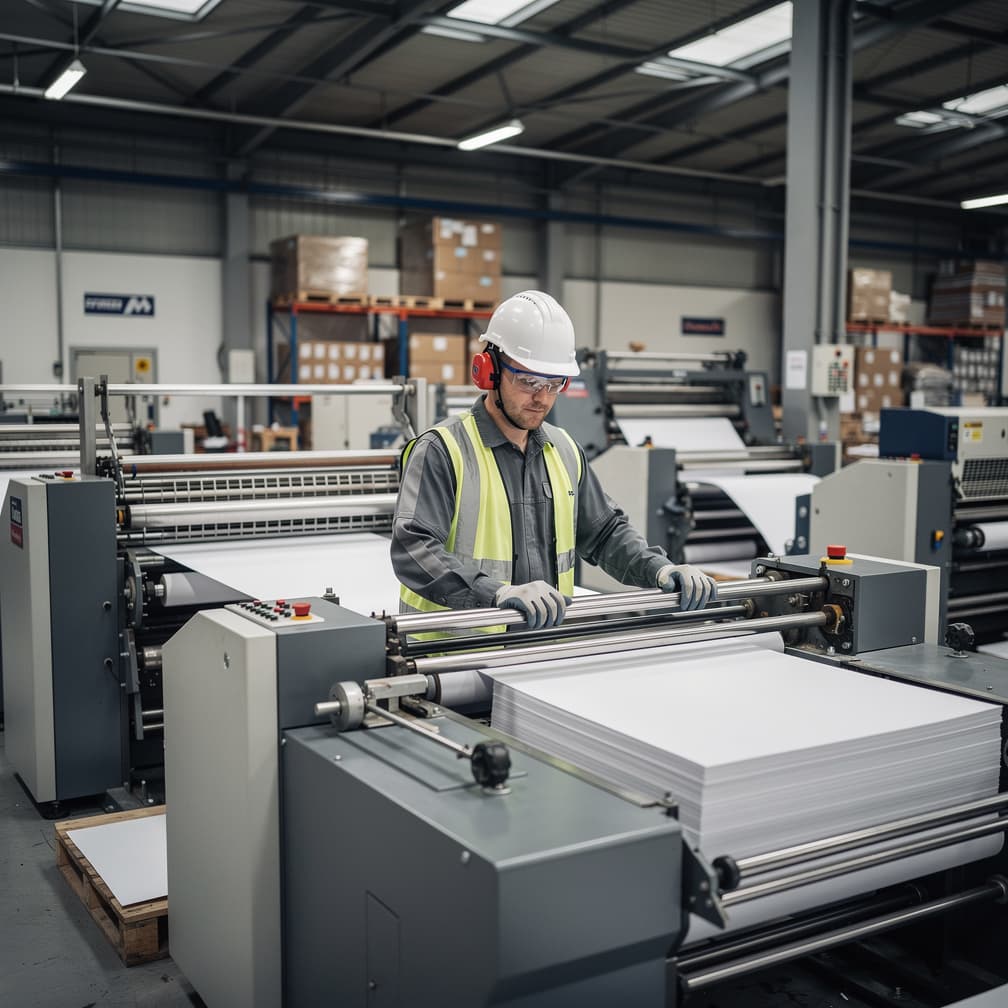

Reprints are the loss a printing company rarely budgets for. A spot color drifts halfway through a long run, the client rejects the job, and the press time is gone whether you bill for it or not. Slips at the pickup counter, a bindery jam that stops finishing for a full shift, water over a pallet of stock: the exposures sit inside your own building. That is what printing company insurance in Fort Collins has to answer for. The decision underneath it is which limit gets tested first when a client says your error cost them a product launch. Your lease and your larger accounts have already made part of that decision for you. This page lays out what drives the price in Fort Collins and where the honest gaps sit.
What Makes Fort Collins Different
Rain on a delivery day is a printing problem, because finished work leaves the building stacked on pallets and skids. Shrink wrap is not waterproof, and a soaked banner becomes a reprint no matter whose fault the weather was. Stock off your premises is a different conversation from stock in your racks, and the two do not always sit in the same place on a policy. That distinction usually shows up as Inland Marine, which might respond to property in transit or parked at a temporary site. Standard property forms tend to stop at your walls. Ask where your own paperwork draws that line, and get the answer before a job goes out in Fort Collins. Weather that never touches your building can still cost you a run. Sort the wording out while the sky over Fort Collins is clear.
Local Risk Factors in Fort Collins
Two inches of hail on a skylight puts water directly over a press, and the press is the part nobody replaces by the end of the week. Even a small leak into an electrical cabinet becomes a shutdown while someone decides whether the machine is safe to run. That downtime is the expensive half, not the roof patch. Ask what a quote for your Fort Collins shop says about lost income and rented equipment while a press sits out of service in Larimer County, and where the waiting period begins. Then ask whether the hail deductible is a percentage. Those two answers usually matter more than the premium difference you were shopping on.
What Coverage Does a Printing Company in Fort Collins Need?
General Liability
Landlords and corporate accounts ask for this one by name before a lease is signed or a purchase order clears. General Liability generally applies to third-party injury and property damage: a customer who falls at your counter, or a panel your crew drops in somebody else's lobby. It typically excludes damage to your own work, so a rejected run is not a liability claim.
Example: A customer picks up a boxed order, catches a heel on a pallet strap by the counter, and breaks a wrist. The medical bills and any suit that follows are what this line is meant to take on.
Commercial Property
Fire, a burst line, or a storm that opens the roof can put presses, finishing machines, paper stock, and finished jobs at risk in one event. Commercial Property is generally the line for what sits inside your building, valued at replacement cost or actual cash value depending on the form. Flood and mechanical breakdown from an internal fault usually sit outside it.
Example: A sprinkler head lets go over the racks overnight. Skids of stock and a week of finished jobs are pulp by morning, and a contents claim may follow for the paper and the completed work alike.
Workers Compensation
Employee injuries do not belong to your liability policy, which catches plenty of owners off guard. Workers' Compensation typically responds to medical costs and lost wages when a bindery hand catches a finger or an operator hurts a back lifting stock. Rating runs off payroll, so the split between pressroom and office hours matters. Which employers must carry it is a question that changes at every state line.
Example: A helper reaches into a folder to clear a jam without locking it out and loses a fingertip. Treatment, the follow-up surgery, and the weeks away from the floor are what this line generally answers for.
Tools & Equipment (Inland Marine)
Portable gear is the blind spot: a laptop holding client files, a plate maker, hand tools, and the finishing equipment that rides along to an install. Inland Marine might apply to property in transit or away from your premises, where a property form generally stops at the walls. Scheduled items and blanket limits behave differently, so ask which one a quote assumes.
Example: Your crew loads a wide-format printer and a tool case for a lobby graphics job in Fort Collins. The truck gets broken into overnight, and the missing gear could fall to this line rather than the shop's property policy.
How Much Does Printing Company Insurance Cost in Fort Collins?
Printing Company Insurance is a bundle of separate policies, priced separately. The ranges below are typical figures for Fort Collins for each line, except workers compensation, which is rated per $100 of payroll; a quote prices each one against your own operations.
| Coverage | Typical range | What moves your price |
|---|---|---|
| General Liability Insurance | $75 - $200 per month | Industry and risk classification, annual revenue, number of employees |
| Commercial Property Insurance | $170 - $550 per month | Building value and construction type, roof age and condition, fire protection class |
| Workers Compensation Insurance | $0.75 - $2.74 per $100 of payroll | Employee classification codes, total annual payroll, experience modification rate |
| Inland Marine Insurance | $30 - $110 per month | Total insured value of the scheduled property, type and age of the equipment, where it is stored and how far it travels |
Prices shown are general estimates, not guaranteed rates or quotes. Your actual premium will depend on the insurer, coverage selected, business details, location, claims history, and other underwriting factors. Learn about our pricing methodology.
What Are the Insurance Requirements for a Printing Company in Fort Collins?
Workers' comp is generally required once you have your first employee. Colorado generally requires employers to carry workers' compensation at that point. Common exemptions include sole proprietors, partners in partnerships, and members of LLCs. Confirm current thresholds with your state's workers' compensation agency before you hire.
Where to verify licensing and coverage rules. The Colorado Division of Insurance publishes consumer guidance and current insurance requirements for Colorado businesses. When a contract or lease demands specific wording, the Colorado Division of Insurance's guidance is the authoritative place to check.
Get Your Printing Company Quote in Fort Collins
Compare rates from multiple carriers. Free quotes, no obligation.
Operating in Fort Collins
- Plates, files, and approved proofs belong to the client, so losing their artwork in a fire becomes a conversation about your liability rather than only about your equipment.
- Wide-format installs put your crew on ladders inside somebody else's lobby, and the owner of that building in Fort Collins can demand named coverage before anyone carries a panel through the door.
- Paper arrives by the pallet and cannot be dried out once it is soaked, which turns even a small roof leak into a total loss on whatever sat underneath it.
- Temporary help hired through a busy stretch still counts as payroll at audit, and a Fort Collins shop that leaves those hours off the estimate gets the bill once the season ends.
How to Buy: Advice for Fort Collins Owners
Timing decides how much of this costs you. Shop before the busy stretch rather than during it, because underwriting questions take longer to answer when the floor runs around the clock. A renewal that falls in your heaviest season gets rubber-stamped, which is how a Fort Collins shop ends up carrying last year's limits against this year's contracts. Look at every contract you have signed since the last renewal and check whether any of them raised the bar. Workers' Compensation deserves a second look whenever crew size or overtime patterns change, since payroll is the rating base. The Colorado Division of Insurance publishes the current requirements for coverage in Colorado, which is worth checking whenever a client insists something is mandatory. Then bring the updated numbers to participating carriers through CPK and compare what each one does with them.
FAQ
Printing Company Insurance in Fort Collins: FAQ
Standard property policies typically exclude flood, and it is priced separately through the federal program. Paper is close to the worst possible loss in that scenario, since soaked stock and finished jobs cannot be dried and run again. FEMA maps drive flood pricing and availability. If your Fort Collins building sits low or opens onto a dock at grade, ask before the season rather than after.
A per-occurrence limit is the most a policy might pay for a single claim. The aggregate is the ceiling for the entire policy term. A Fort Collins shop with a bad claim year can exhaust the aggregate with months left before renewal, which leaves everything after that exposed. Ask what happens when the aggregate runs out and what restoring it would cost.
That is a third-party injury claim, and General Liability is the line that typically responds to the medical bills and any suit that follows. Ink, dust, and wet shoes make the floor near a counter a real exposure rather than a theoretical one. Write incident notes and take photos the same day. Claims filed months later get decided by whatever record exists.
Payroll by job function, annual revenue, an equipment schedule with values, building construction and protection details, and any loss runs you can obtain. Vague answers produce pricing that changes after an inspection. If you run solvent-based work, a night shift, or your own bindery, say so up front. Surprises found later cost more than a rounded-down number ever saved.
Yes. Loss history follows a shop through the market, and repeat small claims often hurt pricing more than one large loss does. Ask each carrier quoting in Colorado what a past claim is doing to the current number and when it drops out of the rating period. That answer can decide whether you file a minor loss or absorb it.
A certificate is a snapshot of a policy on the day someone issued it, and nothing more. It does not amend the policy or promise anything to the holder. That is why clients ask for notice of cancellation language, and why a lapse tends to get discovered by strangers. Keep a list of holders and reissue after any change.
Sources
- 1.Colorado Division of Insurance(Colorado Division of Insurance publishes consumer guidance for insurance buyers.)


