







































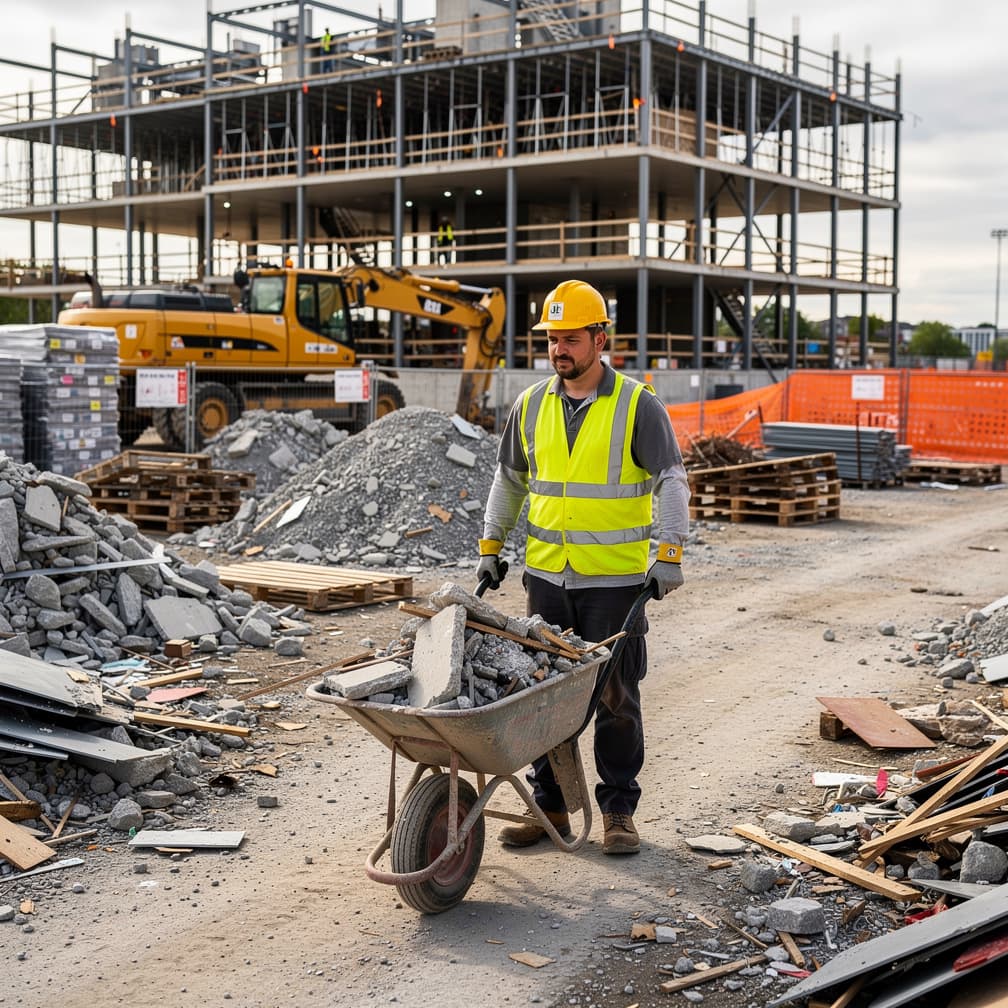

General liability for a debris removal outfit commonly starts around $35 a month, which is small next to one driveway replacement. Cost is rarely the reason owners delay, though. The reason is that nobody demands proof until the morning work is supposed to start, and then a property manager asks for a certificate and the job waits. Debris removal insurance in Greeley is priced mostly on payroll, vehicles, and what you haul, so two outfits doing identical work can land in different rate territory. Claims history outweighs all of it after the first year. Gather your driver list and payroll figures first, then put identical limits in front of participating carriers in Colorado, because a smaller number on smaller limits was never actually cheaper.
What Makes Greeley Different
Fewer competitors in a thin market sounds comfortable until the only truck you own sits in a shop. About 21 debris removal businesses work in Weld County, and the vendors who service them are equally few. Downtime after a collision runs on somebody else's schedule, and a small market has fewer schedules. Rental replacements, tow distances, and parts delays all stretch when the nearest option is an hour away. Ask any quote how rental reimbursement and towing get handled before you assume they are included. Those pieces are inexpensive to add and painful to discover missing on the worst possible morning. A customer in Greeley does not care why your truck stopped, only that the box is still full. Continuity of work is the thing being insured here, and it deserves the same scrutiny as price.
Local Risk Factors in Greeley
Hail turns a quiet stretch into a month of roofing tear-off hauling, and roofing debris is heavy, sharp, and full of fasteners. Overloaded trailers, punctured tires, and driveways left with nails in them all cluster in that window. General Liability may respond when a homeowner's tire finds something your crew left behind, subject to the policy's terms, and a magnet sweep costs a great deal less than the claim. Hail also dents whatever you park outside: trucks, trailers, and the loader in the open lot. Vehicle physical damage is one question and your own equipment is another entirely, so ask both before the next storm reaches Greeley, and ask participating carriers in Colorado how each gets handled.
What Coverage Does a Debris Removal in Greeley Need?
General Liability
Property managers, general contractors, and municipal clerks ask for this one by name before a truck reaches the site. It can help cover third-party injury and property damage arising out of your work: a cracked driveway, a neighbor's fence, a slip at a residential cleanout. Damage to your own loader and injuries to your own crew sit outside it.
Example: Your crew drags a loaded container across a homeowner's driveway in Greeley and cracks the apron in three places. The repair estimate lands a week later, and the policy may take the claim subject to your deductible.
Commercial Auto
Miles are the exposure here. Trucks and trailers running between a demolition job and a disposal facility sit outside what a liability form addresses, and this line is meant to answer for the collision, the injuries, and the damage your vehicle does to others. Rating follows units, gross weight, radius, and driver records. Cargo riding on the trailer usually raises separate questions.
Example: A loaded trailer clips a parked sedan while backing out of a tight alley, and the owner's repair estimate runs to a door and a quarter panel. That claim would typically be handled here.
Workers Compensation
A helper who slips on wet plywood at a cleanout needs medical care, and this is the line built to answer for it. It can pay for treatment and lost wages for injured employees, and it generally limits your exposure to the injury lawsuit that might otherwise follow. Rating runs on payroll by job class, so a driver, a laborer, and an operator price differently. Requirements vary by state.
Example: An operator wrenches a shoulder forcing a frozen pile onto a trailer and misses six weeks of work. Medical bills and a share of the lost wages might be picked up under this line, subject to the state's rules.
Commercial Umbrella
Primary limits are finite, and a loaded truck meeting a passenger car is where a debris hauler finds the edge of them. This line sits above General Liability and Commercial Auto, adding limit once an underlying policy is exhausted. Municipal and demolition contracts frequently demand figures a small program cannot reach alone. It follows the underlying forms, so their exclusions usually carry upward.
Example: An intersection collision with your grapple truck injures two people, and the demands exceed what the vehicle policy holds. The excess layer above it could pick up what remains, depending on how the tower was built.
How Much Does Debris Removal Insurance Cost in Greeley?
Debris Removal Insurance is a bundle of separate policies, priced separately. The ranges below are typical figures for Greeley for each line, except workers compensation, which is rated per $100 of payroll; a quote prices each one against your own operations.
| Coverage | Typical range | What moves your price |
|---|---|---|
| General Liability Insurance | $230 - $700 per month | Industry and risk classification, annual revenue, number of employees |
| Commercial Auto Insurance | $480 - $1,325 per month | Fleet size and vehicle types, driver records and experience, coverage limits and deductibles |
| Workers Compensation Insurance | $0.75 - $2.74 per $100 of payroll | Employee classification codes, total annual payroll, experience modification rate |
| Commercial Umbrella Insurance | $120 - $390 per month | Umbrella limit requested, limits carried on the underlying policies, loss history on those underlying policies |
Prices shown are general estimates, not guaranteed rates or quotes. Your actual premium will depend on the insurer, coverage selected, business details, location, claims history, and other underwriting factors. Learn about our pricing methodology.
What Are the Insurance Requirements for a Debris Removal in Greeley?
Workers' comp is generally required once you have your first employee. Colorado generally requires employers to carry workers' compensation at that point. Common exemptions include sole proprietors, partners in partnerships, and members of LLCs. Confirm current thresholds with your state's workers' compensation agency before you hire.
State auto liability minimums apply to business vehicles. Colorado's minimum auto liability limits are $25,000/$50,000/$15,000 (bodily injury per person / per accident / property damage). Contracts and lenders often require more than the state floor.
Where to verify licensing and coverage rules. The Colorado Division of Insurance publishes consumer guidance and current insurance requirements for Colorado businesses. When a contract or lease demands specific wording, the Colorado Division of Insurance's guidance is the authoritative place to check.
Get Your Debris Removal Quote in Greeley
Compare rates from multiple carriers. Free quotes, no obligation.
Operating in Greeley
- Gate attendants at disposal facilities in Colorado check paperwork before they check the load, and an expired certificate stops the truck with a full box still behind it.
- A property manager can hold your invoice until a current certificate names the management company, so a lapsed policy in Greeley costs you cash flow before it ever costs you a claim.
- Tipping fees are due at the scale whether or not the customer has paid you, so the working capital that would absorb a deductible is thinner than your profit and loss suggests.
- Nails and screws left in a driveway keep finding tires for weeks after the pile is gone, and the complaint that follows is a property damage claim rather than a service call.
How to Buy: Advice for Greeley Owners
Write down what you refuse to haul before an underwriter asks. Paint, solvents, tires, appliances with refrigerant, and anything that looks like asbestos belong on a refusal list, and the crew has to know it. A disposal allegation can arrive months after the load, and the customer who filled the box will not remember it your way. Photographs of questionable material cost nothing and settle arguments. General Liability might respond to a third-party disposal claim depending on the facts and the exclusions, which is exactly why the exclusions deserve reading. Commercial Auto asks its own questions about what rides on the trailer, and your answers should match the refusal list. Check the Colorado Division of Insurance's guidance before deciding whether a policy's pollution language fits how you work. Bring your written controls to participating carriers, because an operation that can describe its own limits reads better in Greeley.
FAQ
Debris Removal Insurance in Greeley: FAQ
Usually, and the demand comes from the contract rather than from a rule. A property manager typically wants a certificate naming the management company and the owner as additional insureds before a truck touches the property. General Liability is the line most of those requests target. The certificate is a summary; the endorsement is what actually changes your policy, so ask to see it.
Price comes from payroll, the number and weight of your vehicles, how far you haul, the limits your contracts demand, and your claims history. Two haulers with the same trucks can land far apart if one runs a long radius or keeps a driver with violations. Small frequent property damage claims push renewals up more than owners expect. Comparing several participating carriers in Colorado on identical limits is the only way to see your own number.
Often, yes, subject to your policy's terms. Damage to a third party's property while you work is the classic claim on that line, and a cracked apron under a loaded box fits the pattern. Two things trip owners up: the deductible, and the fact that damage to your own equipment sits outside it entirely. Photograph the approach before you drop a box, because a documented condition settles most of these arguments.
That depends on what the debris hits and how the claim gets framed. Damage caused by your vehicle in transit generally falls to Commercial Auto, while the material you were paid to remove can raise separate cargo questions your policy might not address at all. Tarping is the control underwriters ask about, so expect the question. If a driver behind you on a Greeley street is injured, the demand can outrun a primary limit quickly.
It means another party gets some protection under your policy for claims arising out of your work. Owners, property managers, and general contractors ask for it so a claim from your crew's mistake reaches your policy before theirs. The wording matters: some endorsements apply only while you are on site, and others reach work you already completed. Ask which one you have before you sign a contract promising the broader version.
Anyone can bring a claim, and dust or falling material drifting onto adjoining property is a routine complaint in this trade. General Liability can respond to third-party property damage depending on the facts and the policy's exclusions, and it commonly funds the defense as well. Control measures help more than coverage does: wetting the pile, screening the load, and photographing the neighbor's property before you start. Read the pollution language, since it varies.
Sources
- 1.U.S. Census Bureau, County Business Patterns (2022), Weld County(Weld County has about 21 businesses in this trade's category (NAICS group 5621).)
- 2.Colorado Division of Insurance(Colorado Division of Insurance publishes consumer guidance for insurance buyers.)


