







































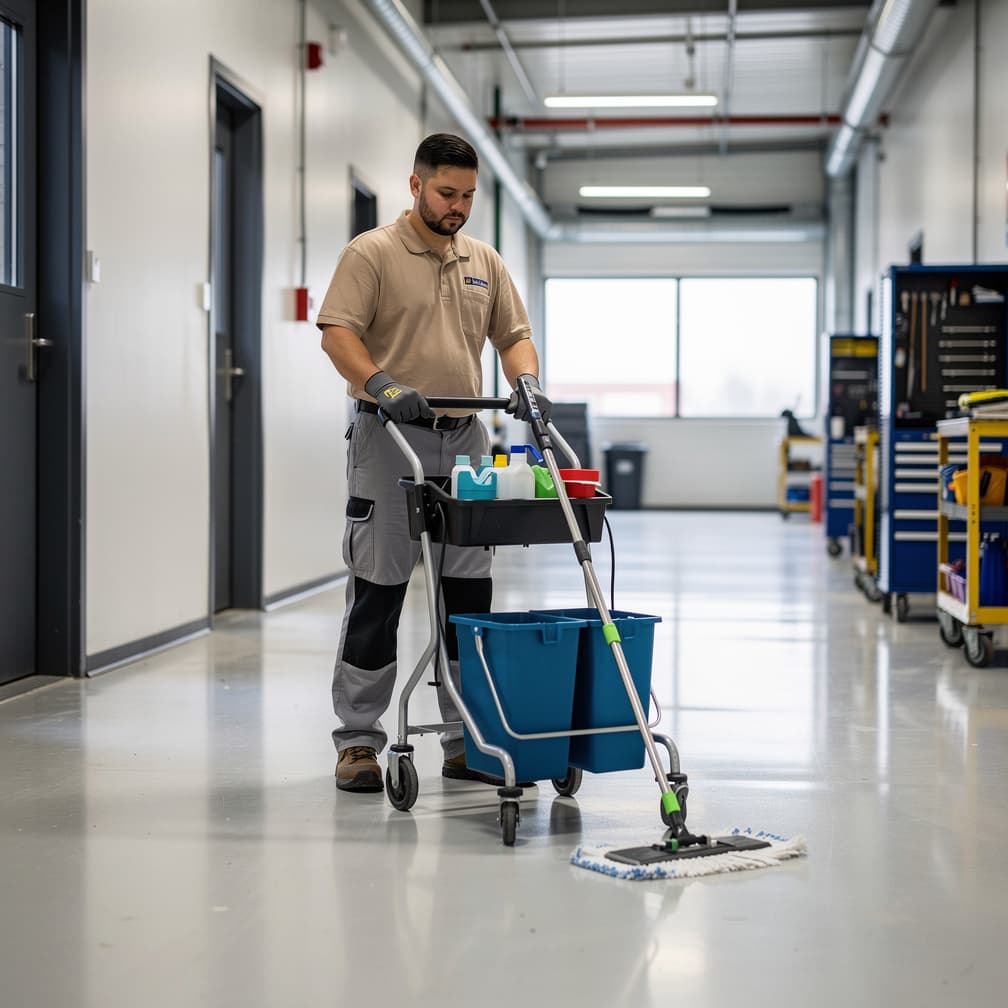

Glass breaks, floor finishes scratch, and office equipment does not survive being knocked off a desk by a supply cart. Those are ordinary nights in cleaning work, and each one is a bill somebody has to absorb. Janitorial service insurance in Lakewood decides whether that somebody is you or a carrier. Damage you cause to a client's property while your hands are on it is one of the trickier corners of a liability form, because part of it can land in an exclusion rather than a claim. Forms differ between participating carriers in Colorado, so that corner is worth reading before a client sends you an invoice for a refinished floor. The pages below break down each line, what it can help cover, and where the gaps are honest ones.
What Makes Lakewood Different
Competitors set the price of cleaning; clients set the price of the paperwork behind it. In a crowded field, the low bid wins the meeting and the certificate wins the contract. Jefferson County has about 18,000 businesses, and each one is both a prospect and a potential claimant. That double role is what makes underinsuring a cheap decision with an expensive tail. A claim from a client is a claim from the person who signs your invoices. Losing the money and the account in one stroke is the outcome worth buying against. Set your limits against the biggest room you clean, then shop the number honestly. Quotes from participating carriers vary on the same facts, which is the only reason comparing pays.
Local Risk Factors in Lakewood
Before you sign a lease on a storage bay in Lakewood, look up, because the roof over your machines is the roof over your revenue. Cleaning equipment does not care about hail until water arrives through the ceiling and finds an electrical panel. A business owners policy can bundle the property question with liability, though property sub-limits inside a package are often lower than owners assume. Ask what it does with equipment stored away from your address, since that is where half your machines spend most nights. Get the number for a Jefferson County location in writing and compare it against what replacing the fleet would really take.
What Coverage Does a Janitorial Service in Lakewood Need?
General Liability
Landlords, property managers, and facility directors ask for this one by name before your crew gets access to a building. It is aimed at bodily injury and property damage your cleaning operations cause to other people: a visitor down on a wet floor, a client's glass panel cracked by a cart. Damage to the surface you were working on, and theft by an employee, typically sit outside it.
Example: A cleaner mops a lobby, a delivery driver walks through before the floor dries, and a wrecked knee becomes a demand letter; general liability may respond to the claim and the defense.
Commercial Property
Flood typically sits outside the standard form, which matters when your machines live at floor level. What the form does address is the fleet and supply side of the business: buffers, extractors, vacuums, ladders, and stock at the address you declare. Equipment kept in client closets or a vehicle usually falls under a much smaller limit, so ask where that line sits before you buy.
Example: A break-in at your storage unit clears out two scrubbers and a pallet of supplies overnight; commercial property could help cover replacement, though the values you declared decide the size of the check.
Workers Compensation
A cleaner slips off a step stool while changing a light diffuser and cannot work for weeks. This is the line built for that: medical costs and lost wages for your own employees, quoted against payroll rather than as a flat monthly figure. Requirements vary by state, and client contracts frequently ask for proof of it whatever the state rules happen to say.
Example: Two crew members walk a ride-on scrubber down a loading dock ramp and one wrenches a shoulder badly; workers compensation is generally where the medical bills and the lost time end up.
Business Owners Policy
Where general liability and commercial property are two contracts, this is one: a package built for smaller cleaning operations, with a single bill and a single certificate. Property caps and eligibility rules are the trade-off, and the aggregate limit is shared across everything inside. Read what the package does with equipment away from your premises before assuming it matches a standalone form.
Example: A fire in the supply room wrecks machines and injures a tenant in the Lakewood unit next door; a business owners policy can help with both halves, subject to the limits inside the package.
How Much Does Janitorial Service Insurance Cost in Lakewood?
Janitorial Service Insurance is a bundle of separate policies, priced separately. The ranges below are typical figures for Lakewood for each line, except workers compensation, which is rated per $100 of payroll; a quote prices each one against your own operations.
| Coverage | Typical range | What moves your price |
|---|---|---|
| General Liability Insurance | $70 - $190 per month | Industry and risk classification, annual revenue, number of employees |
| Commercial Property Insurance | $55 - $180 per month | Building value and construction type, roof age and condition, fire protection class |
| Workers Compensation Insurance | $0.75 - $2.74 per $100 of payroll | Employee classification codes, total annual payroll, experience modification rate |
| Business Owners Policy Insurance | $80 - $210 per month | Annual revenue and industry class, building and contents values, square footage and building age |
Prices shown are general estimates, not guaranteed rates or quotes. Your actual premium will depend on the insurer, coverage selected, business details, location, claims history, and other underwriting factors. Learn about our pricing methodology.
What Are the Insurance Requirements for a Janitorial Service in Lakewood?
Workers' comp is generally required once you have your first employee. Colorado generally requires employers to carry workers' compensation at that point. Common exemptions include sole proprietors, partners in partnerships, and members of LLCs. Confirm current thresholds with your state's workers' compensation agency before you hire.
Where to verify licensing and coverage rules. The Colorado Division of Insurance publishes consumer guidance and current insurance requirements for Colorado businesses. When a contract or lease demands specific wording, the Colorado Division of Insurance's guidance is the authoritative place to check.
Get Your Janitorial Service Quote in Lakewood
Compare rates from multiple carriers. Free quotes, no obligation.
Operating in Lakewood
- Your policy renewal and your biggest Lakewood contract rarely fall on the same date, so read the contract's insurance clause before the policy locks for another term.
- Clients want their exact legal entity on the certificate, and the name on the building is usually not it. One wrong line sends the document back and pushes your start date.
- You bill for cleaning space somebody else occupies, so when a Lakewood client closes for repairs your revenue stops even though nothing of yours was touched.
- Restroom and spill cleanup puts your crew in contact with whatever is on the floor. An exposure incident starts as a payroll and reporting question long before it becomes a claim.
How to Buy: Advice for Lakewood Owners
Renewal is the one moment when you hold leverage, so spend it deliberately. Pull your loss history well ahead of the date and look at what a carrier will see. If the year was clean, say so plainly and ask what it earns you. If it was not, know the story behind each claim before somebody else tells it for you. Check whether any Lakewood client raised their limit requirements since you last shopped, because contracts renew on their own cycle. General Liability limits that were fine last term can fail a new clause quietly. Workers Compensation gets audited on real payroll, so reconcile your numbers before the audit does it for you. Check the Colorado Division of Insurance's guidance before deciding whether to switch partway through a term. Then put the same submission in front of participating carriers and compare what comes back.
FAQ
Janitorial Service Insurance in Lakewood: FAQ
Not automatically, and this catches cleaning contractors more than most trades. Your revenue depends on somebody else's building staying open, while a policy that responds to interruption generally keys off damage to property you have an interest in. If a client shuts for repairs, the loss may sit with you. Ask specifically how a policy treats income tied to another party's premises.
Ask before you bid. Carriers classify cleaning by what you clean, and medical suites, food plants, and post-construction sites can rate differently or be declined outright by a carrier that wrote you for light office work. Winning a contract your policy will not certify is worse than losing it. Confirm the class first, then get the mix you intend to sell quoted properly.
Per-occurrence is the ceiling for one claim; the aggregate is the ceiling for everything inside the policy term. Cleaning produces frequent small claims, and a run of scratched surfaces and slip disputes can eat an aggregate quietly. Once it is gone, the certificate you hand your next Lakewood client promises less than it appears to. Watch both numbers, and ask what defense costs do to them.
Yes, and you should hold their certificates before their first shift. An uninsured sub can end up as your claim, and a workers compensation audit may treat their payroll as yours when the paperwork is missing. Liability wording can also exclude work you did not perform directly. Collect the certificates, check their limits against your own contract, and keep them current.
The building owner usually decides that for you. Most commercial leases require a cleaning contractor to carry liability coverage and to name the owner as an additional insured before crews get access. A certificate of insurance is what proves it. Without one, a property manager in Lakewood can refuse to release keys, and the contract sits unsigned while somebody else bids.
Nobody can quote it from the trade name alone. Cost follows payroll, the services you perform, your claims history, and the limits your contracts demand. A crew that strips and refinishes floors rates differently from one wiping desks. Workers compensation is quoted against payroll rather than as a flat figure, so headcount moves it every time you add a shift. The published ranges for cleaning work sit in the cost table further down this page.
Sources
- 1.U.S. Census Bureau, County Business Patterns (2022), Jefferson County(Jefferson County has about 18,000 business establishments.)
- 2.Colorado Division of Insurance(Colorado Division of Insurance publishes consumer guidance for insurance buyers.)


