







































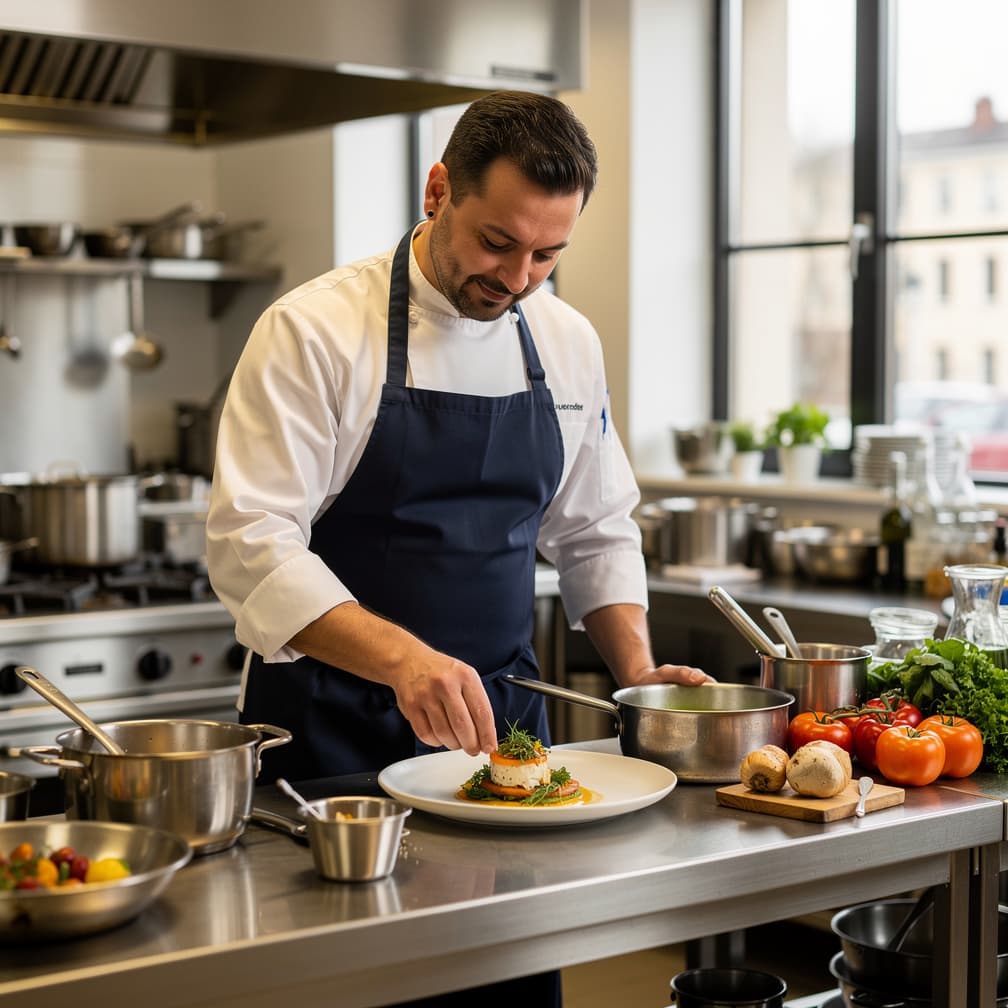

A client calls the morning after a dinner service to say two guests got sick, and the conversation turns to who pays for it. That call is what personal chef insurance in Lakewood is for, along with the scorched countertop, the guest who slips on a wet kitchen floor, and the knife roll stolen out of a hallway. You work inside someone else's home, on their appliances, around their family, which is a different risk picture than a restaurant line. The household that hires you can ask for proof of coverage before you ever unpack a cutting board, and a property manager in Lakewood can ask too. Getting that paper is simple; deciding what limits sit behind it takes more thought. The sections below walk through what personal chefs commonly carry and what the published ranges look like, so you can compare quotes with real numbers in front of you.
What Makes Lakewood Different
Market size changes who your clients are, and your clients decide what your policy has to do. Private households, small offices, and event companies each ask for different things from a working chef. A household cares about the counter you scratched; an office cares about the wording on your certificate. Those two clients push a chef in Lakewood toward different limits and different questions at quote time. Nobody buys one policy for both without deciding which client type actually pays the bills. Look at last year's Lakewood bookings and count where the money came from before you shop. If half your revenue came from one type, price the policy around that half first. That single exercise does more for your buying decision than any comparison chart online.
Local Risk Factors in Lakewood
Before a hail prone stretch, move what matters indoors and photograph what cannot move. A chef's exposure is concentrated in a small number of expensive items, so a short list and a few photos handle most of it. Commercial property might respond when hail damages equipment or the space you rent in Lakewood, but only within what the policy actually lists. Gear that sits in an open bed or an uncovered lot is usually the argument. The Colorado Division of Insurance publishes consumer guidance on wind and hail deductibles in Colorado, which is worth reading before a storm makes it urgent.
What Coverage Does a Personal Chef in Lakewood Need?
General Liability
Landlords, venues, planners, and household clients ask for this one by name, and it is the line most certificates reference. It can help cover claims that a guest was injured, that a meal caused illness, or that your work damaged a client's counters, appliances, or floor. Disputes about your menu advice generally fall outside it.
Example: A guest steps on spilled sauce near the island and lands hard during a dinner in Lakewood; general liability may respond to the injury claim that follows.
Professional Liability
Bodily injury is not what this line is about. When a client alleges your dietary plan was wrong, an allergy instruction was mishandled, or service timing failed the event you were hired for, this is the coverage intended to respond. It follows the advice you sell, which general liability generally sets aside.
Example: A client says the nutrition program you designed ignored a stated allergy and wants the event fee back plus damages; professional liability could fund the defense and any settlement.
Commercial Property
Knives, a circulator, a sealer, sheet pans, a travel oven, and the inventory behind next week's menu are the business. This coverage is designed for theft, fire, storm damage, and vandalism affecting that property. Flood typically sits outside it, wear and tear is treated as maintenance, and gear kept off premises has to be asked for.
Example: A break in empties your storage unit of every tool and case of dry goods overnight; commercial property might pay to replace what your gear list can prove was there.
Business Owners Policy
Two problems, one contract: this package pairs liability with property coverage for chefs who have both a kitchen full of borrowed risk and a garage full of gear. It might help cover injury claims and equipment losses under a single renewal date. Advice disputes usually still need a separate professional line.
Example: A grease fire scorches a client's cabinets and takes out your travel oven in the same evening; one business owners policy is often meant to handle both halves of that night.
How Much Does Personal Chef Insurance Cost in Lakewood?
Personal Chef Insurance is a bundle of separate policies, priced separately. The ranges below are typical figures for Lakewood for each line; a quote prices each one against your own operations.
| Coverage | Typical range | What moves your price |
|---|---|---|
| General Liability Insurance | $55 - $170 per month | Industry and risk classification, annual revenue, number of employees |
| Professional Liability Insurance | $50 - $160 per month | The services you actually perform, annual revenue or billed fees, limit and retention selected |
| Commercial Property Insurance | $40 - $140 per month | Building value and construction type, roof age and condition, fire protection class |
| Business Owners Policy Insurance | $75 - $200 per month | Annual revenue and industry class, building and contents values, square footage and building age |
Prices shown are general estimates, not guaranteed rates or quotes. Your actual premium will depend on the insurer, coverage selected, business details, location, claims history, and other underwriting factors. Learn about our pricing methodology.
What Are the Insurance Requirements for a Personal Chef in Lakewood?
Workers' comp is generally required once you have your first employee. Colorado generally requires employers to carry workers' compensation at that point. Common exemptions include sole proprietors, partners in partnerships, and members of LLCs. Confirm current thresholds with your state's workers' compensation agency before you hire.
Where to verify licensing and coverage rules. The Colorado Division of Insurance publishes consumer guidance and current insurance requirements for Colorado businesses. When a contract or lease demands specific wording, the Colorado Division of Insurance's guidance is the authoritative place to check.
Get Your Personal Chef Quote in Lakewood
Compare rates from multiple carriers. Free quotes, no obligation.
Operating in Lakewood
- Your kitchen changes every booking, so the shallow sink, the temperamental gas range, and the floor that gets slick are unknowns you meet at the same time as the deadline.
- Knives, a circulator, a vacuum sealer, and a travel oven usually ride in a personal vehicle, which means the most common equipment loss for this trade is a break-in rather than a kitchen fire.
- An event planner in Lakewood can demand additional insured status and a specific limit before releasing the final headcount, and both requests tend to arrive with the invitation already printed.
- Guests wander into the kitchen while you cook, and a person who trips over your cooler in a hallway is a bodily injury claim regardless of whose idea the party was.
How to Buy: Advice for Lakewood Owners
Certificates run on a schedule, so build one. The moment a booking is confirmed, ask who needs to be named, what limits they want, and what legal name goes on the document; asking later turns a five minute request into a week of email. Keep a folder of every certificate you issued so a renewal means resending, not rebuilding. General Liability is the line those requests point at almost every time, and adding a party by endorsement is usually simple if you ask before the event. A Business Owners Policy can bundle that liability with your property, which leaves one renewal date instead of two. The Colorado Division of Insurance publishes the current requirements for insurance documentation in Colorado, which is worth a look if a client's wording seems unusual. When you buy or renew, CPK shows what participating carriers offer against the same limits, so the certificate you promise is one you can produce.
FAQ
Personal Chef Insurance in Lakewood: FAQ
One client is still a client, and one kitchen is still someone else's property. The exposure does not scale with your booking count; a single stove fire or a single slip in a hallway costs what it costs. Weekly work in a Lakewood residence can also come with a household staff agreement that asks for proof of coverage. Frequency changes your premium, not your risk of a bad night.
Per occurrence is the most a policy may pay for one claim; the aggregate is the ceiling for the whole policy year. Two disputes in one year draw from the same annual ceiling, and it does not reset because you had a bad stretch. Ask, too, whether defense costs come out of those limits, since a long argument over one dinner can consume money you assumed was reserved for a settlement.
Usually quickly once a policy is bound, since the certificate is only evidence of what already exists. The slow part is upstream: getting the client's legal name, the limits they demand, and any endorsement wording they want added. That is why buying during a quiet week beats buying two days before an event. Ask for the requirements when the booking is confirmed, not when the client's office chases you.
Not by default, and not for every cause. Business interruption style coverage generally responds only when a covered event, such as a fire or a theft that takes your equipment out, stops the work. A client changing their mind is a contract problem, so a deposit clause in your Lakewood agreements does more there than any policy will. Ask any quote what triggers the income piece before assuming it is included.
Generally no. Standard property forms typically exclude flood, and flood gets priced as its own decision through a separate policy. If your gear, inventory, or prep space sits somewhere water reaches in Jefferson County, that gap is worth pricing rather than assuming. Wear and tear is a second common exclusion; a dull blade or a worn seal is maintenance, not a claim.
Have revenue for the last year and an estimate for the next, how many services you run in a typical month, whether alcohol is ever served, an equipment list with replacement values, and any claims from the past few years. Add the addresses where gear is stored between jobs and where you prep. Consistent numbers across quotes are what make a comparison honest; guessed numbers make it decorative.
Sources
- 1.Colorado Division of Insurance(Colorado Division of Insurance publishes consumer guidance for insurance buyers.)


