







































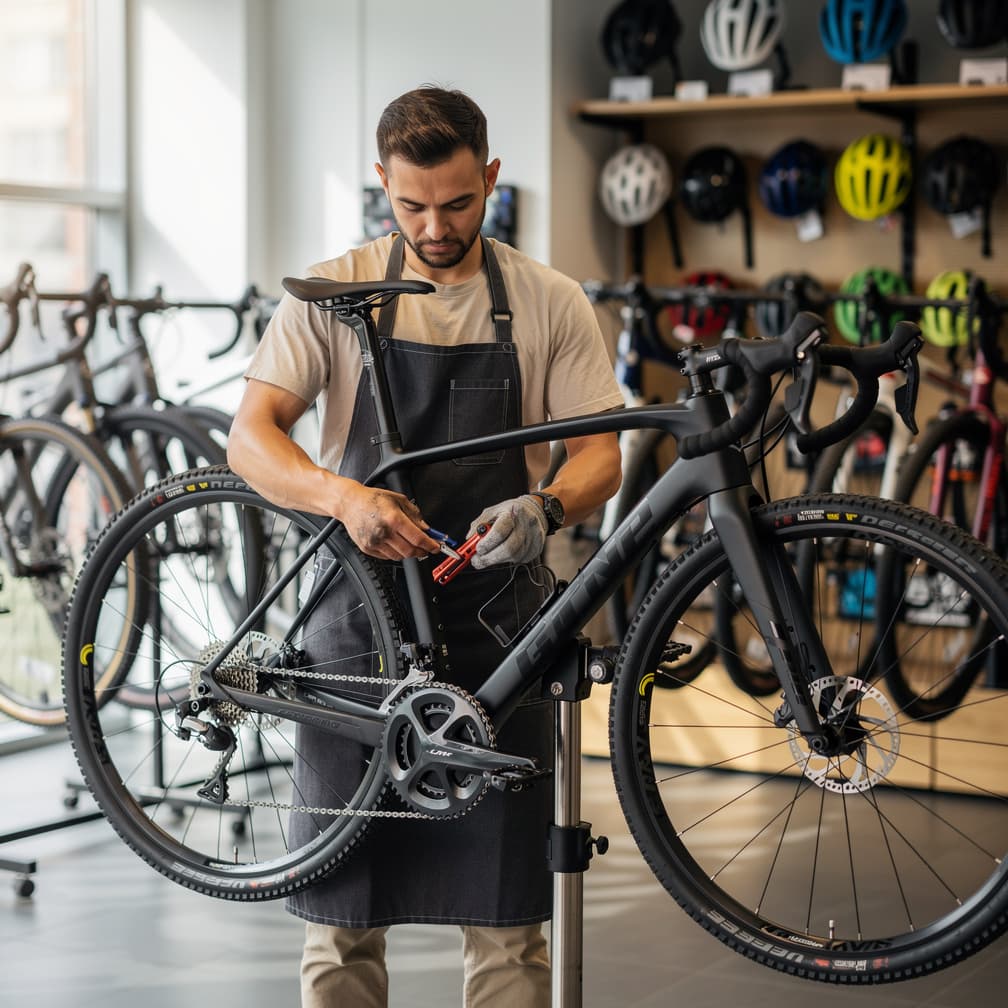

Capitol Planning Region holds about 24,000 businesses, and the ones selling physical goods all lean on the same freight lanes and the same distributors. A storm or a warehouse closure that stalls parts does not care how good your mechanics are; the stands sit empty and the service money stops. That is why bike shop insurance in Hartford deserves a hard look at the income side, not only at the walls and the inventory. Ask what triggers a business income payment, how long it can run, and what has to be physically damaged before it starts. The answer is often narrower than owners expect it to be. Then take one set of facts to several participating carriers and compare what each will actually put in writing.
What Makes Hartford Different
Vendors who consign bikes to your floor often want proof their property is insured while it sits. Their frames are on your rack, under your roof, and outside your ownership, which is a real distinction. A property form written around what you own may treat consigned stock as somebody else's problem entirely. Ask about property of others before the first pallet reaches your Hartford storefront, not after a break-in. Brand programs attach conditions too, including limits and notice requirements you may have agreed to without reading. If a distributor asks your Hartford shop for a certificate, that request is usually contractual rather than optional. Getting it wrong means a loss you assumed was handled turns into an argument about who pays. Put the question to the vendor and the carrier in writing, since verbal assurances rarely survive a claim.
Local Risk Factors in Hartford
Freezing weather does its damage through plumbing rather than through cold itself: a pipe splits above a stockroom and thaws onto boxes of parts. Sudden water from a burst pipe is generally a covered peril on a property form, unlike flooding from outside, though most forms expect you to keep heat in the building. Leave a shop unheated for a week and the claim gets harder to make. Ice at the entrance raises a different question, since a customer who falls at your door in Hartford is a General Liability matter rather than a property one. Keep a record of your heating and your salting, because both come up in Connecticut claims.
What Coverage Does a Bike Shop in Hartford Need?
General Liability
Landlords and event organizers ask for this one by name, and it is the line that answers when somebody outside your payroll gets hurt or has their property damaged. For a bike shop that means customer injuries on the floor, plus products and completed operations: the claim that follows a repair or a part out the door. It typically excludes your own stock and your own staff.
Example: A customer catches a pedal on the way past a display and goes down hard in Hartford; general liability can help cover the medical bills and the suit that tends to follow.
Commercial Property
Flood and ordinary wear are generally outside it, which tells you what it is for: sudden accidental damage to the space you occupy, the bikes and parts inside it, and the stands, jigs, and diagnostic gear that earn your service revenue. Theft is usually included, subject to limits and to how the loss happened. Values you cannot document are values it may not pay.
Example: Someone puts a brick through the front glass overnight and three e-bikes leave the display wall; commercial property may respond to the stolen stock and the window alike, minus your deductible.
Workers Compensation
Employee injuries sit outside general liability entirely, which is the reason this line exists at all. Lifting an e-bike onto a stand, a hand caught in a chainring, a slip in a wet bay: the coverage is meant for medical costs and lost wages when staff get hurt on the job. Rules on who must carry it vary by state, and it is rated on payroll rather than a flat monthly figure.
Example: A mechanic strains her back wrestling a cargo bike onto the stand and misses three weeks at your Hartford shop; workers compensation is designed to pick up the medical bills and part of the wages.
Business Owners Policy
Think of it as the property and the liability conversations settled inside one document, often with some business income terms attached and priced for a shop your size. It bundles rather than expands, so employee injuries, flood, and a number of other perils generally stay outside it. The convenience is real, the exclusions are unchanged, and the limits still need reading.
Example: A pipe splits above the stockroom and soaks a season of parts, closing the bay for two weeks; a business owners policy could answer for the ruined stock and the lost trading days both.
How Much Does Bike Shop Insurance Cost in Hartford?
Bike Shop Insurance is a bundle of separate policies, priced separately. The ranges below are typical figures for Hartford for each line, except workers compensation, which is rated per $100 of payroll; a quote prices each one against your own operations.
| Coverage | Typical range | What moves your price |
|---|---|---|
| General Liability Insurance | $70 - $210 per month | Industry and risk classification, annual revenue, number of employees |
| Commercial Property Insurance | $100 - $310 per month | Building value and construction type, roof age and condition, fire protection class |
| Workers Compensation Insurance | $0.75 - $2.74 per $100 of payroll | Employee classification codes, total annual payroll, experience modification rate |
| Business Owners Policy Insurance | $110 - $350 per month | Annual revenue and industry class, building and contents values, square footage and building age |
Prices shown are general estimates, not guaranteed rates or quotes. Your actual premium will depend on the insurer, coverage selected, business details, location, claims history, and other underwriting factors. Learn about our pricing methodology.
What Are the Insurance Requirements for a Bike Shop in Hartford?
Workers' comp is generally required once you have your first employee. Connecticut generally requires employers to carry workers' compensation at that point. Common exemptions include sole proprietors and partners. Confirm current thresholds with your state's workers' compensation agency before you hire.
Flood damage is typically excluded from standard policies. Standard commercial property and builders-risk-type policies typically exclude flood damage. Flood exposure varies address by address, so check your premises in FEMA's Flood Map Service Center before deciding; if you sit in a mapped flood zone, a separate policy through the National Flood Insurance Program is the usual starting point.
Where to verify licensing and coverage rules. The Connecticut Insurance Department publishes consumer guidance and current insurance requirements for Connecticut businesses. When a contract or lease demands specific wording, the Connecticut Insurance Department's guidance is the authoritative place to check.
Get Your Bike Shop Quote in Hartford
Compare rates from multiple carriers. Free quotes, no obligation.
Operating in Hartford
- A trade-in you clean up and resell carries a products exposure of its own, even though nobody handed you a quote for the privilege of selling used bikes.
- Seasonal hires move your payroll, and payroll is the rating base for workers compensation, so the audit after the season tends to find whatever the estimate before it missed.
- A race organizer or a school district in Hartford can require an additional insured endorsement before you set up a repair tent, and endorsements do not issue the same afternoon you ask.
- Group rides leaving from your door blur the line between a sales event and an activity you are hosting, and that distinction is one a carrier will want to talk through with you.
How to Buy: Advice for Hartford Owners
List every party who can stop your work by asking for a piece of paper, and you have listed your certificate obligations. A landlord can withhold keys. An event organizer can pull your repair tent. A brand can suspend a dealer account. The certificate grants nothing by itself, since it only describes the General Liability policy standing behind it, and the description has to be accurate. Keep your Commercial Property declarations in the same file, because a lender or a landlord can ask for those too. Check holder names, limits, and additional insured wording against what you actually agreed to, since mismatches surface during claims. Ask how quickly certificates issue, because in Hartford a delayed one can idle a week of revenue. The Connecticut Insurance Department publishes consumer guidance on what business policies must disclose. Compare participating carriers on service and terms, not on price alone.
FAQ
Bike Shop Insurance in Hartford: FAQ
Ask that one out loud, because a standard property form is written around property you own. A customer frame on your stand belongs to somebody else, and coverage for property of others is generally a separate grant or endorsement. Raise it before the busy season rather than after a fire. The answer also shapes what you tell customers when they hand a bike across the counter.
You can be named, and that is what completed operations describes: the work left your bay, the exposure did not. A rider hurt after a brake service or a wheel rebuild can bring a claim about the work performed. General Liability typically includes products and completed operations for a shop like this, subject to policy terms and the aggregate limit. Records of what you did, and what you advised, matter.
Theft of stock is usually a Commercial Property question, and the answer turns on the deductible, the limit, and how the loss happened. Forced entry and unexplained disappearance are not always treated alike. Ask how the policy values inventory, because replacement cost and actual cash value pay very differently on a wall of e-bikes. Your documented count is what turns that claim into arithmetic.
It is a one-page summary issued by the carrier showing that a policy exists on a given date. Landlords, event organizers, brand programs, and lenders all ask for one. The certificate grants nothing by itself; it describes a policy that either performs or does not. Keep a list of everyone holding one on your Hartford shop and send updates the week you renew.
It means the landlord wants your policy to defend and cover them for claims arising out of your operations. That is ordinary in retail leases, and it is a real transfer of risk onto your limit. It takes an endorsement, and the wording has to match what you signed. If a landlord in Hartford requires it, get the request to your carrier early, because endorsements are not instant.
Generally not. The aggregate is a ceiling on the whole policy year, while the per-occurrence figure only caps what any single claim can draw out of it. A shop that sells parts and services bikes really can see two of these in one season, and the second claim meets whatever the first one left behind. Ask whether defense costs come out of that same pot, because legal fees on a repair dispute can drain it before anyone discusses settlement.
Sources
- 1.U.S. Census Bureau, County Business Patterns (2022), Capitol Planning Region(Capitol Planning Region has about 24,000 business establishments.)
- 2.Connecticut Insurance Department(Connecticut Insurance Department publishes consumer guidance for insurance buyers.)
- 3.FEMA / FloodSmart(Flood coverage is typically purchased separately; FEMA administers the National Flood Insurance Program.)


