







































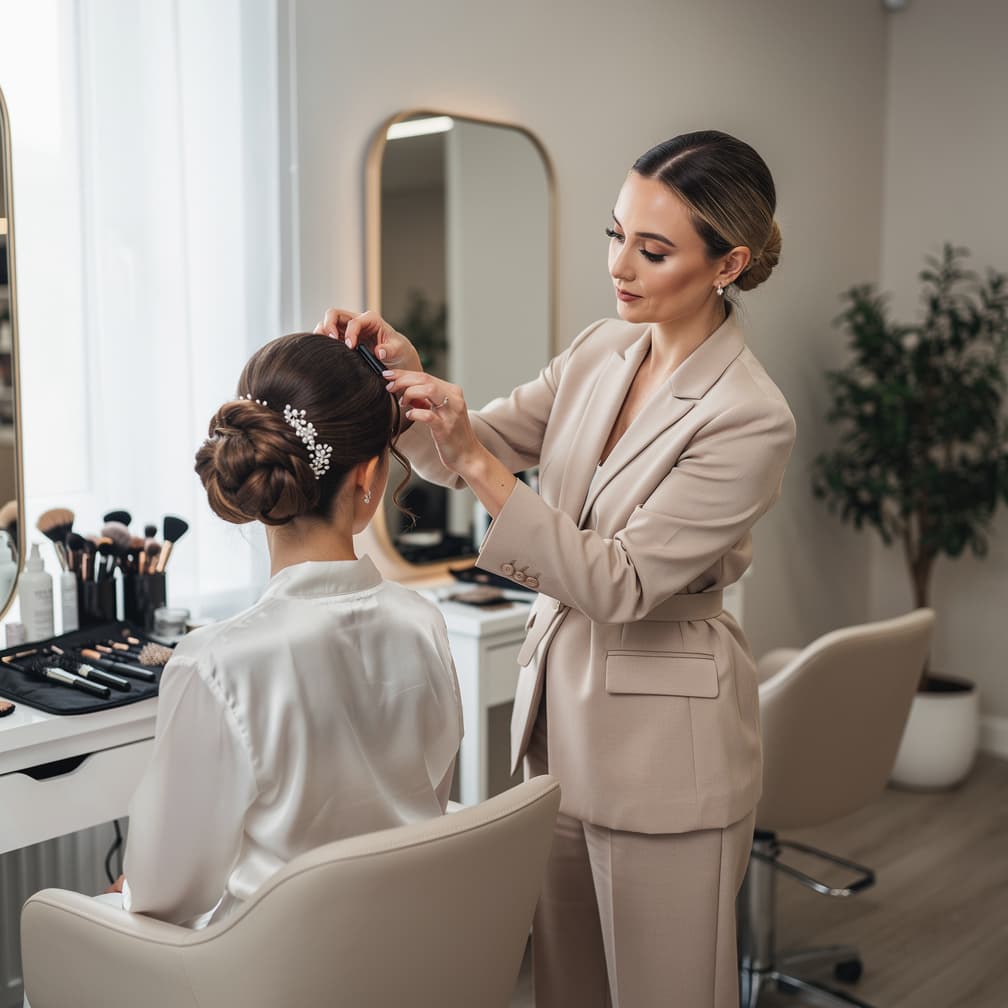

Cords run across a bridal suite floor for three hours while six people move through the room in heels. One caught heel and a bridesmaid goes down on hardwood that belongs to the hotel. That is a bodily injury claim, and it starts with a phone call rather than a lawsuit. Bridal stylist insurance in New Haven is the reason that call has somewhere to go. General Liability is generally the line built for a guest who gets hurt in the space where you are working. It typically does nothing for the ruined dress or your own burned hand. Knowing which losses land outside the form is worth as much as knowing what sits inside it. What follows sorts one from the other for a mobile styling business in New Haven.
What Makes New Haven Different
Ice, wind, or heat can shut a venue's power on the morning you need eight outlets. Hot tools need electricity, and a dead room turns a two-hour schedule into an emergency. You cannot insure your way out of a dark room in New Haven, so you plan your way out. Battery irons, a charged pack, and a car with a working inverter are the real answers. The insurance question arrives afterward, when a client blames the finished look on the conditions. A complaint about the work itself lands in a different place than a broken lamp does. Professional Liability is the line generally aimed at allegations about how the service was performed. Weather rarely creates a claim for a stylist in New Haven directly, though it creates the conditions.
Local Risk Factors in New Haven
Before a named storm is on the map, decide where the kit goes. Evacuation is a logistics problem with an insurance tail: gear left in a rented suite, a car parked at a venue, cases stacked in a garage. Location changes what a form is meant to answer for, and stylists rarely think about that until the road closes. A business owners policy may respond to property at a scheduled location, though property in transit generally sits under a different line entirely. Ask which address your policy in Connecticut actually names before the season starts in New Haven.
What Coverage Does a Bridal Stylist in New Haven Need?
General Liability
Venues, hotels, and planners ask for this one by name before they let a vendor upstairs. It can respond when a guest trips over your cord, when a bridesmaid slips near your station, or when you damage a room you were working in. Complaints about how you styled someone's hair generally sit outside it.
Example: A bridesmaid catches a heel on a taped-down cord and lands hard on a hotel floor. The medical bill and the venue's demand letter arrive together, and this line may pick them up.
Professional Liability
Damage to a lamp is not what this line is about. Allegations about your technique are: color that lifted wrong, adhesive that failed, a finish the client says ruined the photographs. It is generally meant to reach defense costs as well as a settlement, and defense is often the larger number. Intentional acts sit outside it.
Example: The trial went fine, the wedding day toner went brassy, and a letter arrives a month later citing the photos. Defense costs on a claim like that could start long before fault is decided.
Business Owners Policy
Where a standalone liability policy answers only to other people, this package pairs a liability section with property at an address you name. It suits a stylist who holds a suite, a studio, or a chair somewhere. What the property side includes varies between carriers, and gear that travels often sits somewhere else entirely.
Example: A pipe bursts above the studio where your backup stock is shelved, and the shelves come down with the water. Property at the address the policy names can respond, while the cases in your car may not.
Tools & Equipment (Inland Marine)
Irons, dryers, brushes, an airbrush compressor, lighting, and the rolling cases they live in. This line is generally built for property that moves, which is what a bridal kit does for a living. It might respond to theft, fire, or damage in transit. Wear and tear and slow deterioration are typically excluded.
Example: The kit is stolen out of a car in New Haven between a trial and a wedding, and the next booking is four days out. Replacing it quickly is what this coverage is intended to make possible.
How Much Does Bridal Stylist Insurance Cost in New Haven?
Bridal Stylist Insurance is a bundle of separate policies, priced separately. The ranges below are typical figures for New Haven for each line; a quote prices each one against your own operations.
| Coverage | Typical range | What moves your price |
|---|---|---|
| General Liability Insurance | $50 - $140 per month | Industry and risk classification, annual revenue, number of employees |
| Professional Liability Insurance | $45 - $140 per month | The services you actually perform, annual revenue or billed fees, limit and retention selected |
| Business Owners Policy Insurance | $70 - $220 per month | Annual revenue and industry class, building and contents values, square footage and building age |
| Inland Marine Insurance | $15 - $55 per month | Total insured value of the scheduled property, type and age of the equipment, where it is stored and how far it travels |
Prices shown are general estimates, not guaranteed rates or quotes. Your actual premium will depend on the insurer, coverage selected, business details, location, claims history, and other underwriting factors. Learn about our pricing methodology.
What Are the Insurance Requirements for a Bridal Stylist in New Haven?
Workers' comp is generally required once you have your first employee. Connecticut generally requires employers to carry workers' compensation at that point. Common exemptions include sole proprietors and partners. Confirm current thresholds with your state's workers' compensation agency before you hire.
Flood damage is typically excluded from standard policies. Standard commercial property and builders-risk-type policies typically exclude flood. Given New Haven's coastal flood exposure, a separate flood policy is worth pricing; FEMA's National Flood Insurance Program is the usual starting point.
Where to verify licensing and coverage rules. The Connecticut Insurance Department publishes consumer guidance and current insurance requirements for Connecticut businesses. When a contract or lease demands specific wording, the Connecticut Insurance Department's guidance is the authoritative place to check.
Get Your Bridal Stylist Quote in New Haven
Compare rates from multiple carriers. Free quotes, no obligation.
Operating in New Haven
- Weddings do not reschedule for your paperwork. If a planner in New Haven asks for a certificate two days out and your carrier routes the request through an office, the date can go to whoever answers faster.
- Trials happen weeks before the wedding, and a chemical reaction that shows up then is a warning you can still act on. The same reaction on the morning itself is a claim with forty witnesses.
- Bridal work concentrates into a handful of months, so a claim landing in the slow stretch hits an account that is already thin. That timing is the real argument for a deductible you can genuinely absorb.
- Venue property is rented property. The linens, the chargers, the vintage vanity, and the mirror you leaned against the wall all belong to somebody with an invoice book and a replacement cost.
How to Buy: Advice for New Haven Owners
Quotes ask for less than you think. Annual revenue, the services you actually perform, the replacement value of your kit, and whether you have had a claim: that is most of the form. Have the numbers ready and the answers get consistent across carriers, which is the only way to compare anything. Guessing revenue low is a bad habit, since a misstatement can be raised while a claim is being adjusted. Be accurate about chemical services in particular, because that answer moves both the price and what you get from Professional Liability. General Liability is quoted off the same disclosure. Confirm the details with the Connecticut Insurance Department if you are unsure what has to be disclosed in Connecticut. Then take the finished set of quotes from participating carriers and compare terms line by line before you book your next New Haven wedding.
FAQ
Bridal Stylist Insurance in New Haven: FAQ
Intentional acts sit outside every liability form, and so does wear and tear on your own gear. Reputation loss is not insurable, even when the legal bill behind it is. Flood damage typically sits outside a standard property form and is priced separately. A dispute over a refund is a contract problem, and no policy has an opinion about your deposit terms.
Document the scene before it gets cleaned up, since a getting-ready room is reset within the hour. Photograph the floor, the cords, and the layout, and write down who was standing where. Report it to your carrier the same day even if nobody seems hurt. Claims often arrive weeks later, and a report filed early is worth more than a memory reconstructed under pressure.
Price moves on what you do rather than where you live, so a quote in New Haven starts with your service list. Chemical work pushes it up, since skin claims are the expensive kind. Volume matters, because a stylist booked every weekend touches more people. The replacement value of your kit sets the property side, and your claim history follows you between carriers. Limits named in your venue contracts do the rest.
Anyone can file a complaint, and unhappy is not the same as damaged. What matters is whether the allegation is about your technique or about property. Professional Liability is generally the line meant for claims that the work itself fell short. It often reaches defense costs too, and those start accruing long before anyone decides whether the complaint had any merit.
A chemical burn is a bodily injury allegation and a technique allegation at once, which is why it lands awkwardly between coverages. Some forms treat it under a liability section; others exclude chemical services unless you ask for them to be added. Read the exclusions page before you buy, and put the question to the carrier directly. The answer varies enough between forms that assuming is expensive.
Liability lines are about other people, not about your own property. Inland Marine is generally the line built to follow equipment that travels, which describes a bridal kit exactly. It could respond when a case is stolen from a car or crushed in transit. Wear and tear is typically excluded, since a policy is not a maintenance plan for irons you have used for six years.
Sources
- 1.Connecticut Insurance Department(Connecticut Insurance Department publishes consumer guidance for insurance buyers.)
- 2.FEMA / FloodSmart(Flood coverage is typically purchased separately; FEMA administers the National Flood Insurance Program.)


