







































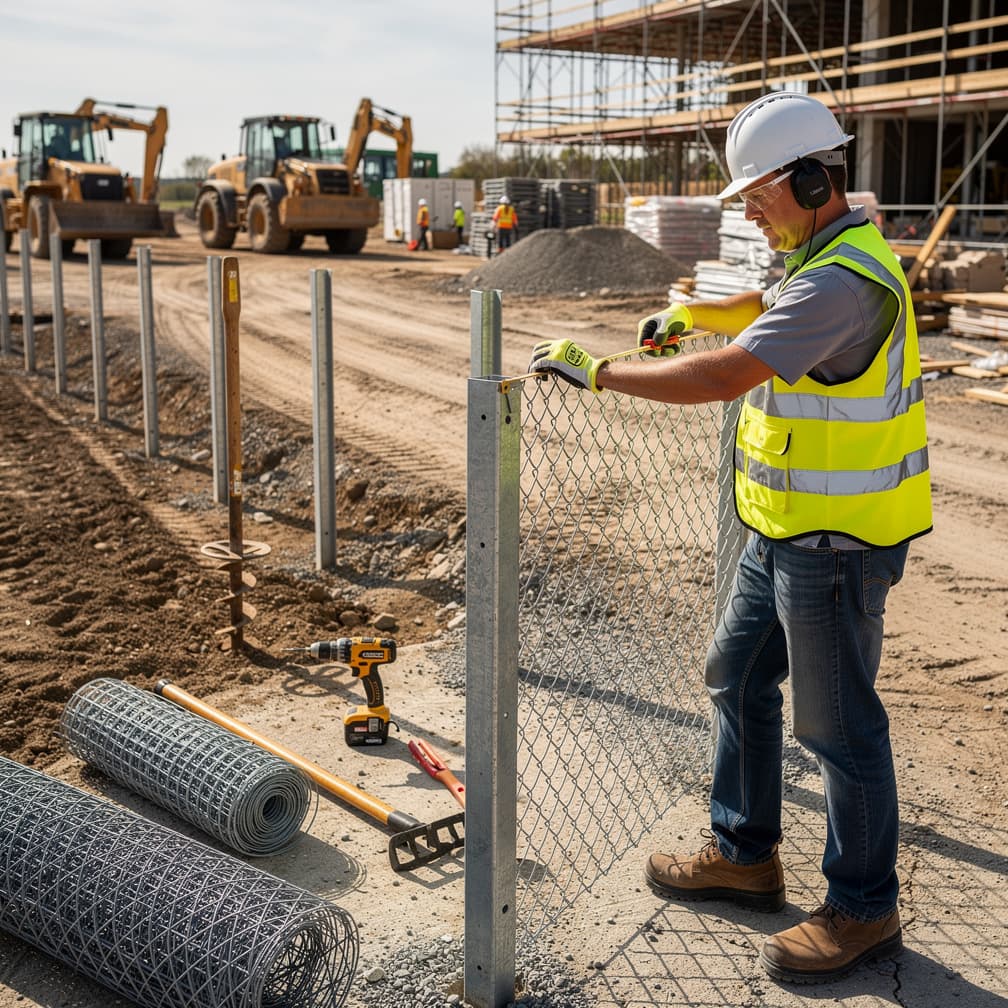

As a fencing contractor in New Haven, you are the party who decides where the line goes, and that decision is the one people sue about. The survey pins may be missing, the customer may point confidently at a hedge, and the fence still ends up in the wrong dirt. Removing and resetting a completed run is expensive, and the neighbor's claim over the ground you took is worse. Fencing contractor insurance in New Haven exists because that mistake is made by careful people on ordinary jobs. Get the boundary in writing, in the contract, with the customer's name on it, and treat that paper as part of your risk program. Then read the coverage sections below with one question in mind: which of these losses would end your year?
What Makes New Haven Different
Wind is the quiet adversary of anything you build to stand up in the open. A privacy fence is a sail, and a sail hung on posts set in wet backfill is a bet. Nobody blames the weather when a run goes over; they blame the contractor who set the posts. That is a workmanship argument, and workmanship arguments are where coverage gets complicated fast. Standard forms in Connecticut tend to draw a line between damage your work causes and the cost of redoing the work itself. Knowing which side of that line a claim falls on is worth an hour with a New Haven quote in front of you. Ask about the your-work exclusion in plain language, and make somebody explain it twice. It is the gap most fence contractors meet, and the one fewest can describe before they meet it.
Local Risk Factors in New Haven
Hurricane season rewrites a fence contractor's calendar twice: everything stops when the storm arrives, and everything is a rush order afterward. Wind takes down runs you installed and runs you did not, and the customer on the phone rarely distinguishes between them. The rush is its own exposure, because crews working long days on unfamiliar lots with hurried backfill make the mistakes that become callbacks. Your own trailer and tools may be sitting in the path of it, and an Inland Marine form's terms about property at a temporary location matter more that week than any other. Wind and named-storm deductibles differ from ordinary ones in many coastal states, so ask what applies to a New Haven address. Ask early, since the days after a storm are the worst possible time to read a policy in Connecticut.
What Coverage Does a Fencing Contractor in New Haven Need?
General Liability
The neighbor, the visitor, and the property you were never hired to touch: that is who this line is about. General Liability may respond when a fence lands over a boundary, an auger opens a sprinkler line, or somebody trips near an open hole. Redoing your own defective run is commonly excluded, and that gap surprises people.
Example: A crew sets forty feet of cedar three feet inside the neighbor's yard, and the neighbor demands removal plus damages. Defense and the third-party claim are what a liability form is generally meant to take on.
Workers Compensation
Backs, hands, and knees do the work in this trade, and an employer carries the cost when one gives out. Workers Compensation is built for employee injury, and it typically handles medical care and lost wages while generally limiting an employee's ability to sue you. Rules vary by state, and the Connecticut Insurance Department publishes the current requirements for employers.
Example: A helper lifting a wet post on uneven ground tears something in his back and misses six weeks. The medical bills and part of the wages he does not earn may fall to this policy rather than to you.
Commercial Auto
Nothing reaches the job without the truck, and personal auto forms commonly exclude business use. Commercial Auto is written for the vehicles, trailers, and hired equipment that haul posts and panels, and it typically addresses injury to others plus damage to the vehicle itself depending on what you buy. Tools inside generally sit on another form.
Example: A gust catches a privacy panel off the trailer on the way to a New Haven job and it goes through the windshield behind you. The other driver's injuries and repairs are the kind of loss this policy may take up.
Tools & Equipment (Inland Marine)
Augers, post drivers, compressors, levels, and the saw all live on a trailer rather than in a shop. Inland Marine is meant for property that moves, and it could respond to theft or damage between sites, subject to conditions about locks, attendance, and what you can prove you owned. Wear and tear is not a covered peril.
Example: A trailer gets broken into overnight at a stalled New Haven site, and the post driver and compressor are gone by morning. Replacing them quickly is what this coverage is intended to make possible, subject to the deductible.
How Much Does Fencing Contractor Insurance Cost in New Haven?
Fencing Contractor Insurance is a bundle of separate policies, priced separately. The ranges below are typical figures for New Haven for each line, except workers compensation, which is rated per $100 of payroll; a quote prices each one against your own operations.
| Coverage | Typical range | What moves your price |
|---|---|---|
| General Liability Insurance | $170 - $525 per month | Industry and risk classification, annual revenue, number of employees |
| Workers Compensation Insurance | $0.75 - $2.74 per $100 of payroll | Employee classification codes, total annual payroll, experience modification rate |
| Commercial Auto Insurance | $270 - $750 per month | Fleet size and vehicle types, driver records and experience, coverage limits and deductibles |
| Inland Marine Insurance | $40 - $160 per month | Total insured value of the scheduled property, type and age of the equipment, where it is stored and how far it travels |
Prices shown are general estimates, not guaranteed rates or quotes. Your actual premium will depend on the insurer, coverage selected, business details, location, claims history, and other underwriting factors. Learn about our pricing methodology.
What Are the Insurance Requirements for a Fencing Contractor in New Haven?
Workers' comp is generally required once you have your first employee. Connecticut generally requires employers to carry workers' compensation at that point. Common exemptions include sole proprietors and partners. Confirm current thresholds with your state's workers' compensation agency before you hire.
State auto liability minimums apply to business vehicles. Connecticut's minimum auto liability limits are $25,000/$50,000/$25,000 (bodily injury per person / per accident / property damage). Contracts and lenders often require more than the state floor.
Where to verify licensing and coverage rules. The Connecticut Insurance Department publishes consumer guidance and current insurance requirements for Connecticut businesses. When a contract or lease demands specific wording, the Connecticut Insurance Department's guidance is the authoritative place to check.
Get Your Fencing Contractor Quote in New Haven
Compare rates from multiple carriers. Free quotes, no obligation.
Operating in New Haven
- The customer who calls in a panic about a leaning fence three seasons later still expects you to answer, and completed work follows you long after the invoice cleared.
- Day labor in the busy stretch is easy to hire and easy to forget at audit, and unreported payroll in Connecticut is payroll you end up paying for twice.
- Certificates get requested by an office you have never spoken to, on a deadline you did not set, and a New Haven start date can sit on that one email.
- A dog behind the old fence is a bite waiting to happen, and whose policy answers depends on facts nobody bothers to record at the time.
How to Buy: Advice for New Haven Owners
Write down every tool that leaves your yard and what it would cost to replace this month. Augers, post drivers, compressors, levels, saws, and the trailer they ride on add up faster than most owners expect. Inland Marine is the line built around property that moves, and its terms usually turn on where the gear sleeps and how it is secured. The trailer itself may sit on Commercial Auto rather than a property form, so ask which policy owns it. Read the theft conditions closely, since an unattended trailer at a job site is exactly the scenario the fine print addresses. Replacement cost and actual cash value are different deals, and the cheaper quote is often the one paying depreciation. The Connecticut Insurance Department publishes consumer guidance on business property coverage. Then put the same equipment list in front of participating carriers in Connecticut and read the conditions rather than the price.
FAQ
Fencing Contractor Insurance in New Haven: FAQ
That depends on the carrier and on whether your policy already contains the wording a request names, so nobody should promise you a timeframe. What you can control is the setup: bind before the season, ask about blanket additional-insured wording, and keep the certificate contact current. A New Haven job that hangs on paperwork is a job you can lose to whoever answers the email first.
Property you are working on sits in a grey zone, and the answer turns on the form. Damage to a driveway or a lawn during installation may fall inside a liability policy, while damage to the actual thing you were hired to build usually does not. Care, custody, and control language is where these claims live. Photograph existing cracks before you dig, because a homeowner's memory improves after a claim.
Meeting a contract's limit is usually cheaper than losing the contract, and the jump costs less than the first quote suggests because severe claims are rare. The real question is whether a carrier will issue that limit at your payroll and history. Ask before you sign, since a New Haven contract binds you whether or not any carrier agrees to the wording it demands.
Requirements vary by state and by city, and plenty of small jobs start without anyone asking for proof. The exposure does not care. One misplaced line, one cracked driveway, or one visitor tripping over an open post hole can cost more than a year of premium. Permit desks and property managers commonly ask for a certificate anyway, so the practical answer usually arrives before the formal one does.
Price follows your payroll, your driving, your claims history, and how deep the work goes, rather than your address alone. A one-truck crew setting residential picket lines prices differently from an outfit augering near foundations and hanging automated gates. Participating carriers in Connecticut read the same submission differently, which is why identical crews get different numbers. Every current range by coverage sits in the cost table further down this page.
That is a third-party property dispute, and General Liability is the line most likely to be tested. What it takes on depends on the form: damage to the neighbor's land and the argument over it usually sit inside the policy, while pulling and resetting your own defective run is commonly excluded. Read the your-work exclusion before you assume the whole fix falls to a carrier.
Sources
- 1.Connecticut Insurance Department(Connecticut Insurance Department publishes consumer guidance for insurance buyers.)


