







































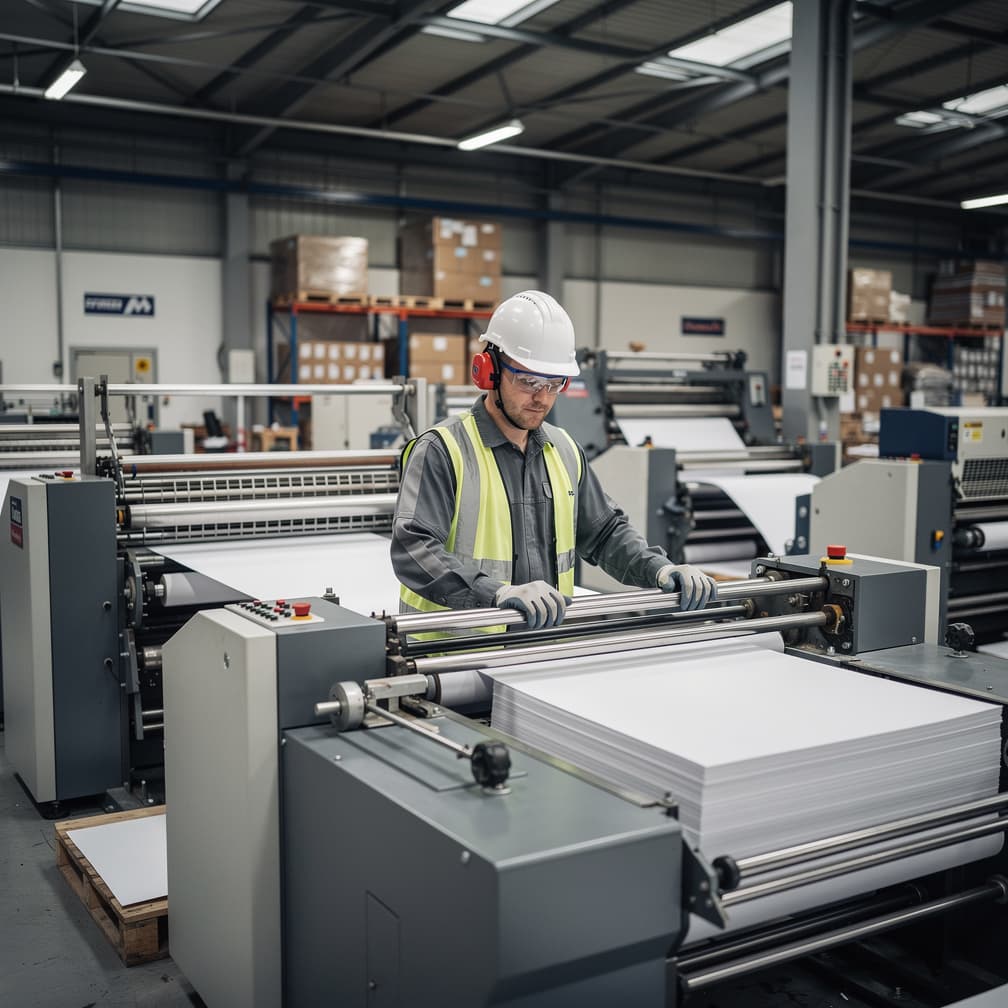

General Liability for a small printing company can start from $25 a month, which is less than the stock you waste on one bad makeready. Low price is not the point. The point is what the number gets built from: payroll, revenue, claims history, and how much replaceable equipment sits on the floor. Printing company insurance in New Haven gets priced from those inputs, so two shops of similar size in New Haven can be quoted very differently. If a quote looks thin, check what the limits actually are and whether the deductible is one you could pay during the week a press is down. The inexpensive policy and the right policy are not automatically the same file. Look at several before you sign one.
What Makes New Haven Different
Competition sets your prices, and your prices decide what a bad claim actually costs you. Thin margins on long runs mean a deductible that looks absorbable on paper may not be absorbable during a slow stretch. That is a pricing decision wearing an insurance costume. Look at your worst month rather than your best, and pick the retention you could pay in the worst one. Shops in crowded markets often carry higher limits because contracts say so, which is a different reason than risk. Neither reason is wrong; they simply have to be separated when you shop. Ask what a premium does when the deductible moves, and what a limit increase costs in New Haven. The gap between those two answers is where most of the real decision sits for a New Haven shop.
Local Risk Factors in New Haven
A week of canceled pickups costs more than owners expect, because payroll, lease, and equipment finance do not pause for a storm. Power loss alone can idle a digital press for days, and a job half-run is worth nothing to the client waiting on it. Ask what a policy contemplates when the utility fails rather than the building, since those are separate triggers with separate wording. Income terms carry a waiting period, and the waiting period is where the argument usually lands. Get that answer in writing for your New Haven shop before the season turns. Board-up costs and debris removal belong in the same conversation, since they arrive first in South Central Connecticut Planning Region and come out of your pocket if nobody planned for them.
What Coverage Does a Printing Company in New Haven Need?
General Liability
Landlords and corporate accounts ask for this one by name before a lease is signed or a purchase order clears. General Liability generally applies to third-party injury and property damage: a customer who falls at your counter, or a panel your crew drops in somebody else's lobby. It typically excludes damage to your own work, so a rejected run is not a liability claim.
Example: A customer picks up a boxed order, catches a heel on a pallet strap by the counter, and breaks a wrist. The medical bills and any suit that follows are what this line is meant to take on.
Commercial Property
Fire, a burst line, or a storm that opens the roof can put presses, finishing machines, paper stock, and finished jobs at risk in one event. Commercial Property is generally the line for what sits inside your building, valued at replacement cost or actual cash value depending on the form. Flood and mechanical breakdown from an internal fault usually sit outside it.
Example: A sprinkler head lets go over the racks overnight. Skids of stock and a week of finished jobs are pulp by morning, and a contents claim may follow for the paper and the completed work alike.
Workers Compensation
Employee injuries do not belong to your liability policy, which catches plenty of owners off guard. Workers' Compensation typically responds to medical costs and lost wages when a bindery hand catches a finger or an operator hurts a back lifting stock. Rating runs off payroll, so the split between pressroom and office hours matters. Which employers must carry it is a question that changes at every state line.
Example: A helper reaches into a folder to clear a jam without locking it out and loses a fingertip. Treatment, the follow-up surgery, and the weeks away from the floor are what this line generally answers for.
Tools & Equipment (Inland Marine)
Portable gear is the blind spot: a laptop holding client files, a plate maker, hand tools, and the finishing equipment that rides along to an install. Inland Marine might apply to property in transit or away from your premises, where a property form generally stops at the walls. Scheduled items and blanket limits behave differently, so ask which one a quote assumes.
Example: Your crew loads a wide-format printer and a tool case for a lobby graphics job in New Haven. The truck gets broken into overnight, and the missing gear could fall to this line rather than the shop's property policy.
How Much Does Printing Company Insurance Cost in New Haven?
Printing Company Insurance is a bundle of separate policies, priced separately. The ranges below are typical figures for New Haven for each line, except workers compensation, which is rated per $100 of payroll; a quote prices each one against your own operations.
| Coverage | Typical range | What moves your price |
|---|---|---|
| General Liability Insurance | $90 - $270 per month | Industry and risk classification, annual revenue, number of employees |
| Commercial Property Insurance | $200 - $650 per month | Building value and construction type, roof age and condition, fire protection class |
| Workers Compensation Insurance | $0.75 - $2.74 per $100 of payroll | Employee classification codes, total annual payroll, experience modification rate |
| Inland Marine Insurance | $40 - $130 per month | Total insured value of the scheduled property, type and age of the equipment, where it is stored and how far it travels |
Prices shown are general estimates, not guaranteed rates or quotes. Your actual premium will depend on the insurer, coverage selected, business details, location, claims history, and other underwriting factors. Learn about our pricing methodology.
What Are the Insurance Requirements for a Printing Company in New Haven?
Workers' comp is generally required once you have your first employee. Connecticut generally requires employers to carry workers' compensation at that point. Common exemptions include sole proprietors and partners. Confirm current thresholds with your state's workers' compensation agency before you hire.
Flood damage is typically excluded from standard policies. Standard commercial property and builders-risk-type policies typically exclude flood. Given New Haven's coastal flood exposure, a separate flood policy is worth pricing; FEMA's National Flood Insurance Program is the usual starting point.
Where to verify licensing and coverage rules. The Connecticut Insurance Department publishes consumer guidance and current insurance requirements for Connecticut businesses. When a contract or lease demands specific wording, the Connecticut Insurance Department's guidance is the authoritative place to check.
Get Your Printing Company Quote in New Haven
Compare rates from multiple carriers. Free quotes, no obligation.
Operating in New Haven
- Ink and press-wash solvent live on the same floor as stacked paper, which is why an underwriter asks about storage cabinets and housekeeping before asking about your revenue.
- Finished jobs sit on racks for days waiting on pickup, and until a customer collects them, that work is your property and your loss if a pipe lets go over your New Haven floor.
- Clients who order long mailing runs route the job through procurement, and procurement will not release a purchase order until the certificate wording matches its template exactly.
- The guillotine cutter is the machine that sends people to an emergency room, and one hand injury can move your payroll rating in Connecticut for years after the bandages come off.
How to Buy: Advice for New Haven Owners
Color is the exposure nobody schedules for. A run that misses the client's approved proof turns into a reprint argument, and the money at stake is their cost rather than your press time. Ask directly whether a policy contemplates that kind of claim or excludes it, because a plain General Liability form typically excludes damage to your own work and the cost of redoing it. Knowing where that line falls is worth more than a small premium difference. Get your proof-approval process in writing and keep the signed proofs, since paperwork settles these disputes long before insurance enters the room. The Connecticut Insurance Department publishes consumer guidance on what business policies commonly exclude. Then compare offers from participating carriers on CPK for the New Haven shop you actually run, with the exclusions read rather than assumed.
FAQ
Printing Company Insurance in New Haven: FAQ
Flood, earth movement, wear and tear, mechanical breakdown from an internal fault, and damage to work you performed incorrectly. Intentional acts sit outside as well. None of that is a trick; it is how the form gets built. Read the exclusions with your own floor in mind, then decide which gaps to price separately and which you can live with.
A landlord can require proof of coverage before handing over keys, and commercial leases usually spell out limits and additional-insured wording. That is a contract demand rather than a legal one, and it is not negotiable in most cases. Read the insurance exhibit before you sign, because the limits named there may exceed what you planned to buy for a New Haven shop.
Pricing comes out of your payroll, your revenue, the value of presses and finishing equipment on the floor, your building, and your claims history. A New Haven shop running solvent-based work on a night shift prices differently than a small digital operation with two people. Nobody can quote it from a web page. Gather payroll by role and an equipment list, and the number stops being mysterious.
Probably not the way owners hope. A standard General Liability form typically excludes damage to your own work and the cost of redoing it, so a rejected run usually lands on you. Written proof approvals matter more here than any policy does. Get sign-off before the press rolls and keep the file, because that document settles most color disputes.
Landlords, corporate customers, show organizers, and property managers at any site where you install finished work. Each one can demand its own limits and its own wording. A purchase order can sit unreleased until the certificate arrives correctly formatted, which makes this a cash-flow problem as much as a coverage one. Keep a running list of every party holding one.
Mechanical breakdown is a common gap. Property forms generally respond to fire, water, and similar sudden causes, not to a machine failing from wear or an internal fault. Equipment breakdown is usually a separate item you have to ask about by name. Check whether it appears on the quote for your New Haven shop at all, and what it says about income while parts are in transit.
Sources
- 1.Connecticut Insurance Department(Connecticut Insurance Department publishes consumer guidance for insurance buyers.)
- 2.FEMA / FloodSmart(Flood coverage is typically purchased separately; FEMA administers the National Flood Insurance Program.)


