







































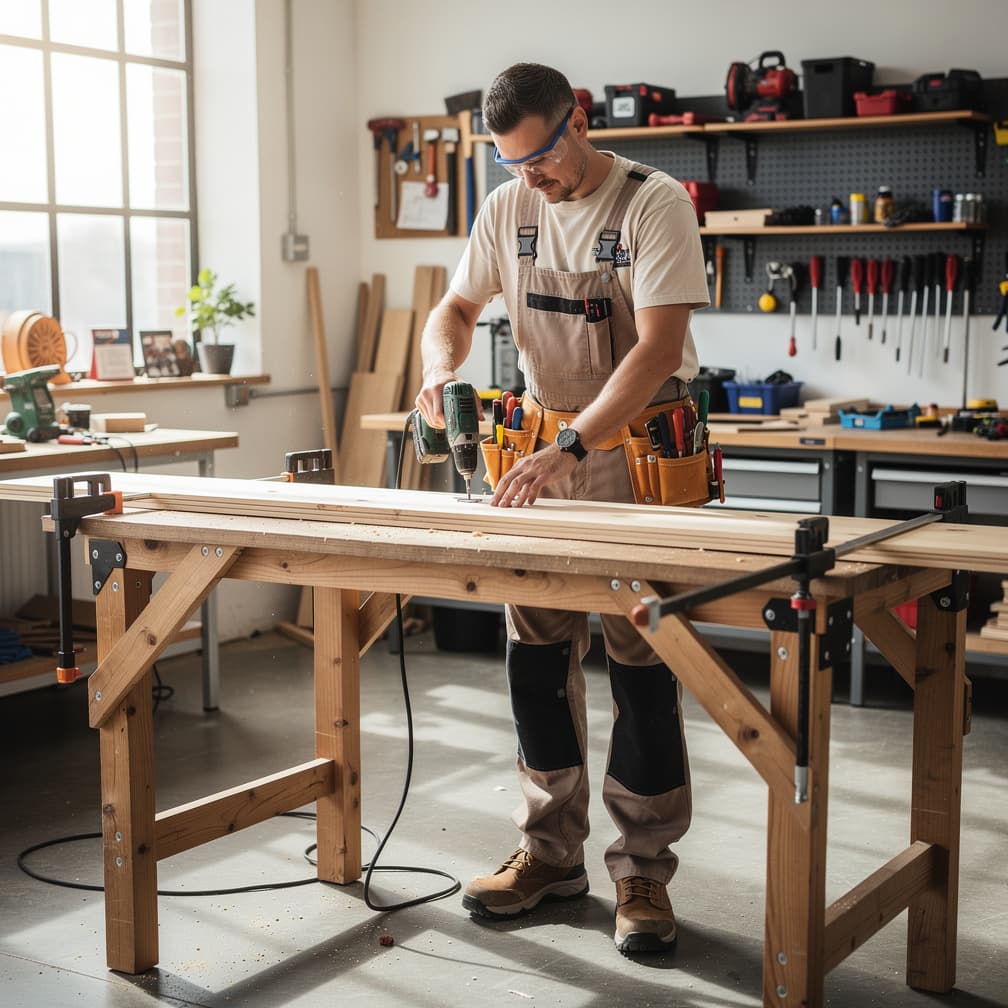

Cheap is a word that hides a deductible. Handyman insurance in Stamford can start from $25 a month at the low end of small-business pricing, and the gap between that and a real quote is usually payroll, a vehicle, and the limits somebody made you carry. A one-person operation with hand tools and a car prices one way. The same person with a helper, a van full of gear, and an apartment management contract prices another way entirely. None of that is regional mystery; it is arithmetic on the exposures you bring. What a thin Western Connecticut Planning Region market changes is who is around to argue with, and how long a replacement part takes to arrive. Get quotes that describe the same business and the same limits, then choose.
What Makes Stamford Different
Weather reroutes this trade instead of stopping it, and the detour creates its own exposure. An indoor backlog after a wet stretch in Stamford means working faster in occupied rooms full of people. Speed plus furniture plus a wet floor is how a customer injury claim starts. Tarps, buckets, and drying fans also mean somebody's belongings are being moved by you. Property you move and property you damage get treated differently by most liability forms. Care, custody, and control exclusions are worth reading before you agree to store a homeowner's furniture. That clause has decided more claim arguments than goodwill ever has, in Connecticut and everywhere else. If storage is part of your service, say so on the application and price it honestly.
Local Risk Factors in Stamford
Plywood, generators, and ladders in high wind are the real risk to a handyman during a named storm, and none of them care about your schedule. Work at height in gusts, with a helper hired that morning, on a roof edge you would refuse in calmer weather, is how a routine board-up becomes an injury claim. General Liability may respond when a customer or a passerby gets hurt by what you were doing, and it typically leaves your own faulty work out of it. The truck is its own question, since a tree across a work vehicle in Western Connecticut Planning Region is physical damage rather than liability. Confirm what your Connecticut policy says about windstorm before the first advisory, because coverage shopped during a watch is often unavailable at any price.
What Coverage Does a Handyman in Stamford Need?
General Liability
Clients ask about this one by name, and it is the line most vendor packets, leases, and contracts are actually demanding. For a handyman it can help cover third-party injury and damage to a customer's property caused by your work: the ceiling that came down, the guest who slipped past your cords. Your own faulty workmanship is typically excluded, and so is property left in your care.
Example: A ceiling fan bracket lets go a week after the install and the fixture takes out a glass table below; General Liability might help cover the table and the injury claim that follows, though the bracket itself is likely your own cost.
Commercial Auto
A personal auto policy commonly stops the moment the vehicle is used for the business, which is the gap this line exists to close. It can respond to accidents involving a work truck or van hauling ladders, lumber, and gear between jobs, including damage you cause to other people and, where you add physical damage coverage, to the vehicle itself. Tools inside ride on a separate form.
Example: You back a loaded van into a client's garage door while turning around in a narrow driveway; Commercial Auto could respond to the door and the vehicle, subject to the deductible you picked.
Tools & Equipment (Inland Marine)
Business tools sit outside a homeowners policy, and a liability policy does not answer for your own stolen property either. This is the form written for gear that moves: drills, saws, ladders, meters, and the contents of a locked van or a jobsite box. It usually pays against a schedule you file, so the values you list are the values you get back. Wear and tear stays excluded.
Example: A truck window goes in overnight outside a Stamford jobsite and the tool bags go with it; Inland Marine might pick up the scheduled gear, with the payout shaped by whether you chose replacement cost or actual cash value.
Workers Compensation
Helpers change everything. Once somebody works for you, their injury stops being a liability question, and this is the coverage built for it: medical care and lost wages for an employee hurt on the job, plus the part that may answer if they sue. Rules and rates differ by state, and a sole proprietor is commonly excluded by default unless the coverage is elected.
Example: Your helper steps off a ladder wrong while handing up a light fixture and breaks a wrist in Stamford; Workers Compensation is generally where the medical bill and the missed weeks get handled.
How Much Does Handyman Insurance Cost in Stamford?
Handyman Insurance is a bundle of separate policies, priced separately. The ranges below are typical figures for Stamford for each line, except workers compensation, which is rated per $100 of payroll; a quote prices each one against your own operations.
| Coverage | Typical range | What moves your price |
|---|---|---|
| General Liability Insurance | $100 - $320 per month | Industry and risk classification, annual revenue, number of employees |
| Commercial Auto Insurance | $190 - $490 per month | Fleet size and vehicle types, driver records and experience, coverage limits and deductibles |
| Inland Marine Insurance | $25 - $80 per month | Total insured value of the scheduled property, type and age of the equipment, where it is stored and how far it travels |
| Workers Compensation Insurance | $0.75 - $2.74 per $100 of payroll | Employee classification codes, total annual payroll, experience modification rate |
Prices shown are general estimates, not guaranteed rates or quotes. Your actual premium will depend on the insurer, coverage selected, business details, location, claims history, and other underwriting factors. Learn about our pricing methodology.
What Are the Insurance Requirements for a Handyman in Stamford?
Workers' comp is generally required once you have your first employee. Connecticut generally requires employers to carry workers' compensation at that point. Common exemptions include sole proprietors and partners. Confirm current thresholds with your state's workers' compensation agency before you hire.
State auto liability minimums apply to business vehicles. Connecticut's minimum auto liability limits are $25,000/$50,000/$25,000 (bodily injury per person / per accident / property damage). Contracts and lenders often require more than the state floor.
Where to verify licensing and coverage rules. The Connecticut Insurance Department publishes consumer guidance and current insurance requirements for Connecticut businesses. When a contract or lease demands specific wording, the Connecticut Insurance Department's guidance is the authoritative place to check.
Get Your Handyman Quote in Stamford
Compare rates from multiple carriers. Free quotes, no obligation.
Operating in Stamford
- Ladders make this trade different from most: a fall from eight feet inside somebody's stairwell can produce a customer injury claim and a week with no income at once.
- About 350 handymen work in Western Connecticut Planning Region, so a client who needs a certificate this afternoon has other numbers to call before the day ends.
- Rental turnovers in Western Connecticut Planning Region arrive in batches with a deadline, and rushing five units in three days is when the wrong anchor goes into the wrong wall.
- Booking platforms verify coverage automatically, and a lapsed record can freeze your profile overnight without a phone call, a warning, or anyone to argue with.
How to Buy: Advice for Stamford Owners
Buy in the order the risk shows up. On day one, before a single customer, General Liability is the line clients ask about and the one that may answer for the damage you do inside someone's home. On the day you put a work vehicle on the road with materials in it, Commercial Auto stops being optional in practice, because a personal policy commonly excludes the trip. On the day your tools are worth more than your car, Inland Marine earns its keep. On the day someone works for you, payroll enters the picture and so does an audit. That sequence costs less than buying everything at once and leaves fewer gaps than buying nothing until a client complains. Compare quotes from participating carriers in Stamford at each step, because your Connecticut pricing changes as your operation does.
FAQ
Handyman Insurance in Stamford: FAQ
Annual revenue, a task list, payroll for anyone who helps you, the vehicle you drive to jobs, and a tool inventory with values. Add the insurance exhibit from your biggest contract, since that sets the limits worth quoting. Accurate inputs matter more than fast ones, because the number you guess becomes the bill you dispute later. With those five items, comparing quotes from participating carriers in Stamford is one sitting.
That scenario is what General Liability exists for, and it is the serious claim this trade files most. A cord across a hallway in an occupied home is a hazard you created, and the injury claim that follows can include medical bills and a lawsuit. Defense costs alone can exceed the damage. Whether the policy responds depends on the facts and the limits you bought, which is why the limit deserves thought now.
Usually yes. New tools can often be added to a schedule, a vehicle can be added the week you buy it, and additional insured wording can be endorsed when a contract demands it. Mid-term changes get priced, sometimes with a small fee, and none of it works backwards: gear stolen the day before you scheduled it is still your loss. Tell the carrier when things change rather than at renewal.
Policies list the states where they apply, and a job over the Connecticut line can fall outside that list. Workers Compensation is the strictest piece, since rules and rates differ state by state and an out-of-state helper injury gets complicated fast. If you cross a border for work with any regularity, say so on the application. Fixing that before the trip costs a phone call; fixing it afterward costs a claim.
Payroll, revenue, and vehicles are the usual suspects, because they get audited and trued up against what you actually did. A helper you added, a van you bought, or simply a busier year all raise exposure. Carriers also re-rate whole classes of work, and that has nothing to do with you personally. Ask for the audit worksheet, check it against your own numbers, and re-shop if the story does not add up.
You need theirs, in writing, before they start. An uninsured subcontractor's mistake tends to land back on your policy, and your carrier can charge you at audit for payments to subs with no certificate on file. Collect one certificate per sub, dated inside the term, and keep it somewhere you can find it. This is the premium surprise that a single folder prevents, and it repeats every year.
Sources
- 1.U.S. Census Bureau, County Business Patterns (2023), Western Connecticut Planning Region(Western Connecticut Planning Region has about 350 businesses in this trade's category (NAICS group 236118).)
- 2.Connecticut Insurance Department(Connecticut Insurance Department publishes consumer guidance for insurance buyers.)


