







































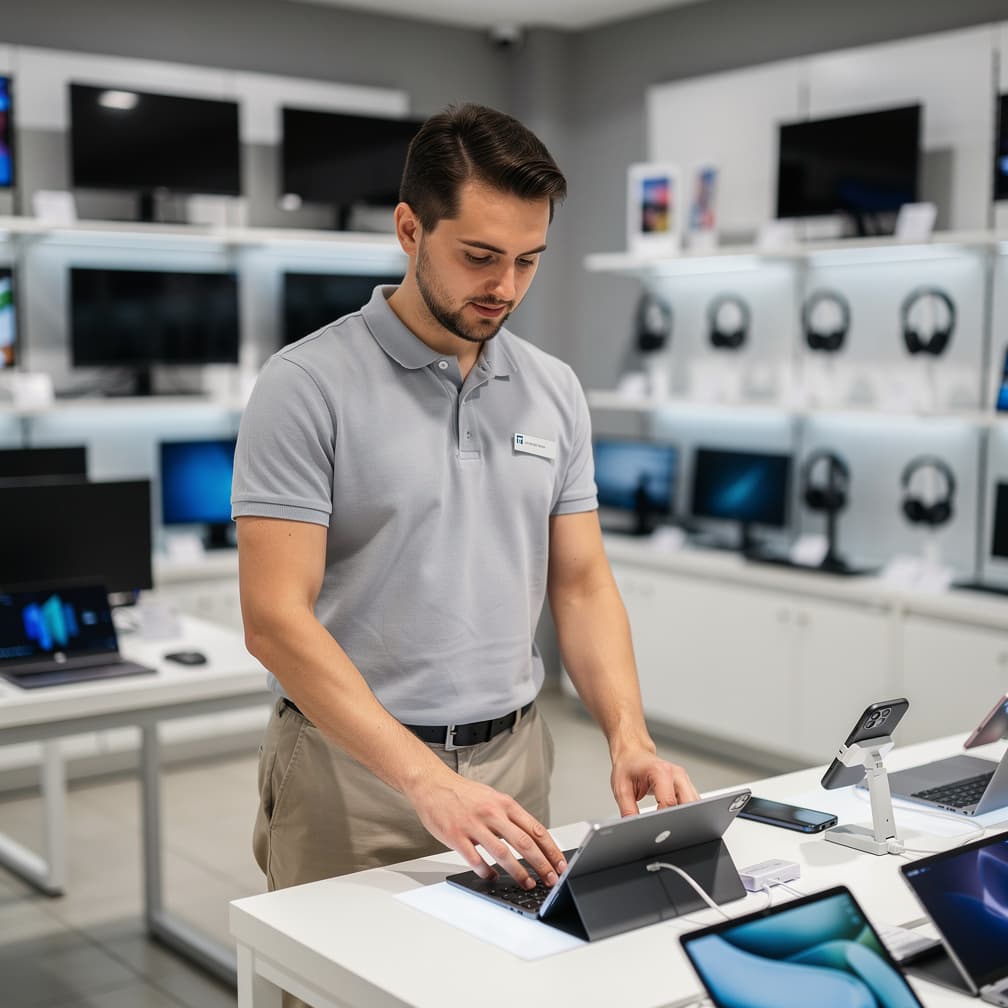

General Liability for a small retail floor tends to sit in a range that runs from $35 to $130 a month, and where you land depends on foot traffic, floor layout, and claims history. That figure is the cheap part of electronics store insurance in Wilmington. The expensive part sits behind the counter: inventory value, the repair bench, the payment system. Underwriters ask what you stock and how it is locked down before they ask anything about the address. An open accessory wall and a busy demo table price differently from locked cases and a single till. Deductibles come off your side of every loss, so a low premium with a high deductible can cost more the year something happens. Participating carriers in Delaware weigh those details differently, which is why one shop draws several different numbers.
What Makes Wilmington Different
About 35 electronics stores operate in New Castle County, and the crews that target the class rarely stop at one door. A run of break-ins across a market can show up in what carriers charge the class at renewal. You cannot control that, so control the part of the file that is yours: alarms, cameras, cash handling. Underwriters ask what happens to portable stock after closing, and the honest answer changes the quote. A locked stockroom, a monitored alarm, and a documented closing routine read differently than a shrug. Bring those details to the application instead of waiting for somebody to ask you about them. Nothing on that list is expensive, and all of it is cheaper than a second theft claim. Shops in a competitive class buy their pricing with paperwork long before they compare quotes.
Local Risk Factors in Wilmington
Decide now what happens to customer devices on the repair bench when a storm is forecast, because those units belong to somebody else and their owners will ask. A written rule for returning or securing them before a closure is worth more than any endorsement. Then look at the building: a Business Owners Policy typically bundles property and liability for a small storefront, though wind and water are where the wording turns specific. Named storm deductibles, roof age conditions, and exclusions for rain driven through an opening are all normal. None of it reads well after the fact. Confirm the details with the Delaware Department of Insurance, and get the pre-storm inventory photographed while a store in Wilmington is still dry and open.
What Coverage Does an Electronics Store in Wilmington Need?
General Liability
Landlords, mall operators, and dealer agreements all ask for this one by name. For a store it is the line that answers when a shopper trips on a cord, a wall-mounted display comes loose, or a charger sold last month scorches a customer's desk. It typically excludes damage to a device you were repairing, and it does nothing for your own stock.
Example: A shopper backs into a demo table at a Wilmington storefront, a tablet lands on her foot, and a lawyer's letter follows the hospital bill. Medical costs and defense may fall to this coverage.
Commercial Property
Flood, wear and tear, and anything damaged on purpose sit outside this one. What it does address is the building where you own it, the fixtures and locked cases, and the stock behind them: phones, tablets, laptops, and accessories lost to fire, burglary, or a burst pipe. Watch the sublimit on portable electronics, which can sit well under the headline limit.
Example: A back door gets pried open overnight and a case of handsets is emptied before anyone answers the alarm. The stolen inventory could be settled under this line, less the deductible and any sublimit.
Cyber Liability
Nothing on a property form addresses a stolen customer list. This one is meant for the digital half of a store: a breached card terminal, repair records pulled off a back-office machine, ransomware freezing the register on a busy afternoon. It commonly funds forensics, customer notification, legal advice, and sometimes the income lost while systems sit down.
Example: Someone slips malware onto the point-of-sale system and card data from a month of sales walks out the door. Notification costs, a forensic review, and the legal advice that follows might be picked up here.
Business Owners Policy
One package, two halves: the liability that answers for shoppers on your floor, and the property side covering stock behind the counter. Small retailers often buy it this way because a bundle can price better than separate lines. Cyber Liability is usually left out, and the theft sublimit still deserves reading before you sign anything.
Example: A pipe above the ceiling lets go, ruining a shelf of tablets and closing the floor for a week. Repairs, the ruined stock, and the interrupted income can each be handled inside the package.
How Much Does Electronics Store Insurance Cost in Wilmington?
Electronics Store Insurance is a bundle of separate policies, priced separately. The ranges below are typical figures for Wilmington for each line; a quote prices each one against your own operations.
| Coverage | Typical range | What moves your price |
|---|---|---|
| General Liability Insurance | $65 - $200 per month | Industry and risk classification, annual revenue, number of employees |
| Commercial Property Insurance | $140 - $480 per month | Building value and construction type, roof age and condition, fire protection class |
| Cyber Liability Insurance | $50 - $180 per month | Records held and how sensitive they are, annual revenue and industry, multi-factor authentication and backup practices |
| Business Owners Policy Insurance | $120 - $410 per month | Annual revenue and industry class, building and contents values, square footage and building age |
Prices shown are general estimates, not guaranteed rates or quotes. Your actual premium will depend on the insurer, coverage selected, business details, location, claims history, and other underwriting factors. Learn about our pricing methodology.
What Are the Insurance Requirements for an Electronics Store in Wilmington?
Workers' comp is generally required once you have your first employee. Delaware generally requires employers to carry workers' compensation at that point. Common exemptions include sole proprietors, partners, and LLC members. Confirm current thresholds with your state's workers' compensation agency before you hire.
Flood damage is typically excluded from standard policies. Standard commercial property and builders-risk-type policies typically exclude flood damage. Flood exposure varies address by address, so check your premises in FEMA's Flood Map Service Center before deciding; if you sit in a mapped flood zone, a separate policy through the National Flood Insurance Program is the usual starting point.
Where to verify licensing and coverage rules. The Delaware Department of Insurance publishes consumer guidance and current insurance requirements for Delaware businesses. When a contract or lease demands specific wording, the Delaware Department of Insurance's guidance is the authoritative place to check.
Get Your Electronics Store Quote in Wilmington
Compare rates from multiple carriers. Free quotes, no obligation.
Operating in Wilmington
- Lithium batteries stored in a back room in Wilmington are a fire question, and how many you keep, and where you keep them, can change what an underwriter says about the building.
- Cash and small high-value stock in one back room in New Castle County is the combination a burglar plans around, and how you separate them shows up in the security questions on every application.
- After a break-in, one glass crew in New Castle County may serve every storefront that needs a door replaced, so the wait to reopen has nothing to do with your policy.
- Renewal starts with a loss run, and every small claim you filed for convenience in Wilmington sits on it, priced into the number you get handed.
How to Buy: Advice for Wilmington Owners
Theft is the loss this trade actually files, so build the quote around it. Small items with high resale value walk out during business hours and after them, and the two situations can fall under different parts of one policy. Ask whether Commercial Property treats shoplifting, burglary, and employee dishonesty the same way, because it usually does not. Ask what the alarm requirements are, since a warranty clause can quietly sink a claim when the system was not armed. A Business Owners Policy in Wilmington may carry a theft sublimit low enough to matter on one bad night. The Delaware Department of Insurance publishes consumer guidance on policy conditions and warranties. Once you know what each form does with theft, compare quotes from participating carriers on that answer alone.
FAQ
Electronics Store Insurance in Wilmington: FAQ
A certificate holder simply receives proof that a policy exists, plus notice if it changes. An additional insured is added to the policy itself and can be defended under it. Landlords usually want the second and often accept a form showing only the first. The difference costs nothing until a claim names both of you, and at that point it costs plenty.
Usually yes. A pallet of phones sitting in a back room before opening day is stock at risk, and a policy that starts when the doors open leaves that week uninsured. Ask whether property in transit is included and what date the coverage binds. A shop in Wilmington may also need a certificate before a landlord releases keys, which often sets the date for you.
Generally not. Standard property forms exclude flood, and rising water outside the door is treated differently than rain coming through a roof a storm just tore open. Flood coverage is bought separately, often through the National Flood Insurance Program or a private carrier. Ask which of the two you are looking at before assuming water is simply water. That distinction decides the claim.
It can, where business interruption is part of the policy and the closure follows a covered physical loss. The clause typically carries a waiting period, a cap on how many months it runs, and a definition of when the business counts as restored. A closure in Wilmington caused by something the policy excludes, flood being the classic case, produces nothing. Ask what starts that clock while the shelves are still full.
Not always. Selling refurbished or repaired units can pull you closer to the manufacturer's position in a product claim, because you altered or certified the item. Valuation can differ too: a used tablet may settle at actual cash value while sealed stock settles nearer to cost. Tell the carrier what share of sales is refurbished, since discovering it at claim time never helps anyone.
Rarely by default. A Business Owners Policy typically packages property and liability for a small retailer, and cyber exposure usually arrives as an endorsement or as its own policy. Where something is bundled in, the sublimit can be small enough to fund a phone call and little else. Ask what the cyber limit is, in size and in scope, before assuming the package handles a breach.
Sources
- 1.U.S. Census Bureau, County Business Patterns (2023), New Castle County(New Castle County has about 35 businesses in this trade's category (NAICS group 443142).)
- 2.Delaware Department of Insurance(Delaware Department of Insurance publishes consumer guidance for insurance buyers.)
- 3.FEMA / FloodSmart(Flood coverage is typically purchased separately; FEMA administers the National Flood Insurance Program.)


