







































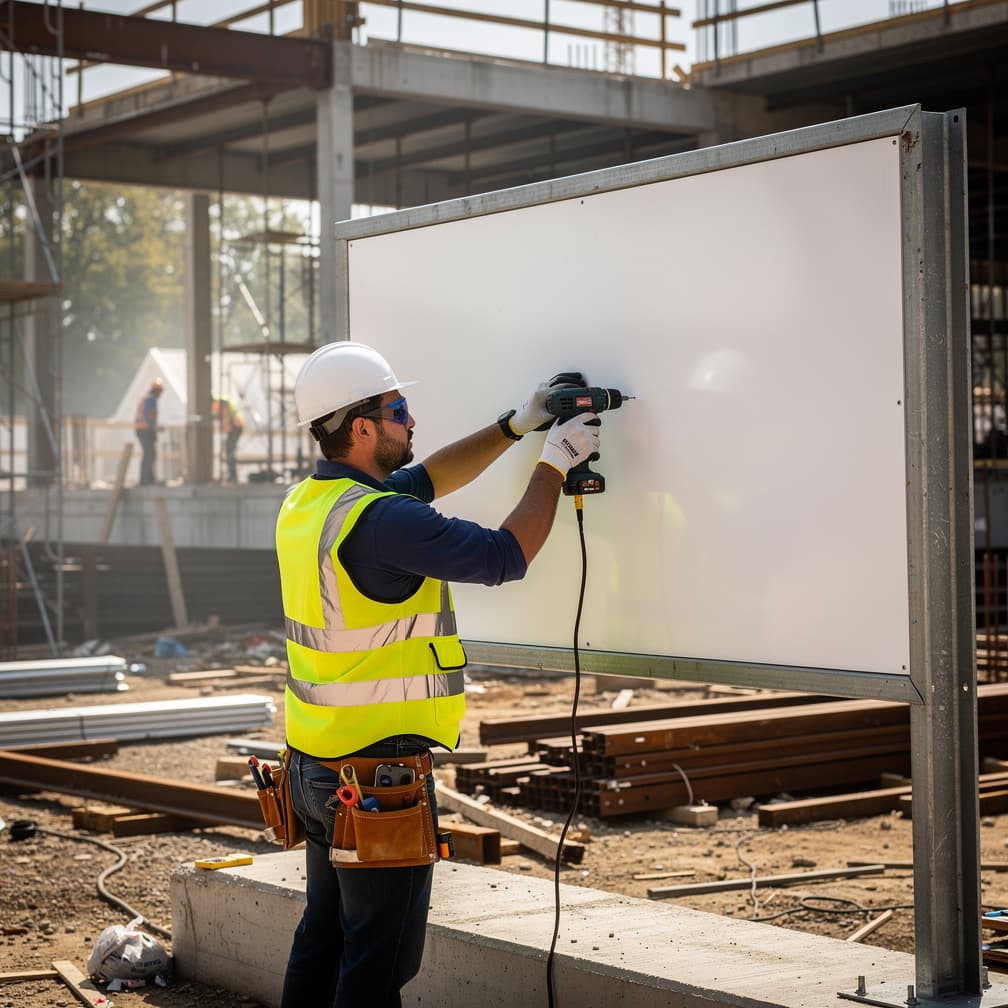

As a sign installation contractor in Wilmington, you sign contracts that quietly move somebody else's risk onto your policy. Indemnity clauses, additional-insured requirements, and waiver language all do it, in sentences most crews never read. Sign installation contractor insurance in Wilmington either matches those clauses or leaves you personally holding the difference. A cracked storefront panel is the obvious loss; the contractual promise to defend a building owner is the one that gets expensive. Both can come out of a single afternoon on a ladder. Ask what a policy is expected to do before the contract tells you what it must do. The sections below cover each line, its published range, and where the wording tends to fall short.
What Makes Wilmington Different
Permit desks are the obligation owners forget about until a sign is already fabricated. Many cities require a licensed or bonded installer before a permit gets issued for a sign. The rules vary by state and city, so a blanket answer here is worth nothing to you. The Delaware Department of Insurance publishes consumer guidance on the business coverages sold to contractors in Delaware. Your own municipality is the authority on the permit side, and it may want a certificate too. Getting told at the counter costs you a trip; getting told at inspection costs you the job. Fold the paperwork question into your quote process so it never lands on install day. A sign that cannot be permitted is a sign that nobody is going to pay for.
Local Risk Factors in Wilmington
Ask about the named-storm deductible before you ask about the premium, because that number decides what a bad season actually costs you. Sign shops carry a strange mix of exposures during a hurricane: a building, a yard, vehicles that have to be moved, and inventory that is worthless once it is wet. Moving trucks and lifts inland ahead of a storm has a real cost either way you decide. Commercial Auto can matter here, since a vehicle left in a lot is a vehicle at risk. What no policy hands back is the week you lose, so plan the schedule around Delaware weather and let coverage argue about the property in New Castle County.
What Coverage Does a Sign Installation Contractor in Wilmington Need?
General Liability
Landlords, general contractors, and franchise facility teams ask for this one by name before a lift ever touches their property. It can respond when your work damages a customer's building or injures somebody nearby, and completed-operations wording extends that reach to failures showing up after you leave. Damage to the sign itself, caused by your own faulty work, is typically excluded.
Example: A channel letter slips during a second-story mount and cracks the storefront glass below; general liability can help cover the window, the cleanup, and the claim the tenant files afterward.
Workers Compensation
Injuries to your own crew sit outside General Liability, and that gap is what this line fills. A fall from a lift, a shoulder torn lifting a panel, or heat illness on a roof deck may be handled here, including medical bills and a portion of lost wages. Requirements vary by state, and the Delaware Department of Insurance publishes the current requirements for employers in Delaware.
Example: A groundman steadying a pylon panel takes the weight wrong and tears a shoulder; workers compensation is generally where the surgery and the missed weeks get sorted out.
Commercial Auto
Trucks, trailers, and the lift towed behind them are business vehicles, and personal auto policies commonly exclude business use altogether. This line rates on what you drive, how far, and who is behind the wheel. It might answer for damage you cause in a parking lot as well as damage to your own vehicle. Tools riding inside are a separate question worth asking about.
Example: Backing a bucket truck into a tight lot in Wilmington, your crew catches a parked sedan's fender; commercial auto is typically the line that settles that repair.
Commercial Property
Everything the other lines ignore lives here: the shop, the fabrication equipment, the vinyl and substrate on the racks, and finished panels waiting on an install date. Fire, theft, and named storm perils are the usual causes of loss. Flood is typically excluded and priced separately, and tools away from the premises often fall outside this form as well.
Example: Somebody cuts the lock on your yard overnight, and the ladders, hardware, and two pallets of substrate are gone by morning; commercial property may pick up the replacement cost.
How Much Does Sign Installation Contractor Insurance Cost in Wilmington?
Sign Installation Contractor Insurance is a bundle of separate policies, priced separately. The ranges below are typical figures for Wilmington for each line, except workers compensation, which is rated per $100 of payroll; a quote prices each one against your own operations.
| Coverage | Typical range | What moves your price |
|---|---|---|
| General Liability Insurance | $240 - $800 per month | Industry and risk classification, annual revenue, number of employees |
| Workers Compensation Insurance | $0.75 - $2.74 per $100 of payroll | Employee classification codes, total annual payroll, experience modification rate |
| Commercial Auto Insurance | $360 - $1,025 per month | Fleet size and vehicle types, driver records and experience, coverage limits and deductibles |
| Commercial Property Insurance | $120 - $460 per month | Building value and construction type, roof age and condition, fire protection class |
Prices shown are general estimates, not guaranteed rates or quotes. Your actual premium will depend on the insurer, coverage selected, business details, location, claims history, and other underwriting factors. Learn about our pricing methodology.
What Are the Insurance Requirements for a Sign Installation Contractor in Wilmington?
Workers' comp is generally required once you have your first employee. Delaware generally requires employers to carry workers' compensation at that point. Common exemptions include sole proprietors, partners, and LLC members. Confirm current thresholds with your state's workers' compensation agency before you hire.
State auto liability minimums apply to business vehicles. Delaware's minimum auto liability limits are $25,000/$50,000/$10,000 (bodily injury per person / per accident / property damage). Contracts and lenders often require more than the state floor.
Flood damage is typically excluded from standard policies. Standard commercial property and builders-risk-type policies typically exclude flood damage. Flood exposure varies address by address, so check your premises in FEMA's Flood Map Service Center before deciding; if you sit in a mapped flood zone, a separate policy through the National Flood Insurance Program is the usual starting point.
Where to verify licensing and coverage rules. The Delaware Department of Insurance publishes consumer guidance and current insurance requirements for Delaware businesses. When a contract or lease demands specific wording, the Delaware Department of Insurance's guidance is the authoritative place to check.
Get Your Sign Installation Contractor Quote in Wilmington
Compare rates from multiple carriers. Free quotes, no obligation.
Operating in Wilmington
- Franchise vendor packets arrive with limits and wording already fixed, so the negotiation you think you are having is really a yes or no, whether the location sits in Wilmington or three states away.
- A sign that has to come down urgently after a failure is emergency work at height, performed by a crew that is already having a bad day.
- Subcontracted crane time can be treated as your payroll at audit unless you hold the operator's certificate, and carriers in Delaware look backward, not forward.
- Anchor conditions inside a wall stay unknown until you drill, and nobody hands you the drawings for a building you did not construct.
How to Buy: Advice for Wilmington Owners
Write down what you would do the day after a sign you installed fails. Who do you call, what do you photograph, who takes the sign down, and who tells the client? A claim starts in that hour, and much of what determines the outcome is settled before anyone contacts a carrier. General Liability might respond to the damage and the injury, and it responds better when your file holds photographs, a work order, and the install notes. Commercial Auto follows the same rule whenever a vehicle is involved. Build the routine now, while nothing has gone wrong in Wilmington. Then ask participating carriers in Delaware how they want a claim reported, because the answer varies, and choose among the ones whose process you can live with.
FAQ
Sign Installation Contractor Insurance in Wilmington: FAQ
Usually yes, though territory and radius both show up on the application, and a wide operating radius gets rated. If most installs sit an hour or more from the shop, say so, because a carrier that priced you as a local operation may look at a highway claim differently. Describing the real footprint costs less than arguing about it afterward.
It depends on whose property it is and where the failure started. Damage to a customer's finished sign is generally their property loss rather than yours, unless your installation gets blamed for the failure. Once a claim points at your anchoring, General Liability is the line that comes into it. Documentation of the install method is what settles that argument.
Usually, though the price and the terms change. Participating carriers in Delaware weigh how recent the claim is, what caused it, and what you changed afterward. A documented tie-off routine or a new spotter policy adopted after an incident is evidence, and evidence is what moves an underwriter. Three clean years does more for a renewal than any negotiating tactic, so the fix starts on the jobsite.
Often, yes. A contract states a minimum, and that minimum was set by someone protecting their building, not your business. The facade you mount to and the people walking under it can produce a claim larger than any limit a work order names. Raising a limit tends to be cheap per dollar next to the first dollar of coverage. Ask for two options in Wilmington and compare.
Licensing rules vary by state and city, so the reliable answer is simpler: the landlord will ask. Property owners and management companies routinely require a certificate of insurance, with named limits, before a lift comes onto their property. That requirement lives in the contract rather than anywhere else, which means it shifts from client to client. Get the wording from them before you price the job.
A quote in Wilmington turns on payroll, the height you work at, how many vehicles you run, and your claims history. A one-truck shop doing ground-level work and a crew running a boom lift on tall facades are not the same risk, and the pricing reflects that. Published ranges for each coverage sit in the cost table further down. Bring payroll and loss runs to a quote and the number gets specific fast.
Sources
- 1.Delaware Department of Insurance(Delaware Department of Insurance publishes consumer guidance for insurance buyers.)
- 2.FEMA / FloodSmart(Flood coverage is typically purchased separately; FEMA administers the National Flood Insurance Program.)


