







































Updated July 5, 2026

Commercial Truck Insurance in Wilmington
Property managers, lenders, prime contractors, and larger shippers around Wilmington often want current certificates before they release a dock, approve a vendor, or let your truck onto a job site. Satisfying them locally usually means your COI matches the named insured, vehicle schedule, and requested limits, and it reaches the other party fast enough to keep a pickup or delivery on schedule. If you are shopping for commercial truck insurance in Wilmington, that paperwork discipline matters almost as much as the policy itself. A missed certificate request can stall a subcontract, delay a warehouse appointment, or push a load to another carrier.
This city also concentrates a lot of counterparties in a compact area. Local trucking work often involves repeated certificate requests from warehouses, retailers, medical facilities, office tenants, and service vendors rather than a single annual proof-of-insurance check. That changes how you should buy. Ask for a policy setup that makes adding additional insureds, updating holders, and issuing certificates straightforward, then review hired and non-owned auto, trailer interchange, and cargo details against the way you actually dispatch.
Commercial Truck Insurance Risk Factors in Wilmington
Wilmington's local risk issue is **congestion around short, time-sensitive runs**. Here, many truck claims start as low-speed backing, tight-turn, loading-area, or side-swipe losses rather than a long-haul highway event. That matters if your week includes downtown deliveries, warehouse approaches, contractor supply drops, and repeat stops at the same properties. You should review physical damage deductibles, towing, rental reimbursement, and downtime planning with those stop-and-go exposures in mind. Delaware's broader hazard profile also matters, but only as a planning prompt, not a city-specific statistic. If weather can interrupt routes, flood a lot, or damage stored equipment, ask how your policy handles garaging location, substituted vehicles, and any gap between cargo responsibility and property damage to your truck or trailer. Then line up certificates, loss payee information, and after-hours claim contacts before the next urgent load, because **response speed often decides whether a local account keeps using your trucks**.
Delaware has a moderate climate risk rating. Top hazards: Hurricane (High), Flooding (High), Coastal Erosion (Moderate), Severe Storm (Moderate). The state's expected annual loss from natural hazards is $180M, which influences commercial truck insurance premiums and may affect coverage availability in high-risk areas.
What Commercial Truck Insurance Covers
Trucking coverage is usually built in layers, because the state's commercial auto minimums are not the same thing as trucking liability needs. For freight carriers, motor carrier liability is the core protection, and federal minimums for general freight often sit well above state auto requirements, with higher limits often needed for certain loads. Cargo insurance can protect the freight you are moving if it is stolen, damaged, or lost in transit, but the terms depend on the type of cargo and the policy wording.
Physical damage coverage can help with repair or replacement after a collision, theft, or other covered loss, which is especially relevant for equipment moving through dense traffic and storm-prone areas. Trailer interchange coverage matters if you use non-owned trailers under interchange agreements. Bobtail coverage and non-trucking liability are common for owner-operators, but they apply to different situations, so the policy language should match when the truck is under dispatch versus when it is not. Delaware-specific exclusions and endorsements vary by carrier, so a quote should be reviewed line by line before binding.
Coverage Included

Motor Carrier Liability
Can help cover injuries and property damage your truck causes to others, a coverage federal regulators require most for-hire carriers to maintain.
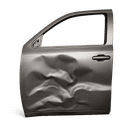
Physical Damage
Can help pay to repair or replace your own truck after an accident, fire, theft, or vandalism.
Cargo Coverage
May pay for damage to or theft of the freight you are hauling while it is in your care.
Trailer Interchange
Can help cover damage to trailers you haul under an interchange agreement but do not own.

Bobtail Coverage
May provide liability protection when you drive your tractor without a trailer attached, such as after dropping off a load.

Non-Trucking Liability
Can help cover accidents that happen when you use your truck for personal errands rather than dispatched work.
Commercial Truck Insurance Cost in Wilmington
Average Cost in Delaware
$370 - $1,025
per month
Businesses in Delaware typically see commercial truck insurance premiums of $370 - $1,025 per month, which tends to run 9% below the national range of $400 - $1,125 per month.
- Radius of operation
- Commodities hauled and cargo value
- Number and value of power units
- Driver motor vehicle records and CDL experience
- DOT safety record, inspections, and FMCSA scores
- Liability limits and physical damage deductibles
Contact CPK Insurance for a personalized quote.
Prices shown are general estimates, not guaranteed rates or quotes. Your actual premium will depend on the insurer, coverage selected, business details, location, claims history, and other underwriting factors. Learn about our pricing methodology.
Your cost depends on several local factors: coverage limits and deductibles, claims history, location, industry or risk profile, and policy endorsements. Delaware's risk profile matters because the state has high hurricane and flooding exposure, moderate severe storm risk, and a history of major disaster declarations. Those conditions can influence physical damage pricing, especially for fleets that park near coastal or low-lying areas. Traffic and loss trends also affect pricing: Delaware's fatal crash rate is slightly above the national average, which can translate into higher liability premiums because carriers price for the increased risk of severe accidents.
Cargo-heavy operations, long-haul routes, and higher limits for motor carrier liability usually cost more than basic local-haul policies. Your quote can also vary significantly by carrier, vehicle class, and endorsements.
Industries & Insurance Needs in Wilmington
The county business mix is what changes demand here. In New Castle County, the largest establishment shares are professional, scientific, and technical services at 15.3%, retail trade at 11.4%, and health care and social assistance at 11.2%. So a local truck account may serve office tenants one day, retail receivers the next, and medical or care-related facilities with stricter delivery windows and site rules after that. Those customers do not all ask for the same paperwork or operational controls.
That is why your quote should be built around what you haul, where you unload, who requires certificates, and whether your drivers enter managed properties with vendor compliance rules. If part of your book involves medical campuses, retail docks, or contractor deliveries to occupied buildings, ask your agent to review liability limits, cargo descriptions, additional insured requests, and any hired vehicle exposure against those contracts before renewal.
What Makes Wilmington Different
Certificate pressure is what changes the calculus here. In many places, a truck policy is mainly about road exposure and equipment value. Around Wilmington, it is also about how often another business asks you to prove coverage before work starts, a gate opens, or a delivery appointment is honored. That administrative side becomes operational risk if your policy setup is clumsy.
The reason is simple: this is a dense commercial market inside a county with many business establishments. So even a small fleet can deal with multiple certificate holders, changing job sites, and customers that want specific wording or evidence of higher limits. If your current policy makes every COI request a scramble, you can lose time and revenue without ever having a claim. Buy with that in mind. Review how quickly certificates are issued, whether scheduled autos and drivers are current, and how your policy handles trailers, subcontracted hauling, and customer-specific insurance requirements before you bind.
Our Recommendation for Wilmington
Start with your contracts, not your declarations page. Pull the last several certificate requests, dock agreements, subcontract terms, and lender requirements, then compare them against your current liability limits, covered autos, trailer arrangements, and cargo wording. That exercise usually shows where a local trucking operation is exposed.
Next, separate your work by stop type. A truck serving retail receivers, managed properties, and contractor sites may need a different deductible and endorsement conversation than a truck running cleaner warehouse-to-warehouse routes. If you use leased units, borrowed trailers, employee vehicles for errands, or dispatch subcontractors during busy weeks, ask for those exposures to be reviewed explicitly rather than assumed.
Finally, test service before you buy. Ask how certificates are requested, how fast they are turned around, and what information is needed to add a new vehicle or update a holder. If a lender or property manager asks for proof on short notice, that process can matter as much as the premium.
Get Commercial Truck Insurance in Wilmington
Enter your ZIP code to compare commercial truck insurance rates from carriers in Wilmington, DE.
Business insurance starting at $25/mo
FAQ
Frequently Asked Questions
Wilmington accounts often need more than a basic ID card. Your policy setup should support fast certificates, accurate vehicle schedules, lender or landlord information, and additional insured requests when contracts call for them, so a delivery or job start does not get delayed.
Wilmington sits in a dense commercial county, so many trucking jobs involve repeated proof-of-coverage requests from commercial counterparties. Review your COI process, named insured details, and requested limits before a customer asks at the last minute.
Wilmington-area demand is shaped by county sectors such as professional services at 15.3%, retail trade at 11.4%, and health care and social assistance at 11.2%. That mix can change delivery windows, site rules, and certificate requirements, so match coverage to your actual stops.
Wilmington short-run work often creates loading-area, backing, and tight-turn exposure more than classic long-haul patterns. Review deductibles, physical damage, towing, downtime planning, and any trailer or cargo responsibilities based on how your truck actually operates each week.
Wilmington lenders usually want the insured name, vehicle information, and loss payee details to match exactly. Before you send proof, confirm the schedule is current and ask whether any recent vehicle change, refinance, or replacement unit needs to be reflected on the policy.
Your policy can include several layers of protection. Motor carrier liability is the core, and physical damage can help with repairs after a collision or theft. Cargo coverage protects the freight you are hauling. If you use non-owned trailers, trailer interchange applies. Bobtail coverage and non-trucking liability address different situations when the truck is not under dispatch. The right mix depends on whether you run local, regional, or long-haul work.
Delaware commercial auto minimums are $25,000/$50,000/$10,000, but freight carriers may also need to meet federal liability expectations, including at least $750,000 for general freight.
Your final cost depends on limits, deductibles, claims history, location, and endorsements.
Sources
- 1.U.S. Census Bureau, County Business Patterns, New Castle County(New Castle County has 17,672 business establishments, so local trucking work often involves repeated certificate requests from warehouses, retailers, medical facilities, office tenants, and service vendors rather than a single annual proof-of-insurance check.; In New Castle County, the largest establishment shares are professional, scientific, and technical services at 15.3%, retail trade at 11.4%, and health care and social assistance at 11.2%.)
Updated July 5, 2026





