Updated July 16, 2026

On-Hook Towing Insurance in Wilmington
Professional, scientific, and technical services lead the business mix in New Castle County at 15.3%, ahead of retail trade at 11.4% and health care and social assistance at 11.2%. What that means on the street is more of your calls originate at employee parking lots, storefront customer spaces, and time-sensitive removals around offices and care facilities than from open-road breakdowns. A damaged vehicle on the hook can turn into a business interruption complaint fast when the owner needs it back for work, deliveries, or patient transport. You are operating in a dense service environment where private-property tows, vendor access, and documentation standards matter on almost every call. Before you request quotes, gather your truck schedule along with the heaviest and highest-value vehicles you accept, and be ready to explain where units are stored between calls and how your drivers document condition from hookup through release.
On-Hook Towing Insurance Risk Factors in Wilmington
Wilmington puts more pressure on **handoff discipline** than on long-distance towing. A short local tow from a parking deck, clinic lot, apartment complex, or downtown curbside space can still produce the same damage dispute as a highway recovery if the vehicle owner claims new bumper, wheel, undercarriage, or drivetrain damage after release. That is why your review should focus on the moments where losses are argued: pre-tow photos, wheel-lift or flatbed selection, low-clearance handling, key control, and signed release procedures. State-level hazard context also matters here in a practical way. Weather disruptions can bunch calls together, tighten storage space, and push crews to move faster, which is when documentation gaps show up later as on-hook claims. If your operation handles police-directed work, private-property removals, and roadside calls in the same week, ask for terms that match those different workflows and confirm how claim reporting should be documented after weather-driven surge periods.
Delaware has a moderate climate risk rating. Top hazards: Hurricane (High), Flooding (High), Coastal Erosion (Moderate), Severe Storm (Moderate). The state's expected annual loss from natural hazards is $180M, which influences on-hook towing insurance premiums and may affect coverage availability in high-risk areas.
What On-Hook Towing Insurance Covers
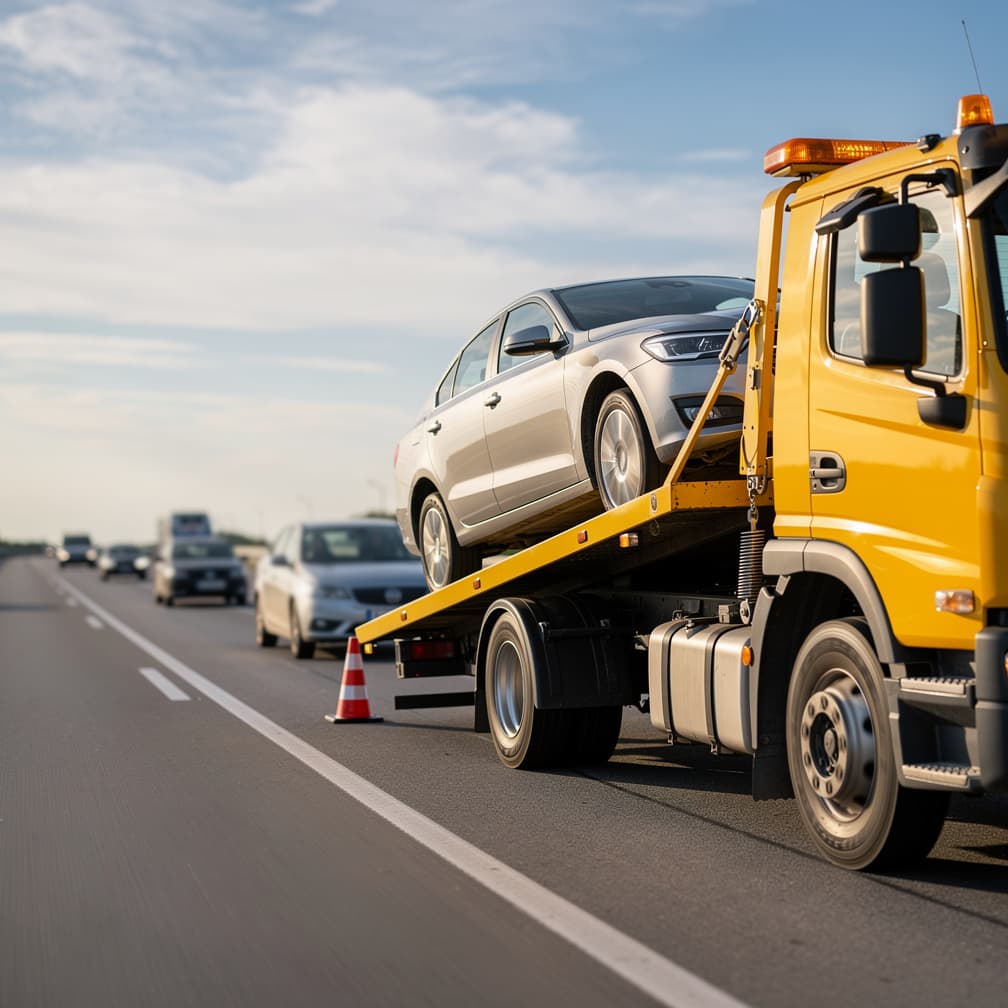
If your work includes roadside pickups on busy suburban corridors, recoveries after heavy rain, dealer transfers, apartment-complex impounds, or moves to body shops and repair facilities, the details of attachment, transport, and release matter. A policy review should focus on where damage allegations are most likely to start. Those points include during hookup, while the vehicle is secured, in transit, at unloading, or when conditions on the shoulder or lot make positioning harder.
That matters here because Delaware Code Title 21 governs towing and recovery operations, which means your compliance with those rules can affect how a claim is investigated and whether a damage dispute expands into a broader liability question. Weather-related hazards can change the loss pattern even on short runs. Wind can affect door swing, debris conditions, and roadside safety. Flooding can complicate access points, increase the chance of hidden water intrusion allegations, and make a customer dispute more expensive if electronics or interiors are involved. Severe storms can also compress call volume into a short period, which raises the odds of rushed documentation or inconsistent securement practices. If your operation works near coastal areas or low-lying routes, ask specifically how the policy responds when a damaged vehicle is moved after storm conditions and whether any exclusions or sublimits may affect the claim.
You should also review how your on-hook limit fits the most expensive vehicle you are willing to accept, not just the average call. If one truck handles routine breakdowns most days but occasionally moves newer SUVs, work vans, or specialty vehicles, your limit decision should reflect that peak exposure. Ask for sample claim scenarios tied to your actual services, then compare those against your dispatch records and tow tickets.
Coverage Included
Collision on Hook
Covers damage to towed vehicles from collisions during transport.
Comprehensive on Hook
Covers theft, fire, and weather damage to vehicles being towed.
Loading & Unloading
Covers damage during the process of loading and unloading vehicles.
Winching Coverage
Covers damage to vehicles during winching and recovery operations.
Multiple Vehicle
Covers all vehicles on multi-car carriers and rollback flatbeds.
What Makes Wilmington Different
New Castle County has 17,672 business establishments, which means your drivers are entering lots where a delayed or mishandled tow can disrupt operations for the business, its employees, and its customers all at once. The dispute is often not just whether damage happened, but when, where, and during which handoff it allegedly occurred. In a market built around offices, stores, and care facilities, you should expect more calls where the vehicle owner, property manager, employer, and site operator all want records. Your review should therefore center on claim defensibility as much as limit selection. Ask whether your insurer wants timestamped photos, dispatch notes, storage logs, and release signatures in a specific format, then make sure your drivers can produce that record consistently on every local assignment.
Our Recommendation for Wilmington
Build your quote request around your actual call mix rather than a generic tow profile. If you spend much of the week on private-property removals, account tows for businesses, or pickups near medical and office sites, tell that story clearly during quoting so the policy review matches your real exposure. Test your limit against the most expensive vehicle you are willing to hook, not the average sedan you see on routine calls. Walk through your operating procedures with the underwriter, covering who photographs the vehicle, when condition gets noted, how keys are logged, where units sit between calls, and what your release documentation looks like. If you serve commercial clients, keep sample contracts, dispatch records, and any site-specific towing instructions ready before you shop. Underwriters tend to quote more competitively when a submission spells out exactly how the operation controls on-hook loss points.
Get On-Hook Towing Insurance in Wilmington
Enter your ZIP code to compare on-hook towing insurance rates from carriers in Wilmington, DE.
Business insurance starting at $25/mo
FAQ
Frequently Asked Questions
Wilmington-area towing often involves private-lot and commercial account work where multiple parties expect records. A damage dispute here can pull in the vehicle owner, property manager, and client account at the same time, so your limits and your documentation procedures need to hold up together rather than as separate decisions.
Calls near offices, retail sites, and care facilities can create fast disputes because the vehicle owner often needs the car back for work or appointments. That makes pre-tow photos, hookup method, and release documentation especially important.
Professional, scientific, and technical services lead the county at 15.3%, with retail trade at 11.4% and health care and social assistance at 11.2%. The practical effect is that a large share of your calls likely come from commercial lots and service locations rather than highway breakdowns, and your policy review should reflect that.
Test limits against the highest-value vehicle you are willing to tow on a local assignment, especially for commercial accounts. A routine call mix can still include a vehicle whose damage claim is far above your average tow.
Wilmington's median household income is $55,269, but that number does not tell you what a damaged vehicle is worth on a claim. A better use of your time is concentrating your quote request on your vehicle mix, handling procedures, and documentation habits.
The Delaware Department of Insurance regulates insurance in the state, which means it licenses the providers and agents who sell policies, reviews rate filings, and takes consumer complaints. If you have a dispute with a carrier over a claim, you can file a complaint with the department, and it can help investigate whether the carrier handled your claim properly under Delaware law.
Delaware roadside operators should review on-hook coverage any time customer vehicles are attached to the truck and moved. Short local tows can still produce expensive disputes, especially when weather conditions, pre-existing damage questions, or difficult unloading situations are involved.
Delaware weather conditions can change the risk on an otherwise routine tow. Severe storms, wind, and coastal flooding can complicate access, loading, securement, and unloading, so your quote should reflect whether those calls are part of your normal dispatch mix.
Sources
- 1.U.S. Census Bureau, County Business Patterns, New Castle County(Professional, scientific, and technical services lead the business mix in New Castle County at 15.3%, ahead of retail trade at 11.4% and health care and social assistance at 11.2%.; New Castle County has 17,672 business establishments.)
- 2.U.S. Census Bureau, ACS 5-Year Estimates, table B19013(Wilmington's median household income is $55,269.)
Updated July 16, 2026