







































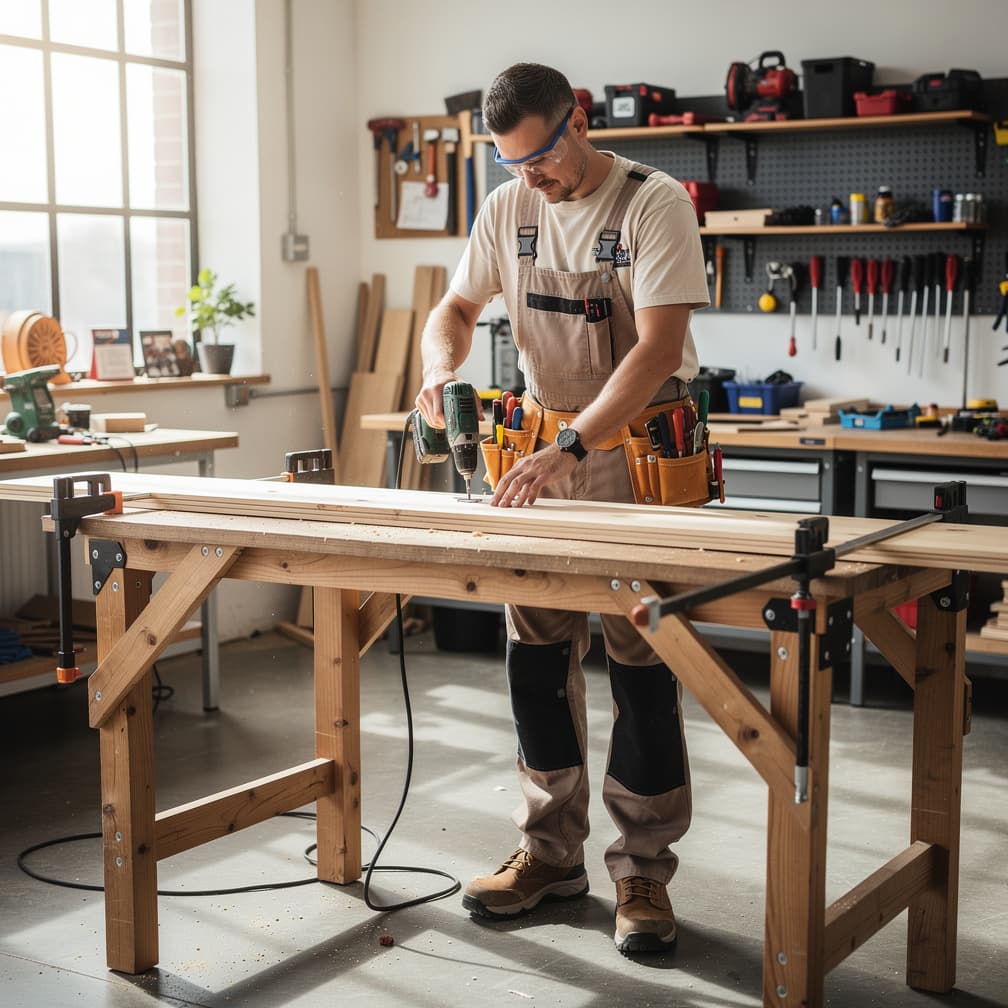

Water finds the path you did not plan for. A supply line that weeps behind a vanity overnight can soak a subfloor, a cabinet run, and the ceiling of the room below before anyone notices, and the last hands on that fitting were yours. Handyman insurance in Washington treats that as third-party property damage, which is a different animal from the small repair you were actually paid for. The invoice does not set the size of the claim. A homeowner's own carrier can pay the family first and then come looking for you, which is called subrogation and it is not personal. Keep the photos, keep the written scope, keep the policy current. The ranges below and a side-by-side comparison of participating carriers will tell you what that costs in District of Columbia.
What Makes Washington Different
A certificate stays paperwork until a drill finds a pipe behind drywall and turns it into evidence of what you promised. The certificate itself grants nothing in District of Columbia or anywhere else; the policy behind it decides what happens. That gap trips people who think emailing a one-page form is the same as buying an endorsement. Additional insured status has to be added by the carrier, and it usually carries a cost. A client who asks for it and receives only a certificate is being told yes incorrectly. When the claim arrives, the client's lawyer reads the policy, not the friendly attachment. If a general contractor in Washington requires the wording, get the endorsement issued before the first day. Anything less is a promise you made on behalf of a carrier that never agreed to it.
Local Risk Factors in Washington
Wet weeks after a flood produce a backlog that never quite clears, and the tools doing that work sit in standing water more than anyone plans. Motors, cordless batteries, and meters do not forgive it, and gear soaked at a jobsite is a different question from gear stolen from one. Inland Marine forms differ on water: some exclude flood outright, some sublimit it, and reading yours before the season is cheaper than discovering the answer after. A handyman in Washington also carries a scheduling loss, since income lost while roads are closed is generally not payable when nothing of yours was damaged. Ask what the form says about water, then decide what rides in the truck during a District of Columbia flood watch.
What Coverage Does a Handyman in Washington Need?
General Liability
Clients ask about this one by name, and it is the line most vendor packets, leases, and contracts are actually demanding. For a handyman it can help cover third-party injury and damage to a customer's property caused by your work: the ceiling that came down, the guest who slipped past your cords. Your own faulty workmanship is typically excluded, and so is property left in your care.
Example: A ceiling fan bracket lets go a week after the install and the fixture takes out a glass table below; General Liability can help cover the table and the injury claim that follows, though the bracket itself is likely your own cost.
Commercial Auto
A personal auto policy commonly stops the moment the vehicle is used for the business, which is the gap this line exists to close. It can respond to accidents involving a work truck or van hauling ladders, lumber, and gear between jobs, including damage you cause to other people and, where you add physical damage coverage, to the vehicle itself. Tools inside ride on a separate form.
Example: You back a loaded van into a client's garage door while turning around in a narrow driveway; Commercial Auto may respond to the door and the vehicle, subject to the deductible you picked.
Tools & Equipment (Inland Marine)
Business tools sit outside a homeowners policy, and a liability policy does not answer for your own stolen property either. This is the form written for gear that moves: drills, saws, ladders, meters, and the contents of a locked van or a jobsite box. It usually pays against a schedule you file, so the values you list are the values you get back. Wear and tear stays excluded.
Example: A truck window goes in overnight outside a Washington jobsite and the tool bags go with it; Inland Marine might pick up the scheduled gear, with the payout shaped by whether you chose replacement cost or actual cash value.
Workers Compensation
Helpers change everything. Once somebody works for you, their injury stops being a liability question, and this is the coverage built for it: medical care and lost wages for an employee hurt on the job, plus the part that may answer if they sue. Rules and rates differ by state, and a sole proprietor is commonly excluded by default unless the coverage is elected.
Example: Your helper steps off a ladder wrong while handing up a light fixture and breaks a wrist in Washington; Workers Compensation is generally where the medical bill and the missed weeks get handled.
How Much Does Handyman Insurance Cost in Washington?
Handyman Insurance is a bundle of separate policies, priced separately. The ranges below are typical figures for Washington for each line, except workers compensation, which is rated per $100 of payroll; a quote prices each one against your own operations.
| Coverage | Typical range | What moves your price |
|---|---|---|
| General Liability Insurance | $90 - $290 per month | Industry and risk classification, annual revenue, number of employees |
| Commercial Auto Insurance | $180 - $490 per month | Fleet size and vehicle types, driver records and experience, coverage limits and deductibles |
| Inland Marine Insurance | $20 - $70 per month | Total insured value of the scheduled property, type and age of the equipment, where it is stored and how far it travels |
| Workers Compensation Insurance | $0.75 - $2.74 per $100 of payroll | Employee classification codes, total annual payroll, experience modification rate |
Prices shown are general estimates, not guaranteed rates or quotes. Your actual premium will depend on the insurer, coverage selected, business details, location, claims history, and other underwriting factors. Learn about our pricing methodology.
What Are the Insurance Requirements for a Handyman in Washington?
Workers' comp is generally required once you have your first employee. District of Columbia generally requires employers to carry workers' compensation at that point. Common exemptions include sole proprietors. Confirm current thresholds with your state's workers' compensation agency before you hire.
State auto liability minimums apply to business vehicles. District of Columbia's minimum auto liability limits are $25,000/$50,000/$10,000 (bodily injury per person / per accident / property damage). Contracts and lenders often require more than the state floor.
Where to verify licensing and coverage rules. The DC Department of Insurance, Securities and Banking publishes consumer guidance and current insurance requirements for District of Columbia businesses. When a contract or lease demands specific wording, the DC Department of Insurance, Securities and Banking's guidance is the authoritative place to check.
Get Your Handyman Quote in Washington
Compare rates from multiple carriers. Free quotes, no obligation.
Operating in Washington
- Tools live in a vehicle overnight, which is where they get stolen, and a truck parked at your own house in Washington is still a jobsite for the purposes of that loss.
- Scope creep arrives as a question: while you are here, could you look at the panel. The answer decides whether the job stays inside the work your policy describes.
- You are often the first person to touch a fixture that has been failing for a decade, which makes you the easiest party to blame when it finally gives up.
- A homeowner in Washington can ask for proof of coverage after you have already started, and the honest answer costs you the job if the policy expired last month.
How to Buy: Advice for Washington Owners
If you rent a shop, a bay, or even a storage unit, read the lease before you shop for insurance. Landlords commonly require a specific limit and their entity named on your policy, and a lease signed without checking becomes a promise you may not be able to keep. The same logic applies to a yard where a trailer sits overnight, since where your gear sleeps changes what an Inland Marine form may pay after a theft. Get the lease requirement, the storage location, and the tool schedule onto one page before you request anything. General Liability then gets quoted against reality instead of guesswork. Consult the DC Department of Insurance, Securities and Banking's guidance before deciding whether a limit a landlord demands is normal. Comparing quotes from participating carriers in Washington works best when every carrier is answering the same question.
FAQ
Handyman Insurance in Washington: FAQ
Yes, through the contract, and that is the most common way limits actually get chosen in this trade. A vendor agreement or a lease can name the limit, the wording, and the entity to be added. Nothing forces you to sign it, though signing it and not carrying it is the worst of the available options. Price the endorsement before you agree to the job, then decide whether the work still makes sense.
The per-occurrence limit is the most a policy may pay for one claim; the aggregate is the ceiling for the whole term. A handyman touching a dozen homes a month in Washington can reach an aggregate through a run of small claims, without ever having one catastrophic loss. Frequency matters here as much as severity. Ask what the aggregate is before you assume a single number describes your position.
A certificate of insurance is the standard document, and the carrier or the agent who wrote the policy issues it. The certificate names you, the coverage, the limits, and the dates. It does not amend the policy, so a client who needs additional insured status needs an endorsement as well. If a manager in Washington asks for proof, ask what entity to name and where to send it, because a certificate with the wrong name buys you nothing.
Flood is its own decision. Standard property forms typically exclude it, and coverage comes through a separate policy, often via the National Flood Insurance Program. That cuts two ways for a handyman: water you cause by nicking a supply line is not flooding, and a rising creek that ruins the tools in your truck is a different question from a theft. Know which peril you are asking about before you assume anything.
Annual revenue, a task list, payroll for anyone who helps you, the vehicle you drive to jobs, and a tool inventory with values. Add the insurance exhibit from your biggest contract, since that sets the limits worth quoting. Accurate inputs matter more than fast ones, because the number you guess becomes the bill you dispute later. With those five items, comparing quotes from participating carriers in Washington is one sitting.
That scenario is what General Liability exists for, and it is the serious claim this trade files most. A cord across a hallway in an occupied home is a hazard you created, and the injury claim that follows can include medical bills and a lawsuit. Defense costs alone can exceed the damage. Whether the policy responds depends on the facts and the limits you bought, which is why the limit deserves thought now.
Sources
- 1.DC Department of Insurance, Securities and Banking(DC Department of Insurance, Securities and Banking publishes consumer guidance for insurance buyers.)


