







































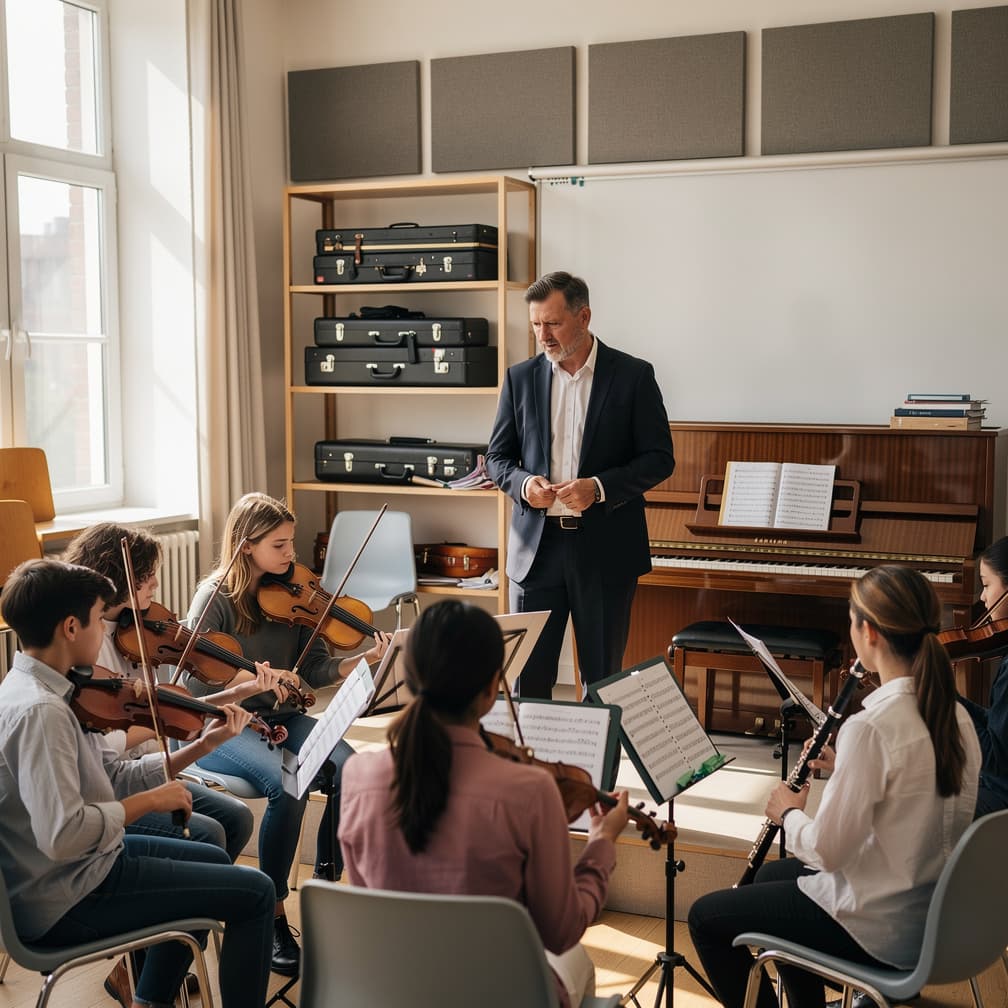

Cost questions usually arrive in the wrong order at a music school: owners ask what a policy runs before they know what they own. Walk the rooms with a phone camera first. Count the pianos, the amps, the loaner instruments, the recital sound gear, and note what belongs to a student or a teacher rather than to you. That inventory sets the property limit, and the property limit drives most of the number. Deductibles do the rest, and a low deductible you never touch is money you handed over for nothing. Music school insurance in Cape Coral is far easier to price honestly than to fix after a loss. Participating carriers in Florida weigh the same submission differently, so bring the list, ask for identical terms, and let the comparison do its job.
What Makes Cape Coral Different
Applications for a school ask who is alone with a child, and the answer shapes the whole submission. Underwriters want to know about screening, about whether lesson room doors have windows, about supervision while students wait between lessons. Those are operational questions with insurance consequences: a school that can describe its rules gets a straightforward review, and one that improvises collects questions. Write the rules down before you need them. Say who may be in a room, what the door policy is, how long a child waits unattended, who signs them out. A school in Cape Coral with a written procedure holds evidence of care, and evidence of care is what an adjuster looks for after an allegation. Participating carriers in Florida ask about this in different words, so expect the question whatever the form looks like.
Local Risk Factors in Cape Coral
Before a named storm is anywhere near Florida, decide where the instruments go. A grand cannot be evacuated in an afternoon, but removable gear can be lifted, wrapped, and moved away from the glass. Photograph every room first, since that file is what turns a disputed claim into a paid one. Confirm what your policy expects you to do to protect property once a warning is issued, because most forms ask for reasonable steps and read that phrase strictly afterward. Then confirm the deductible: a school in Cape Coral may be carrying a percentage-based wind deductible without ever having done the arithmetic. Do it on a quiet day rather than in the queue behind every other claim in Lee County.
What Coverage Does a Music School in Cape Coral Need?
General Liability
Landlords and recital venues ask for this one by name, usually with a limit written into the agreement and a request to be listed on it. The line points at third-party injury and third-party property damage: a parent who falls in the lobby, a guest hurt at a concert. It generally says little about a student's instrument left in your care, which is a separate question worth asking.
Example: A grandmother steps back to photograph a recital, catches a floor cable, and fractures a wrist. The school gets the demand letter and the medical bills, and General Liability is generally the line that takes that claim.
Commercial Property
Pianos, amps, the sound desk, the shelf of loaners, and the improvements you built into a rented room: that is what this line is written around. It can help cover fire, theft, vandalism, and sudden water escape, subject to limits and deductibles. Flood and gradual seepage typically sit outside the form, and property belonging to students may carry a sublimit of its own.
Example: A supply line above the recital room lets go overnight and the upright underneath swells shut. With the loss documented and the deductible met, Commercial Property may answer for the instrument and the drying work.
Professional Liability
Slips and falls are not what this line is about. It is intended for allegations that the teaching itself caused harm: technique a parent blames for a strained hand, audition preparation that went badly, guidance a family says it relied on. Those claims arrive slowly, often long after the lesson, and the wording usually turns on when the claim was made rather than when the lesson happened.
Example: A parent claims months of instruction on the wrong hand position injured a child, and demands tuition back plus therapy costs. Professional Liability is the line intended to meet that argument, subject to its terms.
Business Owners Policy
Buying the property and the liability apart works perfectly well. A Business Owners Policy folds them into one form instead, and it often prices better for a single-location school in Cape Coral. The trade is shape: packaged forms follow a standard, so high-value instruments, students' property, and the income side of a long closure can fall outside or sit under sublimits.
Example: A kitchen fire two doors down fills the school with smoke and closes it for six weeks. A Business Owners Policy can help cover the cleanup and, depending on the trigger, some of the tuition that never arrived.
How Much Does Music School Insurance Cost in Cape Coral?
Music School Insurance is a bundle of separate policies, priced separately. The ranges below are typical figures for Cape Coral for each line; a quote prices each one against your own operations.
| Coverage | Typical range | What moves your price |
|---|---|---|
| General Liability Insurance | $75 - $220 per month | Industry and risk classification, annual revenue, number of employees |
| Commercial Property Insurance | $130 - $430 per month | Building value and construction type, roof age and condition, fire protection class |
| Professional Liability Insurance | $65 - $200 per month | The services you actually perform, annual revenue or billed fees, limit and retention selected |
| Business Owners Policy Insurance | $150 - $410 per month | Annual revenue and industry class, building and contents values, square footage and building age |
Prices shown are general estimates, not guaranteed rates or quotes. Your actual premium will depend on the insurer, coverage selected, business details, location, claims history, and other underwriting factors. Learn about our pricing methodology.
What Are the Insurance Requirements for a Music School in Cape Coral?
Workers' comp is generally required once you have 4 or more employees. Florida generally requires employers to carry workers' compensation at that point. Common exemptions include sole proprietors, partners, and corporate officers (up to 4). Confirm current thresholds with your state's workers' compensation agency before you hire.
Flood damage is typically excluded from standard policies. Standard commercial property and builders-risk-type policies typically exclude flood. Given Cape Coral's coastal flood exposure, a separate flood policy is worth pricing; FEMA's National Flood Insurance Program is the usual starting point.
Where to verify licensing and coverage rules. The Florida Office of Insurance Regulation publishes consumer guidance and current insurance requirements for Florida businesses. When a contract or lease demands specific wording, the Florida Office of Insurance Regulation's guidance is the authoritative place to check.
Get Your Music School Quote in Cape Coral
Compare rates from multiple carriers. Free quotes, no obligation.
Operating in Cape Coral
- Humidity ruins wood slowly and silently. A school in Cape Coral that lives with a slow leak for a season turns what might have been an insurable event into a maintenance dispute nobody wins.
- A school in Lee County running one location has nowhere to teach while repairs drag on, so the calendar takes the damage even when the paperwork behaves. Ask about temporary space before you need it, not after.
- Enrollment records and tuition receipts are the only evidence of what a shutdown actually cost, and they are the last thing an owner thinks to back up. Keep a copy somewhere that is not inside the building.
- About 20 music schools teach across Lee County, so a family whose lessons stop has somewhere else to go by the second week. The roster you lose during a closure rarely walks back in on its own once the rooms reopen.
How to Buy: Advice for Cape Coral Owners
Pull the lease before you shop anything else, because the insurance clause inside it already names the limit you are obliged to carry. Match that limit first, then decide whether you want more than the minimum someone else chose for you. General Liability is the line most leases and venue agreements are aiming at, and the certificate they ask for is evidence of it. Bring Commercial Property into the same conversation while you are there, since the landlord's building is not your gear and your gear is not the landlord's problem. Ask what each quote assumes about instruments left in the rooms overnight. The Florida Office of Insurance Regulation publishes consumer guidance on how commercial policies are put together, which is worth ten minutes before you sign. Then compare quotes from participating carriers on those exact limits through CPK, so the numbers describe the same school in Cape Coral.
FAQ
Music School Insurance in Cape Coral: FAQ
It sets the share you fund yourself before anything else happens, on every claim, every time. A low deductible costs more each month and tempts you into filing small claims, which is what pushes your record the wrong way. Put it at the level where a cracked stand or a snapped string stays your problem and a fire does not, then keep a small repair budget for the rest.
No. The landlord's policy is written around the structure and the landlord's own interest, so your instruments, sound gear, and the improvements you installed are not on it. That is the most common misunderstanding in a leased studio. Ask what the lease makes you responsible for, fixtures included, and insure that side yourself. A certificate from a landlord proves their coverage exists, never that it reaches your gear.
Most commercial landlords ask for proof of liability coverage before they hand over keys, and many name a specific limit inside the lease. Read that clause before you negotiate rent, because meeting it is part of the cost of the space. A landlord in Cape Coral can hold the keys until a certificate sits in their file, and the certificate is only evidence that the policy exists on the day someone looks.
Things you can describe: how many students come through weekly, whether you host recitals, the value of instruments and sound gear in the building, your loss history, and the limit your lease demands. Construction and what your neighbors do in the same building count too. Two schools of the same size get quoted very differently once those answers land, which is why comparing on identical limits is the only comparison worth making.
It turns on who owns the instrument and where it sat. Property belonging to others but left in your care runs under specific wording, often with its own sublimit, and a plain liability form commonly narrows or excludes it. Participating carriers in Florida draw that wording tighter or looser, so ask how each quote treats a student's instrument stored overnight versus one being played in a lesson.
The hall wants its own name attached to your policy so a claim arising out of your event reaches your coverage and not only theirs. That comes from an endorsement on the policy, not from the certificate, though the certificate is what gets emailed around. If a hall in Cape Coral names an endorsement in its agreement, ask for a copy of the actual endorsement. Wording varies, and yours may be narrower than the version they asked for.
Sources
- 1.U.S. Census Bureau, County Business Patterns (2022), Lee County(Lee County has about 20 businesses in this trade's category (NAICS group 611610).)
- 2.Florida Office of Insurance Regulation(Florida Office of Insurance Regulation publishes consumer guidance for insurance buyers.)
- 3.FEMA / FloodSmart(Flood coverage is typically purchased separately; FEMA administers the National Flood Insurance Program.)


