







































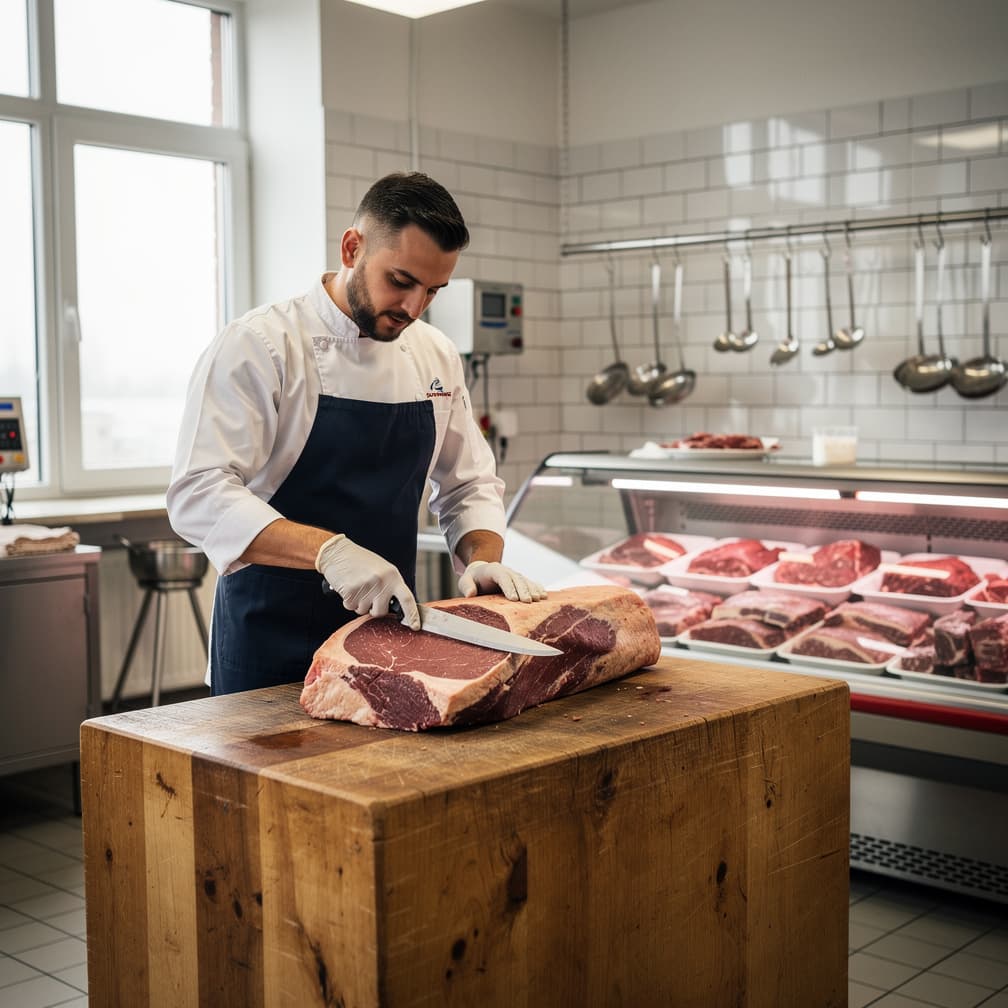

About 20 butcher shops operate in Pinellas County, which tells you something practical: the wholesalers, refrigeration technicians, and equipment dealers serving them all know each other. That matters when a saw goes down or a cooler dies, because your recovery time depends on a short list of people. Butcher shop insurance in Clearwater is really a question about downtime and liability, in that order, for a shop whose product is perishable and whose tools are sharp. A claim on spoiled inventory turns on documentation, so temperature logs and supplier invoices matter more than the wording you skim at renewal. Ask what proof a carrier expects on a spoilage claim, and gather it now rather than during the outage. The sections below set out what participating carriers ask for and what the published ranges look like.
What Makes Clearwater Different
Limits cost less than owners expect, and the step from a basic limit to a higher one is usually modest. What drives the price is not the top number but the exposure underneath it: people, product, and square footage. In a dense county the exposure runs higher, because more customers move through the same space every hour. Pinellas County has about 32,000 businesses, and a landlord with that many tenants nearby has heard every excuse for a thin limit. Ask for the quote at two limits and weigh the difference against what one counter injury can cost you. That comparison usually ends the debate faster than any argument about the monthly price does. The other driver is how well your shop documents its safety habits, because underwriters reward evidence over intentions. Mats, guarded blades, and a written cleaning routine are cheap, and they show up in the price you get.
Local Risk Factors in Clearwater
Hurricane warnings close a shop before any wind arrives, because staff need to secure homes and customers stop shopping days ahead of a forecast. The product in your case does not pause for that, so the loss starts with sales and ends with stock if the power drops. Wind and rain damage to the building and its contents is generally what a property form contemplates, so Commercial Property may respond where a roof opens or a window goes. The flood exclusion matters here more than anywhere, since storm surge and rising water often get treated as flood rather than wind. Ask how your policy splits wind from water, what the deductible is for a named storm, and whether it runs as a percentage instead of a flat figure. Terms in Florida vary by carrier, so read them before the season reaches Clearwater.
What Coverage Does a Butcher Shop in Clearwater Need?
General Liability
Landlords, market organizers, and wholesalers usually name this line when they ask for proof, and it is the one most butcher shops buy first. It can help cover third-party injury and property damage claims, a customer down on a wet floor or a cart through a neighbor's door, plus the defense behind them. Damage to your own equipment sits elsewhere.
Example: A customer steps off a wet mat near the case, breaks a wrist, and hires a lawyer six weeks later; general liability may answer for the injury claim and the defense that follows.
Commercial Property
Flood sits outside it, mechanical breakdown is commonly excluded, and wear on an aging compressor is not a claim. What remains is the core of a butcher shop's balance sheet: coolers, saws, slicers, scales, cases, and stock, against fire, theft, vandalism, and storm damage. Spoilage terms, where offered at all, usually arrive as a separate endorsement.
Example: A fire in the back room takes out two grinders and a wall of packaging overnight in Clearwater; commercial property could pick up the repairs and the equipment replacement, subject to your deductible.
Workers Compensation
A cut, a burn on a sealer, a slip in the cold room: staff injuries in this trade are hands-on and frequent enough that carriers price them by job code rather than headcount. This line is generally intended to address medical care and a share of lost wages for employees hurt at work. Rules on who must carry it vary by state.
Example: A helper's hand slips on a band saw during a busy stretch and the shift ends at an urgent care clinic; Workers Compensation is typically meant to handle the treatment and the wages missed while the hand heals.
Business Owners Policy
Where liability and property get bought as two policies, this package puts them under one, which is a common structure for an owner-operated counter. It can suit a shop with equipment, inventory, and public foot traffic in Clearwater. What sits inside varies by carrier, so the endorsement list, and what is missing from it, is the part worth reading.
Example: A pipe bursts over the display case and a customer slips in the runoff the same morning; a Business Owners Policy might address the property damage and the injury claim under one policy.
How Much Does Butcher Shop Insurance Cost in Clearwater?
Butcher Shop Insurance is a bundle of separate policies, priced separately. The ranges below are typical figures for Clearwater for each line, except workers compensation, which is rated per $100 of payroll; a quote prices each one against your own operations.
| Coverage | Typical range | What moves your price |
|---|---|---|
| General Liability Insurance | $90 - $290 per month | Industry and risk classification, annual revenue, number of employees |
| Commercial Property Insurance | $220 - $775 per month | Building value and construction type, roof age and condition, fire protection class |
| Workers Compensation Insurance | $0.75 - $2.74 per $100 of payroll | Employee classification codes, total annual payroll, experience modification rate |
| Business Owners Policy Insurance | $190 - $625 per month | Annual revenue and industry class, building and contents values, square footage and building age |
Prices shown are general estimates, not guaranteed rates or quotes. Your actual premium will depend on the insurer, coverage selected, business details, location, claims history, and other underwriting factors. Learn about our pricing methodology.
What Are the Insurance Requirements for a Butcher Shop in Clearwater?
Workers' comp is generally required once you have 4 or more employees. Florida generally requires employers to carry workers' compensation at that point. Common exemptions include sole proprietors, partners, and corporate officers (up to 4). Confirm current thresholds with your state's workers' compensation agency before you hire.
Flood damage is typically excluded from standard policies. Standard commercial property and builders-risk-type policies typically exclude flood. Given Clearwater's coastal flood exposure, a separate flood policy is worth pricing; FEMA's National Flood Insurance Program is the usual starting point.
Where to verify licensing and coverage rules. The Florida Office of Insurance Regulation publishes consumer guidance and current insurance requirements for Florida businesses. When a contract or lease demands specific wording, the Florida Office of Insurance Regulation's guidance is the authoritative place to check.
Get Your Butcher Shop Quote in Clearwater
Compare rates from multiple carriers. Free quotes, no obligation.
Operating in Clearwater
- A sample tray on the counter is a small kindness with a liability attached, because children reach and parents let them, and a cut at the counter starts the same way a fall does.
- Temperature logs feel like busywork until a spoiled inventory claim asks what the box was doing at three in the morning, and the only answer worth having is a record.
- A Clearwater storefront with glass at street level sits one accident away from an open shop, and boarding it up is a repair bill plus a day dark.
- Grinders and slicers get cleaned by hand, and a cleaning injury reads differently from a production injury on a Workers Compensation file, so write down which one it actually was.
How to Buy: Advice for Clearwater Owners
How a claim actually starts is worth rehearsing before one does. Someone falls, someone gets cut, or the cooler in your Clearwater shop is warm at open, and the first hour decides how the file reads later. Write down the time, the names, and the conditions, and take photographs, because memory is not evidence and neither is a good intention. Report it even when it looks small, since a delayed report is why plenty of claims turn into arguments. General Liability responses often turn on what got documented in that first hour, and Commercial Property claims on spoiled product turn on temperature records. Keep a log for both, and keep it somewhere that is not the shop, because a fire takes paperwork with it. Ask each participating carrier writing in Florida how it wants a claim reported and how fast it answers, then weigh that against the quoted price.
FAQ
Butcher Shop Insurance in Clearwater: FAQ
Sometimes, though not always, and organizers usually want their own name on a certificate before they assign a space. Off-site selling can change what a policy contemplates, so describe it at quote time rather than assuming the shop's coverage travels with the cooler. If a market near Clearwater asks for wording your policy does not carry, that is a coverage question to settle with the carrier, not a form to sign quickly.
Theft of business property is generally contemplated by a property policy, though the terms decide the outcome. Money is usually treated apart from equipment, often with a low sublimit. Employee theft is its own conversation and commonly excluded unless a specific coverage gets added. Keep a dated inventory with serial numbers somewhere a fire cannot reach, because a claim moves on proof of what existed, not on recollection.
Underwriters read patterns, so several small claims in a year can move a renewal more than one larger loss does. It is also why fixing the mat by the case is a pricing decision as much as a safety one. Participating carriers in Florida can read the same loss history very differently. That spread is the argument for comparing quotes rather than accepting the renewal sitting in front of you.
Generally not. A landlord's policy is built around the building, while your coolers, saws, scales, and inventory sit on your side of that line. Leases differ on who owns the storefront glass, the walk-in, and any fixtures you installed, and tenants often guess wrong. Read the repair clause and the insurance clause together, then insure what the lease on your Clearwater storefront says is yours rather than what feels fair.
Turnaround depends on the carrier, and nobody can promise a timeframe on your behalf. Some carriers let you generate a certificate yourself online at any hour; others route the request through service staff. Ask how it works before you buy, because a landlord in Clearwater waiting on paper does not care how the process is structured. If the request needs additional insured wording, allow more time, since that is an endorsement rather than a printout.
Landlords and lenders commonly ask for proof of coverage before keys change hands or equipment ships, so in practice the paperwork comes first. Opening requirements also vary by state and city. The Florida Office of Insurance Regulation publishes the current requirements for business coverage, and your lease names the rest. Line up General Liability and a certificate for whoever is asking, then compare quotes in Clearwater on limits rather than on the monthly figure.
Sources
- 1.U.S. Census Bureau, County Business Patterns (2022), Pinellas County(Pinellas County has about 32,000 business establishments.; Pinellas County has about 20 businesses in this trade's category (NAICS group 445210).)
- 2.Florida Office of Insurance Regulation(Florida Office of Insurance Regulation publishes consumer guidance for insurance buyers.)
- 3.FEMA / FloodSmart(Flood coverage is typically purchased separately; FEMA administers the National Flood Insurance Program.)


