







































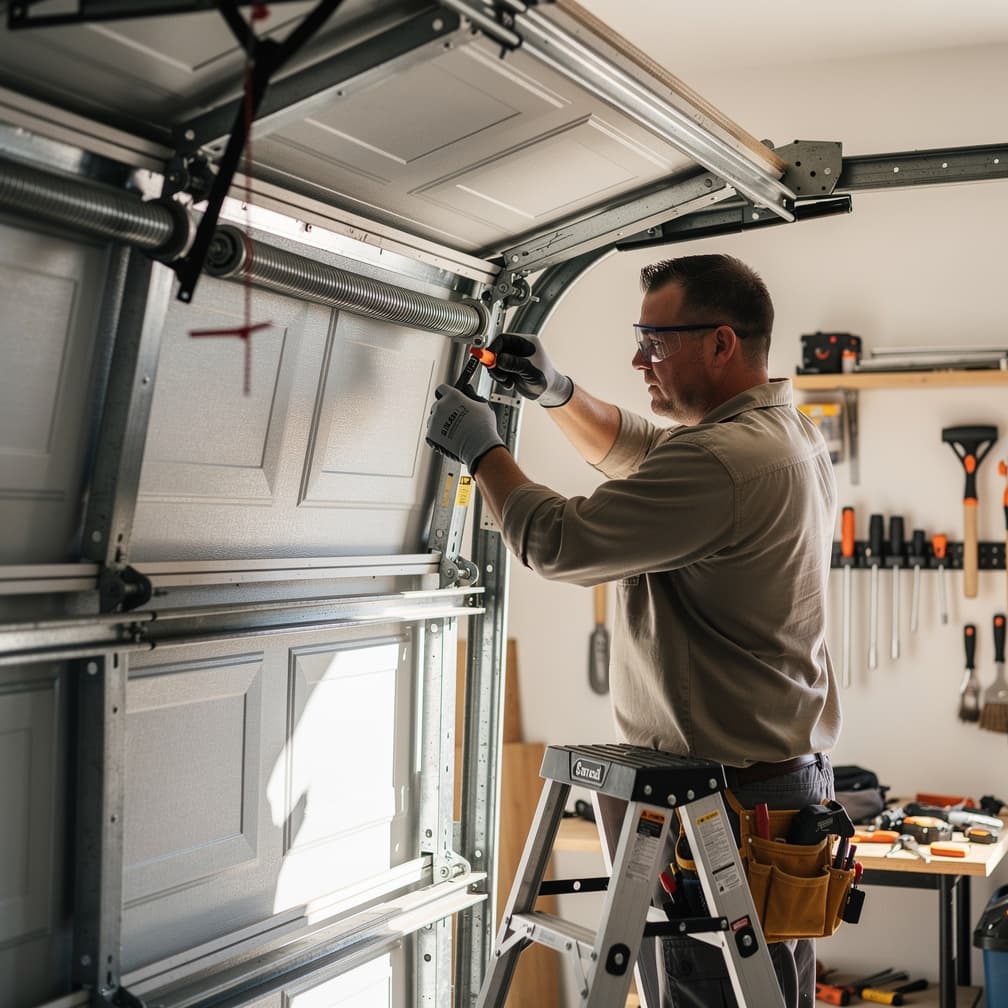

Springs, tracks, and openers ride in the van, and that van is the whole operation parked on a public street. A collision on the way to a service call can crumple the vehicle, ruin the sections inside it, and empty a week of appointments at once. Garage door installer insurance in Gainesville is what stands between that week and your own savings. Thin markets punish downtime twice: a builder in Alachua County can hand the next twelve doors to whoever answered the phone while your truck sat in the shop, and that call rarely comes back. So the real question is how fast the work restarts, and that answer lives in the fine print about hired vehicles, loaner equipment, and lost income. Below you will find the coverages, the published ranges, and a way to compare quotes from participating carriers.
What Makes Gainesville Different
Bad weather in a thin market means every customer wants you on the same three clear days. Calling one job off is easy; calling six off and rebooking around a single crew is not. The pressure to catch up is where mistakes live, and these mistakes involve tension and heavy panels. An overloaded schedule in Gainesville is a risk factor even though no application ever asks about it. Storm season also fills the phone with damaged doors, which is real revenue and real hazard at once. Working on a door a falling limb already bent is a different job than installing a new one. Tell your carrier if storm repair becomes a large share of the work, since the exposure differs. Conditions across Florida shape the calendar, and the calendar shapes the claims.
Local Risk Factors in Gainesville
Boarded windows, closed roads, and a customer base with no power empty your schedule for a week and then triple it. Storm repair is real revenue: bent tracks, blown-in panels, and openers that never recovered from a surge. It is also different work, done fast, on doors that are already damaged, beside homeowners who want it finished today. Employee injury climbs when the pace does, and Workers' Compensation is generally the line that responds when a tech gets hurt on a rushed call in Alachua County. Your own van is exposed as well, since a truck parked outside a Gainesville shop takes the same wind everything else does. Decide before the season which of those you can afford to be wrong about.
What Coverage Does a Garage Door Installer in Gainesville Need?
General Liability
Builders, property managers, and homeowners ask for proof of this one before a crew touches an opening. It generally answers third-party injury and property damage: a bystander struck when a spring releases, a customer's wall gouged by a track, a sedan dented under a door that came down wrong. Redoing your own faulty install is typically excluded.
Example: A winding bar slips during a torsion swap and the homeowner standing in the doorway takes it in the shoulder; the injury claim and the defense costs behind it may fall to this coverage.
Commercial Auto
A personal auto policy typically excludes a van used for business, and that gap is where this line starts. It is meant for the trucks and trailers hauling sections, ladders, and openers between jobs, and it can help cover injury or damage you cause on the road. Storm and theft damage to your own truck is usually an add-on rather than a given.
Example: A loaded trailer rear-ends a car at a light on the way to a Gainesville install; the other driver's repairs and medical bills could land here, subject to the limits you bought.
Workers Compensation
Where General Liability stops, this one begins: the injured person is your own technician rather than the customer. It is generally built around medical treatment and lost wages after a work injury, from a spring release to a fall off a ladder on an icy driveway. Whether owners and family members must be covered varies by state.
Example: An installer slips on a wet driveway carrying a section and fractures a wrist; the treatment and the wages missed while it heals are what this line is intended to address.
Tools & Equipment (Inland Marine)
Tools rarely stay put, and a policy written around a shop address tends to stop at the curb. This line follows winding bars, drills, torsion kits, ladders, racks, and opener stock in transit and on site, and it may respond when they are stolen or wrecked away from home. Values on file and the deductible decide what a small loss is worth.
Example: Somebody pops the lock on a service van overnight and the whole kit is gone before the first call; scheduled equipment might be replaced under this coverage, less the deductible.
How Much Does Garage Door Installer Insurance Cost in Gainesville?
Garage Door Installer Insurance is a bundle of separate policies, priced separately. The ranges below are typical figures for Gainesville for each line, except workers compensation, which is rated per $100 of payroll; a quote prices each one against your own operations.
| Coverage | Typical range | What moves your price |
|---|---|---|
| General Liability Insurance | $170 - $470 per month | Industry and risk classification, annual revenue, number of employees |
| Commercial Auto Insurance | $350 - $900 per month | Fleet size and vehicle types, driver records and experience, coverage limits and deductibles |
| Workers Compensation Insurance | $0.75 - $2.74 per $100 of payroll | Employee classification codes, total annual payroll, experience modification rate |
| Inland Marine Insurance | $35 - $130 per month | Total insured value of the scheduled property, type and age of the equipment, where it is stored and how far it travels |
Prices shown are general estimates, not guaranteed rates or quotes. Your actual premium will depend on the insurer, coverage selected, business details, location, claims history, and other underwriting factors. Learn about our pricing methodology.
What Are the Insurance Requirements for a Garage Door Installer in Gainesville?
Workers' comp is generally required once you have 4 or more employees. Florida generally requires employers to carry workers' compensation at that point. Common exemptions include sole proprietors, partners, and corporate officers (up to 4). Confirm current thresholds with your state's workers' compensation agency before you hire.
State auto liability minimums apply to business vehicles. Florida's minimum auto liability limits are $0/$0/$10,000 (bodily injury per person / per accident / property damage). Contracts and lenders often require more than the state floor.
Where to verify licensing and coverage rules. The Florida Office of Insurance Regulation publishes consumer guidance and current insurance requirements for Florida businesses. When a contract or lease demands specific wording, the Florida Office of Insurance Regulation's guidance is the authoritative place to check.
Get Your Garage Door Installer Quote in Gainesville
Compare rates from multiple carriers. Free quotes, no obligation.
Operating in Gainesville
- Driveways are sloped and slick, and a ladder set on wet concrete produces the most ordinary injury on the job, whether the person who falls is your tech or the homeowner helping.
- Commercial rolling doors weigh about what a small car weighs, and the claims that follow one coming down unexpectedly are sized accordingly.
- A residential job in Gainesville takes two hours and a warehouse job takes two days, and the limits a client demands scale with the second one rather than the first.
- Storm weeks across Florida stack the schedule, and a crew catching up on six installs in three days is making decisions faster than anyone should.
How to Buy: Advice for Gainesville Owners
Write down every tool worth replacing and what replacing it would cost today, then hold that number against your policy. Winding bars, drills, torsion conversion kits, ladders, racks, and the opener stock in the van add up faster than most shops guess. Inland Marine is generally written around scheduled or blanket property, and the two behave differently the day something disappears. Scheduled means you listed it; blanket means one limit sitting over the category. Neither helps if the value you gave is three years old. General Liability does nothing for your own tools, which surprises people at the wrong moment. The Florida Office of Insurance Regulation publishes consumer guidance on business property coverage that is worth a look. Then hand the current list to CPK and compare what participating carriers in Gainesville are willing to schedule and at what limit.
FAQ
Garage Door Installer Insurance in Gainesville: FAQ
Faulty workmanship is usually handled differently from the damage that workmanship causes. Redoing a track you mounted wrong, or eating the labor to fix it, is typically your own cost, because a liability form is not a warranty on your craftsmanship. Damage the bad install causes to the customer's wall, vehicle, or ceiling is the part that may fall to the policy. Read the workmanship language and ask exactly where the line sits.
Turnaround depends on your carrier and on whether the client wants a plain certificate or an endorsement added. A basic certificate naming a client is routine paperwork, while adding additional insured status or matching contract wording is a policy change and takes longer. Nobody on the marketplace side controls how fast a carrier issues documents, so ask for the paperwork when you bid rather than when you are already scheduled. Keep a list of who holds one.
The per-occurrence limit is the most a single claim can draw. The aggregate is the most the policy will do across the whole policy year, however many claims arrive. That gap matters for a door shop because one rough year can bring a spring injury, a damaged vehicle, and a gouged wall, and all three eat the same aggregate. A contract usually names the per-occurrence figure and stays quiet about the ceiling behind it, so ask for both in writing.
Material you have already attached usually belongs to the property owner, while the sections in your truck or staged on site are still your problem. General Liability is not written around damage to your own property, so a panel creased by wind on a jobsite is a different conversation. Inland Marine can sometimes follow property in transit or at a temporary location, depending on how the form defines covered property and where it says coverage applies. Read those definitions first.
Products and completed operations is the part of a liability form dealing with work you already finished, and it is usually where a late failure gets examined. Wear and tear on a spring at the end of its cycle life is generally nobody's claim, since a policy is not a maintenance contract. If a failure hurts somebody or damages property and your work is alleged to be the cause, that is the scenario completed operations exists for. Keep your install records and photos.
Expect questions about payroll, how many employees you have and what they actually do, your vehicles and drivers, annual revenue, the residential and commercial split, and whether you subcontract. They also want a claims history, usually three to five years of it, and the limits your contracts require. An equipment list with current values helps if you want the tools scheduled. Bring real numbers, because a quote built on estimates gets corrected at audit.
Sources
- 1.Florida Office of Insurance Regulation(Florida Office of Insurance Regulation publishes consumer guidance for insurance buyers.)


