







































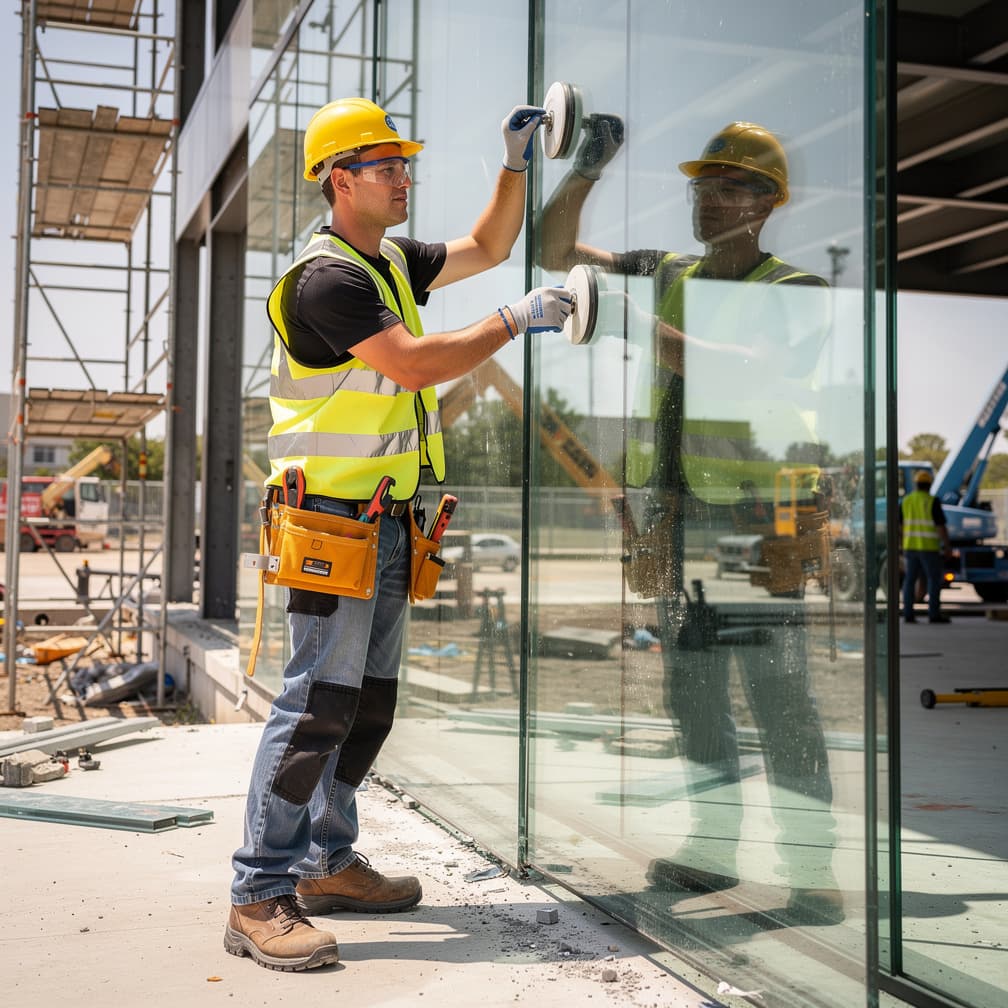

Unloading a laminated unit at the curb is where a glazier claim usually starts, before a single tool comes out of the truck. Glazier insurance in Jacksonville gets priced around that handling risk: the lift, the carry through an occupied lobby, the set into a frame with no room for error. Panes get scratched by hardware, dropped on thresholds, and cracked by an opening that was never square to begin with. The customer's floor, a neighbor's parked car, and the tenant walking out with coffee all sit inside your work zone. Each of those is a different kind of claim with a different answer behind it. Read the coverage cards below against your last three jobs in Jacksonville, since that is where your real exposure lives.
What Makes Jacksonville Different
Bigger buildings mean bigger units, and bigger units mean a bigger number behind every mistake. If a tower in Jacksonville hires you, the curtain wall panels can cost more than your truck. Working on those jobs raises the required limits, and required limits are what set your premium. The exposure is genuinely larger, so the price increase is a reflection of the work itself. Height, access, and crane time all show up in the underwriting questions for that work. A shop that does one tower job a year still gets priced for tower work. Deciding whether that Jacksonville job is worth the annual premium is a real business decision. Run the numbers before you chase the prestige work, because the policy follows the exposure.
Local Risk Factors in Jacksonville
Hurricane season changes a glazier's calendar in two directions at once. Work stops entirely while the storm moves through, and then the phone does not stop for weeks afterward, because broken storefronts are exactly what a hurricane produces. That surge is where the risk lives: rushed board-ups, unfamiliar buildings, crews working long days on damaged property, and temporary help added faster than payroll paperwork can follow. General Liability may respond when a board-up you left fails and water reaches a tenant's inventory, though the argument over whether it was workmanship or wind can take months. Your own shop is exposed too, and wind damage in Florida often carries its own deductible on a commercial property policy. A shop in Jacksonville should know that number before the season starts.
What Coverage Does a Glazier in Jacksonville Need?
General Liability
General contractors and building owners are the ones who insist on this line, and the contract usually names the limit. It can help cover third-party injury and property damage arising out of your work: a passerby hurt near a work zone, a customer's floor wrecked by a dropped unit. The pane you damaged yourself is typically excluded as your own workmanship.
Example: A carried pane clips a display case in an occupied lobby and the retailer's stock goes with it; general liability is generally where that claim lands.
Commercial Property
Flood is left out of this form, and so is ordinary wear on your racks and cutting tools. What remains is the shop itself: stock, hardware, suction cups, and the equipment that would stop your work if it burned or walked out the door overnight. Coverage might respond to fire, theft, and vandalism, subject to the deductible you picked.
Example: Someone pries the shop door overnight and leaves with the suction cups, the tools, and half the staged hardware; a property claim could put the shop back to work.
Workers Compensation
A pane slips on a stairwell landing and an installer's hand is cut to the tendon. Medical bills and lost wages from that injury are what this line is meant for, and it prices against payroll rather than at a flat monthly rate. Contracts commonly demand it, and thresholds vary, so the Florida Office of Insurance Regulation publishes the current requirements.
Example: An installer overreaches on a lift setting an upper-floor unit and tears a shoulder; workers compensation is typically the line that handles the treatment and the missed weeks.
Commercial Auto
Your truck is the piece that moves everything else, which is why this line is written against a schedule of vehicles rather than against your business generally. It may help cover liability and damage from an accident while hauling panes, hardware, and crews between sites. The units strapped to the rack are cargo, and cargo is often a separate question.
Example: A loaded rack shifts during a hard stop on the way to a Jacksonville job and the truck ends up in a guardrail; commercial auto may pick up the vehicle side of it.
How Much Does Glazier Insurance Cost in Jacksonville?
Glazier Insurance is a bundle of separate policies, priced separately. The ranges below are typical figures for Jacksonville for each line, except workers compensation, which is rated per $100 of payroll; a quote prices each one against your own operations.
| Coverage | Typical range | What moves your price |
|---|---|---|
| General Liability Insurance | $230 - $775 per month | Industry and risk classification, annual revenue, number of employees |
| Commercial Property Insurance | $170 - $575 per month | Building value and construction type, roof age and condition, fire protection class |
| Workers Compensation Insurance | $0.75 - $2.74 per $100 of payroll | Employee classification codes, total annual payroll, experience modification rate |
| Commercial Auto Insurance | $300 - $875 per month | Fleet size and vehicle types, driver records and experience, coverage limits and deductibles |
Prices shown are general estimates, not guaranteed rates or quotes. Your actual premium will depend on the insurer, coverage selected, business details, location, claims history, and other underwriting factors. Learn about our pricing methodology.
What Are the Insurance Requirements for a Glazier in Jacksonville?
Workers' comp is generally required once you have 4 or more employees. Florida generally requires employers to carry workers' compensation at that point. Common exemptions include sole proprietors, partners, and corporate officers (up to 4). Confirm current thresholds with your state's workers' compensation agency before you hire.
State auto liability minimums apply to business vehicles. Florida's minimum auto liability limits are $0/$0/$10,000 (bodily injury per person / per accident / property damage). Contracts and lenders often require more than the state floor.
Flood damage is typically excluded from standard policies. Standard commercial property and builders-risk-type policies typically exclude flood. Given Jacksonville's coastal flood exposure, a separate flood policy is worth pricing; FEMA's National Flood Insurance Program is the usual starting point.
Where to verify licensing and coverage rules. The Florida Office of Insurance Regulation publishes consumer guidance and current insurance requirements for Florida businesses. When a contract or lease demands specific wording, the Florida Office of Insurance Regulation's guidance is the authoritative place to check.
Get Your Glazier Quote in Jacksonville
Compare rates from multiple carriers. Free quotes, no obligation.
Operating in Jacksonville
- Emergency board-ups get done at night by tired people, and a board that fails before you return turns into an argument about your workmanship rather than about the original break.
- A general contractor in Duval County can withhold retainage over a scratched frame that another trade caused, because the glass sub is the one everybody remembers being there.
- Ladders and lifts set on uneven sidewalks are how glaziers get hurt, and an injury on a public walkway pulls the property owner into the claim as fast as it pulls in you.
- Staged glass leaning against a wall is one bump away from becoming a public safety event, which is why underwriters ask how you secure material before install.
How to Buy: Advice for Jacksonville Owners
Ask each quote the same three questions and write the answers down. What happens when a pane breaks during install and damages the customer's finishes? What happens when someone walking past the work area is hurt? What happens when the truck is in an accident with a full rack of units? Those three scenarios cover most of what actually happens to a glass shop, and General Liability and Commercial Auto split the work between them along lines that are never obvious from a summary page. A quote that cannot answer plainly is not a quote you can compare. Rules and required wording vary across Florida, so the answers matter more than the brochure. A glazier in Jacksonville with three written answers from each option is in a real position to choose, and CPK is where those participating carriers line up next to each other.
FAQ
Glazier Insurance in Jacksonville: FAQ
In practice, yes. Contractors and property owners routinely require proof of coverage before a glass sub touches an opening, and the requirement lands in the contract rather than in the law. Expect the exhibit to name a limit, ask for additional-insured status, and demand a current certificate. Showing up without it is how a start date slips, because the work order sits until the paper clears.
Cost tracks a handful of drivers rather than a flat rate. Payroll and how each person is classified matter most, since a shop hand and an installer rate differently. After that come your vehicle list, the height you work at, your claims history, and the limits your contracts demand. The cost table on this page shows the published ranges; your own number in Jacksonville comes from those inputs.
Usually not, and this surprises people. The unit you damage while working on it is your own workmanship, and standard liability forms typically exclude the thing you were working on. What might respond is the collateral damage: the customer's floor, the frame, or the display case the pane went through. Ask any quote to walk that distinction through a real scenario before you buy.
Anyone paying you or letting you onto their property. General contractors, building owners, property managers, tenants opening a new storefront, and sometimes a permit office. A landlord in Jacksonville can hold your keys or your gate access until the certificate is on file. The certificate is evidence rather than the policy itself, so what matters is whether the coverage behind it is genuinely in force.
It extends your policy's defense to your client for claims arising out of your work. Owners want it because it moves the first line of defense onto your paper instead of theirs. Two versions exist: blanket wording that reaches whoever your contract names, and a scheduled endorsement that reaches only the names typed on it. Scheduled endorsements go stale when management changes, so ask which one you are quoting.
It depends on where you operate and how the people are classified, and thresholds differ widely. The Florida Office of Insurance Regulation publishes the current requirements for workers compensation in Florida. Separate from any legal question, your contracts will likely demand it: a general contractor rarely lets an uninsured crew onto a site, because their own policy then absorbs your injuries. Assume you need it and price it honestly.
Sources
- 1.Florida Office of Insurance Regulation(Florida Office of Insurance Regulation publishes consumer guidance for insurance buyers.)
- 2.FEMA / FloodSmart(Flood coverage is typically purchased separately; FEMA administers the National Flood Insurance Program.)


