







































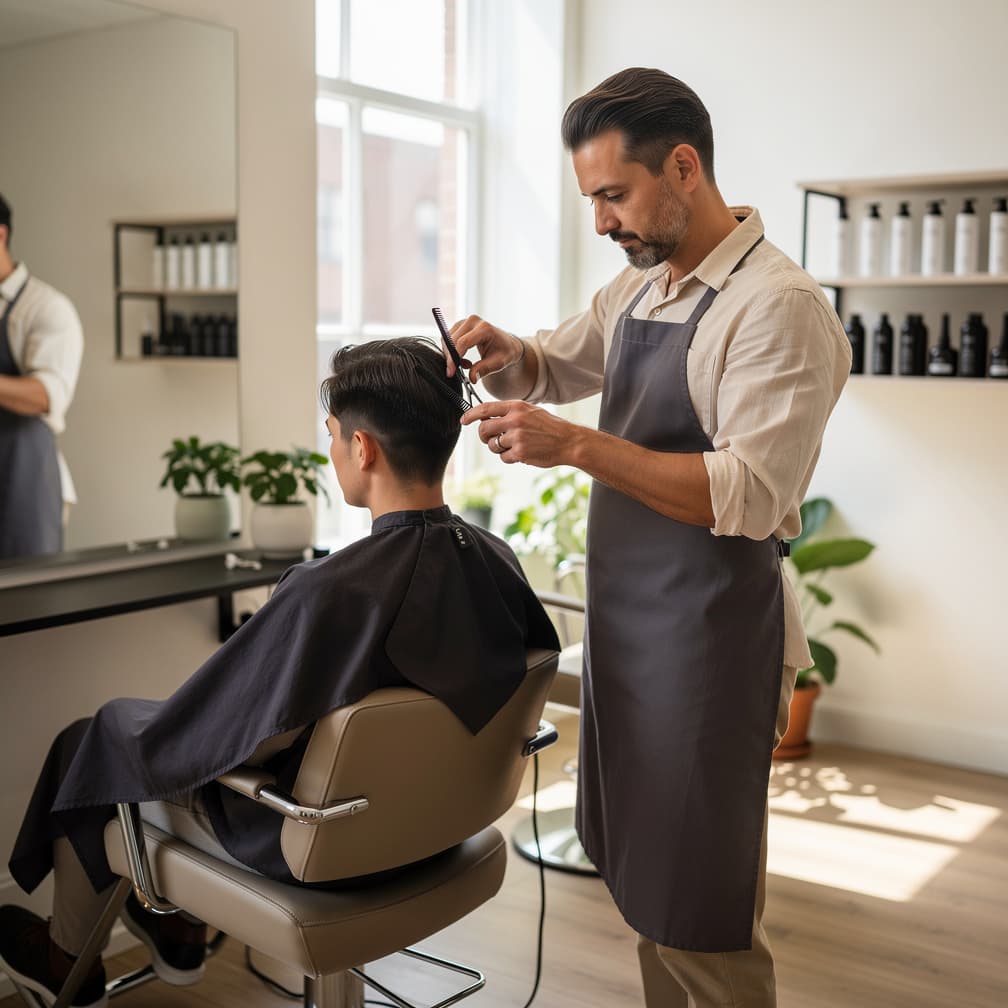

Duval County has about 28,000 business establishments, and that count is why a salon lease in a market this size reads like a construction contract. Density gives property managers leverage, and leverage shows up as insurance clauses: named limits, additional-insured wording, and a certificate on file before opening day. Hair salon insurance in Jacksonville has to satisfy that paperwork and still answer the claims that actually happen at a chair. Those are two different jobs, and owners often buy for the first and get surprised by the second. A certificate proves a policy existed. It says nothing about whether the limit survives a serious injury claim. Read the lease clause, price the limits it names, then look hard at what it left out.
What Makes Jacksonville Different
About 340 hair salons operate around Jacksonville, and that is the labor pool you hire from. A stylist can hold a chair at your shop and a chair somewhere else in one week. When she is burned at your bowl, two shops and two policies start arguing about her. Employment status decides that argument, and status turns on facts rather than on what you called it. Who sets her hours, who supplies her color, who takes the payment: those are the facts. Write them down honestly before an application asks, because an audit will ask you later anyway. A dense market makes this common rather than rare, which is why underwriters probe it hard. Answer it once, in writing, and the same answer can go to every carrier quoting you.
Local Risk Factors in Jacksonville
A week of cancelled appointments does more financial damage to a salon than most wind claims do. The chairs are fine, the rent is due, and stylists paid on commission earn nothing while the shop stays dark. Income protection generally attaches to physical damage a policy already handles, so a closure with an intact building may trigger nothing at all. That is the gap worth understanding before a Florida season rather than after it. Ask what proof of lost revenue a carrier expects and how long a payment may run. Then ask what happens to color and retail stock in a back room that spends four days without power, because a Jacksonville salon can lose the inventory without losing the roof.
What Coverage Does a Hair Salon in Jacksonville Need?
General Liability
A client slips near a shampoo bowl and the injury claim arrives with a lawyer attached. That is the third-party territory this line is built for: bodily injury on your floor, damage to a customer's property in your care, and the defense costs behind both. It typically leaves out injuries to your own staff, and complaints that the service itself was performed badly.
Example: A toddler waiting for a haircut pulls a rolling cart over and needs stitches; general liability may help cover the emergency bill and the demand letter that arrives afterward.
Professional Liability
Where general liability argues about the floor, this line argues about the work. A relaxer that damages hair, a color correction that goes wrong, advice that costs a client her length: the allegation is that the service was performed badly. Defense costs are often the larger half, and they usually arrive before fault is settled. Physical damage to your building sits elsewhere.
Example: A bridal party's lightening service leaves breakage the day before the wedding and the client demands payment for extensions; professional liability could respond to that claim and its defense.
Commercial Property
Mirrors, stations, dryers, washers, and a wall of retail stock are what a salon actually owns, and this is the line written to that figure. Fire, theft, vandalism, and storm damage are the usual triggers, and a settlement follows the contents number you supplied rather than the room you have. Flood typically sits outside it, and a worn-out dryer motor reads as maintenance.
Example: Somebody breaks the front glass overnight and clears the retail shelf in Jacksonville; commercial property might answer for the stock, the glass, and the mess left behind.
Workers Compensation
States ask for this one as soon as you have employees, and the threshold varies, so the Florida Office of Insurance Regulation publishes the current requirements for employers. Salon injuries are ordinary rather than dramatic: a burn from a hot tool, a cut from shears, a back that gives out after nine hours standing, and this line is meant for those. It is rated per hundred dollars of payroll.
Example: A stylist steadies a client, catches her wrist on a hot iron, and misses three weeks; workers compensation is generally intended to handle the treatment and part of the lost wages.
Business Owners Policy
One package instead of two policies: property and liability written together, usually at a better number than the pieces bought apart. For a small salon it is often the sensible core, and landlords generally accept it as proof of coverage. Workers compensation is not part of it, and a heavy chemical or skin-treatment menu can push a shop outside a standard bundle.
Example: A back room fire closes a two-chair shop for a month; a business owners policy can help with the repairs and, where income protection is included, some of the lost bookings.
How Much Does Hair Salon Insurance Cost in Jacksonville?
Hair Salon Insurance is a bundle of separate policies, priced separately. The ranges below are typical figures for Jacksonville for each line, except workers compensation, which is rated per $100 of payroll; a quote prices each one against your own operations.
| Coverage | Typical range | What moves your price |
|---|---|---|
| General Liability Insurance | $50 - $150 per month | Industry and risk classification, annual revenue, number of employees |
| Professional Liability Insurance | $45 - $150 per month | The services you actually perform, annual revenue or billed fees, limit and retention selected |
| Commercial Property Insurance | $85 - $280 per month | Building value and construction type, roof age and condition, fire protection class |
| Workers Compensation Insurance | $0.75 - $2.74 per $100 of payroll | Employee classification codes, total annual payroll, experience modification rate |
| Business Owners Policy Insurance | $90 - $260 per month | Annual revenue and industry class, building and contents values, square footage and building age |
Prices shown are general estimates, not guaranteed rates or quotes. Your actual premium will depend on the insurer, coverage selected, business details, location, claims history, and other underwriting factors. Learn about our pricing methodology.
What Are the Insurance Requirements for a Hair Salon in Jacksonville?
Workers' comp is generally required once you have 4 or more employees. Florida generally requires employers to carry workers' compensation at that point. Common exemptions include sole proprietors, partners, and corporate officers (up to 4). Confirm current thresholds with your state's workers' compensation agency before you hire.
Flood damage is typically excluded from standard policies. Standard commercial property and builders-risk-type policies typically exclude flood. Given Jacksonville's coastal flood exposure, a separate flood policy is worth pricing; FEMA's National Flood Insurance Program is the usual starting point.
Where to verify licensing and coverage rules. The Florida Office of Insurance Regulation publishes consumer guidance and current insurance requirements for Florida businesses. When a contract or lease demands specific wording, the Florida Office of Insurance Regulation's guidance is the authoritative place to check.
Get Your Hair Salon Quote in Jacksonville
Compare rates from multiple carriers. Free quotes, no obligation.
Operating in Jacksonville
- Color and lightener sit in a back room that warms up the moment the power dies, and spoiled product is a loss most owners never think to ask about.
- Your busiest hours put the most people on the wettest floor in a Jacksonville salon, which is why a slip claim tends to arrive on a full book rather than a quiet one.
- Clients hand you coats, bags, and phones without thinking twice, and property sitting in your care gets treated differently by many policies than property you own outright.
- A stylist in Jacksonville who takes a chair somewhere else on her day off is still a payroll question at your audit, whether or not anyone thought to mention her.
How to Buy: Advice for Jacksonville Owners
Water is the loss salons underrate. Shampoo bowls, washers, and water heaters run all day, and a supply line lets go at three in the morning without warning. Commercial Property can respond to the damage and often to the mess it makes downstairs, though the failed part itself is usually left out. Ask specifically about water reaching a neighbor's space, because a shared building turns your leak into their claim and your liability. General Liability is the line that argues about that one, and its limit is the number a building owner reads. Ask whether your lease already decided how large that limit has to be. The Florida Office of Insurance Regulation publishes consumer guidance on water damage claims. Photograph your plumbing and keep the service records, then compare quotes from participating carriers in Jacksonville with the same building details on every application.
FAQ
Hair Salon Insurance in Jacksonville: FAQ
Flood damage typically sits outside a standard property form, so it gets bought and priced as its own separate decision. That surprises owners who assume storm damage is simply storm damage. Wind and a burst supply line are usually treated differently from rising water, and that distinction decides the claim. Ask your carrier which of the three your policy handles and which it does not, before a season rather than during one.
Income protection in Florida forms is often a separate item rather than something automatically included, and it usually attaches to physical damage the policy already handles. An empty appointment book with no damage behind it typically triggers nothing at all. Ask what proof a carrier wants, because bank statements and an exported appointment history answer better than memory. Ask how long the payment may run, since the clock is often the real limit.
It puts another party onto your policy so their claim can draw against your limit when a loss involves you both. Landlords ask for it because it shifts risk away from their policy and toward yours. The wording matters, and a paraphrase typed onto a certificate often gets rejected. Ask for the exact language the lease demands, then hand it to every carrier you compare in Jacksonville.
For many small shops it is the sensible core, because it commonly bundles property and liability into one structure that prices better than the pieces bought apart. It does not usually include Workers Compensation, which is rated against payroll on its own. Whether it fits depends on your service menu, since heavy chemical work and skin treatments can push a shop outside a standard bundle. Price it both ways and compare.
Start with what your lease demands, because that is a floor you have already agreed to. Then ask what stepping up to the next limit costs, since the gap is often smaller than owners assume. Per-occurrence is what one claim can draw; the aggregate is everything a policy may handle across a year. Three small claims can reach an aggregate faster than anyone plans for.
Commercial Property written in Florida is generally set to a contents figure you supply, and a claim settles against that figure rather than against the room you actually have. Mirrors, dryers, chairs, washers, and back bar inventory add up faster than owners guess. A number from three build-outs ago settles like a number from three build-outs ago. Walk the floor once a year with a camera and update the schedule.
Sources
- 1.U.S. Census Bureau, County Business Patterns (2022), Duval County(Duval County has about 28,000 business establishments.)
- 2.U.S. Census Bureau, County Business Patterns (2023), Duval County(Duval County has about 340 businesses in this trade's category (NAICS group 812112).)
- 3.Florida Office of Insurance Regulation(Florida Office of Insurance Regulation publishes consumer guidance for insurance buyers.)
- 4.FEMA / FloodSmart(Flood coverage is typically purchased separately; FEMA administers the National Flood Insurance Program.)


