







































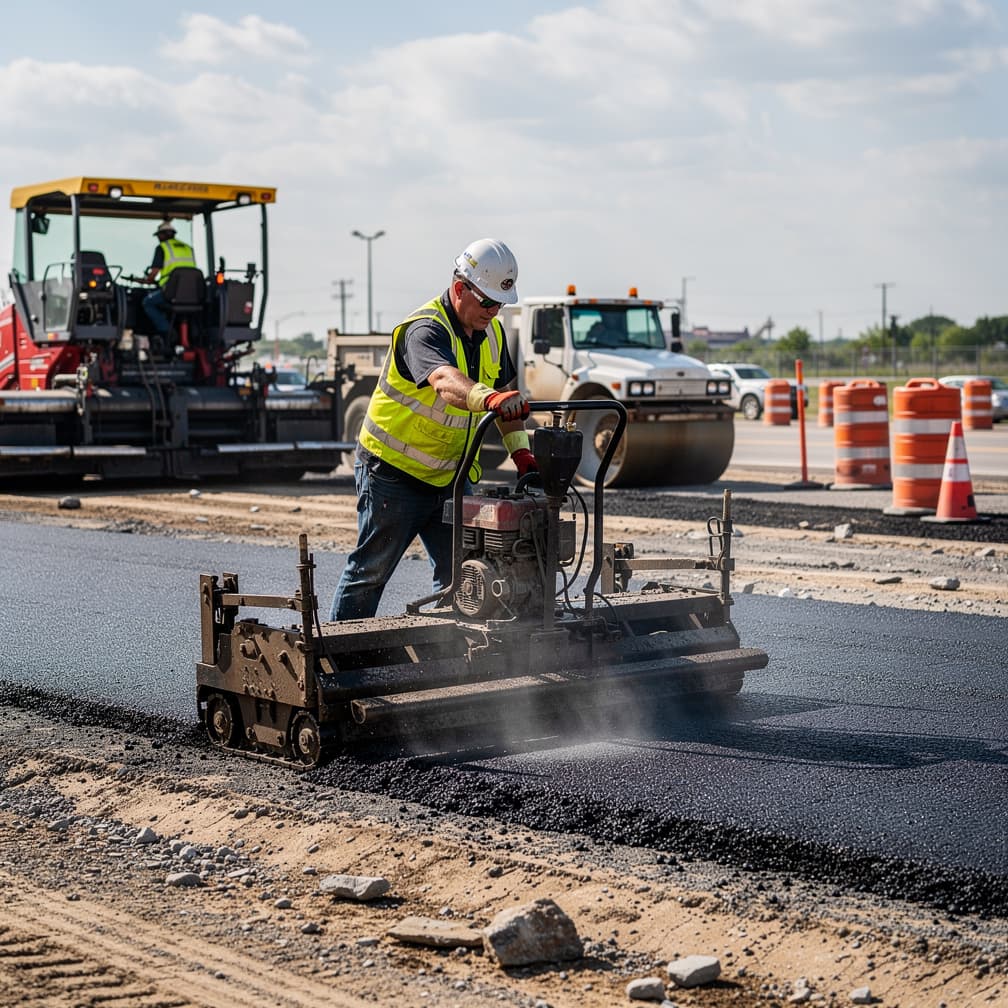

As a paving and asphalt contractor in Lakeland, every job leaves behind a surface that someone will walk on, park on, and complain about. Scuffs on a fresh mat, a rolled edge, drainage that pools after the first storm week: the complaints arrive once the crew is gone. Paving and asphalt contractor insurance in Lakeland answers for some of that and pointedly not for the rest, and the boundary catches owners off guard. Damage to a third party's property is one conversation; redoing your own defective work is usually another. Knowing where that line sits changes how you write a bid and how much you hold back for rework. It also changes which questions matter when a quote lands in front of you. The breakdown below starts with the exposures a paving crew actually creates.
What Makes Lakeland Different
Seasonal shutdowns change your exposure without changing your bill, and that mismatch deserves a look beforehand. Equipment stored for the off-season still gets stolen, still gets vandalized, and still gets damaged where it sits. Payroll drops when the crew is not laying mat, which matters because Workers' Compensation is rated on payroll. Reporting the change rather than waiting for audit can align the cost with the work you are doing. Vehicles you park for a stretch are a similar conversation, and the answer depends on the form participating carriers in Florida issued. What you should not do is drop coverage on a machine for the winter and hope. A theft during the quiet months lands the same way it would mid-season on a Lakeland job. Use the slow stretch to fix the schedule, the values, and the paperwork instead.
Local Risk Factors in Lakeland
Before a named storm reaches anybody's map, decide where the pavers, rollers, and trailers are going. Moving machines inland costs a day; losing them costs the season, and otherwise that choice gets made under pressure. Equipment coverage generally turns on the schedule you filed and the values on it, not on how hard the wind blew. Wind and water get treated differently, and the water half is commonly excluded from standard property forms and bought separately. A paving business in Polk County with an accurate equipment schedule has a far shorter claim than one working from memory. Update the values, photograph the yard, and keep the list somewhere that survives a power outage in Florida.
What Coverage Does a Paving & Asphalt Contractor in Lakeland Need?
General Liability
Owners, general contractors, and landlords ask for this one by name before a crew mobilizes, and the certificate usually has to show it. It generally responds to bodily injury and property damage your work does to other people: a clipped storefront apron, a visitor who trips at an open site. Damage to your own mat, and the cost of redoing it, typically sits outside.
Example: A compactor nudges a bollard into a client's glass entry while the crew finishes a Lakeland apron. The repair bill and the complaint that follows are the kind of loss this line may take on.
Workers Compensation
Hot mix, moving rollers, and live traffic put a paving crew within reach of a serious injury every working day. This line is meant for employee injuries: medical treatment and a share of lost wages after someone gets hurt on the job. Liability forms typically exclude those claims, and what employers must carry varies from state to state.
Example: A screed operator takes a burn through a glove reaching across fresh mat, and treatment runs into weeks of follow-up visits. Medical costs and part of the missed pay could fall here.
Commercial Auto
A personal auto policy usually walks away the moment a vehicle is used for the business, which is where this line starts. Trucks, dumps, and the trailers hauling rollers between jobs get rated on units, drivers, and how far they run. Injury and damage to others in an at-fault wreck are the core of it; the machine riding on the trailer is generally handled elsewhere.
Example: A loaded trailer clips a parked sedan while backing into a tight Lakeland lot, and the other driver reports an injury the next morning. Costs on their side are what this coverage is intended to meet.
Commercial Umbrella
Where the underlying limits stop, this one is designed to keep going, sitting above General Liability and Commercial Auto rather than replacing either. Contracts on larger paving jobs often demand limits the base program cannot show on a certificate. It typically inherits the exclusions beneath it, so a gap downstairs stays a gap upstairs.
Example: A multi-vehicle wreck involving a paving truck exhausts the auto limit before the medical bills are even counted. Whatever is left of the claim may find its way here, subject to the terms.
How Much Does Paving & Asphalt Contractor Insurance Cost in Lakeland?
Paving & Asphalt Contractor Insurance is a bundle of separate policies, priced separately. The ranges below are typical figures for Lakeland for each line, except workers compensation, which is rated per $100 of payroll; a quote prices each one against your own operations.
| Coverage | Typical range | What moves your price |
|---|---|---|
| General Liability Insurance | $320 - $1,100 per month | Industry and risk classification, annual revenue, number of employees |
| Workers Compensation Insurance | $0.75 - $2.74 per $100 of payroll | Employee classification codes, total annual payroll, experience modification rate |
| Commercial Auto Insurance | $700 - $2,000 per month | Fleet size and vehicle types, driver records and experience, coverage limits and deductibles |
| Commercial Umbrella Insurance | $150 - $575 per month | Umbrella limit requested, limits carried on the underlying policies, loss history on those underlying policies |
Prices shown are general estimates, not guaranteed rates or quotes. Your actual premium will depend on the insurer, coverage selected, business details, location, claims history, and other underwriting factors. Learn about our pricing methodology.
What Are the Insurance Requirements for a Paving & Asphalt Contractor in Lakeland?
Workers' comp is generally required once you have 4 or more employees. Florida generally requires employers to carry workers' compensation at that point. Common exemptions include sole proprietors, partners, and corporate officers (up to 4). Confirm current thresholds with your state's workers' compensation agency before you hire.
State auto liability minimums apply to business vehicles. Florida's minimum auto liability limits are $0/$0/$10,000 (bodily injury per person / per accident / property damage). Contracts and lenders often require more than the state floor.
Where to verify licensing and coverage rules. The Florida Office of Insurance Regulation publishes consumer guidance and current insurance requirements for Florida businesses. When a contract or lease demands specific wording, the Florida Office of Insurance Regulation's guidance is the authoritative place to check.
Get Your Paving & Asphalt Contractor Quote in Lakeland
Compare rates from multiple carriers. Free quotes, no obligation.
Operating in Lakeland
- A property manager in Lakeland can hold your final payment until a certificate naming the correct legal entity is on file, so a lapsed policy stops your cash flow faster than it stops your work.
- Rollers and pavers left overnight on an open jobsite face theft and vandalism they never face inside a fenced yard, and where a machine sat on a Lakeland site when it disappeared can shape how the claim gets handled.
- Striping crews, curb subs, and haulers move across the same site you do. Any one of them can mark the mat you just laid, and untangling who did what takes longer than the repair itself.
- Traffic control is the part of the job nobody describes in the bid. An open lane beside a working crew on a Lakeland street is where the serious injury claims start, and it is the first thing an adjuster asks about.
How to Buy: Advice for Lakeland Owners
Loss runs tell a carrier more about you than any application answer, so read yours before somebody else does. Five years of history follows the business, and a string of small claims can read worse than one honest large one. If the file is full of minor property damage, fix the practice before you shop, because pricing follows the pattern. Report claims anyway, since late notice can jeopardize a claim that would otherwise have been handled without argument. General Liability and Commercial Auto both feed that record, and the vehicle side moves the number hardest. Check the Florida Office of Insurance Regulation's guidance before deciding how to handle a loss you would rather absorb quietly. When the runs are as clean as they will get, put them in front of participating carriers in Florida and see who prices them kindly.
FAQ
Paving & Asphalt Contractor Insurance in Lakeland: FAQ
Payroll by class code, annual revenue, a description of your work mix, a vehicle list with drivers and radius, an equipment schedule with current values, and loss runs. Contracts matter too, since required limits and additional insured wording shape what you have to buy. Bring the insurance exhibit from your biggest client along with the rest. With that file assembled, offers from participating carriers become comparable instead of a guessing game.
Because the inputs differ far more than the trade name suggests. Payroll size, work mix, vehicle count, driving records, limits, deductibles, and claims history all pull the number in different directions. Carrier appetite is the other half of it: one submission can be attractive to one company and unwelcome at the next. That is why a single quote tells you almost nothing. Put the identical exposure in front of several participating carriers in Florida before deciding.
Only if you can absorb the first slice of several losses in one season. Paving generates frequent small property damage on Lakeland lots and drives, and each one gets funded by you before anything else responds. A steep deductible suits rare, large losses better than frequent, small ones. Ask for two deductible levels quoted side by side so the tradeoff arrives as a number rather than a feeling.
Most owners and general contractors will not let a crew mobilize without a certificate on file, and the request usually arrives attached to the contract. The document names limits and often names the client as an additional insured. That is a contractual demand rather than a legal one, so it shifts from client to client. General Liability is the line those requests tend to center on. Settle it before the bid, because coverage bought under deadline pressure costs more and fits worse.
Nobody can price a paving business off the trade name alone. The number follows payroll, revenue, the vehicle list, equipment values, the limits your contracts demand, and five years of loss history. A three-truck outfit in Lakeland laying residential drives and a three-truck outfit running highway shoulder work land in very different places. Published ranges give you a starting point; your own number comes from those inputs, so make them accurate before you shop.
Usually not. Redoing your own defective work is a workmanship question, and policies generally treat it as a cost of doing business rather than an insured loss. What may respond is damage your faulty work does to somebody else's property, such as water that undermines a neighboring structure. That distinction decides how much you hold back for callbacks. Price rework into the bid and treat the policy as protection against the bigger, third-party half of the problem.
Sources
- 1.Florida Office of Insurance Regulation(Florida Office of Insurance Regulation publishes consumer guidance for insurance buyers.)


