







































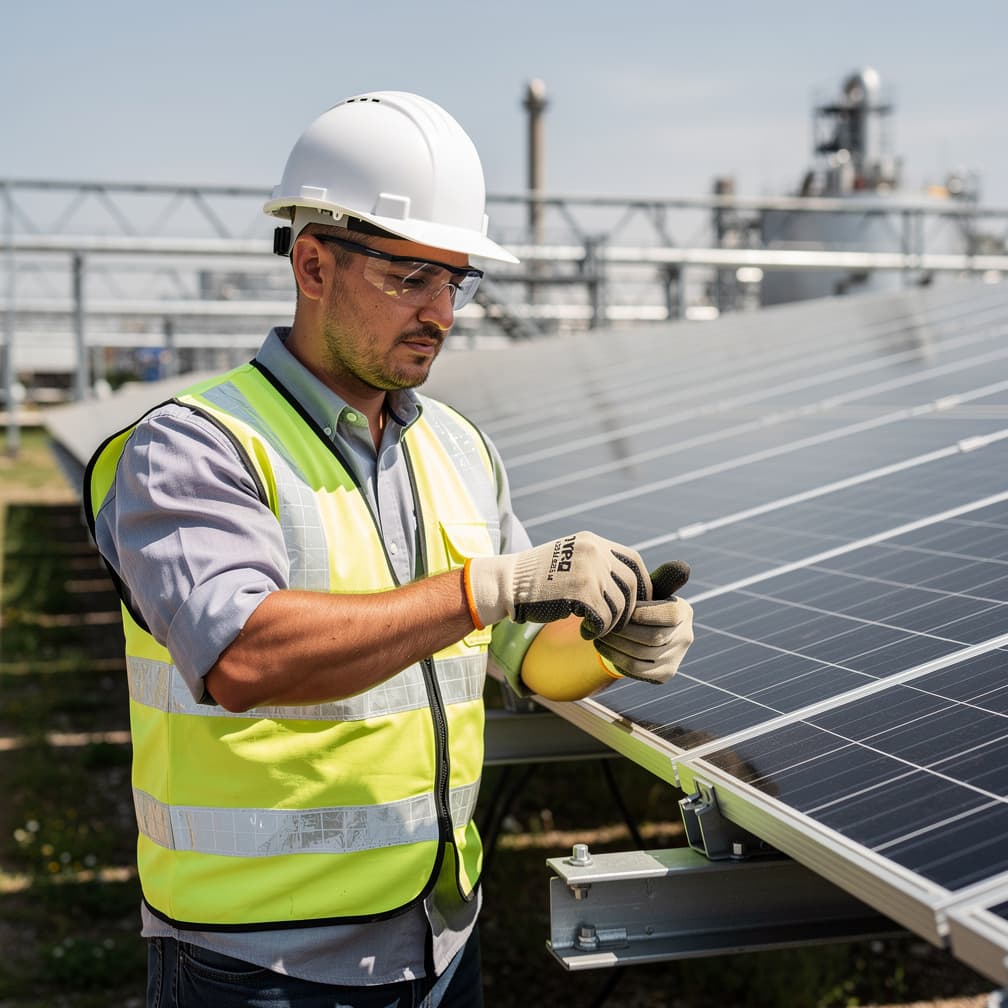

Trenching for a conduit run cuts an irrigation line, and the site owner wants the landscaping restored on your dime. Dense metro work stacks general contractors, roofers, and electricians onto one schedule, so a single mistake gets three parties pointing at you. That crowding is why solar contractor insurance in Miami Gardens gets read line by line before a commercial award. Miami-Dade County holds about 96,000 business establishments, and the property you damage usually belongs to someone with counsel on retainer. Certificates, additional insured wording, and limits get checked against the contract, never against your good intentions. Coverage that satisfies a residential job can fall short the moment you bid a rooftop array on a leased building. Know what the paperwork demands before the award, not after.
What Makes Miami Gardens Different
Procurement teams reject certificates for a missing waiver of subrogation more often than for low limits. The waiver surrenders your carrier's right to chase the owner after it has paid a claim. Carriers charge for it, or refuse it, and neither answer arrives the day you ask. Commercial work carries these clauses as standard boilerplate wherever you bid in Florida. Nobody negotiates them for a rooftop array worth a fraction of the building underneath it. You either comply or you walk, and walking after mobilization costs more than complying early. Read the whole insurance exhibit while you are still pricing the job in Miami Gardens. Then price each of those endorsements into your bid rather than absorbing the cost afterward.
Local Risk Factors in Miami Gardens
Hurricane conditions strip a jobsite of anything not fastened down, and a half-installed array is exactly that. Rails clipped but not torqued, modules staged on a roof, and a lift parked beside a house all become debris. The claim that follows is rarely simple, because a panel that leaves your stack and lands on a neighbor's car in Miami Gardens is third-party damage, and General Liability may respond to it, subject to your limits. Wind damage to your own materials sits somewhere else entirely, and named-storm deductibles in coastal parts of Florida can be far larger than the flat deductible you assume you have. Ask which of your policies carries a separate windstorm deductible before the season starts.
What Coverage Does a Solar Contractor in Miami Gardens Need?
General Liability
Roofs, driveways, and staging areas all belong to somebody else, and this is the line that looks at damage to their property and injuries to people who are not your employees. General contractors and building owners generally require proof of it before site access. Faulty workmanship on the array itself typically sits outside what it will answer.
Example: A crew hoisting rails drops a bundle onto a customer's gutter run and cracks two skylights on the way down. The resulting repair claim may fall to this line, subject to your deductible.
Workers Compensation
General contractors demand proof of it before a crew reaches the gate, and state rules about who must carry it vary enough that any blanket answer is worthless. It is rated against payroll rather than sold per policy, and it typically responds to medical costs and lost wages after a fall or a heat illness on the job. A hurt homeowner sits elsewhere.
Example: An installer slips on frost-covered decking, breaks a wrist, and misses eight weeks of the install season. Medical bills and a share of lost wages would typically run through this coverage.
Commercial Auto
A personal auto policy generally excludes business use, which leaves the truck hauling modules and crews as the gap most solar contractors carry without noticing. This line is rated per vehicle, per driver, and by how far you travel, and it might respond to damage and injuries arising out of a crash. What rides in the bed is usually a separate conversation.
Example: Your trailer of racking rear-ends a stopped car on the way to a site in Miami Gardens, and the other driver reports an injury. Defense and settlement costs might sit here, depending on the policy.
Tools & Equipment (Inland Marine)
Where a building policy stops at the wall, this one follows property that moves: panel lifters, inverter testers, ladder racks, compressors, and the trailer they ride in. It is rated on the schedule you declare and settles against those declared values, so a stale list quietly shifts the loss back to you. Modules awaiting install are often treated as stock and fall outside it.
Example: A locked trailer is emptied overnight at a staging area, taking every hand tool and two panel lifters with it. The scheduled equipment could be replaced under this line, less the deductible you chose.
Professional Liability
A shade study, a string layout, a production estimate, or a permitting detail is advice, and advice that costs a client money creates a claim with nothing physically broken. That is the gap this line is intended for, since a liability policy generally reads on injury and property damage instead. Owners on commercial arrays in Miami Gardens can require it by contract.
Example: Your estimate promises output the array never reaches once a neighboring building's shadow is properly accounted for, and the client wants the difference back. A dispute of that kind is what this coverage is meant to take on.
How Much Does Solar Contractor Insurance Cost in Miami Gardens?
Solar Contractor Insurance is a bundle of separate policies, priced separately. The ranges below are typical figures for Miami Gardens for each line, except workers compensation, which is rated per $100 of payroll; a quote prices each one against your own operations.
| Coverage | Typical range | What moves your price |
|---|---|---|
| General Liability Insurance | $250 - $875 per month | Industry and risk classification, annual revenue, number of employees |
| Workers Compensation Insurance | $0.75 - $2.74 per $100 of payroll | Employee classification codes, total annual payroll, experience modification rate |
| Commercial Auto Insurance | $360 - $1,025 per month | Fleet size and vehicle types, driver records and experience, coverage limits and deductibles |
| Inland Marine Insurance | $75 - $310 per month | Total insured value of the scheduled property, type and age of the equipment, where it is stored and how far it travels |
| Professional Liability Insurance | $150 - $550 per month | The services you actually perform, annual revenue or billed fees, limit and retention selected |
Prices shown are general estimates, not guaranteed rates or quotes. Your actual premium will depend on the insurer, coverage selected, business details, location, claims history, and other underwriting factors. Learn about our pricing methodology.
What Are the Insurance Requirements for a Solar Contractor in Miami Gardens?
Workers' comp is generally required once you have 4 or more employees. Florida generally requires employers to carry workers' compensation at that point. Common exemptions include sole proprietors, partners, and corporate officers (up to 4). Confirm current thresholds with your state's workers' compensation agency before you hire.
State auto liability minimums apply to business vehicles. Florida's minimum auto liability limits are $0/$0/$10,000 (bodily injury per person / per accident / property damage). Contracts and lenders often require more than the state floor.
Where to verify licensing and coverage rules. The Florida Office of Insurance Regulation publishes consumer guidance and current insurance requirements for Florida businesses. When a contract or lease demands specific wording, the Florida Office of Insurance Regulation's guidance is the authoritative place to check.
Get Your Solar Contractor Quote in Miami Gardens
Compare rates from multiple carriers. Free quotes, no obligation.
Operating in Miami Gardens
- Storm weeks stop rooftop work across Miami Gardens entirely, and crews stay on payroll while the schedule slides, so the delay costs you twice: once in wages, once in the rate those wages set.
- Access points decide a lot: the driveway, the side gate, and the ladder set are where visitors get hurt, and not one of those places belongs to you.
- An owner in Florida can demand limits higher than anything you have carried, and raising a limit is a phone call, while learning the requirement after mobilization is a lost week.
- Roof warranty companies can void a manufacturer's warranty over a penetration made by an uninsured crew, which turns your flashing detail into the homeowner's argument for an entirely new roof.
How to Buy: Advice for Miami Gardens Owners
Count vehicles honestly, including the personal truck someone takes on a run to the supply yard. Commercial Auto is priced per vehicle, per driver, and per mile of radius, and it is usually the largest line in a solar program. A personal auto policy generally excludes business use, which means the least expensive truck on your roster can be the uninsured one. Pull driving records before a carrier does, since one conviction can move the rate for the whole fleet you run out of Miami Gardens. Ask whether hired and non-owned exposure is included when an employee runs an errand in their own car. General Liability will not step in for a crash. Check the Florida Office of Insurance Regulation's guidance before deciding how to structure the fleet. Then compare quotes from participating carriers through CPK against one identical vehicle list.
FAQ
Solar Contractor Insurance in Miami Gardens: FAQ
General contractors, property managers, roof warranty companies, permit offices, and utilities approving an interconnection all can, and each may want different wording. A certificate that satisfied a job in Miami-Dade County last year rarely satisfies the next requester. Ask for the requirement in writing, then check that your policy already carries it instead of assuming. That document decides whether your crew gets on site.
Per-occurrence is the ceiling on any single claim; the aggregate is the ceiling across the entire policy term. One large roof claim can eat much of the aggregate, and the next claim inside that same term finds whatever remains. Nobody warns you when the aggregate is running low except your own records. Track paid claims the same way you track receivables.
Most work starts with somebody asking for proof. A homeowner may not, but a roof warranty company, a general contractor, or a utility approving an interconnection can. General Liability is the line those requests usually mean, and it is what a certificate names. Waiting until the request arrives adds a week you rarely have between award and mobilization, and nobody holds a crane day open for paperwork.
Nobody can quote you from a page. Premiums get built from payroll, the share of work done on pitched roofs, your vehicle count and radius, the value of your tool schedule, and three years of claims. Adding battery storage or trenching changes the picture again. Two underwriters reading the same submission can land in different places, which is why comparing several quotes from carriers in Florida is worth the hour.
Damage to someone else's property during an install is usually General Liability territory, subject to your deductible and your limits. If a rail gouges shingles or a dropped module cracks a skylight, that is third-party property damage. What the line generally will not do is pay to redo your own faulty workmanship on the array itself. That distinction catches more solar contractors than any other.
Yes, and most commercial contracts do exactly that. The status has to be added by endorsement rather than promised on a certificate, since the certificate is only a summary of what the policy already says. Ask for a copy of the endorsement itself. Ask also whether it continues past turnover, because ongoing operations wording stops the day you finish and a roof leak rarely does.
Sources
- 1.U.S. Census Bureau, County Business Patterns (2022), Miami-Dade County(Miami-Dade County has about 96,000 business establishments.)
- 2.Florida Office of Insurance Regulation(Florida Office of Insurance Regulation publishes consumer guidance for insurance buyers.)


