







































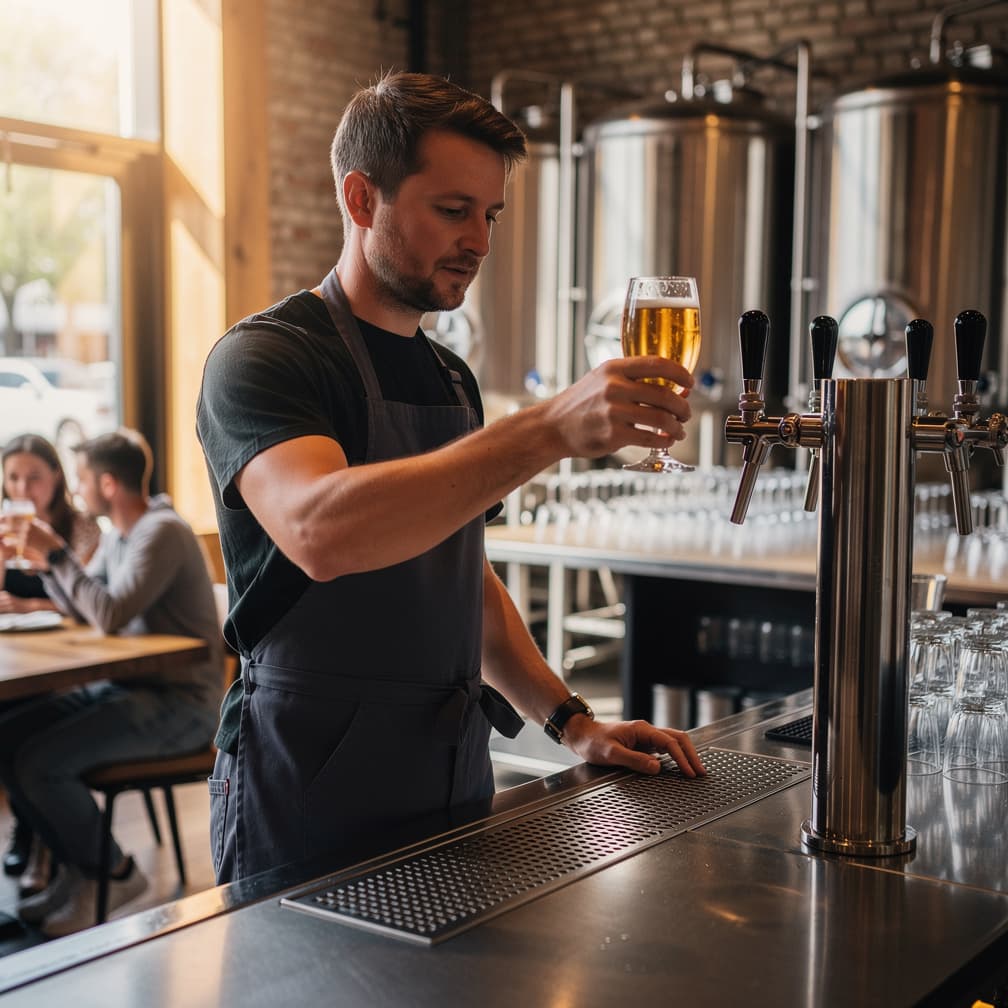

About 15 breweries operate in Miami-Dade County, and in a market that crowded the certificate turns into a sorting tool. A festival organizer with more applicants than taps can set limits, dictate additional insured wording, name a deadline, and move on to the next brewery when the paperwork is late. That is a revenue loss no insurance policy answers for, and it makes your insurance file a sales asset. Brewery insurance in Miami is worth buying with those requests in mind rather than after the first one lands. Ask a carrier how certificates get issued and whether event wording comes built in or by endorsement. Ask what a blanket additional insured endorsement adds. Those questions cost nothing before you bind and plenty afterward.
What Makes Miami Different
Premiums move on things you control and on things you chose the day you signed a Miami lease. Payroll size and the split between production work and bar work set the Workers Compensation basis. Serving hours matter, and a room that runs late reads differently to an underwriter than one closing early. Food service changes the picture again, and so does music, games, or anything else that gathers a crowd. High rent tends to push a taproom toward longer hours, and longer hours raise the exposure being priced. Claims history follows you across carriers, and a single liquor claim can shape your terms for years. None of that shows up in an online estimate, which is why two quotes for one Miami address diverge. Ask which factor moved your number most, then ask what the carrier would need to see instead.
Local Risk Factors in Miami
Ask about the wind and water split before you need it, because a hurricane loss usually contains both. Wind that lifts roof panels and drives rain into the packaging room is typically a property claim, and the surge that comes across the lot generally is not. Standard forms exclude flood, and surge counts as flood in most wordings, which leaves a Miami brewery holding either two policies or one gap. Neither carrier will settle that argument for you after the fact. Check the Florida Office of Insurance Regulation's guidance before deciding, and price the flood side while the market is quiet rather than during a Florida storm watch.
What Coverage Does a Brewery in Miami Need?
General Liability
Landlords, festival organizers, and retail accounts ask for this one by name before they let you in the door. It can help cover bodily injury and property damage claims brought by third parties: the guest who slips near the taps, the neighbor's unit soaked when a hose lets go. Claims arising out of serving alcohol are commonly excluded and sit with Liquor Liability instead.
Example: A guest carrying a flight steps on a wet patch by the restroom door and fractures a wrist. The wrist, the ambulance ride, and the demand letter that lands a month later are what this line is meant to answer.
Commercial Property
The building, the brewhouse, the tanks, the walk-in, the taps, and the packaging stacked in the corner are what this coverage is written around. It typically responds to fire, storm, theft, and vandalism, while flood and mechanical breakdown are commonly left out. A lender behind financed equipment often requires it, and the limit only works when your values are current.
Example: A fire in the packaging area takes the canning line and half the roof, and the taproom goes dark while the rebuild waits on a fabricator. The repair sits inside what this property line addresses, but the lost weeks are a separate business income question, not part of that limit.
Liquor Liability
A guest keeps drinking past the point where somebody should have stopped, drives home, and injures a stranger. That claim commonly falls outside General Liability, and this is the line intended to pick it up. Terms vary widely: some forms condition coverage on documented server training, and some stop at your address rather than following you to a festival.
Example: A bartender keeps pouring for a regular who then backs into another car in the lot on the way out. The injury claim that names your brewery is the scenario this coverage exists for, subject to the form's conditions.
Workers Compensation
Where the liability lines answer to guests and neighbors, this one answers to your own crew. Burns at the kettle, backs strained moving kegs, and cuts from broken glass are the injuries a brewery reliably produces, and medical costs and lost wages are generally what it addresses. Requirements vary by state, so confirm what applies where you operate.
Example: A cellar worker slips while dragging a hose across a wet floor, tears a shoulder, and misses six weeks of shifts. Treatment and a share of those lost wages typically run through this coverage rather than out of your own account.
Tools & Equipment (Inland Marine)
Property coverage generally stops at the building line, which becomes a problem the moment your gear leaves it. This line follows the mobile canning setup, the festival jockey box, the tools, and a vessel in transit to a fabricator. Equipment bolted down and never moved usually belongs on the property schedule instead.
Example: Your jockey box, taps, and portable chiller disappear from a trailer overnight after a festival in Miami. Gear that travels is what this line is meant to follow, where a policy written only for the building would not reach.
How Much Does Brewery Insurance Cost in Miami?
Brewery Insurance is a bundle of separate policies, priced separately. The ranges below are typical figures for Miami for each line, except workers compensation, which is rated per $100 of payroll; a quote prices each one against your own operations.
| Coverage | Typical range | What moves your price |
|---|---|---|
| General Liability Insurance | $140 - $500 per month | Industry and risk classification, annual revenue, number of employees |
| Commercial Property Insurance | $450 - $1,600 per month | Building value and construction type, roof age and condition, fire protection class |
| Liquor Liability Insurance | $120 - $480 per month | Share of sales that comes from alcohol, type of venue and how late you serve, server training and service procedures |
| Workers Compensation Insurance | $0.75 - $2.74 per $100 of payroll | Employee classification codes, total annual payroll, experience modification rate |
| Inland Marine Insurance | $45 - $190 per month | Total insured value of the scheduled property, type and age of the equipment, where it is stored and how far it travels |
Prices shown are general estimates, not guaranteed rates or quotes. Your actual premium will depend on the insurer, coverage selected, business details, location, claims history, and other underwriting factors. Learn about our pricing methodology.
What Are the Insurance Requirements for a Brewery in Miami?
Workers' comp is generally required once you have 4 or more employees. Florida generally requires employers to carry workers' compensation at that point. Common exemptions include sole proprietors, partners, and corporate officers (up to 4). Confirm current thresholds with your state's workers' compensation agency before you hire.
Flood damage is typically excluded from standard policies. Standard commercial property and builders-risk-type policies typically exclude flood. Given Miami's coastal flood exposure, a separate flood policy is worth pricing; FEMA's National Flood Insurance Program is the usual starting point.
Where to verify licensing and coverage rules. The Florida Office of Insurance Regulation publishes consumer guidance and current insurance requirements for Florida businesses. When a contract or lease demands specific wording, the Florida Office of Insurance Regulation's guidance is the authoritative place to check.
Get Your Brewery Quote in Miami
Compare rates from multiple carriers. Free quotes, no obligation.
Operating in Miami
- Band nights change the room: more bodies, less light, cables across the floor, and a crowd standing where nobody normally stands. Underwriters price maximum occupancy, so a Miami taproom that added music should say so at renewal.
- Broken glass on a taproom floor is routine, and the injury it causes is a general liability claim rather than a cleaning problem. Written closing procedures are what a carrier asks about after the second one.
- A tap takeover puts your beer in someone else's bar, poured by someone else's staff, under someone else's house rules. Whether your liquor coverage reaches that night depends on wording, and carriers in Florida handle it differently.
- Growler and can sales move your product past the door and out of your sight, and a contamination complaint can arrive weeks later from a customer you never met. Batch records are what make that defensible.
How to Buy: Advice for Miami Owners
Payroll is the input you can get right for free. Split it honestly: cellar and packaging work rates differently than the person pouring pints, and Workers Compensation gets priced per hundred dollars of payroll by class. Guessing the split low feels like savings until an audit trues it up with interest. Volunteers and family help are worth raising explicitly, because an unpaid hand injured on bottling day in Miami is a question you want answered in advance. General Liability quotes off revenue and square footage instead, so the two lines move on different levers. Ask what a carrier does with owner payroll and whether officers can be excluded. The Florida Office of Insurance Regulation publishes the current requirements for workers coverage. Take that answer, put identical payroll figures in front of participating carriers, and compare on classification and audit terms.
FAQ
Brewery Insurance in Miami: FAQ
Usually not on its own. A Commercial Property form typically responds to fire, storm, theft, and similar physical causes, while mechanical or electrical breakdown is commonly excluded. Spoilage after a chiller failure generally needs an equipment breakdown endorsement, and the treatment of stock varies by carrier. Ask what proof of loss is required, since temperature logs and batch records are what any claim will rest on.
Being named as additional insured extends your liability policy to that organizer for claims arising out of your pour. A festival organizer wants it so your policy is the one in front when a guest gets hurt at your tent. Blanket wording adds parties automatically wherever a contract requires it, and scheduled wording names them one at a time. A certificate is only evidence; the endorsement behind it does the work.
Per occurrence caps one claim, such as the guest who went down at the bar. The aggregate caps the whole policy year, and the taproom, the tours, and the retail accounts all draw from that single pool. A slip at the bar in one season and a products complaint at a retail account in another both draw down the same aggregate, and nothing warns you when it thins. Ask whether defense costs erode the limit, because legal fees can consume it before anyone settles.
Generally no. Standard commercial property forms typically exclude flood, and that coverage gets written and priced separately, often through the National Flood Insurance Program or a surplus lines market. Ground water rising through a floor drain is usually flood, and a pipe bursting inside a wall usually is not. That distinction decides which policy is even in the conversation, so settle it before water is on the floor.
Barrel output, taproom square footage, seat count, serving hours, whether food is served, payroll split by job, equipment values, and loss history. Many ask about events, music, and private buyouts, because a room that gathers a crowd rates differently than one that does not. Have the numbers ready before you start, since a brewery in Miami that guesses gets priced as though the worst version is true.
Not automatically. Many liability forms are written for a fixed location, and pouring at a tent in Miami or anywhere else can require an off-premises endorsement. The organizer will likely want a certificate naming them, which is a separate step from actually having the coverage. Ask both questions in one call: does the form reach the event, and can the certificate carry the wording the organizer demands?
Sources
- 1.U.S. Census Bureau, County Business Patterns (2023), Miami-Dade County(Miami-Dade County has about 15 businesses in this trade's category (NAICS group 312120).)
- 2.Florida Office of Insurance Regulation(Florida Office of Insurance Regulation publishes consumer guidance for insurance buyers.)
- 3.FEMA / FloodSmart(Flood coverage is typically purchased separately; FEMA administers the National Flood Insurance Program.)


