







































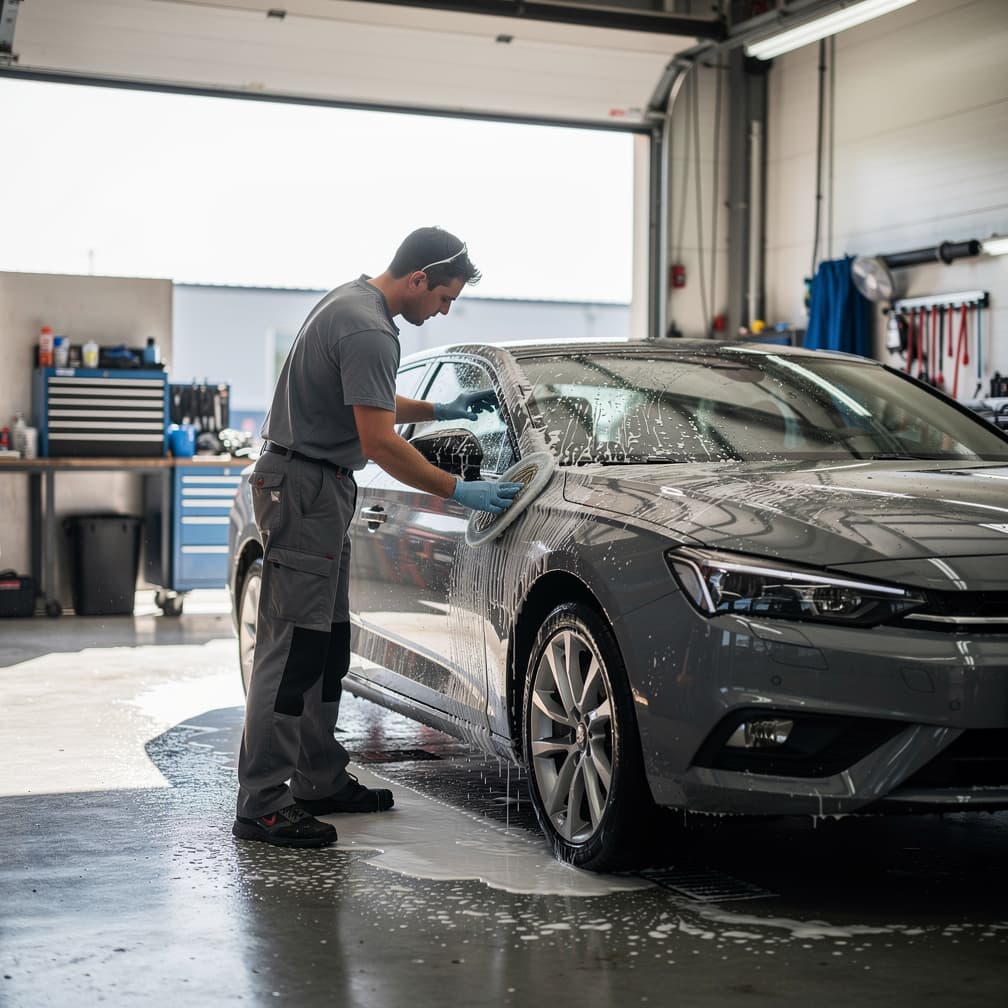

About 137 car washes operate in Miami-Dade County, and that density does one specific thing to your risk: a customer who disputes a scratch has somewhere else to go tomorrow, and a review to leave tonight. Damage claims therefore get settled fast, often out of pocket, and the small ones never reach a policy at all. Owners then carry a claims habit they never priced. Anyone shopping car wash insurance in Miami should decide in advance which disputes go to a carrier and which get handled at the counter, because a deductible above your average paint touch-up means you are paying for a promise you never use. Look at two years of counter settlements honestly. That figure, more than any quote, tells you what limit and deductible you need.
What Makes Miami Different
Dense markets multiply the parties who want to be named on one wash's paperwork. A landlord, a lender, an anchor tenant, and a fleet account can all want their own copy. Some of them use tracking services that reject a certificate over a formatting detail nobody explained. A rejected certificate is not a coverage problem, but it stops a contract just as effectively. If a fleet account in Miami sends a vendor packet, read its insurance page before signing anything. Those packets can demand limits sitting well above whatever your lease already asked you to carry. Buying to the highest requirement once beats amending a policy every time a new account opens. Keep a current certificate with every party, and confirm how carriers in Florida handle mid-term reissues.
Local Risk Factors in Miami
Hurricane weather closes a wash twice: once while nobody is driving, and again when the site itself is torn up. Wind takes the canopy over the vacuum lanes, the signage, and the roof of the equipment room long before it touches anything structural. Commercial Property may respond to wind damage, subject to a separate windstorm deductible that is often a percentage of the building limit rather than a flat figure. Surge and rising water are a different question, since property forms typically exclude flood whatever the wind did first. An owner in Miami should ask which deductible applies, what the percentage is, and what the form says when wind and water arrive together, because that question decides most coastal claims in Florida.
What Coverage Does a Car Wash in Miami Need?
General Liability
Landlords, lenders, and fleet accounts ask for proof of this line before they ask about anything else. It generally responds to third-party claims: a guest who falls in a wet lane, an injury near the vacuum stalls, or damage to property that was never in your hands. Damage to a vehicle in your care during the wash itself typically falls outside it.
Example: A customer steps out of the pay lane onto wet concrete, lands hard, and sends a demand four months later with a lawyer attached. General Liability may pick up the defense and the settlement, subject to your limits.
Commercial Property
The equipment room is the real asset here, not the shell wrapped around it. Conveyors, pumps, dryers, control boards, signage, and the building can all be scheduled, with fire, storm, vandalism, and theft as the usual covered causes. Flood typically sits outside the form, and wear or mechanical breakdown generally needs an endorsement of its own.
Example: Someone pries open the pay terminal overnight, takes the coin box, and cracks a bay door on the way out. Commercial Property could fund repairs to the door and the terminal once your deductible is met.
Workers Compensation
An attendant catches a hand near a brush, or pulls a shoulder loading mats across a long shift. This line generally handles medical care and a share of lost wages, and it is rated on payroll by job classification rather than on your building. Rules on who must carry it vary, and the Florida Office of Insurance Regulation publishes the current requirements for employers.
Example: A tunnel loader slips on the wet apron mid-shift and tears a knee ligament that ends up needing surgery. Workers Compensation might handle the treatment and part of the missed pay, depending on how the claim is filed.
Business Owners Policy
Where separate policies split property and liability across two renewals, this package holds both for one site: one certificate, one deductible conversation, one bill. Workers Compensation stays outside it, flood and equipment breakdown usually do as well, and the limits sitting inside the package still deserve reading line by line.
Example: A fire in the equipment room stops the tunnel for three weeks in Miami, and the repair bill lands beside a month of refunded memberships. A Business Owners Policy can be structured to answer for both, within its terms.
How Much Does Car Wash Insurance Cost in Miami?
Car Wash Insurance is a bundle of separate policies, priced separately. The ranges below are typical figures for Miami for each line, except workers compensation, which is rated per $100 of payroll; a quote prices each one against your own operations.
| Coverage | Typical range | What moves your price |
|---|---|---|
| General Liability Insurance | $140 - $525 per month | Industry and risk classification, annual revenue, number of employees |
| Commercial Property Insurance | $400 - $1,475 per month | Building value and construction type, roof age and condition, fire protection class |
| Workers Compensation Insurance | $0.75 - $2.74 per $100 of payroll | Employee classification codes, total annual payroll, experience modification rate |
| Business Owners Policy Insurance | $300 - $975 per month | Annual revenue and industry class, building and contents values, square footage and building age |
Prices shown are general estimates, not guaranteed rates or quotes. Your actual premium will depend on the insurer, coverage selected, business details, location, claims history, and other underwriting factors. Learn about our pricing methodology.
What Are the Insurance Requirements for a Car Wash in Miami?
Workers' comp is generally required once you have 4 or more employees. Florida generally requires employers to carry workers' compensation at that point. Common exemptions include sole proprietors, partners, and corporate officers (up to 4). Confirm current thresholds with your state's workers' compensation agency before you hire.
Flood damage is typically excluded from standard policies. Standard commercial property and builders-risk-type policies typically exclude flood. Given Miami's coastal flood exposure, a separate flood policy is worth pricing; FEMA's National Flood Insurance Program is the usual starting point.
Where to verify licensing and coverage rules. The Florida Office of Insurance Regulation publishes consumer guidance and current insurance requirements for Florida businesses. When a contract or lease demands specific wording, the Florida Office of Insurance Regulation's guidance is the authoritative place to check.
Get Your Car Wash Quote in Miami
Compare rates from multiple carriers. Free quotes, no obligation.
Operating in Miami
- Wet concrete never fully dries during business hours. A wash that cannot show a documented floor routine ends up arguing a slip claim with nothing but memory on its side.
- Chemical drums, reclaim tanks, and a boiler share one small room, and how that room is kept shows up twice: once in an inspection report, and again in a renewal price.
- Membership plans keep billing while the tunnel sits dark, and the refunds that follow a shutdown in Miami are a real cost no repair invoice ever shows.
- Signage and canopies sit outside the main building limit more often than owners realize, and a storm is a poor moment to learn what the sublimit actually is.
How to Buy: Advice for Miami Owners
Start with the loss that would actually close you: the tunnel out of service for a month. Ask each quote what it does about lost income, what triggers that payment, and how long the waiting period runs before anything is payable. Commercial Property may answer for the damage itself, while the income piece can sit in a separate coverage part with its own conditions. A Business Owners Policy can bundle both sides, though the income terms still deserve their own reading. Equipment breakdown is often an endorsement rather than a given, so ask for it by name instead of assuming. Bring revenue records, an equipment list with model numbers, and two years of loss runs. Check the Florida Office of Insurance Regulation guidance before deciding what a policy in Miami has to include, then put the same numbers in front of participating carriers.
FAQ
Car Wash Insurance in Miami: FAQ
Not by default. Property coverage is written to a location, so a new site has to be added and rated on its own building, equipment, and payroll. Liability may extend to newly acquired premises for a limited window, and that is a condition rather than a promise, so confirm the wording. Tell the carrier before the second site opens, not at the first claim.
It generally responds to third-party claims: a customer who goes down in a wet entry lane, a guest hurt near the vacuum stalls, or damage you cause to property that was never in your hands. What it typically does not touch is damage to a vehicle you had control of during the wash itself. That gap catches owners off guard, so raise it by name before you buy anything.
Usually not under a standard liability form. Damage to property in your care, custody, or control is a common exclusion, and a vehicle riding your conveyor is exactly that. Some carriers offer an endorsement built for the exposure and price it separately. Ask every quote how it treats vehicle damage, and count what you settled at the counter last year before choosing a limit.
Price follows a handful of inputs rather than a rate card. Payroll and job classifications drive the comp side, revenue and claim frequency drive the liability side, and building value plus your equipment schedule drive property. Hours of operation, alarms, and the age of your wiring all matter. Participating carriers in Florida weigh loss history differently, so two washes on one street can price apart.
Because a claim arising from your operation can name them too, and that status lets your policy answer on their behalf for claims tied to your work. It generally does not reach their own negligence, so a fall on a sidewalk they maintain stays their problem. The wording has to be a real endorsement on the policy, not a line typed onto a certificate. Ask which version you actually have.
Per-occurrence is the most a policy may pay for one event, such as a single customer's fall at the pay station. The aggregate is the ceiling for the entire policy year, and every slip, every injury claim, and often every defense bill draws it down. A wash with three small claims by midyear can find the aggregate thinner than expected right as the busy stretch starts. Ask when it resets.
Sources
- 1.U.S. Census Bureau, County Business Patterns (2023), Miami-Dade County(Miami-Dade County has about 137 businesses in this trade's category (NAICS group 811192).)
- 2.Florida Office of Insurance Regulation(Florida Office of Insurance Regulation publishes consumer guidance for insurance buyers.)
- 3.FEMA / FloodSmart(Flood coverage is typically purchased separately; FEMA administers the National Flood Insurance Program.)


