







































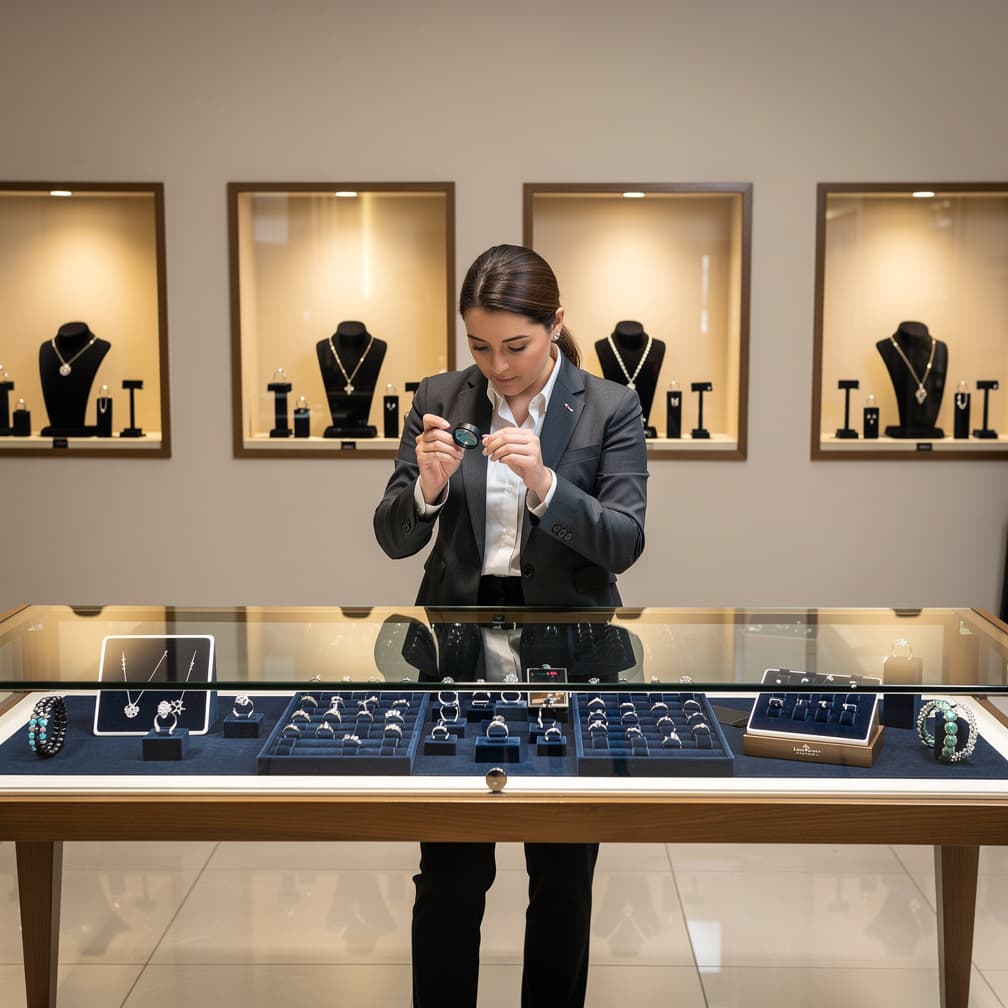

Payroll, stock values, and loss history do more to move your quote than anything on your website. A bench jeweler, a part-time seller, and an owner behind the counter each price differently under workers compensation, which is rated against payroll rather than charged as a flat monthly figure. Jewelry store insurance in Miami therefore starts with numbers you already keep: what you pay people, what the inventory is worth on an average day, and what your worst day looked like. Carriers reward documentation. An inventory system that can produce values by category beats a spreadsheet nobody has opened since the last count. Gather those first. The rest of this page lays out the lines, the published ranges, and the questions worth putting to each participating carrier in Florida.
What Makes Miami Different
Storm weeks do not damage a jewelry store the way they damage a warehouse or a job site. The loss is usually the closed door: a dark showroom during the stretch that pays for your year. Water finds display cases and paperwork before it finds anything dramatic, and both matter at claim time. Wet appraisal files and soaked repair tickets make valuation harder exactly when you need it to be easiest. After a wide event crosses a dense metro, every restoration crew within reach is booked for weeks. Your reopening date then depends on a queue you do not control and cannot simply pay past. Ask a carrier in Florida how a closure gets measured and what waiting period applies before anything responds. Storing your Miami records off-site costs almost nothing and shortens every conversation that follows.
Local Risk Factors in Miami
Hurricane warnings close a jewelry store before any wind arrives, because moving inventory into a safe and boarding glass takes the better part of a day. That lost trading time is a real cost, and it lands whether or not the storm does. Wind-driven rain then finds display lighting, ceilings, and the paperwork you keep behind the counter. Commercial Property can help cover wind damage to cases, fixtures, and stock, though wind deductibles in coastal parts of Florida are often a percentage of value rather than a flat amount. Read that number before the season, because it is the part of a hurricane claim owners in Miami misjudge most.
What Coverage Does a Jewelry Store in Miami Need?
Commercial Property
Showcases, safes, repair benches, fixtures, and the merchandise inside them are what this line is built around. Fire, storm damage, and building losses that shut a store typically land here, and many leases require it before the keys change hands. Water arriving from outside the building is generally excluded and priced as its own decision.
Example: A sprinkler head lets go over three display cases on a quiet night; commercial property may respond to the ruined stock, the soaked fixtures, and the cleanup that follows.
General Liability
Injuries to your own staff sit elsewhere; this line is aimed at the people who walk through the door. A shopper who slips at the entry, tips a case over, or is hurt at the repair counter is the classic claim, and landlords commonly demand it along with additional-insured status. Damage to your own stock is not what it addresses.
Example: A customer catches a heel on the entry mat and fractures a wrist in Miami; general liability might help cover the medical bills and the defense costs that follow.
Commercial Crime
Where property cover leans toward the broken case, this line leans toward what left in somebody's pocket. Employee theft, forgery, embezzlement, and fraud tied to cash, inventory, or repair intake are the intended targets, and losses like these often surface months later during a count. Shortages you cannot document usually go nowhere.
Example: A bookkeeper routes supplier payments to a personal account for most of a year; commercial crime is generally the line meant to answer once an audit surfaces it.
Tools & Equipment (Inland Marine)
Merchandise leaves the store more often than owners admit: a trade show, a courier run, a stone at a setter's bench, a piece out on approval. This line generally follows property in transit or away from the premises, where a standard property form may stop at the door. Conditions on how goods travel usually apply.
Example: A tray of finished rings travels to a show and never reaches the table; inland marine may respond, subject to the transit conditions written into the policy.
Workers Compensation
If you have employees, most states require this line, and the thresholds vary. Medical bills and lost wages from work injuries are what it is meant for: a burn at the torch, a repetitive strain injury at the bench, a fall in the stockroom. It is rated against payroll by job class rather than sold at a flat monthly figure.
Example: A bench jeweler burns a hand at the torch and misses six weeks; workers compensation is typically intended to pick up the medical treatment and part of the lost wages.
How Much Does Jewelry Store Insurance Cost in Miami?
Jewelry Store Insurance is a bundle of separate policies, priced separately. The ranges below are typical figures for Miami for each line, except workers compensation, which is rated per $100 of payroll; a quote prices each one against your own operations.
| Coverage | Typical range | What moves your price |
|---|---|---|
| Commercial Property Insurance | $625 - $2,300 per month | Building value and construction type, roof age and condition, fire protection class |
| General Liability Insurance | $100 - $350 per month | Industry and risk classification, annual revenue, number of employees |
| Commercial Crime Insurance | $80 - $320 per month | Employees who handle money or inventory, internal controls and separation of duties, funds and securities on hand |
| Inland Marine Insurance | $200 - $875 per month | Total insured value of the scheduled property, type and age of the equipment, where it is stored and how far it travels |
| Workers Compensation Insurance | $0.75 - $2.74 per $100 of payroll | Employee classification codes, total annual payroll, experience modification rate |
Prices shown are general estimates, not guaranteed rates or quotes. Your actual premium will depend on the insurer, coverage selected, business details, location, claims history, and other underwriting factors. Learn about our pricing methodology.
What Are the Insurance Requirements for a Jewelry Store in Miami?
Workers' comp is generally required once you have 4 or more employees. Florida generally requires employers to carry workers' compensation at that point. Common exemptions include sole proprietors, partners, and corporate officers (up to 4). Confirm current thresholds with your state's workers' compensation agency before you hire.
Flood damage is typically excluded from standard policies. Standard commercial property and builders-risk-type policies typically exclude flood. Given Miami's coastal flood exposure, a separate flood policy is worth pricing; FEMA's National Flood Insurance Program is the usual starting point.
Where to verify licensing and coverage rules. The Florida Office of Insurance Regulation publishes consumer guidance and current insurance requirements for Florida businesses. When a contract or lease demands specific wording, the Florida Office of Insurance Regulation's guidance is the authoritative place to check.
Get Your Jewelry Store Quote in Miami
Compare rates from multiple carriers. Free quotes, no obligation.
Operating in Miami
- A supplier shipping goods on memo can require evidence of coverage before the first box moves, and the request usually wants the endorsement rather than the certificate you keep on file.
- Emptying the cases at close is a routine underwriters actually price, because the hours your stock sits unattended count for more than the hours your doors are open.
- An alarm installer in Miami may be booked out for weeks, and a carrier's protective safeguard condition does not pause while you wait for the appointment.
- Loose stones move between the bench, the tray, and the safe several times a day, and every handoff without a record is a valuation problem waiting for a bad night.
How to Buy: Advice for Miami Owners
Limits are the part of this decision nobody enjoys and everyone regrets getting wrong. Set the property and crime limits against a real inventory value, not a round number that felt comfortable. Then check whether a limit is per occurrence or an annual aggregate, because two claims in one year can exhaust an aggregate quietly. General Liability and Commercial Property handle that arithmetic differently, and the difference only shows up on the second claim. Ask each carrier to state it plainly. Check the Florida Office of Insurance Regulation's guidance before deciding what limits your contracts already commit you to in Florida. CPK's job is narrow and useful: quotes from participating carriers, lined up so a Miami owner can see what each limit actually buys.
FAQ
Jewelry Store Insurance in Miami: FAQ
Standard property forms typically exclude flood, which means water arriving from outside the building is priced as its own separate decision. That gap catches owners who assume water is water. A burst pipe inside the store is usually a different question with a different answer. Ask a carrier to point at the definition in their wording, because definitions of flood differ and the difference decides whether a claim opens.
Bring inventory values by category with a dated count, purchase invoices and appraisals, your safe rating, alarm certification and monitoring contract, payroll split by role, revenue, and a plain description of past losses. Underwriters price unknowns pessimistically, so a complete file often quotes better than a careful story. Send the same packet to every participating carrier in Florida so the offers differ because of the carriers.
They can. A per-occurrence limit is the ceiling for a single incident, while the aggregate caps the whole policy term. If a shopper is hurt at your repair counter in one season and a second injury follows before renewal, both draw down the same aggregate, and the later claim can find far less room left than the first one did. Ask each carrier what remains after a first payout, not only what the limits read on day one.
Naming them as an additional insured can extend some of your liability protection to them for claims arising out of your operations, so their own policy is not the first one tested. It is a contractual demand rather than a courtesy, and it usually requires an endorsement rather than a certificate alone. Take the exact wording from the lease and hand it to the carrier word for word.
A closed showroom loses sales that never come back, and that loss is handled separately from any physical damage. Some property policies can include income protection while the doors are shut, often with a waiting period and a time limit attached. Ask a carrier in Florida how a closure is measured, when the clock starts, and how long it runs. Two offers at one price can differ enormously here.
Merchandise that leaves the store often steps outside the wording that protected it in the case. Inland Marine is generally the line meant for property in transit or away from the premises, and it can carry its own conditions about how goods are carried and secured. Tell the carrier what travels, how often, and how it moves, before the first show rather than after it.
Sources
- 1.Florida Office of Insurance Regulation(Florida Office of Insurance Regulation publishes consumer guidance for insurance buyers.)
- 2.FEMA / FloodSmart(Flood coverage is typically purchased separately; FEMA administers the National Flood Insurance Program.)


