







































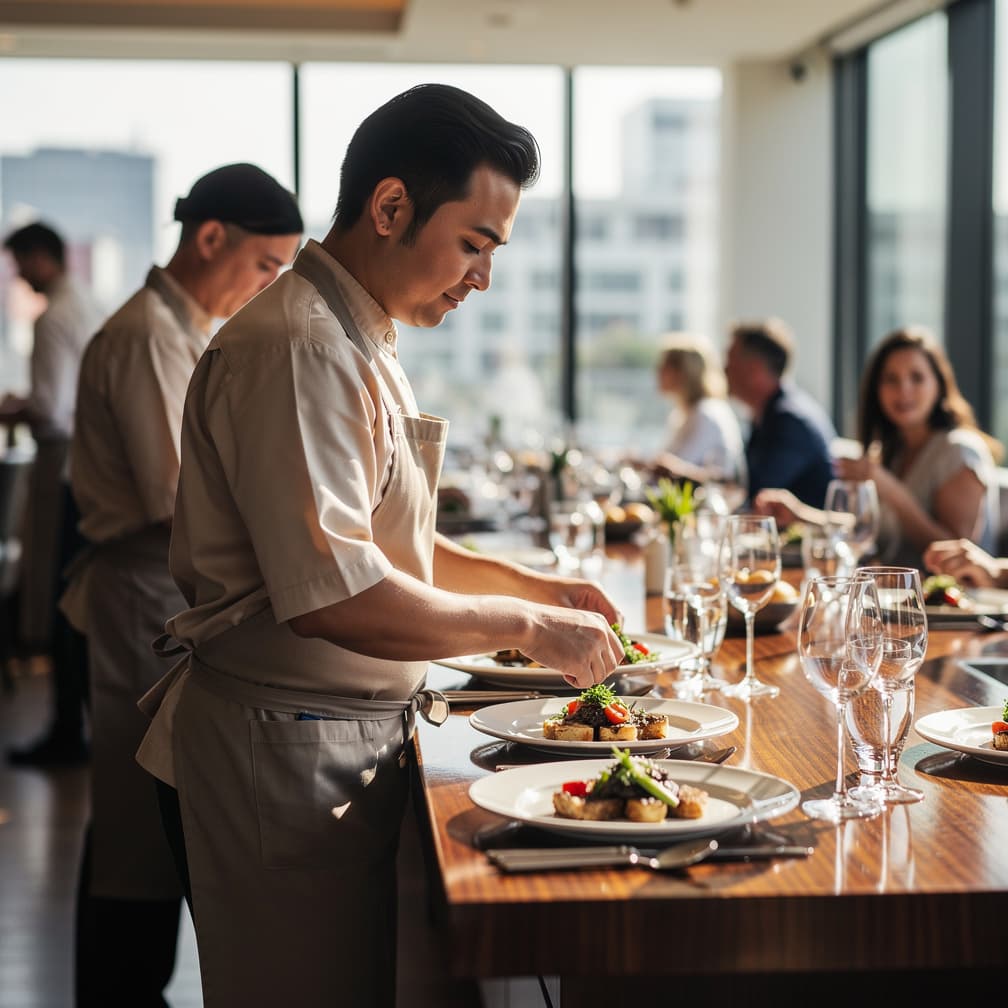

There are about 5,300 restaurants operating in Miami-Dade County, which means the carriers writing food service here have seen your exact claim before and priced it accordingly. Their appetite is already set, and your job is to land on the right side of it. That comes down to what a submission carries: suppression service dates, hood cleaning intervals, seating, alcohol share, delivery. Restaurant insurance in Miami is a rated product, and the rating happens on facts you supply. Leave a field blank and somebody fills it in with an assumption that costs you. Fill it in yourself with a record you can prove. Then put the same complete file in front of several participating carriers and let them argue over it.
What Makes Miami Different
Payroll, alcohol share, cooking method, and claims history move your premium far more than your address does. Address still matters, because rebuild costs and labor rates ride on the market around you. Miami-Dade County carries about 96,000 business establishments, and dense markets bid up the contractors who rebuild kitchens. A carrier prices what a rebuild costs today, not what your build-out cost when you opened. That gap widens quietly for years, and a renewal notice never announces it to you. Your deductible is the other lever, and it is the one owners set once and then forget. Raising it lowers the premium and moves risk onto a bank account running on thin margins. Run that number against your slowest month, since a claim does not check your calendar first.
Local Risk Factors in Miami
A week of canceled reservations does not repair itself once the storm passes. Staff scatter, produce orders stop, and the block reopens on whatever schedule the utility decides. Owners lose more to the closure than to the shingles, and that gap is where they find out what the policy was built to do. Physical damage is the usual trigger, so a dining room that is intact but dark can sit outside the form entirely. Ask what your quote says about power interruption that starts away from your premises, and whether spoiled stock is addressed at all. A participating carrier in Florida may treat an off-premises outage differently from a failed compressor in your own Miami kitchen.
What Coverage Does a Restaurant in Miami Need?
General Liability
Landlords, event clients, and delivery platforms ask for this one by name, and it is the line usually pointed at a customer who gets hurt in your dining room or whose property you damage. It can help cover their medical claims, the legal defense, and a settlement, subject to your limits. Damage to your own equipment sits elsewhere.
Example: A customer steps on a slick patch by the beverage station, catches a chair on the way down, and leaves with a wrist that needs attention. A demand letter arriving four months later is the kind of claim this line may answer.
Commercial Property
Flood and slow wear sit outside this form, and so does the shell of the building when your landlord owns it. What belongs on the schedule is yours: the hoods, the ranges, the walk-in, the build-out you paid for, the stock on the shelf. It may respond to fire, smoke, and other listed causes, subject to limits and your deductible.
Example: A fryer flares, the suppression system dumps, and smoke works its way into the dining room upholstery. Repairs to the equipment and the room can be picked up here, once the deductible clears.
Liquor Liability
General Liability forms commonly push alcohol into an exclusion, and this is the line written to sit in that gap. Wherever a bar serves, dram shop claims reach back to the person who poured, and the coverage is intended to answer for injuries a served patron goes on to cause. Documented server training is often a condition of it.
Example: A regular closes out, drives away, and hits someone two miles from your door. The suit that names your bar for the last pour is the scene this coverage was built around, subject to the policy's conditions.
Workers Compensation
Cuts, burns, and slips are the daily inventory of a kitchen, and this is the line a state system generally expects an employer to carry for them. It typically handles medical treatment and a share of lost wages for an injured employee, and it is rated on payroll rather than on sales. Requirements vary by state.
Example: A prep cook slices a thumb on a mandoline during a rush and spends the evening in urgent care instead of on the line. Treatment and time away from work might run through this coverage in Miami.
How Much Does Restaurant Insurance Cost in Miami?
Restaurant Insurance is a bundle of separate policies, priced separately. The ranges below are typical figures for Miami for each line, except workers compensation, which is rated per $100 of payroll; a quote prices each one against your own operations.
| Coverage | Typical range | What moves your price |
|---|---|---|
| General Liability Insurance | $140 - $440 per month | Industry and risk classification, annual revenue, number of employees |
| Commercial Property Insurance | $270 - $875 per month | Building value and construction type, roof age and condition, fire protection class |
| Liquor Liability Insurance | $85 - $380 per month | Share of sales that comes from alcohol, type of venue and how late you serve, server training and service procedures |
| Workers Compensation Insurance | $0.75 - $2.74 per $100 of payroll | Employee classification codes, total annual payroll, experience modification rate |
Prices shown are general estimates, not guaranteed rates or quotes. Your actual premium will depend on the insurer, coverage selected, business details, location, claims history, and other underwriting factors. Learn about our pricing methodology.
What Are the Insurance Requirements for a Restaurant in Miami?
Workers' comp is generally required once you have 4 or more employees. Florida generally requires employers to carry workers' compensation at that point. Common exemptions include sole proprietors, partners, and corporate officers (up to 4). Confirm current thresholds with your state's workers' compensation agency before you hire.
Flood damage is typically excluded from standard policies. Standard commercial property and builders-risk-type policies typically exclude flood. Given Miami's coastal flood exposure, a separate flood policy is worth pricing; FEMA's National Flood Insurance Program is the usual starting point.
Where to verify licensing and coverage rules. The Florida Office of Insurance Regulation publishes consumer guidance and current insurance requirements for Florida businesses. When a contract or lease demands specific wording, the Florida Office of Insurance Regulation's guidance is the authoritative place to check.
Get Your Restaurant Quote in Miami
Compare rates from multiple carriers. Free quotes, no obligation.
Operating in Miami
- Your walk-in dies on the day the refrigeration tech is booked solid, and the protein inside starts spoiling on its own schedule. Photograph the unit and keep the disposal list before a single tray leaves your Miami kitchen.
- Landlords and licensing offices both want current proof of coverage, and neither one calls ahead. An owner in Miami can be asked for a certificate on the morning of an inspection, with no time left to fix a lapse.
- Turnover means the person on your fryer tonight may have started last week, and burn claims cluster around that first month. A short, documented training block is the only part of that you actually control.
- Every additional-insured request is a promise made in a contract you already signed, so the endorsement has to exist before the party asking ever asks for it.
How to Buy: Advice for Miami Owners
Start with the lease, because it usually names your limits before you ever pick a policy. Pull the insurance clause, the additional-insured requirement, and any waiver language, then put all three in front of whoever is quoting you. General Liability is what that clause is usually pointing at, and Commercial Property is what your build-out needs once the space is yours. The two get quoted together often enough that owners assume they are one thing. The Florida Office of Insurance Regulation publishes consumer guidance on commercial policy basics if the wording is new to you. Bring the seating count, the hood service dates, and your alcohol percentage to the conversation. Then compare quotes from participating carriers on identical limits, because a lower price on a lower limit is not a better deal for a Miami kitchen.
FAQ
Restaurant Insurance in Miami: FAQ
Price tracks a handful of facts: payroll, seating, cooking method, the share of sales from alcohol, your claims history, and what a rebuild of your build-out would cost today. The same square footage can price very differently across two kitchens on the same block. The levers you control are housekeeping, documented training, and the deductible you are willing to carry. Ask each carrier for the same limits, or you are comparing nothing at all.
That depends on how the power failed and on what the form says. An outage starting off your premises is generally treated differently from a compressor that quits inside your own kitchen, and some policies address only one of the two. Spoilage often sits in an endorsement rather than the base form. Ask which one your quote includes, then photograph the failed unit and keep the invoice for everything you threw out.
Anyone with a contract and leverage: a landlord, a produce or linen supplier, an equipment lessor, a delivery platform, an event client booking your private room. Each may want different wording and its own name on the endorsement. The certificate only summarizes what the policy said on the day it printed, so it grants nothing on its own. Keep a list of who is named and check it at every renewal.
Often, yes. Plenty of General Liability forms push alcohol into an exclusion and hand some of it back by endorsement, and Liquor Liability is written to sit in that space. Wherever alcohol is served, dram shop exposure reaches back to the pour itself. Ask which form your quote uses and whether documented server training is a condition of the coverage. A condition you cannot prove you met is an argument you tend to lose.
The per-occurrence number is the most a policy may pay for one incident, and the aggregate is the ceiling for the whole term. A single slip claim tests the first. A year holding three of them tests the second, and once the aggregate is spent the rest of the term runs thin. Ask whether defense costs come out of those limits or sit outside them, because legal work on a food-poisoning claim can consume a limit before anyone is paid.
General Liability is the line usually pointed at bodily injury claims brought by a customer, and a foodborne-illness allegation is one of those. What decides the file is proof: temperature logs, supplier invoices, cleaning records, and the names of everyone working that shift. Carriers ask for all of it. Intentional acts, and contamination you knew about and served anyway, sit outside any form.
Sources
- 1.U.S. Census Bureau, County Business Patterns (2022), Miami-Dade County(Miami-Dade County has about 96,000 business establishments.)
- 2.U.S. Census Bureau, County Business Patterns (2023), Miami-Dade County(Miami-Dade County has about 5,300 businesses in this trade's category (NAICS group 7225).)
- 3.Florida Office of Insurance Regulation(Florida Office of Insurance Regulation publishes consumer guidance for insurance buyers.)
- 4.FEMA / FloodSmart(Flood coverage is typically purchased separately; FEMA administers the National Flood Insurance Program.)


